Procurement Guides

How to Wholesale Pill Organizers from China?

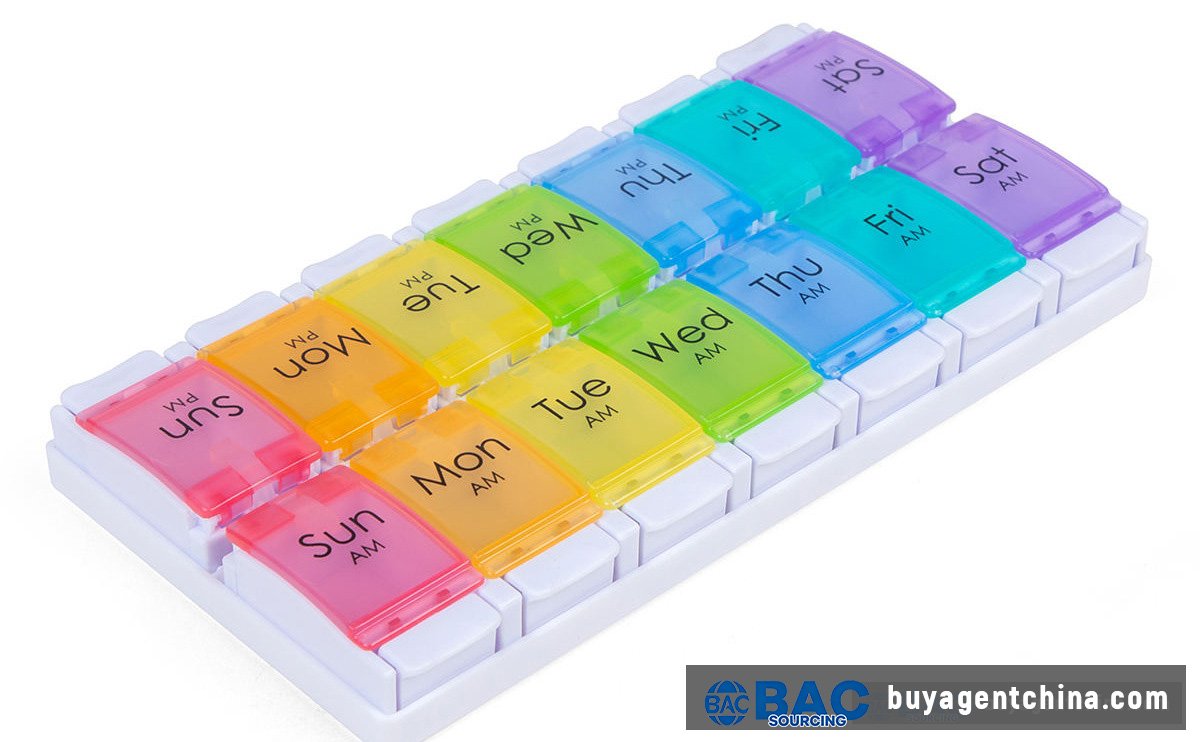
01 Weekly AM PM pill organizer — one of the fastest-moving stock models out of Yiwu

The short answer, first: a pill organizer that retails for $15–25 on a US drugstore shelf often leaves a Chinese factory for ¥4–6 — under a dollar. That gap between factory gate and shelf price is the margin this trade runs on, and it is why wholesale pill organizers keep pulling in new importers.

1. Why Global Buyers End Up Sourcing Pill Organizers from China

Start with an unsentimental fact: plastic pill organizers are overwhelmingly made in China. On the HS 3924 heading (other household articles of plastics), China is the largest exporter in the world — trade-data platforms consistently rank Chinese shipment records first for this family, and the more specific subheading for plastic pill boxes, 39249090, is likewise China’s biggest export line.

The price ladder is more useful than the word “cheap.” Within the same product category, ex-works prices span more than a hundredfold: an 8-grid sealed box from Yiwu can come in around ¥1.75 in volume, while a custom metal alloy organizer starts at ¥300. Whether you are selling a $9.99 Amazon impulse buy or building a premium branded metal box, you can find the matching supplier in one country — often in the same city.

For a buyer, the edge — if you price it honestly — is not cheapness itself. It is that the entire price ladder sits inside one country. Yet being locked into China as your source is not the same as sourcing easily. Language, culture, paperwork, shipping and inspection — a mistake in any one of them can wipe out every dollar you saved on the factory price. This guide is written for buyers who want to wholesale pill organizers from China but do not know where to start, and for buyers who have sourced before but keep getting stuck on the ground. Before you spend anything, the parts that matter most — factory regions, real prices and whether an agent earns its fee — are below. Most sourcing guides skip exactly those.

2. Step One: Decide What You Are Buying — Stock Wholesale or OEM/ODM

Many newcomers treat “buying pill organizers from China” as one task. In reality the market splits cleanly into two models, and picking the wrong one can cost you three months or a whole bad batch.

2.1 Off-the-Shelf (Stock) Wholesale

The factory has already designed the model and packed it in the warehouse. You order models the factory has already designed and shelved; the most you change is a logo stamp or a shell color. For anyone testing the water, stock is the fastest way to start trading.

AspectStock Wholesale
Best forAmazon sellers, dropshippers, offline stores, promo-gift sellers, fast product tests
Minimum orderLow — many Yiwu/Ningbo factories ship from 100–300 pcs
Lead timeFast — 3 to 15 days
PriceCheapest (no mold, no design cost)
DifferentiationAlmost none — hundreds of sellers may carry the same model
Biggest riskCommodity competition, price wars, no brand moat

2.2 OEM/ODM Customization

The factory produces to your drawings, samples or colors (OEM), or rebuilds a proven shell with new colors, parts and features (ODM). This is the only path to your own brand and to real margin — which is why most private-label pill organizer projects start here.

AspectOEM/ODM Customization
Best forImporters and sellers who want a private label and higher margins
Minimum orderHigh — 300–1,000 pcs for logo/color work; 3,000 pcs up for a new mold
Lead timeLong — 7–15 days sampling plus 20–45 days bulk production
PriceHigher (sampling, mold and management costs)
DifferentiationStrong — structure, function, color and packaging are all yours
Biggest riskBig upfront cost, an irreversible mold, strict sample sign-off

2.3 A One-Line Decision Rule

If you want to move fast and test demand, start with stock and stay off new molds. If you want a long-term brand and refuse to die in a price war, OEM/ODM is the only route — but bring capital and patience. The single biggest mistake new pill organizer buyers make is opening a mold before the market has spoken.

Practical advice: most smart buyers “test with stock first, customize after the numbers are in.” Run 500–2,000 stock pieces through your market to validate color, grid size and price point, then invest in customization.

3. Step Two: Match the Factory Region to Your Order

This category has a cleaner division of labor than it looks: Ningbo does molds and quality, Yiwu does low-cost volume, Guangdong does electronic smart boxes and precision molding. Seasoned buyers pick a region by order, not by hunting for the cheapest quote nationwide.

3.1 The Pill Organizer Factory Map at a Glance

RegionPositioningStrengthsMarketsBest suited for
Ningbo (Yuyao/Cixi), ZhejiangMold capital, quality plasticStrong mold development, automated injection molding, dense specialist factoriesEU/US/Japan/ROK, volume + quality lines7-day boxes, mid-to-premium OEM/ODM, new-mold work
Yiwu, ZhejiangGlobal small-commodity hubHuge model variety, rock-bottom prices, mature cross-border logisticsWorldwide, cross-border sellers’ main baseAmazon $9.99 models, promo gifts, small stock orders
Dongguan/Shenzhen, GuangdongElectronic smart organizersIntegrated electronics, precision molding, Bluetooth/timer/reminderEU/US smart-health marketSmart reminder boxes, electronic custom models
Taizhou/Hangzhou, ZhejiangMedical packaging supportMedical-grade materials, rapid prototypingStable exportMedical-grade, BPA-free certified lines

3.2 Small Custom vs Large Custom — Which Region to Pick

This is the choice buyers overlook most, and it drives your cost and lead time more than almost anything else.

Small customization (logo swap, color change, repackaging): Yiwu first — it has the largest pool of shared molds, handles 500–3,000 pcs comfortably, samples in 3–7 days and ships in 15–25 days. If you want slightly better quality without the big price, Ningbo (Yuyao) is the second pick.

Large customization (new mold, structure redesign, added electronics, medical-grade materials): Ningbo (Yuyao/Cixi) first — mold development and injection molding are its strengths, good for mid-to-premium 7-day boxes and PP/metal lines. For electronic smart boxes, use Guangdong. Most mature factories can do both, but each region has a clear ceiling on complexity and quality.

A single line worth memorizing: **send volume to Yiwu, quality to Ningbo, electronics to Guangdong.** Doing it backwards in pill organizer sourcing is not impossible — it just wastes your money and your lead time.

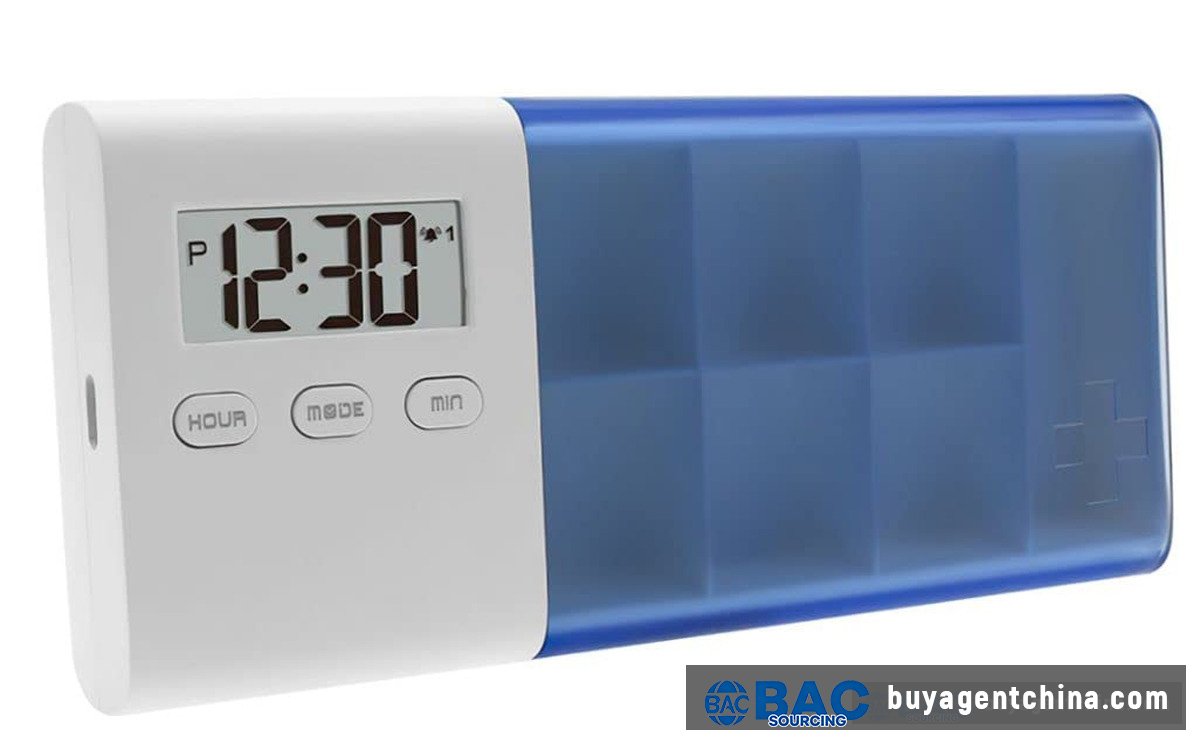
02 A smart electronic pill organizer with a built-in timer — the Guangdong specialty in this category

A smart electronic pill organizer with a built-in timer — the Guangdong specialty in this category.

4. Step Three: What a First-Time Buyer Actually Pays

People assume “find a factory on 1688, order, pay, receive” is the whole story. The real price is not one number — it is a ladder.

4.1 1688 Ex-Works Price Reference (CNY)

TypeEx-works (¥/pc)Notes
8-grid portable sealed box~1.75Yiwu, volume model, cross-border mainstay
7-day 21-grid weekly box~5.00Yiwu, three-times-a-day model
7-day dispenser box4.05–7.50Yiwu, many models
Smart reminder electronic box8–16Shenzhen/Dongguan, Bluetooth/timer
Metal alloy box (custom)300 upCustom, negotiable on volume

4.2 FOB Price Reference (USD)

TypeFOB (US$/pc)Typical MOQ
Basic 7-day weekly box0.10–0.501,000–3,000
7-day AM/PM box0.15–0.353,000
Electronic smart reminder box2.00–5.001,000–5,000
Metal/premium custom box5.00 upPer project

Note that FOB excludes sea freight, duties and destination-port fees. Many buyers see FOB and think it is cheap, then discover their real margin only after adding freight, duty, clearance and last-mile delivery. In cross-border wholesale, always price on landed cost, never on FOB.

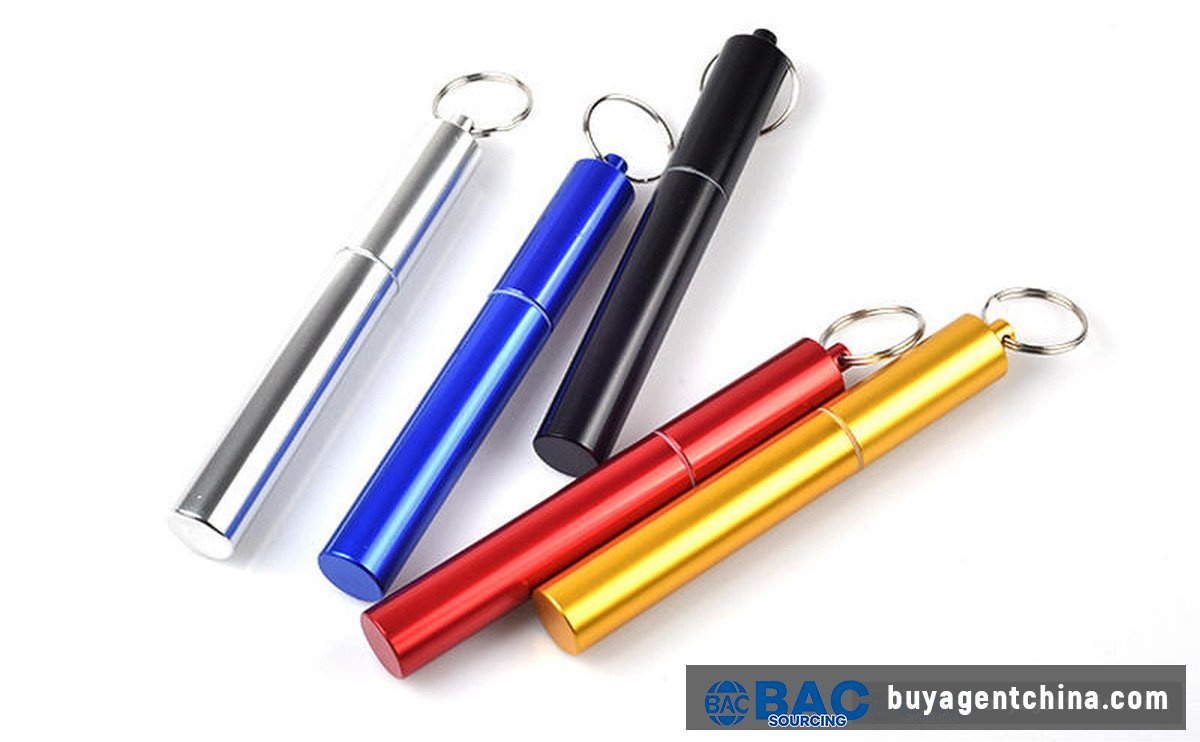
03 An aluminum-alloy pill holder — the premium custom tier that starts around ¥300 ex-works

An aluminum-alloy pill holder — the premium custom tier that starts around ¥300 ex-works.

5. Step Four: The Four Difficulties That Cost Newcomers Tuition

These four hurdles charge almost every first-time pill organizer buyer a tuition fee.

5.1 Language: It Is Not Just Translation

Foreign-trade staff at Chinese factories usually speak basic English, but material grades, FDA/REACH compliance clauses and wall-thickness tolerances are very hard to communicate through translation tools. “Leak-proof” can mean entirely different structures at different factories. And an English inquiry often lands with a “foreign trade salesperson” rather than the factory owner, so information — and the price — gets distorted through layers.

5.2 Culture: How Negotiation Actually Works

Chinese factories like to “make friends first, then talk business,” and quotes usually leave room to negotiate. Walk into the first round of quotes with zero pushback and some suppliers quietly reassess how seriously to take you. “Reply soon” in China means the same day or next; “start production soon” usually depends on a deposit (commonly 30%) — before payment, everything is a verbal promise. Keep two Chinese holiday windows in mind: Chinese New Year (capacity drops in Jan–Feb) and the National Day week (early October). Order pill organizers inside those two windows and a 2–4 week slip is common.

5.3 Paperwork: More Complex Than It Looks

Exporting a shipment of pill organizers is a full chain: contract → deposit → production → inspection → balance → booking → customs declaration (packing list, commercial invoice, declaration form) → air or sea freight → destination clearance (HS classification, import duty, possible surtax) → inland delivery.

The most common mistake is HS classification. Plastic pill organizers usually export under 39249090, but electronic smart models can slip into Chapter 85, and both the classification and duty shift by material and function. A wrong code means at best a delay, at worst a seized and fined shipment.

5.4 Shipping and Inspection: Where the Cost Hides

Shipping: small batches by express or air are expensive; larger batches by sea LCL carry per-cubic-meter charges and port fees; FCL means coordinating booking, trucking and customs yourself.

Inspection: this is the biggest trap in this category. There is a phrase you will hear again and again at Chinese factories: “the sample is the sample, the bulk is the bulk.” A perfect sample followed by sub-par bulk is not rare — it is routine. Without a third-party inspection or someone on the line, you find loose lids, visible mold lines and off-color shells only after the goods arrive, and returning them costs more than throwing them away.

Currency and payment: suppliers mostly accept T/T and are risk-averse. Orders above a certain size usually require a 30% deposit and 70% balance before shipment — you pay before you see the goods, and the risk sits entirely with you. Together these four are why so many buyers can point to a cheap factory price and still land on no profit.

6. Direct Sourcing vs Using a China Sourcing Agent

The question “should I hire an agent?” depends on three things: what your time is worth, how big your orders are, and how much risk you will carry. For many importers the tipping point is the first time a batch arrives with defects they cannot easily fix.

CriterionDirect from FactoriesVia a China Sourcing Agent
CostLowest on paper (no agent fee), but high hidden costsA service fee (often 3–8% of order value, or a fixed fee), but low hidden costs
CommunicationSlow — language, time zones, message distortionFast — the agent deals with factories in Chinese, directly
Quote accuracyHard to judge — padded quotes are commonAgents know the market and push quotes near the floor
InspectionAlmost none unless you fly to ChinaCore value: on-site inspection, line follow-up, reports
Quality assuranceDepends on luck and contract wordingSomeone watches sample-to-bulk consistency
Risk coverageAll risk on youAgent blocks problems and cuts bad-goods losses
Paperwork & logisticsYou deal with customs and forwarders, easy to slip upAgents usually have vetted forwarders and customs channels
Supplier managementNone — you argue alone when problems hitBuilds a supplier ledger, handles after-sales disputes
Best forExperienced buyers, big orders, plenty of timeNew buyers, scattered orders, little time, burnt before

Conclusion: if you are an experienced buyer moving dozens of containers a year with an inspection team or someone based in China, direct sourcing leaves you the biggest margin. If you are new, your orders are medium-sized, or you have already been burned by language, inspection and communication problems, a transparent-fee China sourcing agent covering quotes, negotiation, inspection, follow-up and logistics handoff is very often cheaper on a total-cost basis. That fee usually pays for itself — a cost that quietly cuts other costs.

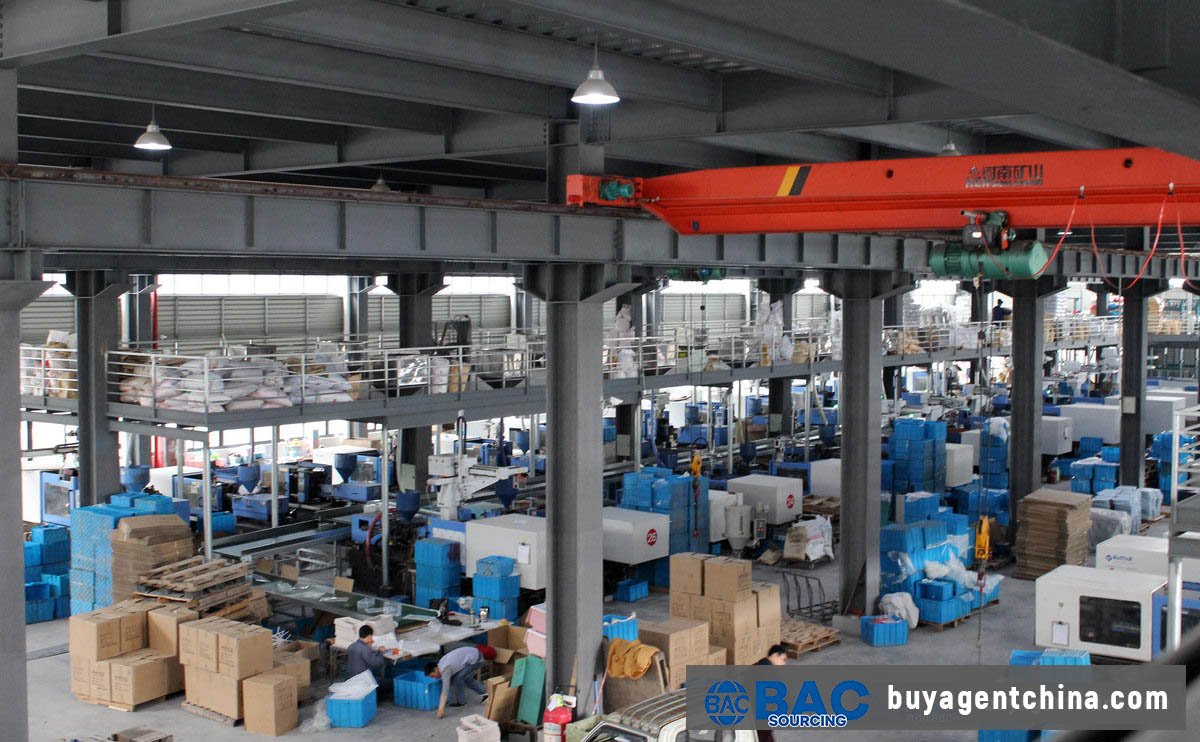
04 Inside a Chinese injection-molding plant- the tooling that turns resin into pill organizers

Inside a Chinese injection-molding plant: the tooling that turns resin into pill organizers.

7. Two Sourcing Plans: Test Order vs Full-Container Brand Build

Different order sizes call for different playbooks. Here are the two plans that cover how most people buy wholesale pill organizers from China.

7.1 Small Test Order Plan (500–3,000 pcs)

Goal: validate the market with the least money — do not lose, learn the trade.

Region: Yiwu first; Ningbo (Yuyao) for a small quality batch. Model: stock or a rebranded stock shell, no new mold. Order size: start from 500 pcs — a sensible first test order before any big commitment.

How to execute: (1) find a Yiwu stock or shared-mold factory and ask for real videos and actual transacted prices — watch for unrealistically low bait quotes; (2) buy one or two samples first and ship them to your country to check quality, size and weight — the freight is worth it; (3) use express or air for small orders, avoid sea LCL whose fixed fees eat your margin; (4) even for a small test order, arrange one third-party inspection or agent follow-up, otherwise you are not testing real quality.

Budget reference: Yiwu models at ¥1.75–7.50 ex-works, about $0.25–1.00 FOB. Rebuild your selling price once freight and duty are on top — FOB numbers alone will fool you.

7.2 Large Bulk Order Plan (10,000+ pcs / Full Container)

Goal: build your own brand, lock in cost, secure supply.

Region: Ningbo (Yuyao/Cixi) for mid-to-premium 7-day and PP/metal lines; Guangdong (Dongguan/Shenzhen) for electronic smart boxes. Model: OEM/ODM under contract, a set MOQ and volume-tied pricing tiers.

How to execute: (1) write a clear spec sheet — material, grid count, dimensions, wall thickness, lid structure, packaging — in both English and Chinese; (2) sample and iterate 2–4 rounds, then sign off on a physical golden sample that becomes the only acceptance standard for bulk; (3) agree T/T terms, aiming for 30% deposit + 40% after inspection + 30% before shipment, or 30/70 with the balance against a copy of the bill of lading; (4) during bulk production, arrange on-site follow-up or a third-party inspection (SGS, ITS, or your agent), with a mid-production check and a pre-shipment check; (5) ship by sea FCL, book two to three weeks ahead, and avoid Chinese New Year and the National Day holiday.

Budget reference: mid-to-premium 7-day boxes at $0.30–0.80 FOB; electronic smart boxes at $2.00–5.00 FOB. Metal custom models are priced per project — there is no flat one-price.

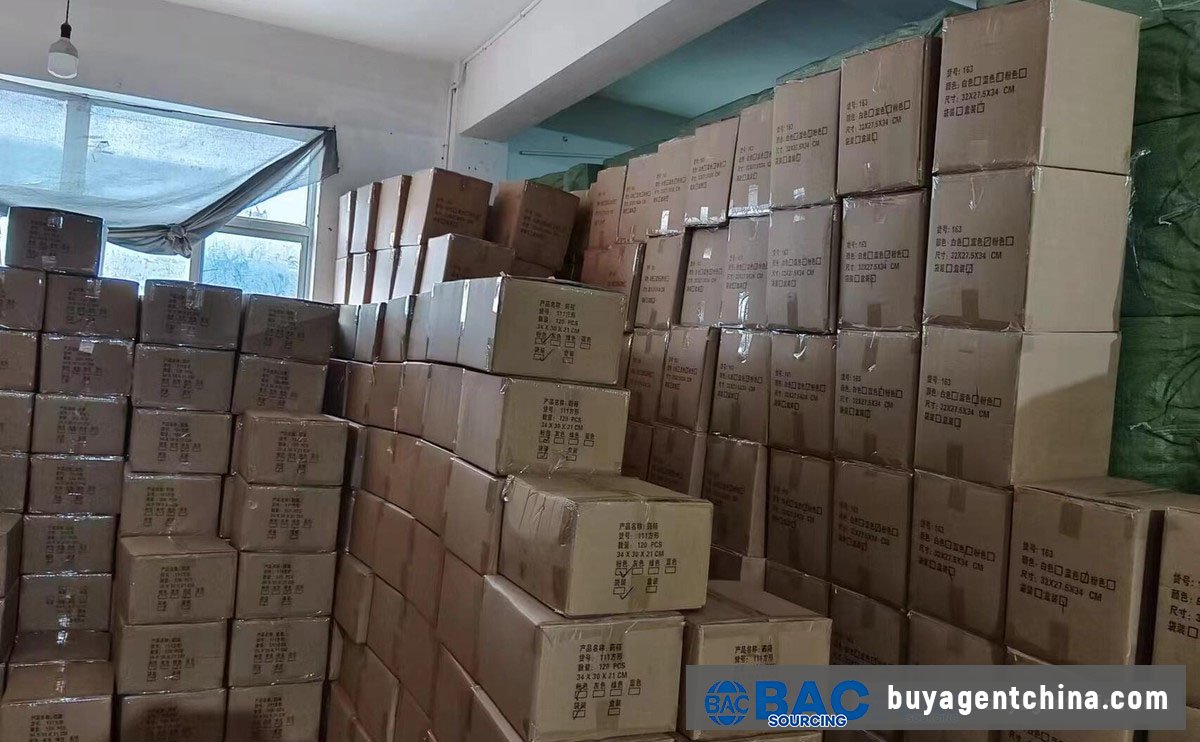
05 Finished cartons staged for export at a pill organizer warehouse

Finished cartons staged for export at a pill organizer warehouse.

8.Frequently Asked Questions (FAQ)

Q1: What is the minimum order quantity (MOQ) for pill organizers?

Stock models ship from 100–300 pcs at many factories; a rebranded stock shell usually needs 500–1,000; a brand-new mold starts around 3,000 pcs. Testing with stock first is the safest way to start.

Q2: How much does an agent actually save versus sourcing direct?

What you save is not the fee — it is the hidden cost: the factory price pushed down, bad goods stopped, flights and rework avoided. On total cost, a transparent-fee agent is often cheaper than direct sourcing, because its commission is usually smaller than the gap it cuts off the price.

Q3: Beyond the factory price, what hidden costs are there?

Sea freight, import duty, clearance charges, inland delivery, inspection fees, possible product certifications (FDA/REACH), and bad-goods losses. Wholesale buyers should always price on landed cost, never on FOB.

Q4: What certifications do plastic pill organizers need to export?

Common ones include US FDA requirements for containers touching food/medicine, EU REACH and food-contact rules, and child-resistant-lid standards where relevant. It depends on the destination and whether the box touches medication. A wrong HS code (electronic models can fall into Chapter 85) can cause delays or fines.

Q5: What is the process for building a private-label pill organizer?

Test with stock → lock the grid count, material and colors → sample 2–4 rounds → sign a golden sample → bulk production plus inspection → sea freight. Let the market give you numbers before you ever open a mold.

Q6: When is the worst month to order pill organizers?

Chinese New Year (Jan–Feb) and the National Day week (early October) cut capacity sharply, and orders placed then commonly run 2–4 weeks late. Also, never treat anything as confirmed before the deposit lands — production only really starts once the money is in.

9. About BuyAgentChina / BAC Sourcing

BuyAgentChina is a transparent-fee China sourcing agent. We do not own factories, do not stock goods, and do not mark up prices — we earn only from standardized service fees. Whether you need to find stock, push the factory price down, audit a line, or handle order follow-up and logistics handoff, we talk to factories in Chinese and lay every cost on the table. For current services and fee structure, see our services page.

Leave a Reply

Your email address will not be published. Required fields are marked *