Custom Sourcing, Procurement Guides, Sourcing Tips

Anti-Skid Tire Snow Chains: Which Type to Source from China

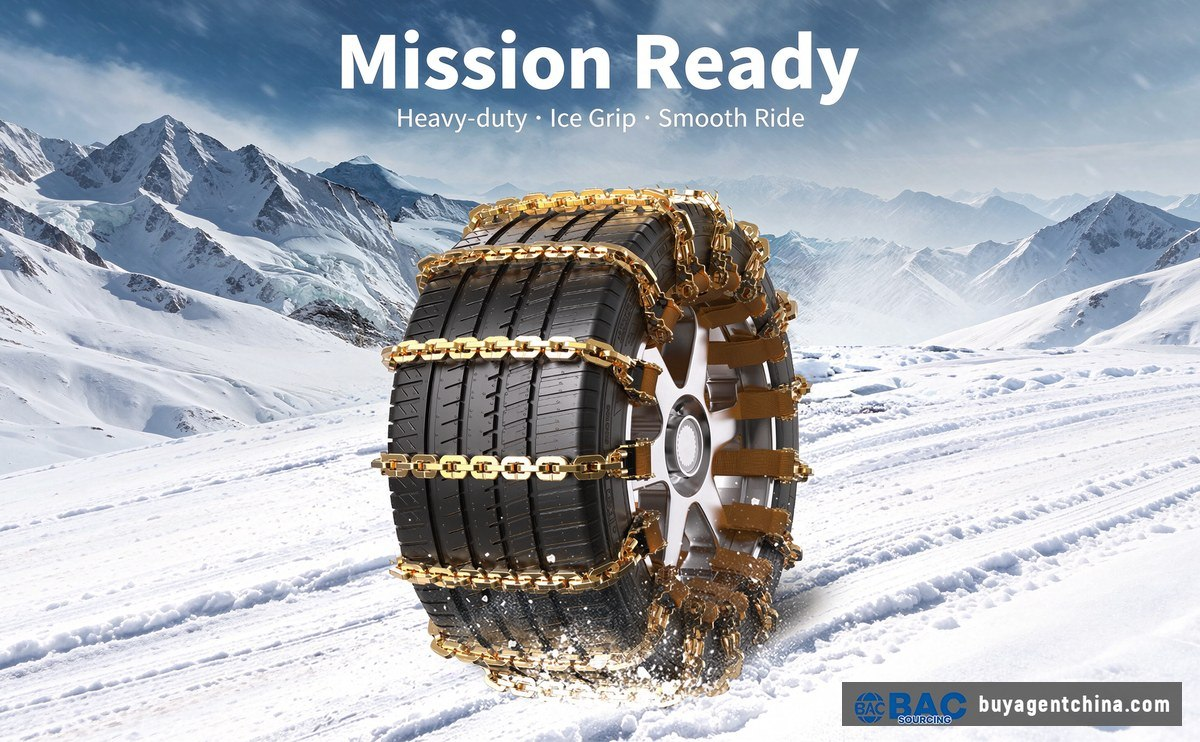
Heavy-duty link chain set reserved for mountain winter stock

The anti-skid tire snow chain market reached about USD 1.2B in 2025, growing near 5.2% yearly; match type to road, vehicle and reuse frequency before sourcing from China.

1. Anti-Skid Tire Snow Chains Market and Sourcing Snapshot

Once winter hits, snow-chain listings crowd every European and North American auto shelf. Each link and strap in the photos looks ready to bite into ice. In your customer’s driveway, though, the four families differ sharply on grip, noise, durability and fit time.

Start with market size. Dataintelo’s 2026 report puts the global automotive snow chain market at about USD 1.2B in 2025, heading to USD 1.8B by 2033, a 5.2% CAGR. A separate Dataintelo series estimates USD 1.42B in 2025 rising to USD 2.31B by 2034 at 5.6% CAGR. On the type side, PW Consulting’s 2025 breakdown shows metal chains at 67.4% share, with passenger cars at 47.7% of application. Regionally, Europe takes 41.72%, North America 30.34% and Asia Pacific 21.86%. The main buyers sit in the north, and they judge fitment and documentation more strictly.

China is one main supply base for this hardware-and-auto-parts category. Chain clusters sit around Jinhua and Pujiang in Zhejiang. Qingdao, Liaocheng and Linyi in Shandong build link chain and heavy-duty industrial units. Hangzhou and Jinhua supply export-ready auto parts sets. Prices run from under a dollar for an emergency strap to twenty-plus dollars for an SUV steel set. The spread is wide. What keeps your margin is not the number on the quote sheet. It is whether the type you pick matches the road your customers actually drive on.

Demand is heavily seasonal. European and North American listings build inventory between late summer and early winter. A chain that arrives after the first freeze competes on clearance, not margin. The category also carries an unusual return logic. A buyer who cannot fit the chain to their tire, or whose type is wrong for an icy mountain road, blames the product rather than the weather. Fitment charts and type guidance then matter as much as the unit price.

Compliance expectations rise with the market. Northern European and North American buyers often ask for a fitment chart on the box and legible markings for tire size. A missing chart creates a return even when the chain itself is sound. Treat packaging and documentation as part of the product, not an afterthought.

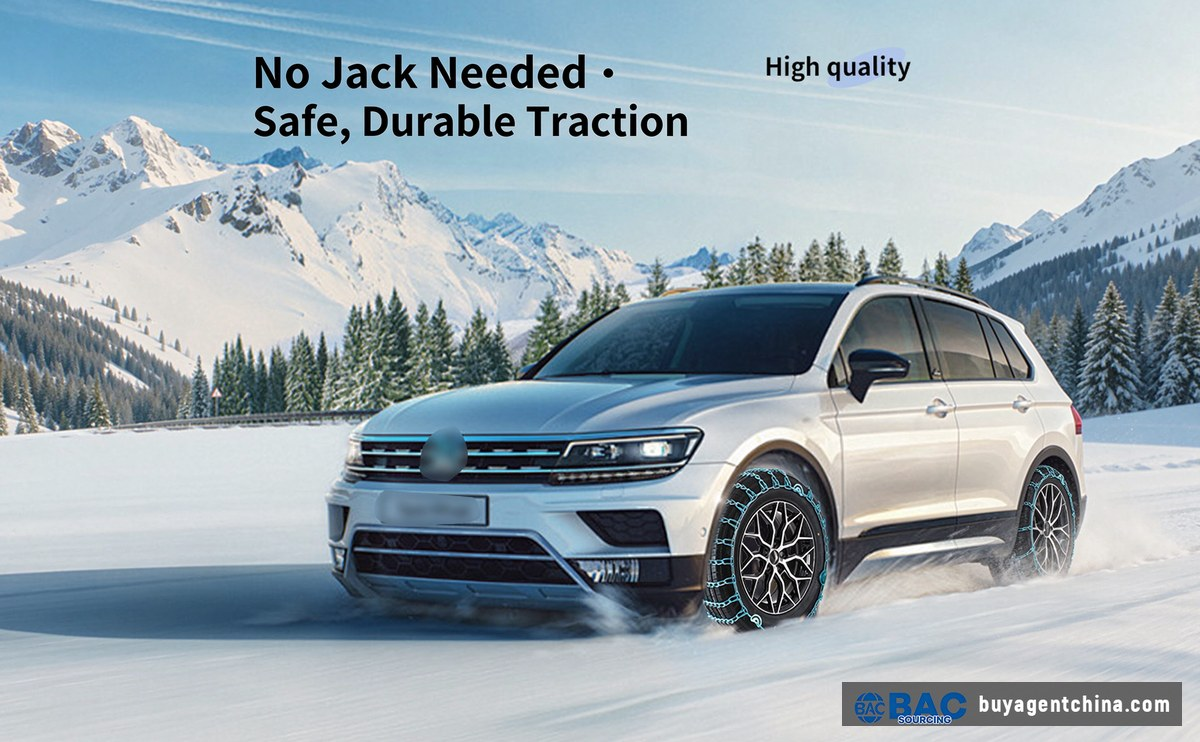
SUV fitted with a traction chain on a snowy mountain road

SUV fitted with a traction chain on a snowy mountain road

2. Four Anti-Skid Tire Snow Chain Types and Who Should Skip Each

A snow chain is not one product. It is four families. Reverse exclusion beats scoring every option on one grid. Look at the road, the vehicle and how often the gear will be used. Cross out what clearly does not fit. Only then move to price and suppliers.

2.1 Steel Link Chains for Deep Snow and Heavy Vehicles

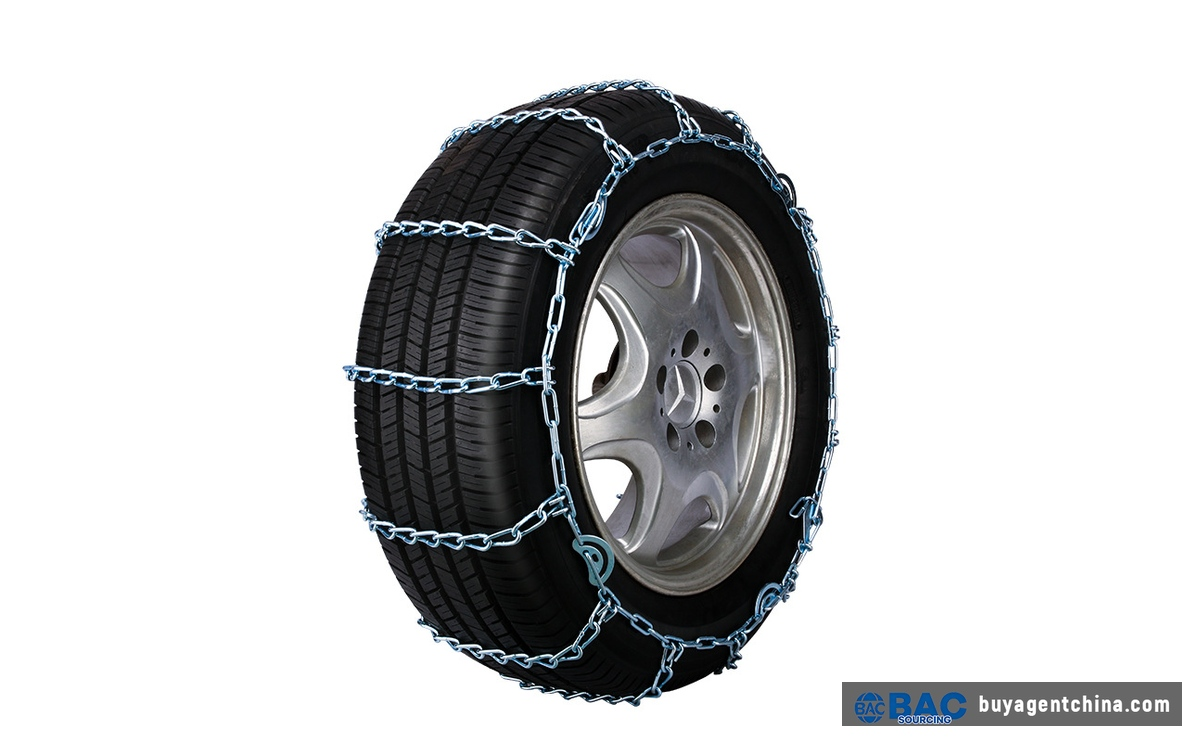
Steel link chains use manganese or carbon steel links woven into a diamond or D-square mesh over the tread. In deep snow, steep gradients, off-road ground and heavy SUVs, pickups or light trucks, they offer the most stable grip. They are also the most durable of the four.

The trade-offs are clear. On cleared dry pavement the chain is noisy and vibrates. It carries real weight and takes patience to fit. A poorly routed chain can scuff alloy rims. If your channel sells city-commute passenger cars, your customers meet light snow only occasionally, and ride quietness matters, cross steel link chains off your shortlist first. That is not a quality verdict. It is a working-condition mismatch.

Fitment starts on the tire sidewall. Width, rim diameter and aspect ratio decide which chain size applies. A set bought for the wrong width sits loose or binds on the tread. Ask the supplier for a fitment range, not a single tire number. Keep that range on the retail box. It is the most common question a winter customer asks before checkout.

Once the chain is on, re-check the tension after the first short drive. Links settle under weight, and a loose chain thrashes the tire. A tensioner that stays loose after ten minutes is a sizing problem, not a driver error.

Galvanized steel link chain in a diamond mesh fitted to a passenger tire

Galvanized steel link chain in a diamond mesh fitted to a passenger tire

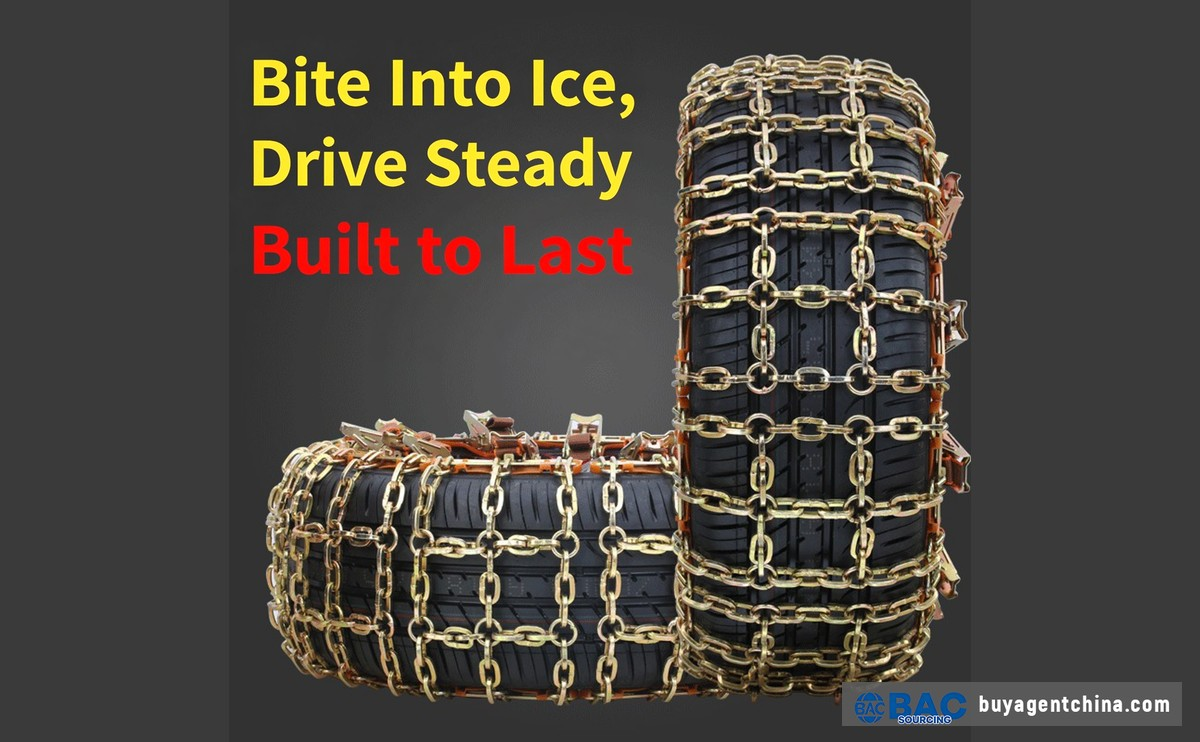
Heavy-duty gold-plated link chain set on two passenger tires

Heavy-duty gold-plated link chain set on two passenger tires

2.2 Plate-Studded Chains for Hard Ice

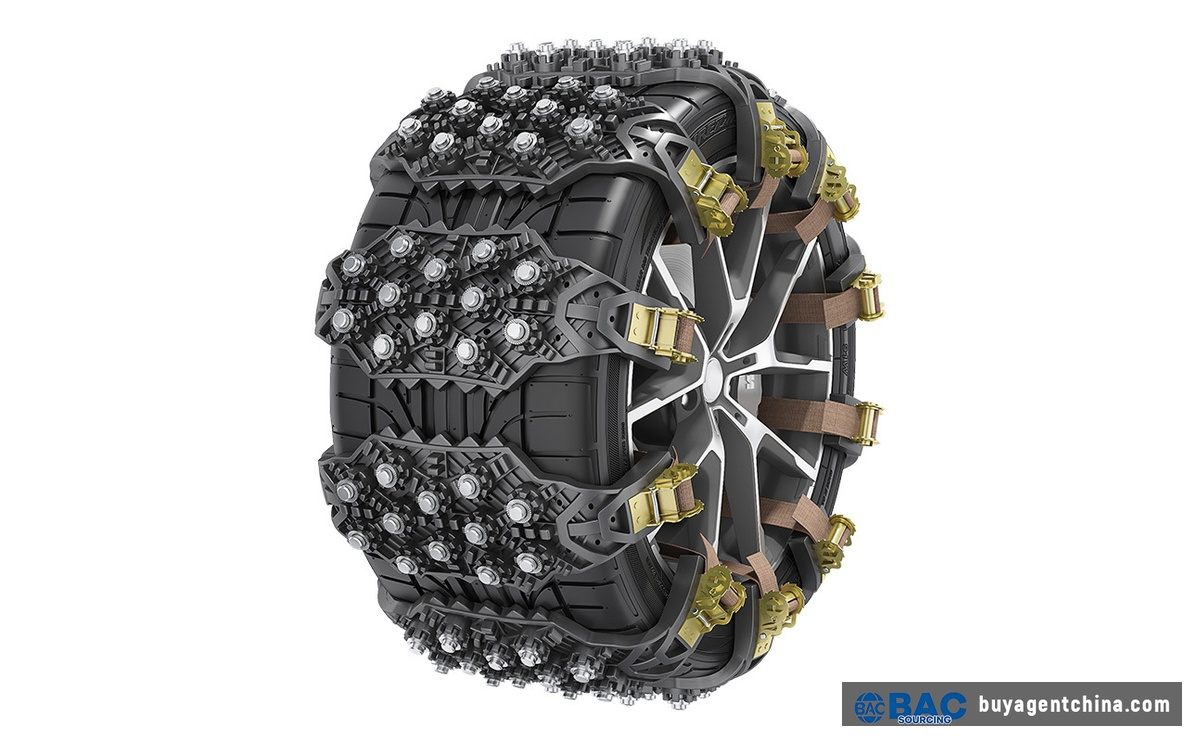
Plate-studded chains mount bolts or studs onto steel plates that follow the tread. Their bite on packed snow and hard ice beats a plain link chain. The type appears on heavy-duty forklifts, construction machinery and high-altitude mountain roads.

The unit is rigid, heavier and priced higher. Ordinary passenger-car retail rarely needs it. If your channel is a standard passenger-car accessories shop selling light vehicles, plate-studded chains belong on the exclusion list. Reserve them for industrial and heavy-duty buyers who drive hard-ice routes.

Black plate-style traction chain with silver studs and strap fasteners

Black plate-style traction chain with silver studs and strap fasteners

Black plate-style traction chain with silver studs and strap fasteners

2.3 Non-Metal Straps for Quiet Passenger-Car Use

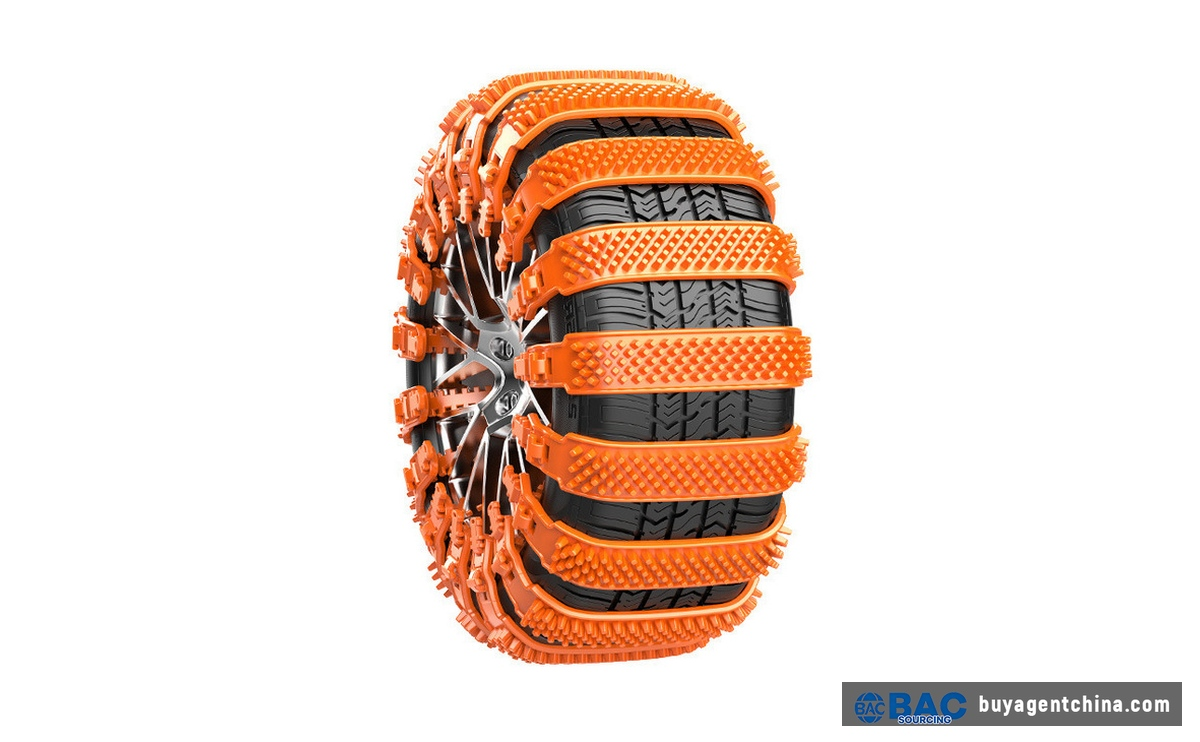
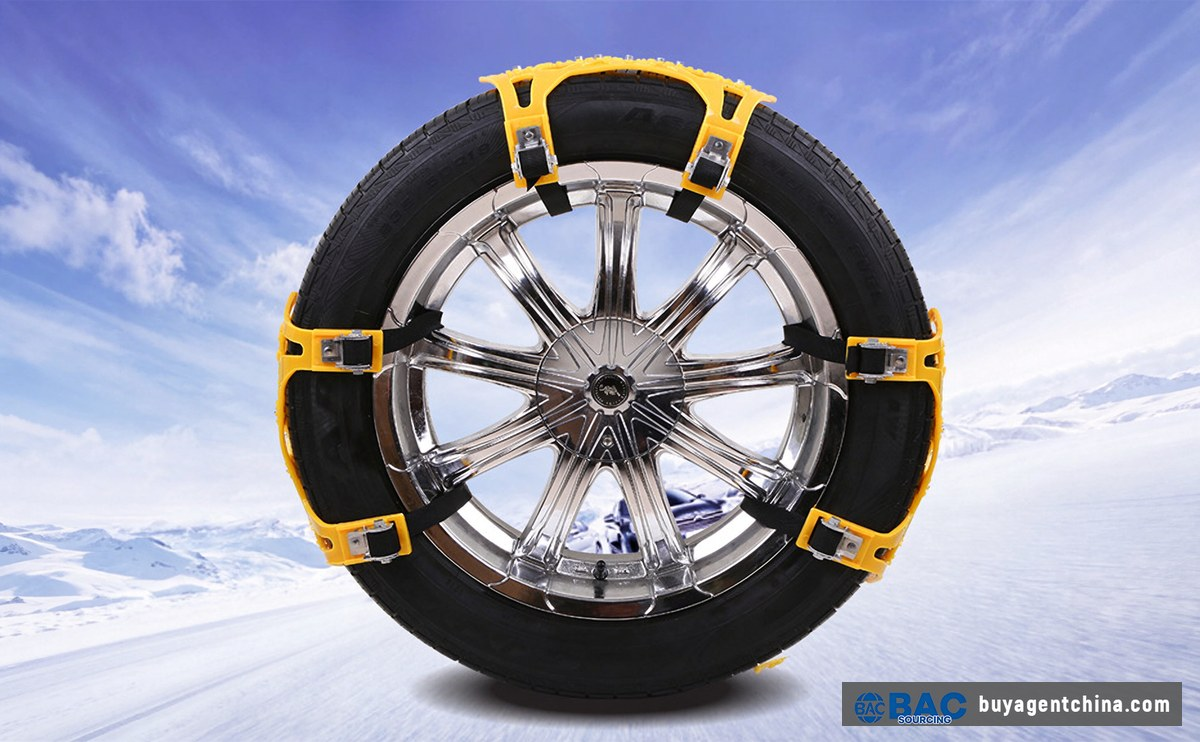
Non-metal strap chains replace steel links with segmented urethane, rubber, nylon or TPU bands, held by straps and buckles. The selling points are low noise, little vibration, light weight and fast install. On dry pavement they do not turn brittle and crack the way an exposed steel link can. They suit light passenger cars and family users who meet occasional snow.

Durability is moderate. Long hard-ice climbs and frequent reuse are not this strap’s strong suit. Check the band material before you quote it. Urethane and TPU hold up better than thin nylon in repeated use, and the buckle rather than the band is often the first failure point. Ask the supplier which part they warrant. The exclusion rule is straightforward. If the customer’s vehicle is a heavy truck, a year-round mountain or ice route, or you sell the chain as high-frequency winter gear, do not make a strap chain your main line. Conversely, city passenger cars, light to moderate snow, and buyers who value easy fit and ride comfort fit this tier well.

Orange non-metal segmented strap chain wrapped around a passenger tire

Orange non-metal segmented strap chain wrapped around a passenger tire

Yellow non-metal strap chain with metal buckles on a chrome rim

Yellow non-metal strap chain with metal buckles on a chrome rim

2.4 Zip-Tie Emergency Straps for One-Trip Use

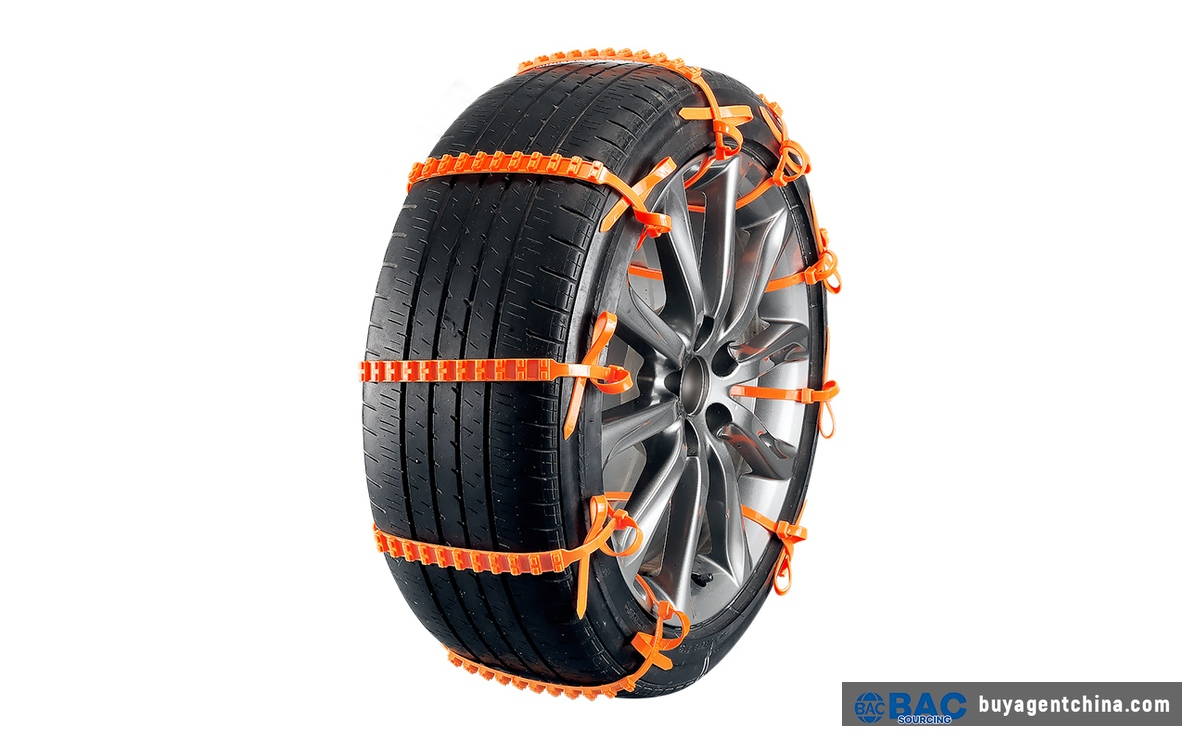
Zip-tie emergency chains bind disposable nylon ties or toothed bands across the tread. They are the lowest price, pack down to almost nothing, and work as a spare carried in the car for a stuck moment. Their position is temporary escape and a single trip, not a repeat-use winter kit.

If your line is a year-round repeat-purchase winter accessories range, where customers expect several uses a season, zip-tie units stay out of the main assortment. They fit only as a low-cost emergency add-on or a supporting item in a promotional bundle. Selling a disposable tie as a regular durable item brings returns and bad reviews in the first winter itself.

Orange zip-tie style disposable emergency traction straps

Orange zip-tie style disposable emergency traction straps

3. Anti-Skid Tire Snow Chain Price Ladder by Type

The reference prices below were collected in November 2026 from 1688, Alibaba and Made-in-China, on an ex-factory or FOB basis. They exclude destination freight and duty. Final quotes depend on specification, tire fitment range and order volume.

TypeTypical FOB referenceCommon MOQChannel fitPricing note
Light metal link chainUSD 1.99–2.99/pc100 pcsCross-border retail, passenger carsLight Shandong Qingdao supply, finer link gauge
Universal emergency traction setUSD 13.90–27.90/set300–10,000+ sets, tieredSUV/pickup/passenger main lineUnit price drops with volume; USD 13.90 above 10,000 sets
SUV steel chainUSD 20/set50 setsCold-region SUV/off-roadZhejiang Hangzhou supply, manganese mesh with tighteners
Engineering heavy-duty chainUSD 10/pc up10 pcsForklift/construction/heavy loadShandong Liaocheng link works, spec by tire
Plastic/nylon strap chainUSD 0.50–9.50/pc100–500 pcsCity passenger cars, light snowCompound and band count set the tier
Zip-tie emergency unit1688 domestic ¥31/pc upMixed few-piece lotsEmergency add-on/promo bundleDisposable positioning, no durability promise

When you ask for a quote, settle three things up front. Is export packaging included? Is local delivery to the forwarder’s warehouse included? Which tire size range does the chain fit? A 1688 domestic price is a cost health check, not a landed price. Domestic freight, export paperwork and the trading markup all spread into your landed cost.

Plating separates the entries in this tier. Galvanized links show a dull zinc finish; a bright, flaky coat on a cheap quote usually means thinner zinc. Ask for the plating thickness or a salt-spray hour figure before you compare two prices. Rust after one coastal winter erases any savings on the unit price.

4. China Anti-Skid Tire Snow Chain Production Clusters

Chain making is a traditional hardware trade, and the clusters tie to the process itself. The table below groups by province-level region. No third-party city name carries a sourcing promise. The actual factory still needs verification through workshop video and business license.

ClusterPositioningStrengthsBest-fit orders
Jinhua, Pujiang, ZhejiangEstablished chain-making clusterManganese/carbon steel links, welded chain, full export range; a representative factory founded in 1988 in a 55,000 m² plantMetal chain main line, repeat orders
Qingdao, Liaocheng, Linyi, ShandongLink and industrial heavy-duty supplyLight auto chain, engineering/forklift heavy chain, ISO9001-certified plantsVolume light units and heavy industrial units
Hangzhou, Jinhua auto-parts beltExport auto-parts supplySUV sets, tighteners and buckles, export paperwork supportPackaged retail sets
Central-south Zhejiang / eastern Guangdong plastic-belt clustersNon-metal straps and injection partsTPU/nylon toothed bands, strap buckles, light emergency unitsStrap chains and zip-tie emergency units
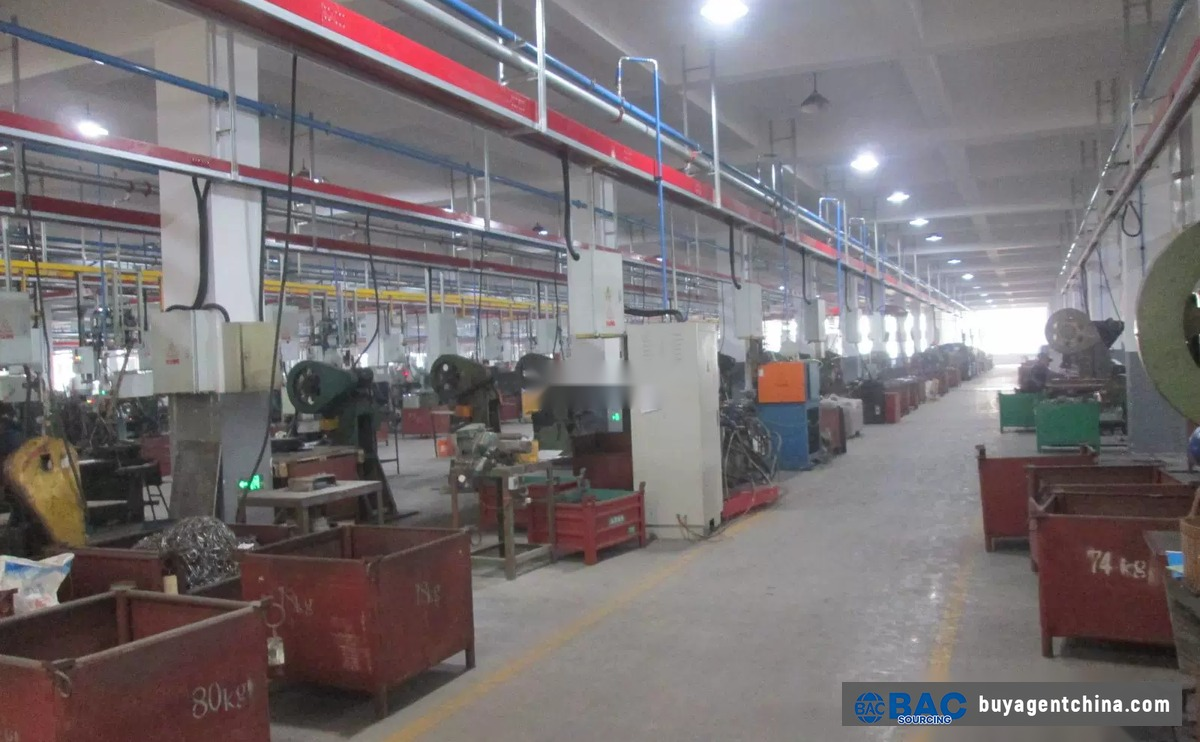
Chain-making workshop with link processing and zoned material storage

Chain-making workshop with link processing and zoned material storage

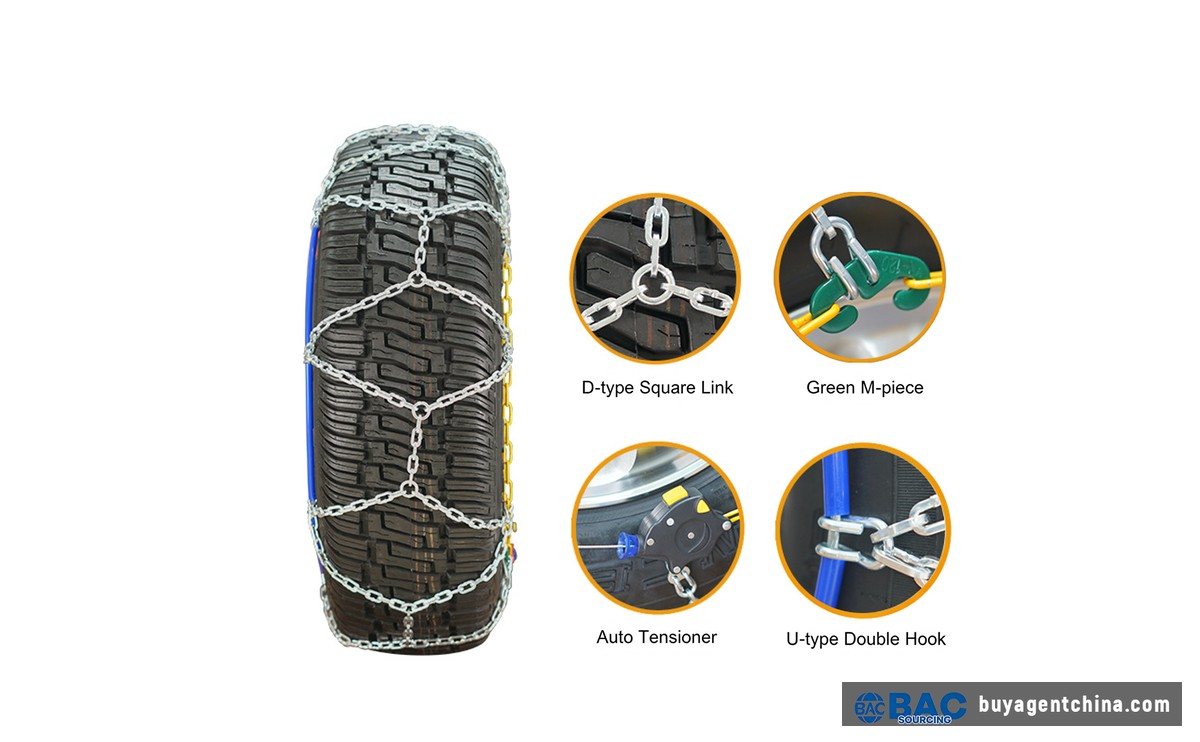
Link gauge, M-piece, auto tensioner and U-hook close-up details

Link gauge, M-piece, auto tensioner and U-hook close-up details

Inside the workshop, I read the floor before the business card. Offcuts on the ground, grinding marks at the welding station, and whether the QC bench records data tell you more about management than a nameplate. A sample is a sample, and mass production is mass production — I have said it for fifteen years. Between batches, link gauge, plating thickness and weld consistency usually show up only at the mid-production check.

When you review a chain sample, check three physical points first. Measure the link wire diameter with calipers against the quoted gauge. Run a finger along welds for sharp burrs that cut the strap or a glove. Ask for a salt-spray hour figure on the zinc plating, not a plain “rust-proof” label. A chain that sheds red rust after one coastal winter comes back as a return, not a repeat order.

Video and paperwork narrow the field; the physical check decides the batch. Ask the factory for today’s workshop clip, not a polished catalog shot. Match the export license, the tax registration and the packing list to the same legal entity. If the quote and the documents come from different names, slow the order down before you pay a deposit.

5. Stock Anti-Skid Chains vs OEM/ODM Customized Sets

When you enter this category, stock wholesale and OEM/ODM customization are two different roads.

ComparisonOff-the-shelf stockOEM/ODM custom
MOQTens to a few hundred sets; mixed lots commonUsually 500–1,000 sets per design, incl. mould and packaging changes
Lead time48 hours to 2–3 weeksSampling 1–2 weeks; bulk 30–60 days; avoid the CNY window
DifferentiationUniversal tire sizes, sold by several sellersOwn-brand hangtag, colours, packaging, fitment chart
Stage it suitsTesting designs and validating the channel price pointBrand building after proven sales
Main riskSame-product competition, thin marginInventory pressure, sunk tooling fee, sample-to-bulk drift

The practical rule is direct. Run stock mixed lots through three to five fitments first. See which tire size and which type moves in your channel. Then take the proven seller into customization. Putting the spec in the contract beats sending a smile across the dinner table. Link material, plating, fitment width and tightener configuration go down on paper item by item. They do not stay in a chat thread.

6. Sourcing Anti-Skid Chains: Direct Factory vs Order Fulfillment Agent

You can contact factories directly on 1688 or Alibaba. Or hire a China sourcing company to run sourcing, inspection and paperwork for you. The two routes do not replace each other. The choice depends on whether you can pin specs and risk down from 8,000 miles away.

ComparisonDirect factory contactOrder fulfillment agent
CommunicationYou translate technical specs and verify tire fitment yourselfLocal agent handles the two-way spec check
QuotingOne factory quote, hard to compare side by sideMultiple quotes, factory videos and original-price comparison
InspectionRely on factory self-check or a booked third partyMid-production sample, finished-goods check, loading supervision
PaperworkYou verify HS, packaging and packing listAgent checks classification and document consistency
Best forEstablished importers who know chain specs and can auditFirst-time importers, mixed categories, remote quality control

The hard part of remote sourcing is rarely the price. Translation twists technical specs. A tire width, a link gauge or a plating finish described loosely in chat can arrive on the container as a different part. Cross-check the spec sheet in both languages. Confirm the HS classification before booking space. These two paperwork steps quietly decide whether a winter shipment clears customs on time.

Small mixed categories add another layer. If your cart holds chains, straps and accessories from different makers, one spec thread can cross several factories. An agent consolidates those checks into one weekly update; doing it yourself means running each thread in a separate inbox.

On fees, a transparent agent earns from standardized service charges and does not mark up factory prices. Per the current BAC services page standard fetched on 13 November 2026: the Entry sourcing package is USD 29, three quotes in 3–5 days; the DIVE deep-sourcing plan is USD 140, four to six factories with workshop videos and original quotes; factory visit is USD 170 per day, travel and accommodation reimbursed at cost. For buyers who already have a supplier, the Basic production-management service runs 3–5% (USD 220 base, two SKUs). The full-process Growth plan runs 5–8% (USD 280 base, two SKUs). A standalone inspection is USD 200 per person per day. Custom projects are priced by SKU count, sampling rounds and audit frequency. No flat headline fee applies.

7. Two Order Plans for Anti-Skid Tire Snow Chains

7.1 Small Test Order for Anti-Skid Snow Chains

A first-time buyer should start with stock mixed lots. Pick two to three moving tire fitments. Pair a light metal chain with a strap chain. Use zip-tie emergency units as a bundled add-on. Small lots go by consolidated LCL, leaving buffer for customs cut-off and container loading. Put down the usual deposit, but never settle the balance in full before the goods pass inspection. The goal of a test order is not squeezing cost. It is proving which type and which price band your channel actually eats.

Match the first batch to one climate zone. A stock test order for a coastal city and a mountain interior answer different fitment questions. Keep the two apart in your records so the returns tell you which tire sizes actually move.

7.2 Large Bulk Order for Seasonal Anti-Skid Chain Stock

Once sales are proven, plan the full container. Lock the golden sample as the sole acceptance standard. Write link material, plating, fitment and packaging into the contract. Run three-stage inspection: 30–50% mid-production sampling, 100% finished check, loading supervision. Winter gear has a clear seasonal window. Reserve your production slot and agree the unit price 30–45 days early. Steer clear of the capacity swings around the Chinese New Year break.

Confirm the freight window before booking. Winter stock moves ahead of the first snow; a container that arrives in late January has missed the shelf. Plan the production and shipping date backward from your retail week, not forward from the deposit.

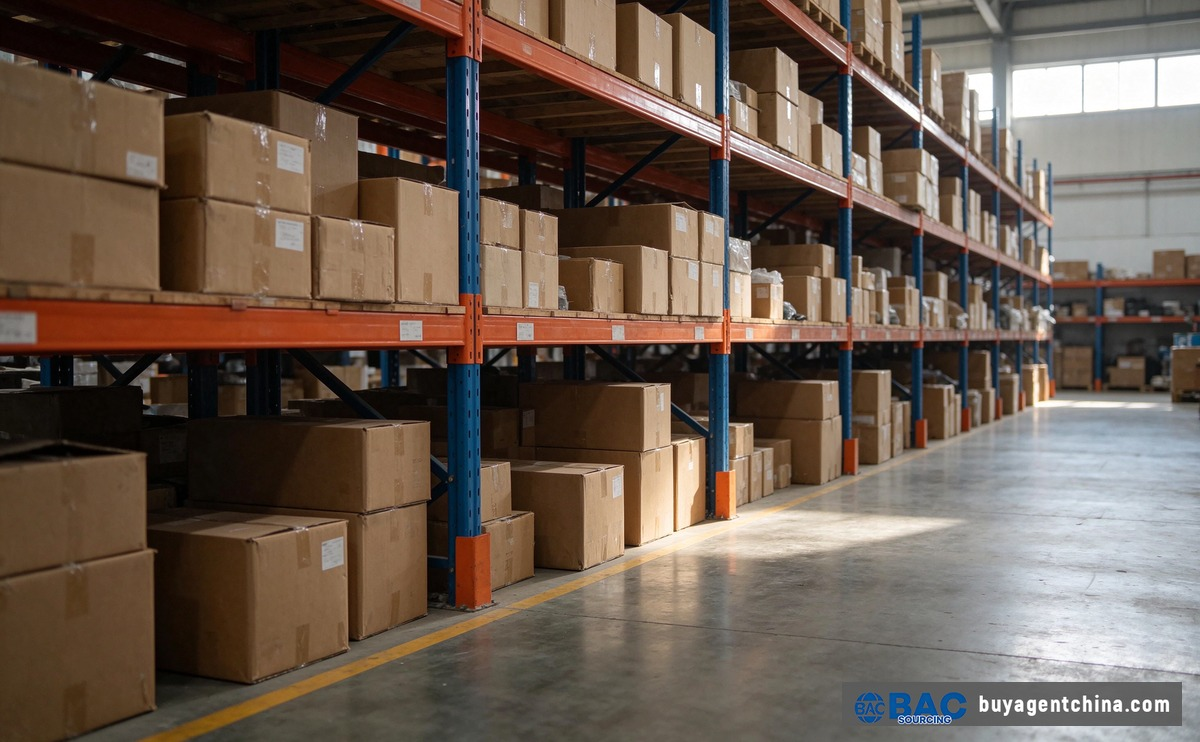
Auto-parts warehouse racks and packing area

Auto-parts warehouse racks and packing area

Cheap is not a sin; chasing cheap is. When a chain quote sits far below the rest, check link diameter, plating and weld before you negotiate further. Know the wire you are paying for. Bargain-hunting is not sourcing.

8. Frequently Asked Questions (FAQ)

Q1. What is the usual MOQ for anti-skid tire snow chains sourced from China?

A1. Stock light metal and strap chains commonly start at 100–500 pcs; SUV steel sets at 50 sets; engineering heavy-duty chains can be quoted from 10 pcs; OEM custom usually starts at 500–1,000 sets per design. Mixed-lot consolidation is the safer route at small order size.

Q2. Which snow chain type sells best in the European and North American markets?

A2. On 2025 structure data, metal chains still hold about 67.4% share and passenger-car applications 47.7%. European and North American buyers pay closer attention to fitment charts and packaging instructions; strap chains are gaining ground in city-commute passenger channels, while metal chains remain the main line for deep-snow mountain routes.

Q3. Do metal snow chains damage rims or road surfaces?

A3. With correct fitment and properly routed tighteners, rim and road damage stays controllable. Extended driving on cleared hard pavement increases noise, tire and rim wear; most units are speed-limited to 30–50 km/h and should be removed once the road is cleared. Alloy-rim customers should pick a version with rim protection padding.

Q4. Under which HS code do tire snow chains ship?

A4. Steel snow chains commonly ship from China under 7315.20.0000; the United States maps them to HTS 7315.20 vehicle skid chains, with some subheadings at a Free default rate, and any China-specific tariff overlay must be confirmed by your customs broker. Classification follows the finished product, not the photo; invoice, packing list and customs entry must carry the same code.

Q5. Can I use my own brand hangtag and packaging?

A5. Yes, that falls under OEM/ODM; it usually starts at 500–1,000 sets per design, covering hangtag, colour box, manual and fitment chart. Approve the golden sample before bulk production; customization surcharges are assessed by project difficulty rather than a fixed flat fee.

Written by BuyAgentChina, a China sourcing agent with transparent fees. We do not own factories, do not stock goods and do not mark up prices — we earn only from standardized service fees. To source ceramic oil burners from China, book a free 15-minute consultation (WhatsApp: +86 18889605489 / hello@buyagentchina.com).

Leave a Reply

Your email address will not be published. Required fields are marked *