Custom Sourcing, Procurement Guides, Sourcing Tips

Which Bathtub Anti-Slip Mat to Import: PVC, TPR or Silicone

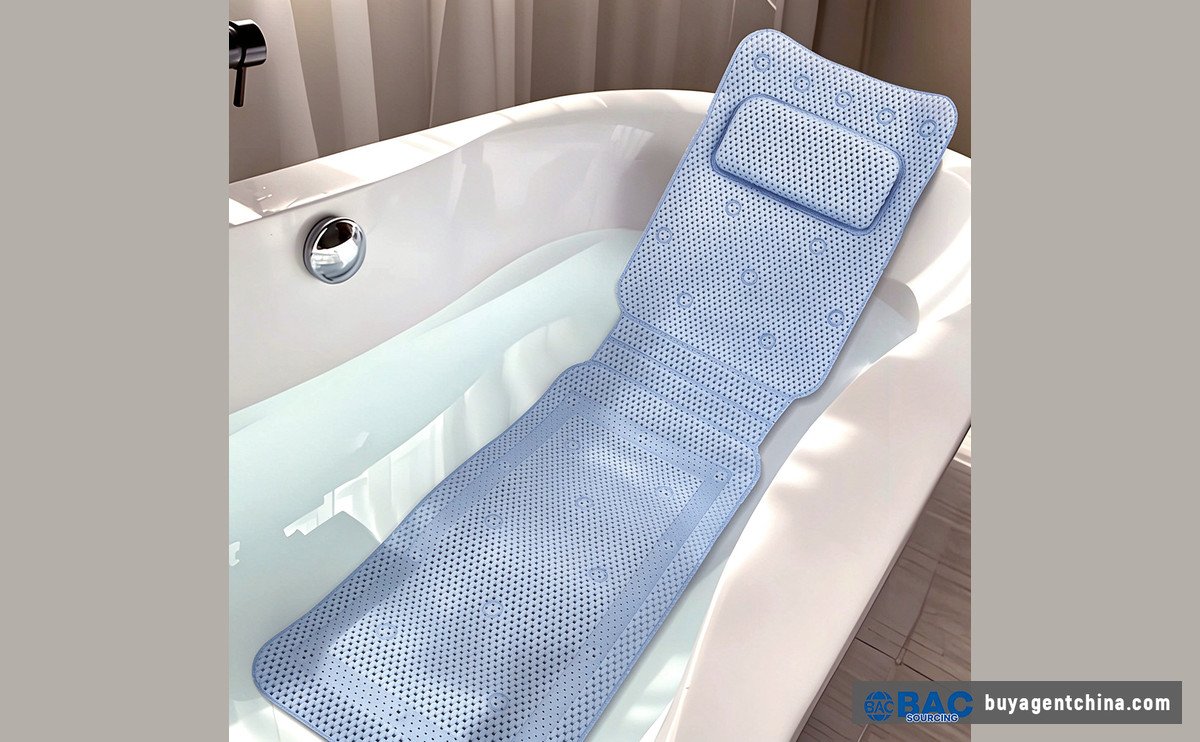
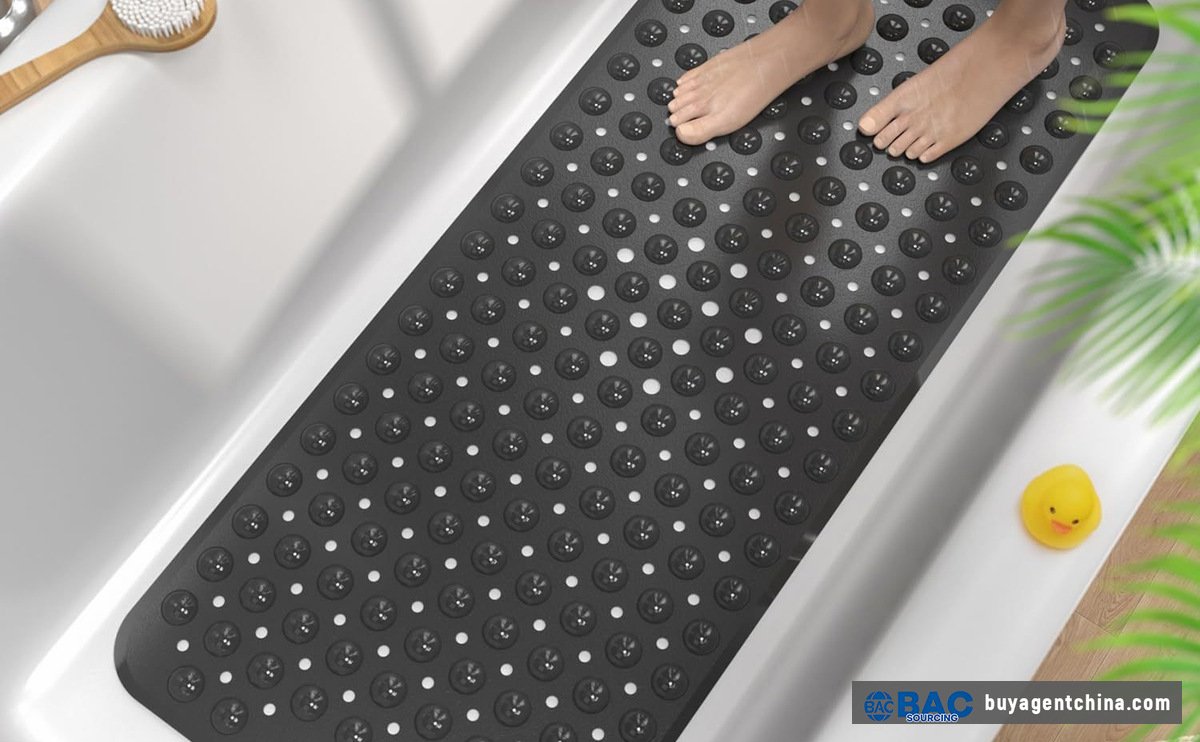
Soft TPE bathtub mat with drain holes — the mainstream no-smell tier
Every bathtub anti-slip mat in a listing photo looks like the same rectangle — until you stand on it. The material underneath decides the grip, the smell, the mould and the return rate. Most buyers make that decision in the thirty seconds before they click “order.”
For an in-tub mat, TPE/TPR is the safest first import: solid grip, no PVC smell, stock about USD 0.9–6 FOB. PVC wins only when price is everything.

1. The 60-Second Decision Rule

Before any quote lands in your inbox, settle the material question with three if-then rules:
  • Selling into US/EU retail, e-commerce or supermarket channels where buyers care about “no smell, safe, ready to unbox”? Start with TPE/TPR. It carries none of the chemical smell of fresh PVC, does not leach phthalate-type plasticisers in hot water, and grips through the texture of the material itself. It is the mainstream safety choice on Western shelves in 2026.
  • Chasing pure unit price — promotions, stalls, wholesale bazaars, channels with high odour tolerance? Take PVC bubble mats. This is the cheapest tier in the category, with 1688 volume models around CNY 8.3–14.9 (about USD 1.2–2.2, October 2026).
  • Serving mothers-and-babies, elderly care or upscale hotels, with budget for a real “grip guarantee”? Choose silicone or suction rubber. Silicone handles hot water and yellowing best; suction rubber holds hardest on the flat bottom of a tub. You pay a step up in unit price and MOQ for it.
Three buyer profiles cover most of the traffic: Amazon/AliExpress listers start with TPE; volume wholesalers start with PVC; vertical channels (baby, senior, hospitality) start with silicone or suction rubber. One honest boundary: fabric and memory-foam mats are a different category for bathroom floors, not the tub. Do not blend them into the same order.

Still undecided? Order a mixed carton of ten to fifteen mats across all three materials, run them through hot-water soaks and drying cycles for a week, and let your own channel answer. Ten mats cost less than one bad container. The test shows you things no spec sheet will: which one curls after a week, which one keeps its grip, and which one makes your supplier’s “eco” claim survive contact with reality.

Rules get you to the shortlist. The price and cluster tables below decide the rest.

2. Four Materials, One Test: How They Actually Compare

The classic mistake in this category is judging a material by the feel of a sample instead of its life on the shelf. A bathtub mat lives in hot water every day, so score every option on the same framework: wet grip, smell, hot-water safety, durability, mould, price, MOQ and best-fit market. Same test, four contestants — only then are they comparable.
Scoring dimensionPVC bubbleTPE / TPRSiliconeSuction rubber
Wet gripMedium: raised dots / bubble textureHigh: material itself grips + textured backingHigh: natural adhesionVery high: suction cups + rubber surface
Fixation in tub (buoyancy)Low–mid: light mats need suction cups or weightMid: density ≈ water, so pick suction or 6mm+ thickHigh: suction-style grips the tub bottomVery high: suction cups pin to tub floor
SmellStrong new-material chemical odour, worse on cheap compoundsEssentially odourlessOdourless (occasionally slight)Mild rubber odour
Hot-water safetyPhthalate/plasticiser concern; avoid long hot soaks and infant usePhthalate-free; food-grade grades availableFood-grade, heat-resistant, safestNatural-rubber compounds need additive checks
DurabilityHardens, yellows, edges curlMedium anti-yellowing, solid overallBest: heat- and yellowing-resistantDurable, but cups and surface age over time
Mould riskMedium (fine if drainage structure is good)Low: fast-drying hole designLow: smooth, quick-dryMedium: cup recesses trap water
Ex-works priceLowest tierLow–midMid–highHigh
Typical MOQLow (from a few dozen)Low–midMidMid
Best-fit marketVolume / promotion / wholesaleMainstream safety line (US/EU)Baby / senior / premiumStrong fixed grip inside a tub
You do not need a lab to pre-screen. Press each sample wet against a wet tile and drag it, fold an edge back hard and watch whether it returns or turns white, and count the drain holes per square. Ten minutes per sample, and the four materials stop being marketing claims and start being measurable numbers.

2.1 PVC Bubble: The Price Anchor, and the Source of the Smell Debate

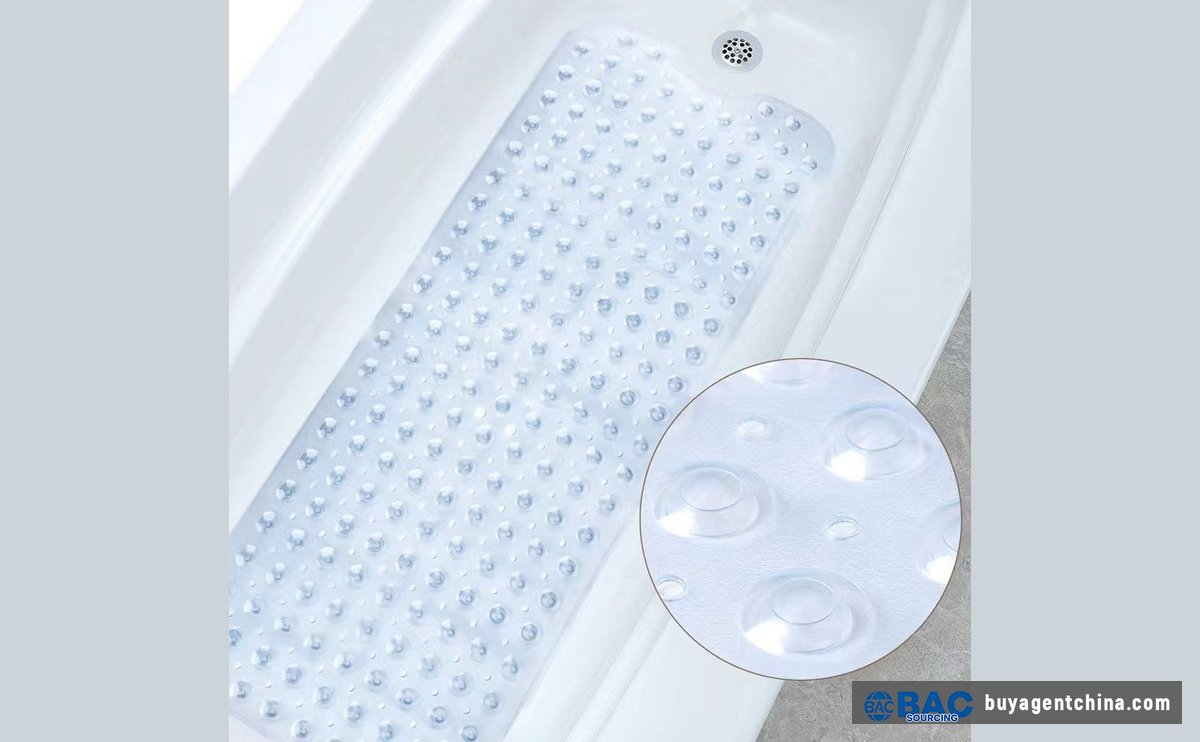
PVC sets the price anchor for the whole category — it is the best-selling material on 1688, with Zhejiang volume models at CNY 8.27 and Yiwu models at CNY 14.90 (October 2026), both past 20,000 units sold. The bubble texture drains fast and the cost floor is as low as this category goes.

The cost shows up where you are not looking. Cheap compounds smell strongly out of the box, phthalate-type plasticisers are a standing debate for long hot-water exposure, and the EU (REACH) and California (Prop 65) have put that risk on paper. PVC is not a ban — it is a channel decision. Only send it into price-sensitive, odour-tolerant channels, and demand a plasticiser test report from the supplier.

Transparent PVC bubble mat — the entry price anchor

Transparent PVC bubble mat — the entry price anchor

2.2 TPE / TPR: The Balanced Pick — No Smell, Real Grip, Fair Price

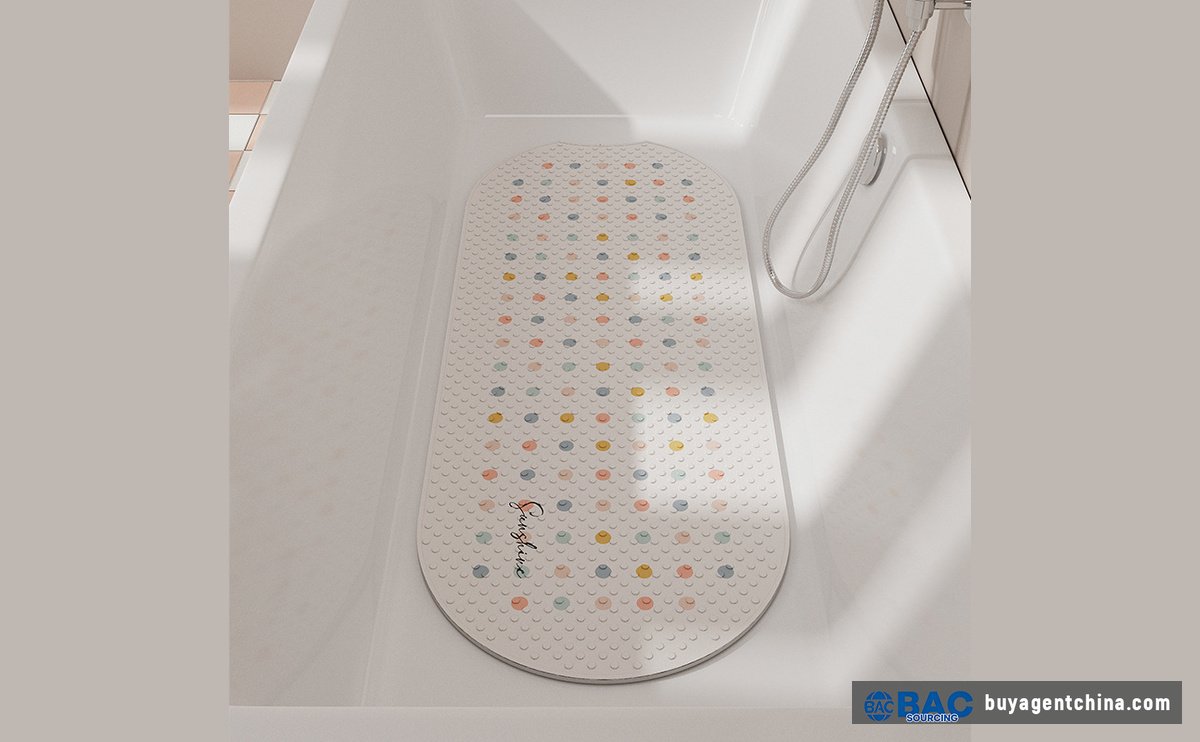
TPE and TPR are the same family of thermoplastic elastomers (TPR is the styrenic branch; B2B quote sheets use the two names loosely). This is the mainstream upgrade in 2026: no PVC smell, no phthalate leach, grip from the material’s own texture, and a fast-drying hole structure that fights mould. 1688 pricing spans CNY 8.27 volume mats to CNY 48.60 thick massage mats (about USD 1.2–7.3). Cross-border dedicated SKUs are plentiful.

The trap I see most often is recycled compound in “TPE”: too much regrind, and the mat loses rebound while the edges go white when stretched. Ask for the grade and a material certificate, and put “virgin TPE, grade X” in the contract in writing. That line beats a dozen verbal promises.

Colourful dot TPE mat — stock colourways vary by factory

Colourful dot TPE mat — stock colourways vary by factory

2.3 Silicone: Heat-Stable and Yellowing-Resistant, the Trust Pick for Baby and Senior Lines

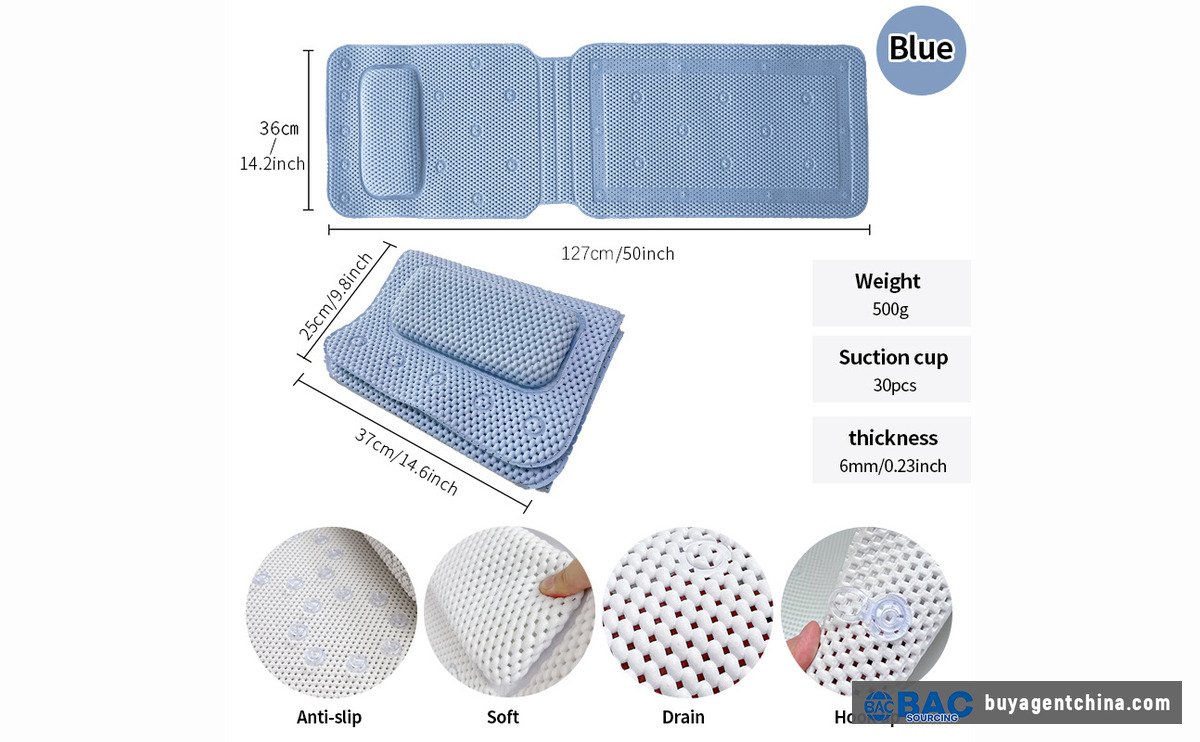
Silicone is the one material that gets better the hotter the water gets. Food-grade silicone resists heat and yellowing, carries no smell, and suction-style silicone mats grip the tub bottom almost as hard as suction rubber. The 1688 silicone cluster sits in Guangdong’s Dongguan area (CNY 6.80–28.50, about USD 1.0–4.3, October 2026). The unit price and MOQ run a step higher, so it is a poor fit for volume discount lines — and the lowest-return choice for baby, senior and hospitality channels.

Folding silicone bathtub mat with suction cups — the baby-and-senior tier

Folding silicone bathtub mat with suction cups — the baby-and-senior tier

2.4 Suction Rubber: The Strongest Fix Inside the Tub

Suction-cup design is the “made for the tub” answer: dense cups pin the mat to the tub floor, which is the highest reliability option for fall prevention. Alibaba FOB quotes for rubber suction tub mats sit around USD 3.34–3.88 (MOQ 500, October 2026). Two things to inspect. Suction cups wear and lose hold with use, and the cup recesses trap water. Check that the cup rows are uniform and the rubber face is flat before you sign off.

Suction rubber mat in use — drain holes and anti-slip texture

Suction rubber mat in use — drain holes and anti-slip texture

3. What Each Mat Actually Costs at the Factory Gate

Every price below carries a date and a source — do not negotiate this year’s order with last year’s quote. USD conversions use the 2026-10-22 rate of USD 1 ≈ CNY 6.6753.
Material / type1688 ex-works (CNY)≈ USDB2B FOB reference (MOQ)As of
PVC bubble, volumeCNY 8.27–14.90$1.24–2.23Large-size PVC $3.80–4.10 (MOQ ~200, Alibaba)Oct 2026
PVC coil / shower——$2.30 (MOQ 100, Made-in-China)Oct 2026
TPE / TPR, incl. thick massageCNY 8.27–48.60$1.24–7.28Retail reference $8.92–18.57 (DHgate, not wholesale)Oct 2026
Silicone, incl. suctionCNY 6.80–28.50$1.02–4.27Cross-border dedicated, Dongguan (1688)Oct 2026
Suction rubber——$3.34–3.88 (MOQ 500, Alibaba)Oct 2026
EVA foam bathroom matCNY 23.80$3.57—Oct 2026
Two ways to read this table. First, 1688 ex-works prices are the floor before domestic freight; B2B platform quotes include export service and margin, and the gap between the two is your negotiation space. Second, prices within one material can span an order of magnitude — the spread is usually not the material but virgin vs recycled compound, thickness, suction-cup density and size. Lock the spec sheet first; then the prices become comparable.
Then add the rest before you compare anything: domestic freight to the port, export charges, sea freight at current rates, import duty at the destination, and the inspection fee if you book one. A mat that is two cents cheaper at the factory but arrives with curled edges and an odour complaint is not cheaper — it is a marketing cost you forgot to price. The landed-cost exercise takes an hour and saves the margin that the unit price hides. Run the same math on a full container, not per piece. The two-cent factory gap becomes hundreds of dollars before the cartons are even packed. Quote the ladder, then the freight, then decide.

4. Where the Clusters Are: Who Gets Your Order

Anti-slip mat capacity concentrates in two provinces, with a third small cluster doing EVA foam.
ClusterMain materialsPositioningExport profileBest for
Zhejiang: Yiwu / Jinhua / DongyangPVC and TPE volume lines1688 stock powerhouse, flexible MOQMany cross-border SKUs, small-order friendly, large sales recordsTest orders, volume retail
Guangdong: Dongguan / ShenzhenSilicone, suction rubberCross-border dedicated, premium linesMature silicone product chain, fast mouldingBaby / senior / hospitality
Guangdong: ShantouEVA foam matsFoam interlocking matsBathroom-floor matsEVA-specific lines

Send the same spec sheet to all three clusters. The quote, the MOQ and the meaning of the word “eco” will all come back different — that spread is the cheapest market research you will buy all month. When you want live proof, ask for a video of the suction-cup mould close-up and the press in action; it tells you more than ten showroom photos.

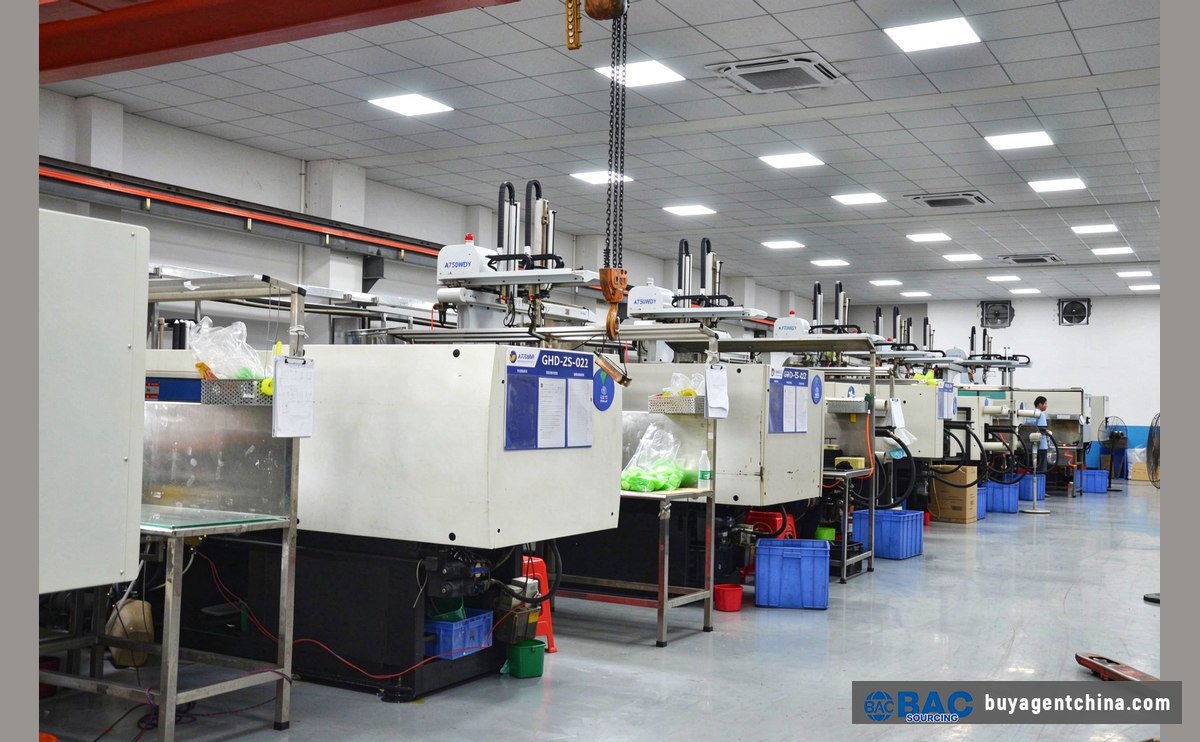
Injection moulding workshop in the Guangdong clusters

Injection moulding workshop in the Guangdong clusters

Cluster choice is really a MOQ and lead-time decision. Zhejiang volume lines answer a 500-piece request in days and price the ladder steeply. Guangdong silicone houses want bigger orders, but handle colour matching and custom moulds faster. If your first order sits under 2,000 pieces, let the Zhejiang cluster win the trial — and keep the Guangdong quotes in the folder for the scale-up.

5. The Details That Decide in Hot Water

Get the material right and four details still decide whether the order becomes repeat business or a first-batch return:
The first-article check decides more than the final inspection does. Ask the factory to run three production mats through a hot-water soak before the batch starts, then compare them against the golden sample: colour, thickness, drain-hole pattern, suction-cup rows. Photograph the comparison and keep the sheet with the sample. When the goods land, the incoming check is a straight repeat of the same five measurements — and both sides sign against the same paper. That habit removes most of the “we never agreed on that” conversations, and it costs less than one rework round.
  • Suction cups vs anti-slip backing. Inside a tub on a flat surface, use suction; on a shower floor, use the textured backing. Cups wear out — do not cheap out on them when the use case is “must not slip.”
  • Drain holes. Hole count and size decide water pooling and mould. Fast-dry structure is the invisible standard of this category.
  • Thickness and curling. Thick mats (around 1 cm) feel better and lie flatter; thin ones are cheaper but the edges curl, and curled edges are a return-reason leader.
  • Smell and safety. Smell it out of the box, then again after a thirty-minute hot-water soak. Ask for third-party plasticiser/phthalate test reports (EN 71 and REACH in the EU, Prop 65 in California), and check infant-contact standards for baby lines.

When a supplier says “absolutely no problem,” I am usually already lining up a backup — this checklist is the trigger.

Before you commit, run the supplier through three questions that need paper answers. What grade and compound does the mat use? What did the last two inspection reports show? Will a third-party inspection at 30–50% of production be written into the contract? Two refusals out of three and you have your answer without spending a yuan on samples.

6. Stock, Custom, Small, Bulk: Four Ways to Place the Order

For a low-value consumable like this, the rule is test first, scale after the sales numbers say so.

ComparisonStockOEM / ODM custom
Best forTesting models, testing markets, fast rampBranding, differentiation, channel-exclusive
PriceLowestMid–high (sample + mould amortisation)
MOQLow: 50–500 commonMid–high: 500–2,000+
Lead time7–15 days7–15 days sampling + 20–35 days production
Biggest riskCommoditisation, price warsCustom colour/logo drifting from the sample
ComparisonTest order (500–2,000 pcs)Container order (20,000+ pcs)
RouteStock + light custom (colour/logo)Golden sample signed, spec locked in contract
ConsolidationLCL or express; keep a cut-off bufferFCL booking; lock capacity 30–45 days before peak
InspectionIncoming spot check + review monitoring30–50% mid-production + 100% final + loading supervision
Payment30% deposit, balance after inspectionDeposit + staged, final tied to inspection report

A small order is not a scaled-down big one; it is a different business — the consolidation rhythm, the inspection schedule and the price ladder all change. And a sample is a sample, while mass production is mass production. I have said it for fifteen years: a cheap consumable is exactly where the gap shows up, because defects rarely all appear on the sample.

For a test order, the routine that has worked for me across categories looks like this. Fix the spec sheet first: size, thickness, drain-hole pattern, suction-cup density, compound. Ask three clusters for price ladders at 500 / 2,000 / 5,000 pieces, order one style per supplier from the middle of the ladder, and put a 30–50% inspection clause into every PO. When the goods land, check the incoming batch against the golden sample and let the first sell-through decide the next order size.

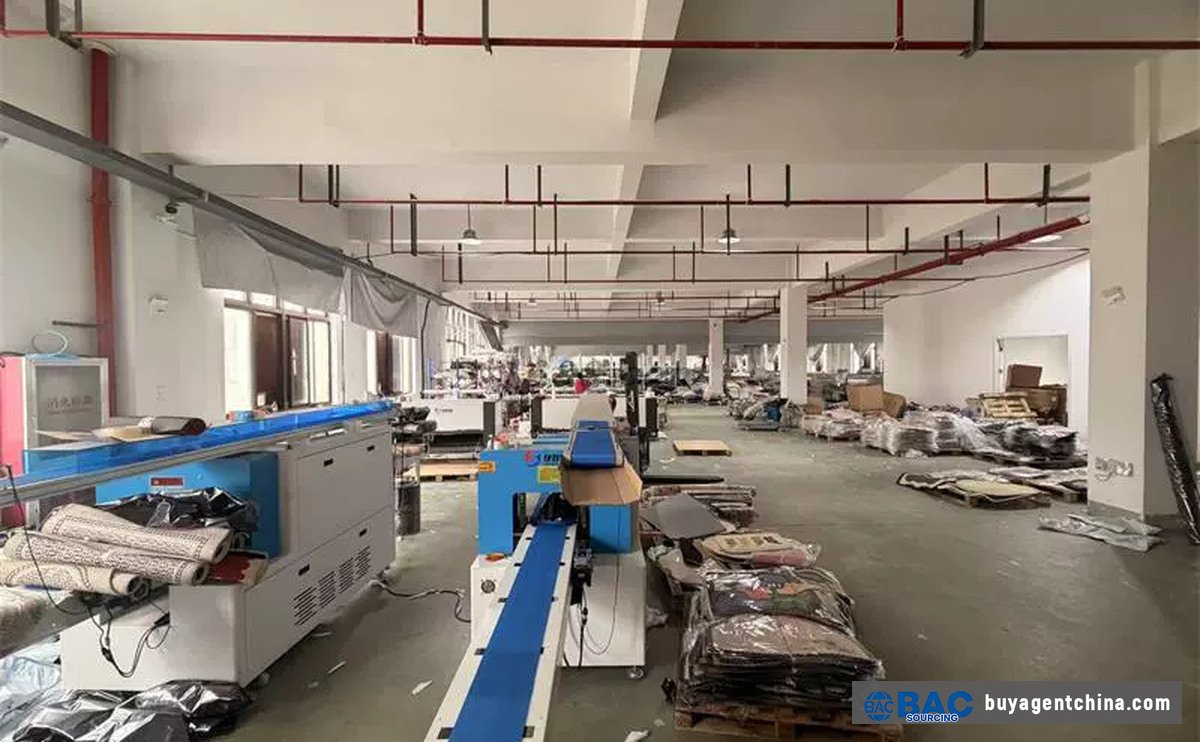
Factory packing line — wrapped goods ready for the container

Factory packing line — wrapped goods ready for the container

A container order runs the same routine with heavier instruments: golden sample signed and kept at both ends, a virgin-compound clause in the contract, staged payment tied to the mid-production and final inspection reports, and a loading-day visit so the cartons that leave are the ones you checked.

7. Direct from the Factory, or Through a China Buying Agent?

Both routes work; score them on the same dimensions and the choice stops being an argument.

DimensionDirect factoryChina buying agent
CostLooks lowest (no service fee)Fixed fee, usually covered by what inspection and rework save
CommunicationEnglish sales desk; technical specs get distortedLocal team verifies specs and contract line by line
Quote honestyHard to tell if a margin is addedTransparent agent shows the factory's original quote
InspectionOn you, or a third-party hireAgent samples to AQL 2.5 and supervises loading
Compliance / paperworkYou research HS and certificationsAgent assists classification and document checks
Supplier managementYou fly out when things breakLocal follow-up and site visits
Best forExperienced buyers, big volume, China resourcesFirst imports, small orders, language/inspection gaps

BuyAgentChina’s current standard (July 16, 2026): Entry sourcing USD 29, DIVE deep sourcing USD 140, factory visit USD 170/day; order management from 3–5% of order value (Basic, USD 220 base) to 5–8% end-to-end (Growth, USD 280 base). An agent’s value is not “buying for you” — it is checking. Getting you the right goods is not about the priciest or the cheapest; overpay and you pay the tuition, underpay and I do.

Whatever route you pick, the contract hygiene is the same. Write the fixed commission or fee down before work starts, pay the factory direct so the margin stays visible, and keep a clause that every inspection report belongs to you. An agent who shows the factory’s original invoice and refuses kickbacks is an agent worth keeping. One who cannot answer a spec question without forwarding it to the factory is a postbox, not a partner.

8. Paperwork: HS Codes, Labels and the Export Picture

Mats classify into three HS families by material, and the wrong code costs you inspection, a held container and back duties. Putting the spec in the contract beats sending a smile across the dinner table — paperwork runs on the same rule.

Finished materialHS candidateNotes
PVC / plastic tub mat3924.90.10 (US MFN 3.3%); 3918.10.90 (plastic floor coverings — most-used HSN for tub mats per Volza)Classify the finished product, not the listing photo
Plastic anti-slip mats (misc.)3926.90.99 (46,776 global shipment records per Volza)Catch-all for mats without a dedicated subheading
Rubber / silicone mat4016.91.00 (US MFN 2.7%; UK advance ruling 4016.91.00)Dedicated rubber mat code

On the demand side, research houses put the global market for bathroom anti-slip mats (tub mats included) around USD 1.23–2.15 billion in 2025 (MarketPublishers, Verified Market Reports, Dataintelo, PW Consulting), growing at a 4.5–6.5% CAGR depending on how the category is defined. Rubber held the largest material share at roughly 32.5%, and Asia-Pacific contributed about 36.5% of revenue (Dataintelo, 2025). On the supply side, China’s export records for tub-mat-class HSN 3918.10.90 show about 1,602 shipments involving 242 Chinese exporters (Volza, 2025) — the clusters are the capacity.

For a buyer, the HS line matters at two moments: when you book the first container, and when customs reclassifies. Many suppliers list the same mat under “floor mat”, “tub mat” and “shower mat” — the classifier reads the commercial invoice, not the listing photo. Keep one line of description stable across shipments, such as “bathtub anti-slip mat, PVC bubble, 60 x 35 cm”, and check the destination tariff once a year. A stable description plus a current code beats hoping the entry slides through.

Document pack for the shipment: commercial invoice, packing list, certificate of origin where the trade agreement applies, and the forwarder’s bill of lading. Newer models with batteries or heating functions move to a different classification and transport rules — do not mix them into the same carton.

On labels, three rules cover most markets. Write the material name in the destination language where textile or fibre rules apply, add a country-of-origin mark where customs asks for one, and make no uncertified claims. “Antibacterial” or “eco” without a test report is an invitation to a chargeback. Selling into California means checking Prop 65 exposure for the compound; selling into the EU means the REACH file travels with the order. Both are answerable with one document request to the factory, so ask before you book, not after the container clears.

9. Frequently Asked Questions (FAQ)

Q1. How much does a bathtub anti-slip mat cost to import from China?

A1. Stock PVC bubble mats run about CNY 8.3–14.9 ex-works (roughly USD 1.2–2.2), TPE/TPR mats CNY 8.3–48.6, and silicone CNY 6.8–28.5 (October 2026, 1688). Alibaba FOB quotes for mid-size PVC mats run about USD 2.3–4.1.

Q2. Which material is safest for hot bath water: PVC, TPR or silicone?

A2. Silicone is the safest (food-grade, heat-resistant, odourless), and TPE/TPR is the balanced choice (phthalate-free, no PVC smell). Avoid PVC for long hot soaks with children or elderly users unless you hold a phthalate test report.

Q3. Is the MOQ low enough for a small first order?

A3. Yes. For stock PVC bubble and TPE mats, minimum orders of 100–500 pieces are normal, and some factories in the Zhejiang clusters take orders from a few dozen. Custom colours or logos usually need 500–2,000+.

Q4. Do PVC bathtub mats smell?

A4. Many do — the fresh-material odour can be strong and linger. TPE/TPR and silicone do not have the PVC smell; if your channel cannot absorb odour complaints, skip PVC.

Q5. What is the best bathtub mat for elderly users?

A5. A suction rubber or silicone mat with dense suction cups, about 1 cm thick, with drain holes and no curling edges. The suction-cup rows must be uniform — check the mould first, then the goods.

Q6. Can I put my own logo or colour on a stock bathtub mat?

A6. Yes — that is the standard OEM path: colour matching plus printed or embossed logos, usually at 500–2,000+ pieces, with a golden sample signed before mass production. Lock the spec and the compound in the contract.

Written by BuyAgentChina, a China sourcing agent with transparent fees. We do not own factories, do not stock goods and do not mark up prices — we earn only from standardized service fees. To source ceramic oil burners from China, book a free 15-minute consultation (WhatsApp: +86 18889605489 / hello@buyagentchina.com).

Leave a Reply

Your email address will not be published. Required fields are marked *