Sourcing Tips

How to Wholesale Magnetic Phone Cases from China Without Losing the Margin

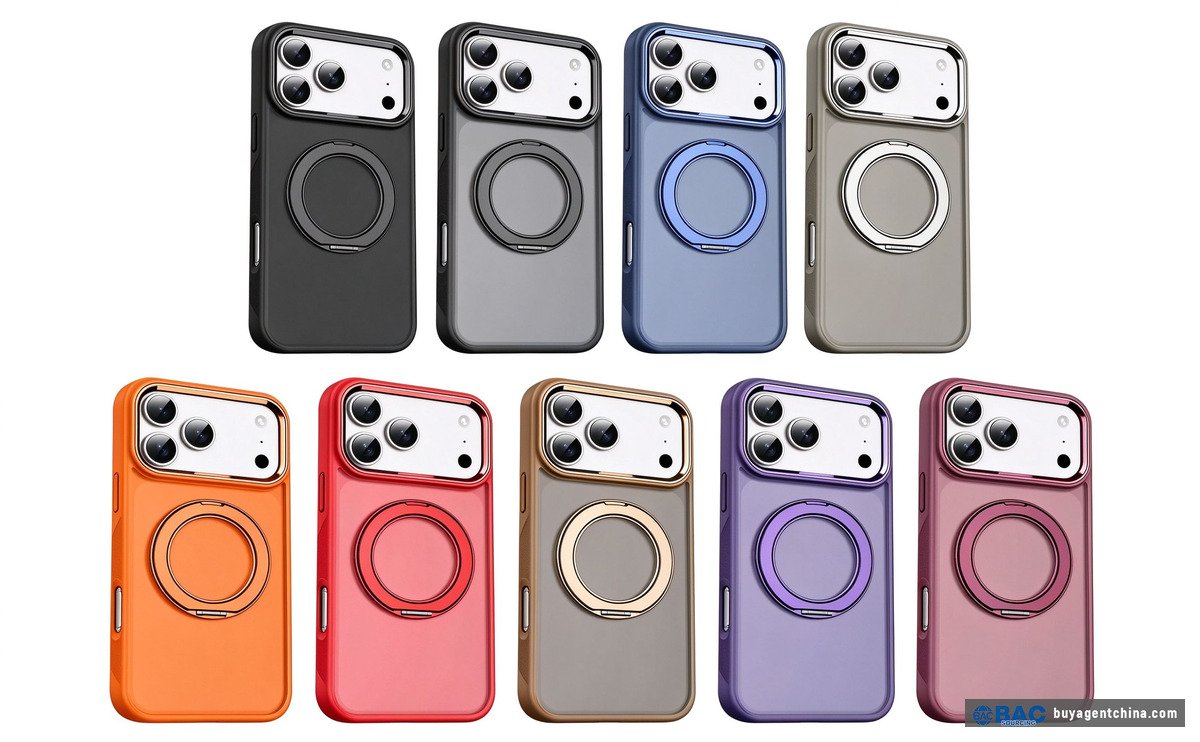
Nine-colour magnetic case line with visible magnet ring — the volume starter line

Global production of MagSafe-compatible phone cases passed 300 million units in 2025; wholesale prices start near USD 1.30 FOB, and the magnet, not the plastic, decides whether your margin survives.

1. The Market Is Huge, and the Margin Trap Is Bigger

Global production of MagSafe-compatible phone cases passed roughly 300 million units in 2025 (Global Info Research, 2026), and estimates for the market itself sit between USD 1.85 billion and USD 3.1 billion depending on the research house (PW Consulting; Global Info Research). North America is the single largest region. Zoom out one step and the whole MagSafe accessory ecosystem was worth around USD 11.6 billion in 2025 (Verified Market Research, 2026), while global demand for protective phone cases split roughly 44.7% Asia-Pacific, 22.7% North America and 20.7% Europe (PW Consulting, 2025).
Behind those numbers sits exactly one production centre: China. Shenzhen alone hosts more than 5,600 phone case makers — over half of the national total (Southern Plus, 2020, citing Qichacha) — and Huaqiangbei’s phone case shipments account for about half of the country’s output (Sina Finance, Dec 2025). China makes roughly 58.8% of the world’s electronics by capacity (Ember via Visual Capitalist, 2024–2025), and phone cases are one of the least glamorous, highest-volume exports riding on top of that chain.
Here is why the trap is bigger than the market. The core selling point of this product — the magnet — is the one part you cannot see. You can touch the plastic and judge the colour; the magnetic pull only shows up in your hand. Every dollar buyers lose on magnetic phone cases disappears in places that never appear in a listing photo. Three hundred million units a year, and the most common complaint in reviews is a magnet too weak to hold a wallet or a charger. That should tell you something.
This guide is for two kinds of people: first-time buyers wholesaling magnetic phone cases from China, and sellers who have already ordered a batch or two and watched the return rate climb. What follows is ordered by how often I have watched these mistakes happen over fifteen years — starting with the ones that cost someone money every week, and ending with the ones that only strike once but take the whole order down.

2. Mistake 1–3: The Errors Buyers Make Every Week

2.1 Mistake 1: You Compare Unit Prices and Nothing Else

Look at real 1688 numbers. A clear acrylic magnetic hard case quotes at CNY 2.00–2.20 a piece at 1,000+ units (Shenzhen Jinzuanjia); a liquid silicone magnetic case quotes CNY 6.50 (Huanjinma Electronics); a genuine-leather magnetic case runs about CNY 29.86 (Mingsheng Leather) — all October 2026 quotes. A fifteen-fold spread looks like “expensive versus cheap” — mostly it is material cost, not margin.
The cost driver of a magnetic case is not the shell; it is the magnet. A cheap magnetic ring (iron sheet) wholesales around CNY 0.40 a piece (Dongguan Tiangxia Dakai Xu Hardware), while an N52 neodymium ring runs USD 0.90–1.20 wholesale (USD 0.90 at 1,000+ on Alibaba). That is a two-to-three-times gap in material alone. Factories that swap neodymium for ferrite, or quietly drop an 18-magnet ring to 12 magnets, get the prettiest unit price on your spreadsheet.
The cost: you pick the “cheap factory” by unit price, and that is usually the one that cut the magnets hardest. The chargebacks and one-star reviews land on your listing, not on their production line.
The fix: ask for a bill of materials before you ask for a price. Magnet grade, magnet count, shell material grade — in writing. Then negotiate. Put “N52 neodymium, 18 magnets, pull force no lower than X grams” into the contract.

2.2 Mistake 2: You Never Test the Magnet

This is the biggest complaint in the category. Accio’s 2026 analysis found 35.8% of reviews that mention MagSafe functionality are negative, and most of them say the same thing: the magnet is weak. On Best Buy, OtterBox Symmetry owners posted back-to-back complaints about magnetic components peeling off within days. A Casetify buyer paid USD 75 and watched a lightweight wallet fly off the case at the slightest touch. Brand-name products in the US and Europe fail this test — imagine what the cheapest 1688 listing does.
Magnet grade decides the outcome. N52 (52 MGOe) is the Apple-spec standard; N48 (48 MGOe) is about 8% weaker and measures roughly 15% worse on alignment accuracy (Mod Trims, 2026). Drop below that to ferrite, and the pull force is a fraction of neodymium’s.
The cost: it will not hold a car mount, a wallet, or a charger alignment. You are not selling a magnetic phone case anymore; you are selling a phone case with a circle printed on the back.
The fix: demand magnet grade and count in the quote, test the sample yourself with a MagSafe charger or a magnetic mount, and write “N52, 18 magnets, pull-force test passed” into the acceptance criteria.
Magnet gradeEnergy productRelative strengthWholesale cost referenceTypical useWhere it fails
N52 neodymium52 MGOeBaseline (Apple spec)USD 0.90–1.20/ring (1,000+)Apple-style rings, mid-to-premium casesExpensive — cheap factories avoid it
N48 neodymium48 MGOe~8% weaker; ~15% worse alignmentMid tierVolume magnetic casesWeak-pull complaints are common
Ferrite sheet / magnetic ringFar below neodymiumClearly weakCNY 0.40/pieceBudget cases, Android adhesive ringsWill not hold; return-rate driver
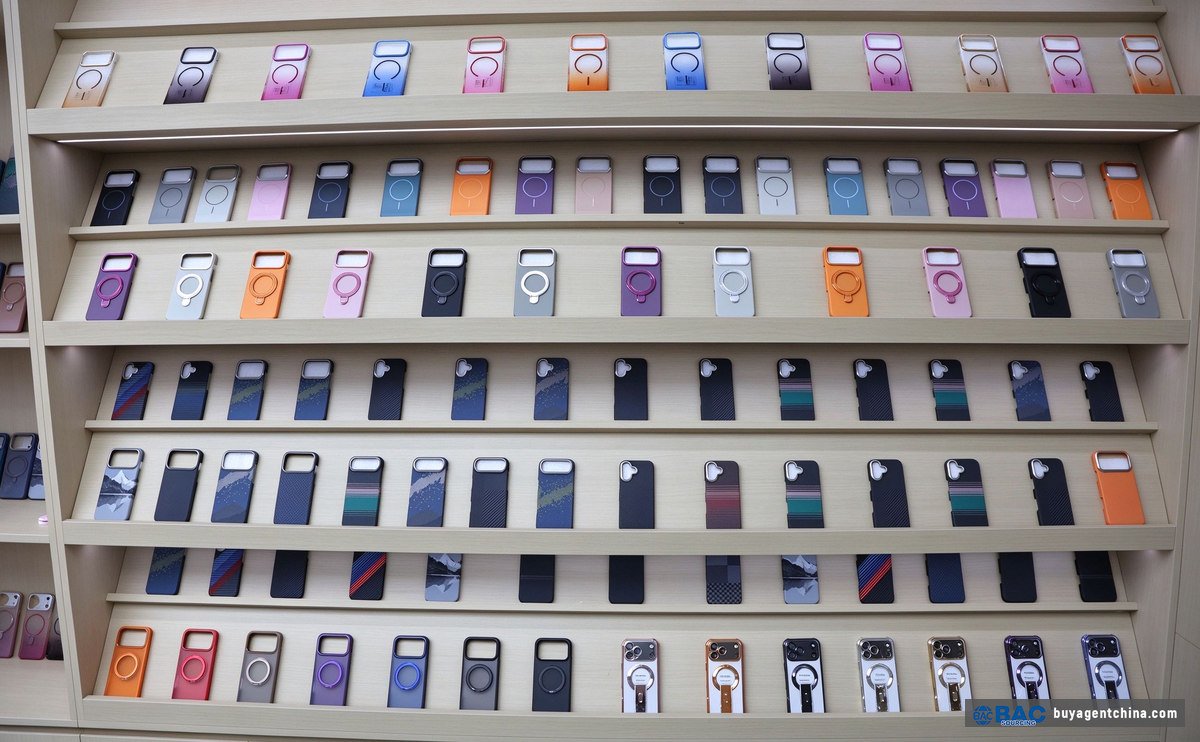
Magnetic case display shelf — ring layouts differ more than listing photos show

Magnetic case display shelf — ring layouts differ more than listing photos show

2.3 Mistake 3: You Trust the Listing Photo, Not the Compatibility

MagSafe geometry is a ring of about 38–39 mm outer diameter with the inner zone left clear for the charging coil, and every iPhone since the 12 carries magnets inside. A case is MagSafe-compatible only if ring diameter, ring position and case thickness all line up. Too thick, or the ring sits off-centre, and wireless charging drops from 15W to 7.5W — or stops. A non-magnetic case alone can cut magnetic pull by 40–70% (ElectronicsHub, 2026). On Android, there are no built-in magnets; the case carries an adhesive ring or a ferrite plate, and the solutions vary wildly between suppliers.
The cost: the batch you ordered because the photo “looked compatible” turns out not to stick to car mounts, desk stands or chargers — the three places your customers actually use the feature.
The fix: confirm the ring matches the MagSafe outer-diameter spec, test case thickness against 15W charging, and for Android models ask exactly what the in-case magnetic solution is instead of accepting “universal”.

3. Mistake 4–6: The Errors That Show Up When the Container Arrives

3.1 Mistake 4: You Ignore Yellowing on Clear Cases

Clear magnetic cases are the volume sellers of the category, and they have one natural enemy: UV. PC and TPU both yellow under ultraviolet and heat — TPU fastest. Acrylic (PMMA) stays clearer and yellows slower but is brittle and cracks on drops. The sample you approved is crystal-clear; the goods three months later may be yellow. On a retail shelf, yellowing reads as “cheap” faster than any other single defect.

The cost driver of a magnetic case is not the shell; it is the magnet. A cheap magnetic ring (iron sheet) wholesales around CNY 0.40 a piece (Dongguan Tiangxia Dakai Xu Hardware), while an N52 neodymium ring runs USD 0.90–1.20 wholesale (USD 0.90 at 1,000+ on Alibaba). That is a two-to-three-times gap in material alone. Factories that swap neodymium for ferrite, or quietly drop an 18-magnet ring to 12 magnets, get the prettiest unit price on your spreadsheet.

The cost: customers write “turned yellow” as the return reason, and the platform quietly lowers your listing’s search weight.
The fix: ask for the anti-yellowing grade and any UV test data, leave the sample on a sunny windowsill for two weeks, and write the grade into the spec sheet.
Shell materialClarityYellowing resistanceFeelCost tierMain risk
Acrylic (PMMA)High, glass-likeBest in classHardMidCracks on drops
PC hard shellMedium-highMediumHardLow-midSlight yellowing over time
TPU / liquid siliconeMediumWeakest (fastest)Soft, skin-friendlyMid-highYellows fast; needs UV-stable formula
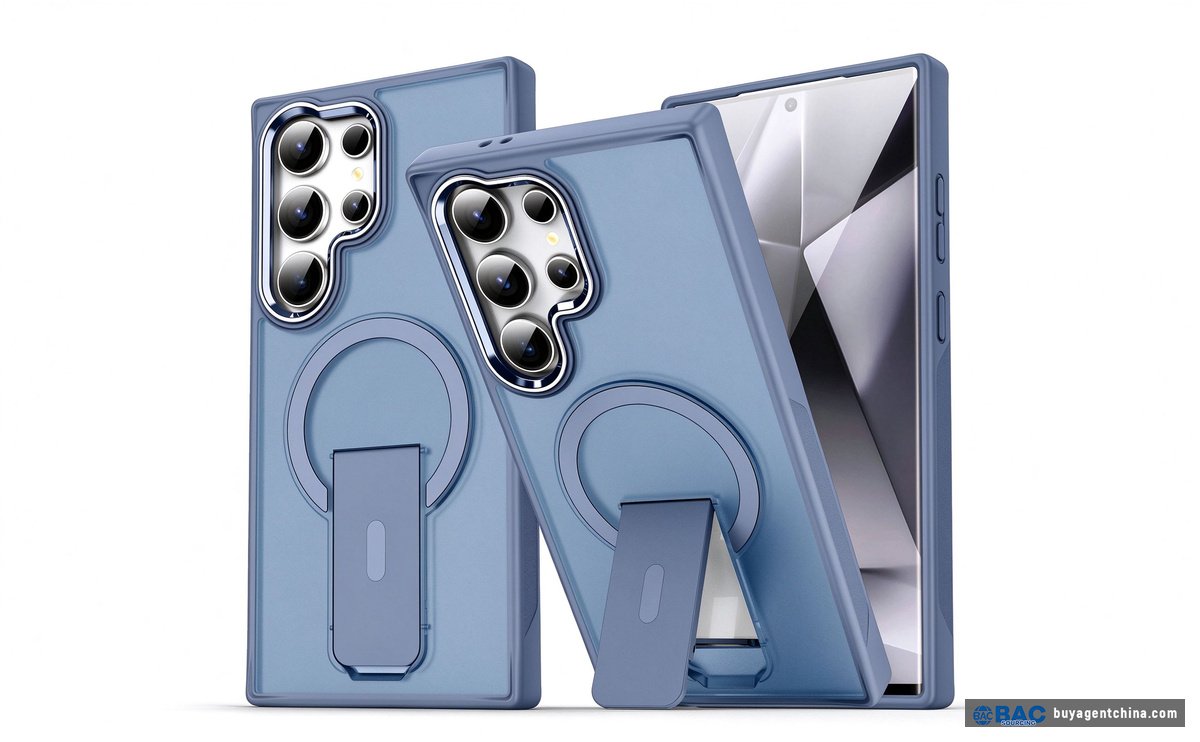
Matte soft-touch magnetic case with folding stand — the mid-tier yellowing risk line

Matte soft-touch magnetic case with folding stand — the mid-tier yellowing risk line

3.2 Mistake 5: The Magnet Ring Sits Over the Charging Coil

If the magnets are laid out directly over the charging coil area (the inner zone), charging efficiency collapses and the phone runs hot. This is a design error, not a material one — the case that “sticks but never charges” is almost always a ring layout that stepped on the coil zone.
The cost: 15W becomes 7.5W. The customer thinks the phone is broken. It is the case.
The fix: ask for a charging-efficiency test report, run a real 15W charge on the sample, and put “no magnets over the coil zone, charging test passed” into the specification.

3.3 Mistake 6: A Sample Is a Sample, and Mass Production Is Mass Production

I have said it for fifteen years, and magnetic cases deserve an extra warning: the hand-made sample uses N52 and the production run quietly switches to N48 or ferrite; the sample uses virgin resin and the bulk adds regrind. It is the classic downgrade path for this category, because the magnet never shows up in a photo.
The cost: the sample is perfect, the container is scrap, and the return freight costs more than the goods.
The fix: sign a golden sample as the only acceptance standard, run three-stage inspection (mid-production at 30–50%, final at 100%, and loading supervision), and pull-test magnets at random on every batch.The fix: confirm the ring matches the MagSafe outer-diameter spec, test case thickness against 15W charging, and for Android models ask exactly what the in-case magnetic solution is instead of accepting “universal”.

4. Mistake 7–9: The Rare Errors That Can Kill the Whole Order

4.1 Mistake 7: You Ship on Unverifiable Certification Claims

MFi certification covers Apple accessory protocols — phone cases are not in its scope. Yet shelves are full of “MFi certified magnetic cases” that simply have the mark printed on. That is trademark infringement and false advertising at once. CE and RoHS are routine export requirements for this category; the EU also looks at REACH. Claim “Qi2 certified” or “MagSafe certified” without a certificate behind it, and the risk is a hold at the destination port or a delisted listing.
The cost: the container sits, the listing dies, and the returns start — the money you “saved” on compliance comes back as losses somewhere else.
The fix: work out which certifications genuinely apply to your target market, ask for copies of the certificates, and write marketing claims strictly within what the certificates cover. Never print a mark you do not own.

4.2 Mistake 8: Your Payment Structure Hands You No Leverage

A 30% T/T deposit is standard practice at Chinese factories. The trap is the balance. Pay 100% up front, and when the batch fails inspection you hold nothing but a payment receipt. Put down the usual deposit, but never pay the balance in full before the goods pass inspection.
The cost: 15W becomes 7.5W. The customer thinks the phone is broken. It is the case.
The fix: ask for a charging-efficiency test report, run a real 15W charge on the sample, and put “no magnets over the coil zone, charging test passed” into the specification.

3.3 Mistake 6: A Sample Is a Sample, and Mass Production Is Mass Production

I have said it for fifteen years, and magnetic cases deserve an extra warning: the hand-made sample uses N52 and the production run quietly switches to N48 or ferrite; the sample uses virgin resin and the bulk adds regrind. It is the classic downgrade path for this category, because the magnet never shows up in a photo.
The cost: goods not inspected, money gone, and every later conversation is you begging.
The fix: 30% deposit, balance after inspection (or against a copy of the bill of lading), the “balance after inspection” clause written into the contract, and third-party inspection or agent supervision on bigger orders.

4.3 Mistake 9: You Buy Someone Else's Logo Into Your Container

Printing “MagSafe”, an Apple logo, or a Spigen/OtterBox look-alike design is the cheapest way to make a case sell — and budget factories love it. Apple enforces its marks aggressively: customs seizures at destination ports, platform delistings, and law-firm letters, any one of which ends the run.
The cost: a whole container held at the dock. Paperwork is not paper; it is money, and customs is a good teacher.
The fix: use “compatible with” wording, design your own logo and artwork, check the trademark record of your target market before ordering, and put “no infringing design” into the contract.

5. Where Magnetic Phone Case Manufacturers Cluster

RegionRoleStrongest atWatch out for
Shenzhen (Huaqiangbei)Volume + speedOver half of China's case makers; newest models first, fast restocks, the deepest cross-border e-commerce poolDowngraded magnets on cheap cases; traders posing as factories
DongguanTooling + hardwareMagnet, magnetic-ring and mould shops cluster here (e.g. Tangxia hardware)Longer supply chain; case-to-component coordination
GuangzhouCross-border stockTraders and cross-border sellers; wide model choice, fast follow-onMostly trading companies, fewer real factories
FoshanSilicone / plastic mouldingSolid silicone and injection-moulding base (Shunde area)Magnetic work is uneven — verify pull force
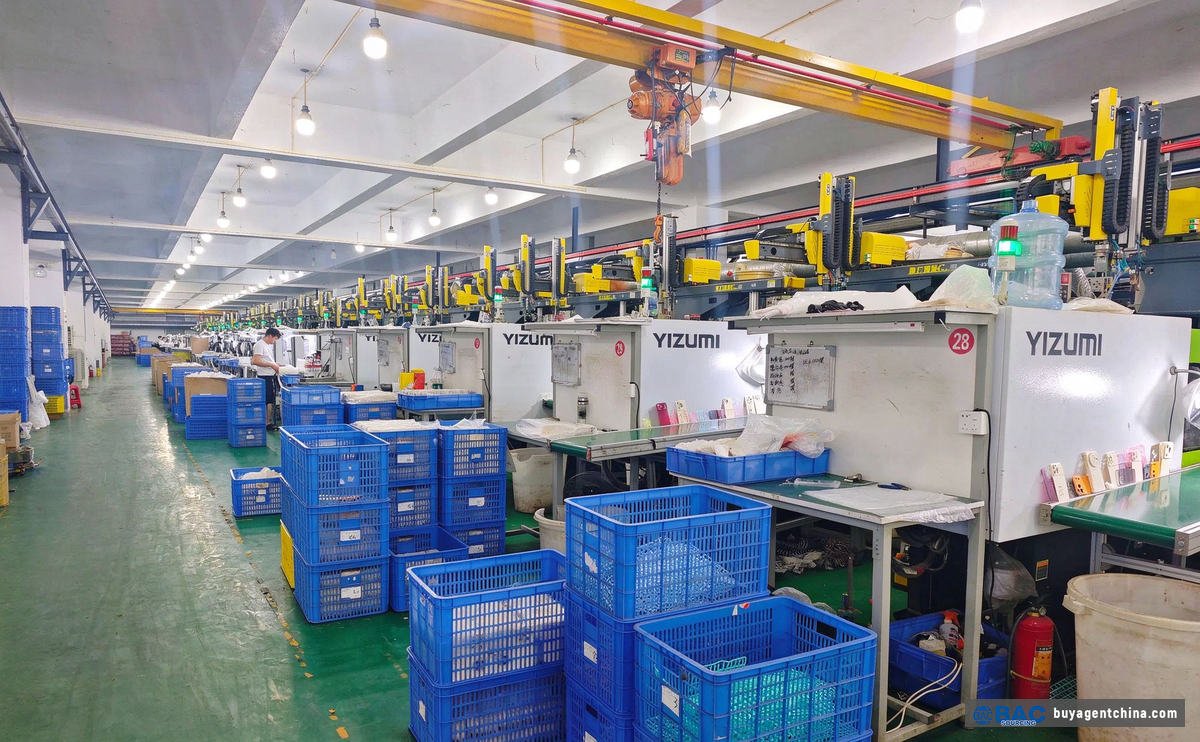
Injection moulding workshop in the phone case cluster — volume and speed

Injection moulding workshop in the phone case cluster — volume and speed

When I walk a factory, I check one thing before anything else: is the QC bench actually being used, and is static protection in place? Electronics die from static and a pretend QC station. A factory that uses its QC bench will usually put the magnet grade in writing. A factory where the bench is decoration — I do not care how low the quote is.

6. Going Direct to Factories or Working with the China Buying Agents

CheckpointGoing direct to factoriesWorking with a China buying agent
CostLowest on paper, high hidden costsTransparent service fee or commission; low hidden costs
CommunicationLanguage, time zones, specs distorted through layersAgent talks to the factory in Chinese, directly
Quote verificationHard to judge; padded quotes are commonKnows the market; pushes quotes near the floor
Magnet / material verificationBasically luck unless you fly overOn-site pull tests, magnet sampling, production follow-up
Sample-to-bulk consistencyDepends on contract wording and luckSomeone watches the hand-sample-to-production gap
InspectionNobody on the line; problems found after arrivalThree-stage inspection; problems blocked before loading
Payment riskAll on youEscrow or staged payment; money moves after inspection
Every trap in this category — magnet, material, compatibility, inspection — lives in the places where you are not on the ground. That is exactly the part an agent handles for you. My view is simple: getting you the right goods is not about the priciest or the cheapest — overpay and you pay the tuition; underpay and I do.

7. Test the Waters First, or Commit to a Full Batch

7.1 The Pilot Batch (500–2,000 pcs)

Goal: prove the real return rate of magnetic cases in your market with the least money. Do not build inventory on a photo.
How to run it: stock models from Shenzhen; prefer clear acrylic or liquid silicone stock lines; buy samples first and pull-test the magnet and charging before committing; ship small orders by express or air and stay away from LCL sea freight, whose fixed fees eat your margin; run one magnet spot-check even on a small order.
Budget reference: clear acrylic stock at about CNY 2.0–2.2 ex-works (roughly USD 0.3–0.4 FOB, October 2026 quotes); recalculate your retail price with freight and duty on top.

7.2 Large Bulk Order (5,000+ pcs / FCL)

Goal: lock the cost, build your own brand, and turn a magnetic case from “accessory” into “product”.

How to run it: write a full spec sheet — magnet grade, magnet count, shell material grade, thickness, ring diameter, anti-yellowing grade; run two or three sampling rounds and sign a golden sample as the only acceptance standard; pay 30% deposit plus balance after inspection; run three-stage inspection with loading supervision; book sea freight two to three weeks ahead and stay out of the Chinese New Year and National Day capacity dips.
Budget reference: OEM liquid silicone magnetic cases at about CNY 6.5 ex-works (roughly USD 0.9–1.5 FOB, October 2026 quotes); branded boxed packaging is additional.

8. Price Reference and the Paperwork That Actually Matters

8.1 Wholesale Price Reference by Type (quotes, October 2026)

TypeEx-works (CNY/pc)FOB reference (USD/pc)MOQ referenceTypical use
Clear acrylic magnetic hard case2.00–2.20 (1,000+)0.3–0.5100–500Volume model, entry markets
Liquid silicone magnetic case6.500.9–1.5500–1,000Mainstream mid-tier, soft touch
Magnetic kickstand film case2.800.4–0.7500Stand + magnet combo
Genuine leather magnetic case29.864.2–6.7200–500Premium line, business models
N52 magnet ring (component)—0.90–1.20 (1,000+)50–100OEM material reference
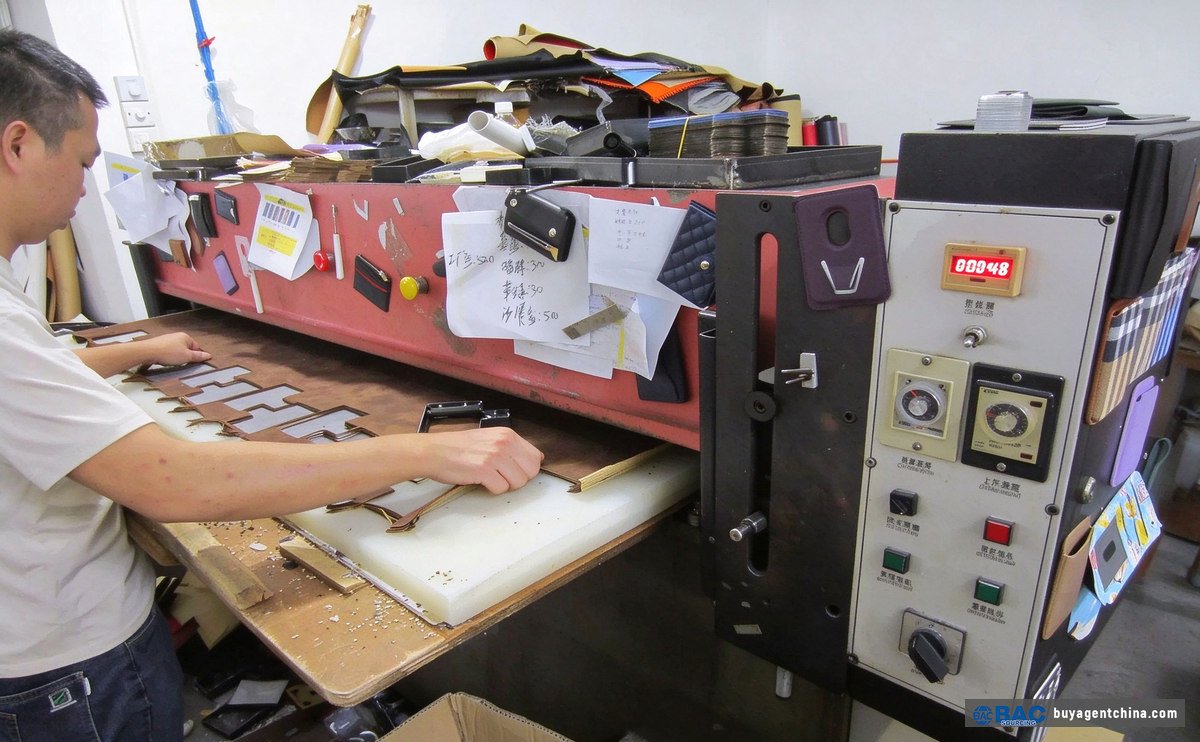
Leather cutting workshop — where genuine leather cases start

Leather cutting workshop — where genuine leather cases start

8.2 HS Classification and Export Paperwork

Plastic and silicone phone cases generally fall under HS 3926.90 in the EU (CN code 3926909790 per the UK HMRC advance tariff ruling 600012147; the US HTS reads the same 3926.90). Leather-faced cases need a separate check against 4202/4205, and combo models — kickstand, magnetic charging function — should be reclassified against their final feature list. Magnetic cases sit between “protective case” and “accessory”, which is exactly where classification mistakes happen. Get the HS code wrong, and a whole container sits at the dock while your margin disappears.
Destination mix for context: 2025 demand for protective phone cases ran 44.7% Asia-Pacific, 22.7% North America and 20.7% Europe (PW Consulting, 2025). North America plus Europe is 43.4% of the market — the two biggest absorption regions for magnetic cases, and also the two most return-sensitive ones.

9. The Pre-Shipment Checklist and a Five-Question Pressure Test

Run this checklist before you commit, and it blocks nine out of ten ways this category loses money:

– [ 1 ] Magnet grade (N52/N48) and count written into the contract
– [ 2 ] Pull-force test data (grams / alignment) received
– [ 3 ] Ring geometry matches the MagSafe outer-diameter spec; no magnets over the coil zone
– [ 4 ] 15W charging verified on the sample (or test report received)
– [ 5 ] Anti-yellowing grade / UV data confirmed; sample sat on a sunny windowsill for two weeks
– [ 6 ] Golden sample signed as the only acceptance standard
– [ 7 ] Three-stage inspection scheduled (30–50%, 100%, loading)
– [ 8 ] Payment: 30% deposit, balance after inspection — never 100% up front
– [ 9 ] No infringing design (no MagSafe / Apple marks, no look-alikes)
– [ 10 ] HS classification verified (3926.90 as the starting point; re-check combos)

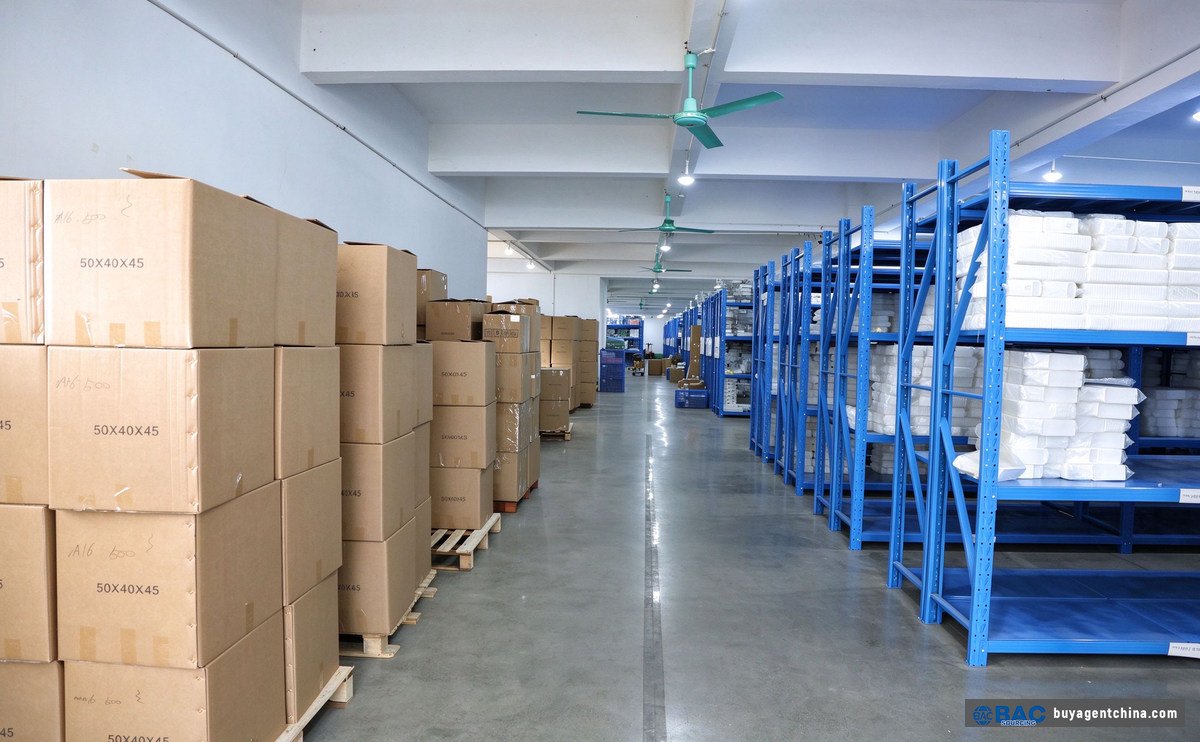
Warehouse packing line with carton counts — three-stage inspection in action

Warehouse packing line with carton counts — three-stage inspection in action

And the pressure test, which beats any audit report you will ever be sent: can your supplier answer these five questions within 24 hours — magnet grade and count, the N52 certificate or test data, a wireless-charging test report, the anti-yellowing grade, and a three-stage inspection schedule? If not, that is your first red flag. Those five questions are also, in compressed form, the checklist Buy Agent China runs as a transparent-fee China buying agent on every magnetic phone case order we handle — sourcing, verification, inspection and follow-up, priced on the published service standard (sourcing from USD 29, factory visits from USD 170/day, order management at 3–5% for Basic or 5–8% for the full Growth plan, as of July 2026).

10. Frequently Asked Questions (FAQ)

Q1. What is the MOQ for magnetic phone cases from China?

A1. Stock models start at 50–100 pieces (several Made-in-China factories quote MOQ 50–100), while OEM customization usually starts at 500–1,000 pieces and a new mould at 3,000+. Test stock first; customize after the numbers justify it.

Q2. How do I verify magnet strength before ordering?

A2. Three steps: get the magnet grade (N52/N48) and count in writing; ask for pull-force test data; and when the sample arrives, test it yourself with a MagSafe charger or magnetic mount. If it will not hold, it is a fail.

Q3. How much does a magnetic phone case cost wholesale from China?

A3. Clear acrylic magnetic hard cases run about CNY 2.0–2.2 (1,000+), liquid silicone about CNY 6.5, genuine leather about CNY 30; the FOB range across types is roughly USD 0.3–6.7 (October 2026 quotes).

Q4. Do magnetic phone cases slow down wireless charging?

A4. With correct ring layout and sensible thickness, 15W charging is unaffected. With the ring over the coil or a too-thick shell, charging drops to 7.5W or stops. Non-magnetic cases cut magnetic pull by 40–70%; the whole point of a magnetic case is to hold 15W and the pull.

Q5. Can I private-label magnetic phone cases?

A5. Yes. Logo and colour OEM typically starts at 500–1,000 pieces, a new mould at 3,000+. Put magnet grade, shell material grade and anti-yellowing grade into the spec, and sign the golden sample as the only acceptance standard.

Leave a Reply

Your email address will not be published. Required fields are marked *