Factory Verification

How to Buy Class 8.8 Hex Head Bolts from China and Verify the Grade

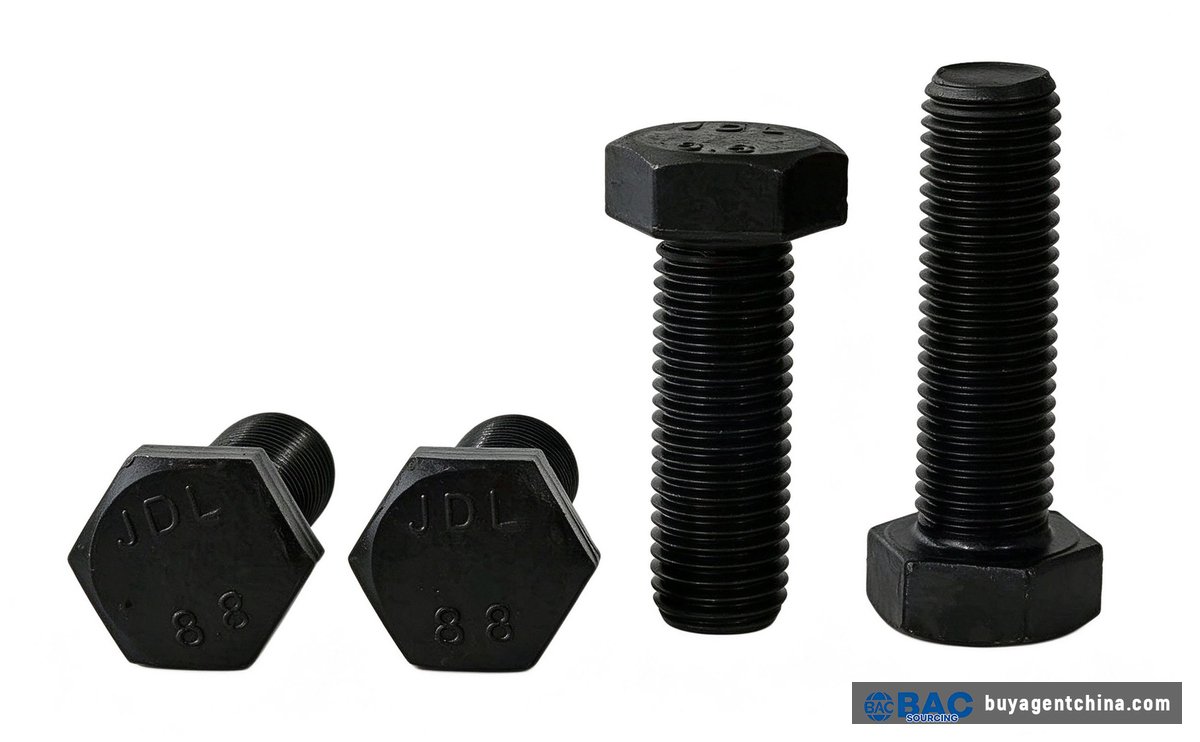
Class 8.8 black-oxide hex head bolts, the stock volume model that prices from cents — note the grade and maker marking on the head (source: supplier photo)

A genuine class 8.8 hex head bolt is rated at 800 MPa tensile strength and 640 MPa yield. It only gets there through quenching and tempering. The “8.8” stamped on the head proves none of that. Verify material, heat treatment, and plating before you pay.

I have spent fifteen years walking Chinese fastener workshops, most of it around Yongnian in Hebei. That district calls itself the “hometown of fasteners.” With roughly 58% of national output, it has a fair claim to the title. Fasteners are the most taken-for-granted parts in any machine. Nobody notices a bolt until it fails. By then, the invoice is long forgotten. That is why the cheap 8.8 hex bolt — the one that saves you four cents — is so often the one that costs you a recall. This guide covers the nine mistakes I watch importers make, in the order they usually make them. Each one has a fix you can use before your money is committed.

1. Mistake: Buying on price alone, and treating "cheap" as a spec

Every importer chases the low price. Class 8.8 hex head bolts are exactly the category where the cheapest quote deserves the most suspicion. The supply base is vast, and the race to the bottom is real. Yongnian district alone produced 7.8 million tons of fasteners in 2025, worth more than RMB 55 billion. That is roughly 58% of China’s national output. Those bolts reached 163 countries. Ningbo and Wenzhou in Zhejiang add an export-oriented layer of mid-to-high-end makers. Jiangsu contributes specialty shops. With that much supply, a buyer can get an M6-grade 8.8 bolt at under a tenth of a yuan. Or pay many times more for the same nominal size with a documented heat-treatment history.

Low cost is not the problem; unverified cost is. The unit price is the least interesting number in the deal. The real cost is whether that bolt holds its rated 800 MPa when torqued into a customer’s machine. And whether it keeps holding it for the service life. A bolt that costs nothing up front but fails under load costs you the joint, the downtime, and often the relationship. So the first discipline is simple. Stop pricing on the piece. Start pricing on the verified unit that meets spec.

1.1 Where the low-price trap comes from

A quote 30% below the market is rarely a discount. It is usually a step that got cut. I see three cuts most often. Recycled scrap steel in place of the specified grade. A quench-and-temper line that was skipped or run short. A plating layer thinner than the standard. None of them shows up on a photo or a quick spec sheet. They show up later. A snapped fastener. A corroded thread. A tensile test that comes back embarrassingly short of 800 MPa. When a supplier undercuts everyone else on an 8.8 hex bolt, ask the right question. Not “how did you do it?” Ask “which step did you skip?”

1.2 Reference price ranges for 8.8 hex head bolts (by size and finish)

Spec / FinishEx-works reference (CNY/pc)FOB reference (USD/pc)Notes
M4–M48 plain black (GB5782/5783)¥0.07–0.27$0.01–0.04Highest volume, indoor use
DIN 933 8.8 zinc platedfrom ¥0.27$0.04–0.06General assembly
Hot-dip galvanized (HDG) 8.8from ¥0.67$0.09–0.15Outdoor / structural
Large size + HDG sets (M8–M36)¥3.86–7.76—Power / solar mounts

2. Mistake: Trusting the "8.8" stamped on the head

The marking on a bolt head is a label, not a proof. The number “8.8” encodes two values. Eight hundred MPa nominal tensile strength. Six hundred forty MPa yield. The 0.8 is the yield-to-tensile ratio. Legitimate factories stamp the grade and their own manufacturer’s mark on the flat of the hex head. The stamp should be crisp and consistent. But head stamps are cheap to make. Fake markings are common. Low-strength steel dressed up as 8.8 happens often enough that you should treat every stamp as a claim to verify. Not a certificate to accept.

Here is the uncomfortable truth about grade verification. You cannot tell a genuine 8.8 from a fake by looking at it. A carefully counterfeited bolt looks identical. What you are actually buying is not the mark. It is the material and the heat treatment behind it. Those are verified with instruments and paperwork, not eyes. The first check is cheap. Ask for the material certificate and the heat number. Confirm the steel is medium-carbon or alloy, not recycled scrap. The second check costs a little more. A hardness tester gives HRC 22–32 for a true 8.8. The third is definitive. An independent tensile test. Most suppliers with nothing to hide cooperate with all three. The ones who stall on the first are telling you everything you need to know.

2.1 Grade authenticity comparison

GradeTensile (MPa)Yield (MPa)Typical materialHardness ref.Typical use
8.8800640Medium carbon steel, quenched & temperedHRC 22–32Machinery, steel structures, general high-strength
10.91040940Alloy steel, quenched & tempered—High-load flanges / structures
12.912201100Alloy steel (ML40Cr / 35CrMoA)—Engines, heavy load, high-load joints

3. Mistake: Checking the material certificate but not the heat treatment

This is the trap that catches engineers. A buyer asks for the material certificate, sees “medium carbon steel,” and signs off. Then he wonders why the delivered bolts are soft. Here is why. The strength of an 8.8 bolt is not given by the steel grade. It is given by quenching and tempering. Take the same medium-carbon bar and skip the quench-temper cycle. It behaves like a 4.8. Roughly half the tensile strength, no matter what the label says. A material certificate and a certified strength are two different things. One is a piece of paper. The other is a running heat-treatment line with records to prove it.

So when you talk to a fastener factory, do not ask “can you make 8.8?” Every fastener shop in Yongnian says yes. Ask about the heat-treatment line instead. Is it in-house or outsourced? Is the temperature logged per batch? Can they show you the tempering records for the lot they are quoting? The difference between an 8.8 that delivers and an 8.8 that is stamped but soft is exactly this process. It is invisible in a catalog. Add a quick in-workshop hardness check. It takes a minute, and it separates a real quench-temper line from a claim.

3.1 Material and heat-treatment checklist

CheckWhat to look forWhat it tells you
Material gradeMaterial cert / heat number vs contract (medium or alloy steel, not recycled)Whether the spec is real
Quench & temperHardness spot checks (HRC), tensile reportWhether tempering was skipped
Thread accuracyThread gauge, rolled vs cut threads, tooth formMachining precision
Batch consistencyHardness / dimension scatter within a lotManagement discipline

4. Mistake: Ignoring the finish, and stepping on the hydrogen-embrittlement landmine

Finish sets both the life and the price of an 8.8 hex bolt. It is also the line item buyers most often under-spec. Black oxide is the cheapest. It offers the least corrosion protection. It is fine indoors, where the part stays dry. Electro-zinc plating sits in the middle on both price and protection. But it carries a specific and serious risk for high-strength parts. Hydrogen embrittlement. The acid pickling and plating steps can let hydrogen atoms diffuse into the steel. They sit at grain boundaries and wait. The bolt passes inspection. It ships. It gets torqued. Then it snaps at far below its rated load, with no visible warning. High-strength bolts fail this way. That is why electro-zinc on 8.8 and above needs a bake-out step to drive the hydrogen out.

Hot-dip galvanizing gives the best outdoor protection. It is the default for solar, power, and structural work. But the thicker coating means the threads usually need after-treatment, and the cost is higher. Dacromet gives strong corrosion protection without the hydrogen risk. It is the choice where strength and corrosion meet. The practical takeaway is simple. Specify the finish in the same sentence as the grade. If a supplier proposes electro-zinc for a high-strength bolt, ask how they handle hydrogen embrittlement before you agree. A finish that saves you two cents and costs you a field failure is a bad trade.

4.1 Finish comparison

FinishPrice impactCorrosionRiskBest for
Black oxideLowestLowNo hydrogen risk, indoorIndoor machinery
Electro-zincMediumMediumHydrogen embrittlement on high-strengthGeneral assembly / mild outdoor
Hot-dip galvanizedHigherHighNeeds thread after-treatmentSolar / power / outdoor structure
DacrometHighHighNo hydrogen riskHigh-strength corrosion duty

5. Mistake: Auditing the wrong thing and never stepping into the workshop

I trust audit reports, but I trust my own ten minutes in the workshop more. A fastener is the honest product to audit, because everything that matters is visible if you look. Is the heat-treatment line actually running? Or is that just the room the salesperson showed you? Is the hardness tester on the floor and used, or is it a prop next to the QC desk? Are the threads rolled rather than sloppily cut? Is the tooling sharp? A factory too lazy to wipe the oil off its floor is not the one I trust to hold an 800 MPa process discipline through a whole run.

This is also where you decide your region. If your business is volume and standard specs, Yongnian is the most efficient place on earth to buy fasteners. Enormous range. Lowest prices. A whole ecosystem of surface-treatment and packaging shops around it. If you need export-grade consistency, stable documentation, and mid-to-high-end finishing, the Zhejiang base around Ningbo and Wenzhou is stronger. If you need a specific custom or specialty part, a specialist shop in Jiangsu or elsewhere may be the answer. None of them replaces the workshop visit. But matching the region to the job makes the visit count for more.

5.1 Production region comparison

RegionPositioningScaleBest suited for
Yongnian, Handan (Hebei)China’s largest standard-parts hub, “hometown of fasteners”2025: 7.8 Mt output, RMB 55bn+, ~58% of national output, exports to 163 countriesVolume, full spec range, value
Ningbo / Wenzhou (Zhejiang)Export-oriented, mid-to-high endDense export fastener baseMid-high end, foreign trade, stable specs
Wuxi (Jiangsu) and othersSpecialty / custom parts—Specific standards, customization

6. Mistake: Agreeing on specs over dinner instead of putting them in the contract

Putting the spec in the contract beats sending a smile across the dinner table. This is doubly true for fasteners. The parameter list is long, and the tolerance for ambiguity is zero. Translation distorts technical terms. Grade. Material. Finish. Thread standard. Tolerance class. A friendly negotiation can paper over gaps that only surface at inspection. So write down every line. DIN 933 full thread or DIN 931 partial thread, or GB 5783 if you buy to the Chinese standard. The material grade. The finish and its thickness. The acceptance standard. For an 8.8 high-strength bolt, add two sentences that matter more than anything else. “Must be quenched and tempered.” “Head must carry grade marking plus manufacturer’s mark.” A supplier who resists putting those in writing is telling you something about the heat-treatment line they are not showing you.

The RFQ you send matters as much as the contract. Do not ask “how much for an M12 8.8 bolt?” You will get a price for a bolt that may or may not meet spec. Ask for a spec sheet back instead. Material grade and heat number. Hardness range. Finish and coating thickness. Thread standard. Batch size. Lead time. Terms for third-party inspection. The suppliers who answer in detail are the ones worth paying. The ones who answer with a price and nothing else are a short list you can discard.

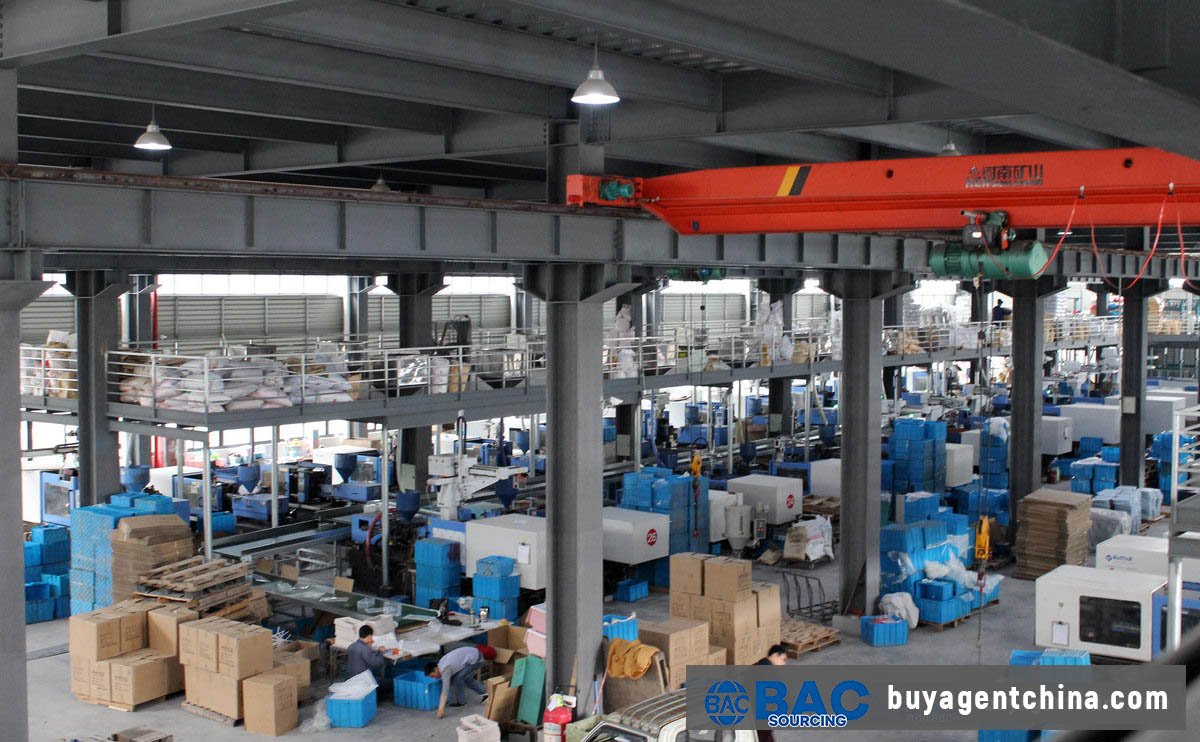
04 Inside a Chinese injection-molding plant- the tooling that turns resin into pill organizers

Inside a Chinese injection-molding plant: the tooling that turns resin into pill organizers.

7. Mistake: Paying the balance in full and closing off the inspection exit

The deposit is standard practice, but the balance is your leverage. Never pay it in full before the goods pass inspection. This is the oldest rule in China sourcing, and fasteners are no exception. For high-strength parts, your payment terms are your quality leverage. A factory that accepts third-party inspection and staged payment is usually a factory with something to show. The factory that insists on full payment before the goods are verifiable is usually not. Thirty percent deposit up front is the convention. The balance should ride on inspection milestones, not on a calendar date.

This is also where direct buying and using an agent split apart. An agent does not just find you a factory. It backfills the invisible steps a first-time buyer rarely gets right alone. Scheduling inspection at the right window. Holding payment in escrow so the factory is paid only when quality passes. Writing contract terms that protect you. The cost is not free, but it is explicit. A transparent sourcing agent charges a fixed fee or a commission band. For reference, Buy Agent China lists a $29 Entry plan for three vetted suppliers, a $140 DIVE deep-sourcing plan, and a $170/day factory-visit rate. Order-management commissions run 3–8% depending on order value, per the July 2026 services page. In return you see the factory’s real invoice and pay no hidden markup. For a small or mid-size order, that structure often lands cheaper than flying yourself to Yongnian to do it wrong.

7.1 Direct factory vs a transparent purchasing agent from China(BAC fee reference, July 2026)

DimensionDirect factoryTransparent agent
Finding suppliersYou screen and negotiate yourselfPre-vetted factories (Entry $29 / DIVE $140)
CommunicationLanguage and specs easily distortedLocal, line-by-line verification
InspectionYou or a separate third partyFactory audit + AQL 2.5 sampling
PaymentDirect T/T, risk on youEscrow and term checks
CostNo service feeFixed fee / commission (3%–8% by order value)

8. Mistake: Treating the sample as the bulk and skipping the three-stage inspection

A sample can be hand-picked, made with care, and photographed well. The bulk is what you actually receive. It is where every shortcut shows up. I have watched that gap cost more first orders than any price war. For 8.8 bolts, do not stop at a pre-production sample. Run at least three checkpoints. Mid-production at 30%–50% for material and heat treatment. A final check at 100% for dimension, thread, surface, and plating. A loading check for quantity and packing. The mid-run check is the one most buyers skip. It is also the one that catches a skipped heat-treatment batch before it becomes your shipment.

What you sample matters too. Pull bolts from different boxes in the lot, not from the top of one box. Check hardness on several units, not one. Measure thread fit with a thread gauge, not by eyeballing. Keep a set of approved samples with the batch number. Compare the delivered goods against them. The whole point is to make “8.8” a measured fact for the actual batch you ship. Not a promise printed on the carton.

8.1 Inspection window schedule

StageWhat to checkWhen
Production 30%–50%Material, heat treatment, hardness spot checksMid-run
100% completeDimension, thread, surface, platingBefore dispatch
LoadingQuantity, packing, moisture protectionAt container loading

9. Mistake: Wrong HS code and lazy packing — a full container stuck at the dock

Class 8.8 hex head bolts typically fall under HS 7318.15 (bolts and screws, with or without nuts). The classification is stable, but the volume behind it is not small. In 2024 China exported roughly USD 588.6 million of this category to the United States. That is about 299,500 metric tons.

Exports to Vietnam came to about USD 271.2 million (86,200 tons). Russia took about USD 194.2 million. Get the HS code wrong, or mis-describe the goods, and a full container sits at the dock while your margin disappears. Confirm the code with your freight forwarder before you book. Put the correct description on the commercial invoice so the shipment clears the first time.

Packing is the second half of this mistake. High-strength steel hates sea freight moisture. Hot-dip and black-oxide parts rust first when salt air gets into a container. By the time the rust appears, it is too late to blame the weather. Put desiccant inside the carton liner. Brace the pallets so boxes do not shift. Seal the cartons. Fasteners are low in unit value, so packing is easy to dismiss. But a corroded batch is a total loss that no freight rate explains away. Small test orders ride as LCL with buffer for consolidation. Large bulk orders go as full containers priced per piece. Both need the same moisture discipline.

9.1 Small test order vs large bulk

ItemSmall test order (thousands–tens of thousands / LCL)Large bulk (full container / FCL)
SpecsStock sizes, volume modelsCustom standards / finishes
FinishBlack oxide / electro-zincHot-dip and others customizable
PaymentDeposit + balanceStaged + inspection terms
InspectionSamplingThree-stage inspection
ShippingLCL, buffer for consolidationFCL, priced per piece

10.Frequently Asked Questions (FAQ)

Q1: What is the MOQ for 8.8 hex head bolts?

For 8.8 hex head bolts in stock sizes, suppliers usually quote from around 1,000 pieces; M6–M16 volume models can often be negotiated from a few hundred to a thousand. Custom specs or special finishes push the MOQ up, usually quoted by the ton or by the thousand.

Q2: How do I confirm a real 8.8 grade and not a fake mark?

Demand a material certificate, check hardness (HRC 22–32), ask for a tensile report, and write "must be quenched and tempered, head marked with grade plus manufacturer mark" into the contract. Independent third-party sampling settles the rest.

Q3: 8.8, 10.9, or 12.9 — which should I buy?

Match the load: general machinery and steel structures take 8.8; high-load flanges and structures take 10.9; engines and heavy-load joints take 12.9. Higher grades cost more — do not pay for strength you do not use, but never cheap out below what the joint needs.

Q4: Is it cheaper to buy direct or use a purchasing agent from China?

It depends on order size and how much time you can invest. With a big order, local staff, or standing inspection capability, direct works. For small-to-mid orders, or when you worry about communication and inspection gaps, a transparent agent at a fixed fee or commission backfills sourcing, inspection, and escrow — the total landed cost is often lower.

Q5: What should I watch in shipping high-strength bolts?

Moisture is the enemy. Put desiccant in the carton liner, brace the pallets, and seal the boxes — hot-dip and black-oxide parts rust first in sea air. Also confirm the HS 7318.15 classification so a wrong code does not trigger inspection or a held container.

*Sources: Yongnian District Government / Hebei industry data (2024–2025 output and share); WITS / customs trade data (2024 HS 7318.15 exports); supplier pricing from 1688 and Alibaba listings (as of 2026); BAC service fees live from buyagentchina.com/services (July 2026).*

Leave a Reply

Your email address will not be published. Required fields are marked *