Sourcing Tips

How to Wholesale Luggage from China?

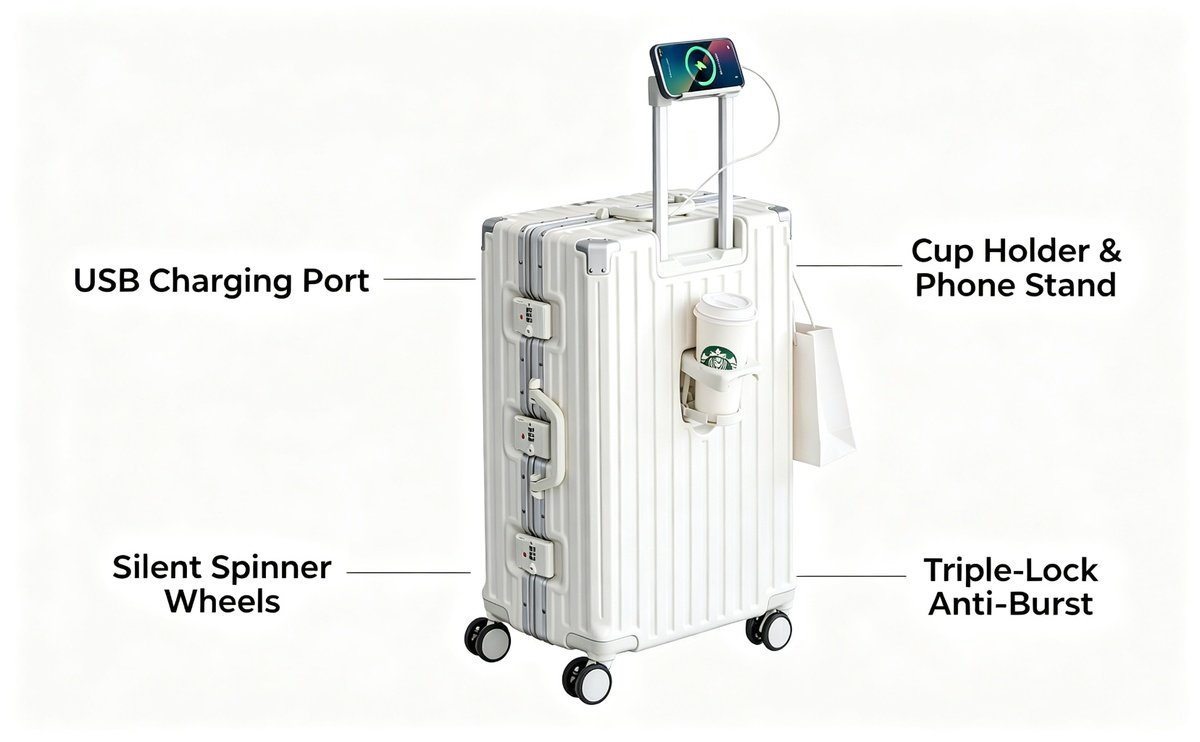
Source Roller Luggage from China 01

Sourcing Guide (Prices, Factory Regions & AgentStrategy)

1. Why Every Global Buyer Ends Up Sourcing Luggage from China

If your product line includes luggage, there is really only one answer on the global supply map: China.

That is not a slogan; it is something you can verify in the numbers. China produces luggage and bags in the billions every year. Baigou, a town in Hebei province, alone makes 800 million to 1 billion pieces a year, holds roughly 30–40% of China’s domestic market, and ships to more than 200 countries. China’s trolley-case exports equal about 64.7% of the world total (2025), which means roughly two out of every three trolley cases sold worldwide come from Chinese factories. In 2025, China exported around USD 34.5 billion of “trunks, suitcases and similar containers” (the HS 4202 family), up noticeably year on year, and the luggage subgroup (HS 420212, plastic or textile outer surface) alone runs into billions of dollars. On top of that, the core lines of the world’s leading brands — Samsonite, TUMI, DELSEY, Swissgear and ACE — are largely produced in Pinghu (Zhejiang) and Dongguan (Guangdong).

For a buyer, the real advantage of sourcing luggage wholesale from China is not simply that it is cheap. It is that you can build a complete price ladder in one place: from an entry-level ABS case at around USD 8 FOB, all the way to premium full aluminum-magnesium cases above USD 100, all within a single manufacturing cluster.

But “you cannot avoid China” is not the same as “easy to buy.” Language, culture, paperwork, shipping and inspection — a mistake in any one of them can eat up every dollar you saved on the factory price. This guide is written for buyers who want to import luggage from China but do not know where to start, and for buyers who have sourced before but keep getting stuck on on-the-ground problems. Before you commit to buying wholesale luggage from China, read through the factory regions, price ranges and agent strategy below — they are the parts most sourcing guides leave out.

2. Step One: Decide What You Are Actually Buying — Stock Wholesale or OEM/ODM Customization

Many newcomers treat “buying luggage from China” as a single task. In reality, the luggage wholesale market splits cleanly into two models, and taking the wrong one can cost you three months or a whole bad batch.

2.1 Off-the-Shelf (Stock) Wholesale

By definition, the factory has already designed the model and packed it in the warehouse. You simply buy existing SKUs, at most changing a logo or a color. For anyone testing the water, stock luggage wholesale is the fastest way to start trading.

AspectStock Wholesale
Best forDropshippers, offline stores, promo-gift sellers, buyers who want to test fast
Minimum orderVery low — some Baigou factories ship from 50–100 pcs
Lead timeFast — 3 to 15 days
PriceCheapest (no mold, no design cost)
DifferentiationAlmost none — hundreds of sellers may carry the same model
Biggest riskCommodity competition, price wars, no brand moat

2.2 OEM/ODM Customization

Here the factory produces to your design, drawings or sample (OEM), or rebuilds a proven shell for you with new colors, features and trim (ODM). This is the only path to your own brand and to real margin — which is why most private-label custom luggage projects start here.

AspectOEM/ODM Customization
Best forImporters and sellers who want a private label and higher margins
Minimum orderHigh — usually 300–600 pcs for logo/color work; 1,000–3,000 pcs for a brand-new mold
Lead timeLong — 7–15 days sampling plus 25–45 days bulk production
PriceHigher (sampling, mold and management costs)
DifferentiationStrong — style, function, color and packaging are all yours
Biggest riskBig upfront cost, an irreversible mold, and strict sample sign-off

2.3 A One-Line Decision Rule

If you want to move fast and test demand, start with stock wholesale and do not jump into customization. If you want a long-term brand and refuse to die in a price war, you have to go OEM/ODM — but bring capital and patience. The single biggest mistake new luggage buyers make is skipping straight to custom molds before the market has spoken.

Practical advice: most smart buyers “test with stock first, customize after the numbers are in.” Run 50–200 stock pieces through your market to validate color, size and price point, then invest in customization. This rule applies whether you are sourcing one container or building a private-label luggage line for the next five years.

Source Roller Luggage from China 02

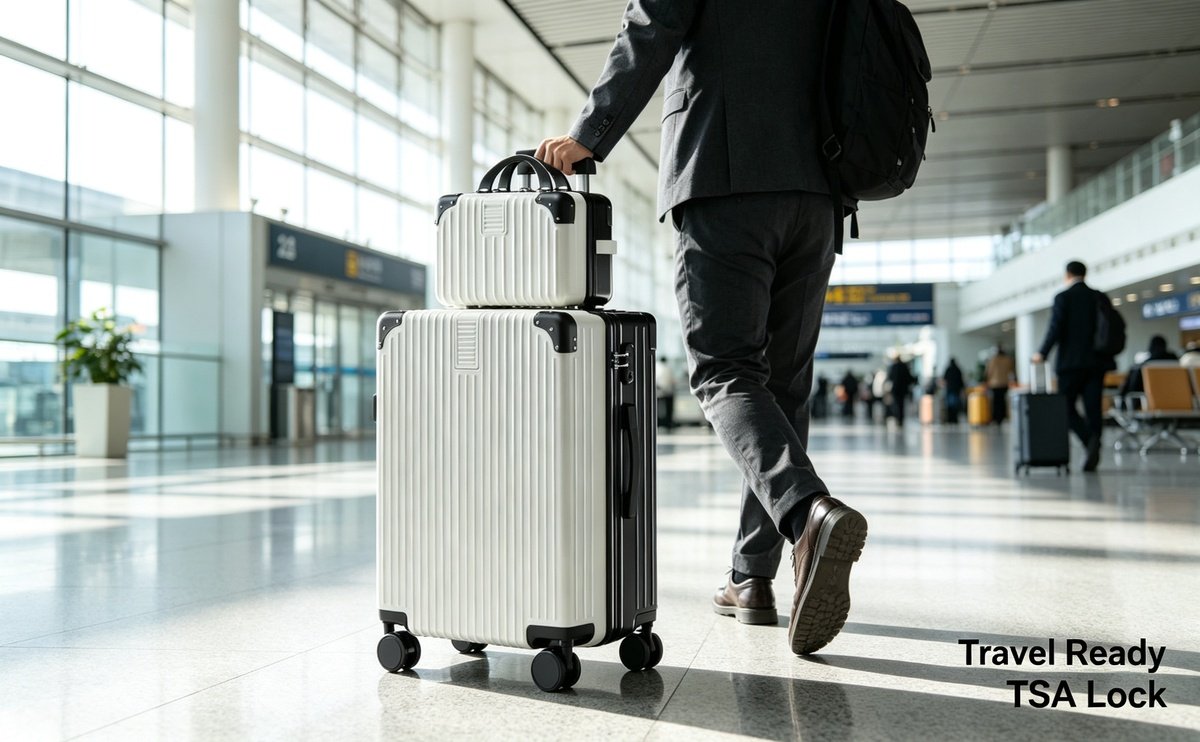
Source Roller Luggage from China

3. China's Luggage Factory Map: Match the Region to Your Needs

The Chinese luggage industry has a clear division of labor: Baigou does volume, Pinghu does quality, Dongguan does premium, Xingan does fast mid-range, Shiling does leather, and Jinjiang does sports. In practice, a savvy buyer of wholesale luggage from China picks the factory region that matches the order, rather than hunting for the lowest quote across the whole country.

3.1 Six Major Luggage-Producing Regions at a Glance


RegionPositioningCompany baseOutput / valueCore strengthsExport shareBest suited for
Baigou, HebeiLuggage capital · value & volume4,000+ makers, 30,000+ workshops800M–1B pcs/yr, 30–40% of China’s marketLowest cost, full supply chain, fast small orders (from 50 pcs), mature e-commerce base~40%, 200+ countriesStock wholesale, small test orders, promo gifts
Pinghu, ZhejiangTravel-luggage capital · premium hard-shell400+ companies, 56 above-scale112M pcs/yr, 37.6% of national outputSamsonite’s core base, strong PC/aluminum-frame process, deep mold capability58.3%, mainly EU/US/JapanMid-to-premium OEM/ODM, large orders
Dongguan, GuangdongPremium luggage OEM hub29 above-scale companies21.4M pcs/yr, 34.2% of national capacityTight QC, leading full aluminum-magnesium process, near Shenzhen port~70%, mainly EU/USPremium lines, metal cases, luxury OEM
Shiling (Huadu), GuangdongLeather goods parkMany small/medium makersCNY 19.26B park output, 39.6% of national park totalStrong leather/soft-shell craft, active brand incubation, Guangzhou air+sea hubs~50%Soft cases, leather cases, fashion models
Xingan, JiangxiRising aluminum-frame baseHuarong and mid-size cluster55M+ pcs/yr, ~20% of national outputDeep vertical chain (95% parts sourced locally), low labor cost, absorbs coastal transfer~30%, domestic + exportAluminum-frame cases, value hard-shell OEM
Jinjiang, FujianFootwear-luggage fusionFusion industrial parkCNY 7.86B park outputSports style, synergy with footwear/apparel, active cross-border e-commerce~45%Sports cases, soft cases, fast fashion

3.2 Small Custom vs. Large Custom — Which Region to Pick

This is the choice most buyers overlook, and it has the biggest impact on your cost and lead time.

Small customization (logo swap, color change, rebranding a stock shell): Baigou is the first choice. It has the largest pool of shared molds in the country, handles 50–500 pcs comfortably, samples in 3–7 days and ships in 15–25 days — a genuine edge for small custom luggage runs. If you want an aluminum-frame case on a smaller budget, Xingan is the second pick.

Large customization (new mold, structural redesign, smart features, premium materials): Pinghu first — mold development and Samsonite-grade process are its strengths, ideal for mid-to-premium PC and aluminum-frame lines. For premium metal cases, choose Dongguan; its full aluminum-magnesium alloy, surface finishing and welding are the best in the country. If you need 3,000+ pcs and must control cost, negotiate in Pinghu or Dongguan, or let Xingan take the mid-range volume. Most established luggage manufacturers in China can handle both, but each region has a clear ceiling on complexity and quality.

One rule to remember: small orders go to Baigou, big orders go to Pinghu, premium goes to Dongguan. Doing it backwards is not impossible in luggage sourcing — it just wastes your money and your lead time.

4. The Four Real Difficulties Every First-Time Buyer Faces

Most people assume that “find a factory on Alibaba, place an order, pay, receive the goods” is the whole story. It is not. These four hurdles cost almost every newcomer a tuition fee, and they apply to nearly every first attempt at buying wholesale luggage from China.

4.1 Language: It Is Not Just Translation

Foreign-trade staff at Chinese factories usually speak basic English, but technical details, material grades, tolerance standards and inspection clauses are very hard to communicate through translation tools. A “soft shell” can mean completely different structures at different factories, and a vague English spec sheet can turn into a very different product on the line. Something subtler is at play too: an English inquiry often lands with a “foreign trade salesperson” rather than the factory owner, so information gets distorted through layers — and so does the price.

4.2 Culture: The Negotiation Logic Is Different

Chinese factories like to “make friends first, then talk business,” and quotes usually leave room for bargaining. If you accept the first quote without pushing back, they may actually re-evaluate how professional you are. “Reply soon” in China means the same day or the next, but “start production soon” usually depends on a deposit (commonly 30%) — before payment, everything is a verbal promise. Also keep in mind Chinese New Year (capacity drops in January and February) and the National Day holiday (early October); luggage orders placed in those windows commonly run 2–4 weeks late, and newcomers who do not know this get stuck in the holidays.

4.3 Paperwork: More Complex Than It Looks

Exporting luggage from China means a full chain: contract → deposit → production → inspection → balance → booking → customs declaration (packing list, commercial invoice, declaration form) → sea or air freight → destination clearance (HS classification, import duty, possible anti-dumping or surtax) → inland delivery.

The most common mistake is HS code classification. Luggage is usually exported under HS 4202 (for example 420212), but the classification and duty differ by material (plastic, textile or metal surface) and by function (for instance built-in electronics). A wrong code means at best a delay and at worst a seized and fined shipment.

4.4 Shipping and Inspection: Where the Money Goes, the Risk Follows

Shipping: small batches by express or air are expensive; larger batches by sea LCL carry per-cubic-meter charges and port fees; FCL means you have to coordinate booking, trucking and customs yourself.

Inspection: this is the biggest trap in luggage sourcing. Chinese factories have a well-known reality — “the sample is the sample, the bulk is the bulk.” Sample-perfect, bulk-subpar happens more often than it should. Without a third-party luggage inspection or someone on the line, you find squeaky wheels, wobbly handles and off-color shells only after the goods arrive, and returning them costs more than throwing them away.

Currency and payment: Chinese suppliers mostly accept T/T but are also risk-averse. Orders above a certain size usually require a 30% deposit and 70% balance before shipment, which means you pay before you see the goods. The risk sits entirely with you.

These four hurdles are the root reason so many buyers “found a cheap factory and still lost money.”

Source Wide-Handle Luggage (trolley case) from China

5. Direct Sourcing vs. Using a China Sourcing Agent: A Side-by-Side Comparison

The question “should I hire an agent?” depends on three things: what your time is worth, how big your orders are, and how much risk you are willing to carry. For many importers, the tipping point is the first time a batch of wholesale luggage from China arrives with defects they cannot easily fix.

AspectSourcing Direct from FactoriesUsing a China Sourcing Agent
CostLowest on paper (no agent fee), but high hidden costsA service fee (often 3–8% of order value, or a fixed fee), but low hidden costs
CommunicationSlow — language, time zones, message distortionFast — the agent deals with factories in Chinese, directly
Quote accuracyHard to judge — padded quotes are commonAgents know the market and can push quotes near the floor
InspectionAlmost none unless you fly to ChinaCore value: on-site inspection, line follow-up, reports
Quality assuranceDepends on luck and contract wordingSomeone watches sample-to-bulk consistency
Risk coverageAll risk on youAgent blocks problems and cuts bad-goods losses
Paperwork & logisticsYou deal with customs and forwarders, easy to slip upAgents usually have vetted forwarders and customs channels
Supplier managementNone — you argue alone when problems hitBuilds a supplier ledger and handles after-sales disputes
Best forExperienced buyers, big orders, plenty of timeNew buyers, scattered orders, little time, burnt before

Conclusion: if you are an experienced buyer moving dozens of containers a year, with your own inspection team or a person based in China, direct sourcing leaves you the biggest margin. If you are new, or your orders are medium-sized, or you have already been burned by language, inspection and communication problems, sourcing wholesale luggage through a reliable China sourcing agent covering quotes, negotiation, inspection, order follow-up and logistics handoff is very often cheaper on a total-cost basis.

6. Two Sourcing Plans by Order Size

Different order sizes call for different playbooks. Below are two plans that cover the two most common ways people buy wholesale luggage from China — a small test order and a large bulk order.

6.1 Small Test Order Plan (50–500 pcs)

Goal: validate the market with the least money — do not lose, learn the trade.

Region: Baigou first, Xingan for aluminum-frame. Model: stock wholesale or a rebranded stock shell, no new mold. Order size: start from 50–100 pcs — a sensible first luggage test order before any big commitment.

How to execute: (1) find a Baigou stock or shared-mold luggage factory and ask for real videos and actual transacted prices — watch out for unrealistically low bait quotes; (2) buy one or two samples first and ship them to your country to check quality, size and weight — the freight is worth it; (3) use express or air for small orders and avoid sea LCL, whose fixed fees will eat your margin; (4) even for a small test order, arrange one third-party inspection or agent follow-up, otherwise you are not testing real quality.

Budget reference: ABS cases at CNY 60–120 per piece ex-works, about USD 8–17 FOB. Recalculate your selling price including freight and duty.

6.2 Large Bulk Order Plan (1,000+ pcs / Full Container)

Goal: build your own brand, lock in cost, secure supply.

Region: Pinghu (mid-to-premium PC and aluminum), Dongguan (premium and metal), Xingan (value hard-shell). Model: OEM/ODM with a contract, fixed MOQ and tiered pricing — the standard structure for bulk luggage orders.

How to execute: (1) write a clear spec sheet — material, size, weight, wheels, locks, lining, packaging — in both English and Chinese; (2) sample and iterate for 2–4 rounds, then sign off on a physical golden sample, which becomes the only acceptance standard for bulk; (3) agree on T/T terms, aiming for 30% deposit + 40% after inspection + 30% before shipment, or 30/70 with the balance against a copy of the bill of lading; (4) during bulk production, arrange on-site follow-up or a third-party inspection (SGS, ITS, or your agent), with a mid-production check and a pre-shipment check; (5) ship by sea FCL, book two to three weeks ahead, and avoid Chinese New Year and the National Day holiday.

Budget reference: PC cases at CNY 150–300 ex-works, about USD 21–42 FOB; aluminum-frame cases at CNY 250–450, about USD 35–63 FOB.

7. How to Find a China Sourcing Agent with Transparent Fees

The biggest fear with an agent is being “double-dipped.” The key, then, is to check whether the fee model is transparent — not whether they charge at all. A good sourcing agent is worth their fee when they handle your luggage orders end to end, but only if you can see exactly what you are paying for.

7.1 What a Transparent Agent Looks Like

CheckpointTransparent agentOpaque agent
Fee modelClearly priced: a fixed service fee or an explicit commission (e.g. 3–5% of value), written into the contractClaims to be free — “the factory pays the commission” — which is usually already baked into the price
Quote logicSeparates the factory price from the agent fee, so you can see the gapGives one lump total and refuses to break it down
Payment pathGoods paid directly to the factory; agent fee paid separately (or a clear three-party agreement)Asks you to pay everything to the agent’s account
Inspection reportProvides photos, videos and an item-by-item checklistJust says “it all looked fine”
Service scopeContract states exactly what is included: quotes, negotiation, inspection, follow-up, logisticsPromises everything verbally, blames the factory when problems come

7.2 How We Recommend You Contract an Agent

Prefer a model of “fixed commission on order value plus a per-inspection fee,” and ask that the commission not be baked into the factory quote — ask the agent to share the original factory quotation so you can cross-check. Request past inspection reports and contact details of at least two factories they work with, then verify. Sign a formal agreement that states the service scope, the fee breakdown, the inspection standard and the responsibility boundary. Finally, run the first one or two orders at a small value to test the working relationship before you scale up.

A good agent earns their fee by cutting more off the price than their commission costs, blocking bad goods, and saving you travel and rework expenses. On a total-cost basis, a transparent agent saves you money; it does not cost you money.

8. Price and Material Reference Tables (2025 Market Rates)

8.1 Price Ranges by Material

MaterialPositioningKey traitsTypical useEx-works (CNY/pc)FOB (USD/pc)Retail ref. (USD/pc)
ABSEntry-levelCheap, colorful, average impact resistanceStudents, short trips, promo gifts60–1208–1730–60
ABS+PCMid-rangeGood balance of cost and toughness, the mainstreamBusiness trips, family travel, entry brand lines100–18014–2560–120
Pure PCMid-to-premiumLight, tough, matte or mirror finishesFrequent travel, studying abroad, mid-tier brand lines150–30021–4280–200
PP (polypropylene)Light mid-rangeVery light, recyclable, slightly higher costAir travel, weight-sensitive passengers130–25018–3570–150
Aluminum-frame (PC/ABS shell)Mid-to-premiumStrong frame, premium look, TSA lock standard, heavierBusiness elite, long trips, mid-to-premium lines250–45035–63150–350
Full aluminum-magnesiumLuxuryMetal feel, extremely durable, repairable, heavyHigh-end business, luxury lines400–800+56–110+250–500+
Soft case (nylon/polyester/EVA)Business-lightExpandable, light, outside pockets, not waterproofCommuting, short flights50–1507–2140–100

8.2 Sizes and Use Cases

SizeCapacityTypical useCustom popularity
14–16 inMakeup / briefcaseCarry-on companion, cosmetics★★☆
18–20 in30–40 LCarry-on, 1–3 day trips, business★★★★★
22–24 in50–70 L3–7 day trips, domestic travel, students★★★★
26–28 in80–110 L7+ day trips, studying abroad, family★★★★
30–32 in120 L+Very long trips, relocation, sports gear★★
Sets (20+24+28 in)CombinedFamily travel, gift bundles, brand lines★★★★★

8.3 Customization Options and MOQs

CustomizationWhat it includesTypical MOQSamplingProduction
LogoScreen print, laser, metal plate, rubber badge300–500 pcs3–7 days25–35 days
ColorPantone matching on shell, handle, wheels, lining500–600 pcs5–10 days30–40 days
Lining / partsPrinted lining, dividers, zipper brand, locks500 pcs7–10 days30–40 days
Structural changeFront-opening, wide-handle and other shell changes500–1,000 pcs10–15 days35–45 days
New mold (ODM)Developing a completely new shell from zero1,000–3,000 pcs20–35 days40–60 days
Baigou quick turnaroundStock shell + new logo/color, flexible mixed orders50–100 pcs3–5 days15–25 days

8.4 Export Volumes and Destinations (2024–2025)

Indicator20242025
China luggage & bags exports (10k tonnes)271.0300.7
China luggage & bags exports (USD bn)29.8934.54
China’s share of global trolley-case exports~64.7%
Top destinationsUS, EU, Japan, ASEANUS 28–32%, EU 22–26%, Japan 8–10%, ASEAN 12–18%

9. Summary: An Action Checklist for Three Types of Buyers

First-time buyers: (1) run a 50–100 pcs stock test order from Baigou and ship by express; (2) test two or three samples for real quality before scaling; (3) strongly consider an agent or third-party inspection from the very first order.

Mid-size buyers building a brand: (1) choose Pinghu or Dongguan for OEM/ODM, sign a spec sheet and physically sign off the sample; (2) start from 500–1,000 pcs and lock the MOQ and tiered pricing; (3) arrange on-site follow-up plus a pre-shipment inspection for bulk production.

Buyers who have sourced before but keep hitting on-the-ground problems: (1) hand inspection, order follow-up, supplier management and after-sales coordination to a China sourcing agent; (2) use a “transparent fees, pay the factory directly” model to turn the agent into your in-China purchasing department; (3) ask the agent to set up two or three backup factories to avoid single-supplier risk.

Wholesaling luggage from China is less about “who found the cheaper factory” and more about “who managed the hidden risks — language, inspection, lead time, quality — earlier.” Whether you buy directly or through an agent, keep the same checklist for every order of wholesale luggage, and update it after each container lands. May your next one arrive safely.

10.Frequently Asked Questions (FAQ)

Q1: What is the minimum order quantity (MOQ) when wholesaling luggage from China?

A: It varies a lot. For wholesale luggage from China, Baigou stock or shared-mold orders can start at 50–100 pcs; logo and color customization usually runs 300–600 pcs; a brand-new mold (ODM) needs 1,000–3,000 pcs. If you only want to test the water, start with stock wholesale and do not begin with customization.

Q2: Which saves more money — sourcing directly or using a China sourcing agent?

A: On paper, direct sourcing saves the agent fee. But once you add language, inspection, rework losses and travel, many buyers actually pay more for their wholesale luggage. A transparent agent with clearly priced fees and factory-direct payment usually negotiates down enough to cover its own commission. Experienced large buyers can go direct; newcomers and buyers who have been burned are better off with a China sourcing agent.

Q3: What hidden costs come with buying luggage from China?

A: Beyond the ex-works price there is usually sampling, mold tooling (for customization), domestic freight, customs, sea or air shipping, destination duty and VAT, possible port surcharges, plus the time you spend on inspection and communication. Anyone buying wholesale luggage from China should build FOB + freight + duty + a 10% buffer into their pricing — never price from the ex-works figure alone.

Q4: What documents do I need to export luggage, and which HS codes apply?

A: You generally need a commercial invoice, packing list and customs declaration; destination clearance may also require a certificate of origin (for example FORM E or an RCEP certificate). Luggage is usually exported under HS 4202 (such as 420212 for plastic or textile outer surfaces), and the classification and duty change with the material and whether it carries electronics. On your first shipment, have an agent or forwarder confirm the code to avoid clearance delays.

Q5: I want to build my own brand of luggage. What is the process?

A: Write a spec sheet (material, size, parts, packaging) → get quotes → sample over 7–15 days (usually 2–4 rounds) → sign off a physical golden sample → place the order with agreed deposit and balance terms → bulk production over 25–45 days → mid-production and pre-shipment inspection → pay and ship. The one hard rule: never approve bulk production without a physical sample you have seen and signed.

Q6: When is the worst time to place an order in China for lead time?

A: Chinese New Year (January–February, factories commonly close for 2–4 weeks) and the National Day holiday (early October) are capacity lows; the cross-border peak season (September–November) keeps factories busy. Place bulk orders outside these windows and put a delay-compensation clause in the contract.

Q7: Which city in China is best for a small-volume buyer like me?

A: Baigou in Hebei. It has the largest pool of shared molds and the strongest small-order capability in the country — 50–100 pcs is workable and delivery takes 3–15 days, which is why it dominates small wholesale luggage orders. For an aluminum-frame case on a budget, look at Xingan; for mid-to-premium brand customization, move up to Pinghu and Dongguan.

Q8: How can I tell whether an agent or factory is trustworthy?

A: Four checks, for any luggage agent or factory: (1) ask for the business license and real workshop photos or video; (2) run a small trial order and test samples yourself; (3) ask the agent for past inspection reports and two factory contacts you can verify; (4) insist on factory-direct payment and itemized fees in the contract — refuse to pay everything to an agent's personal account.

Leave a Reply

Your email address will not be published. Required fields are marked *