Factory Verification

How We Source Soundproof Insulated Windows from China

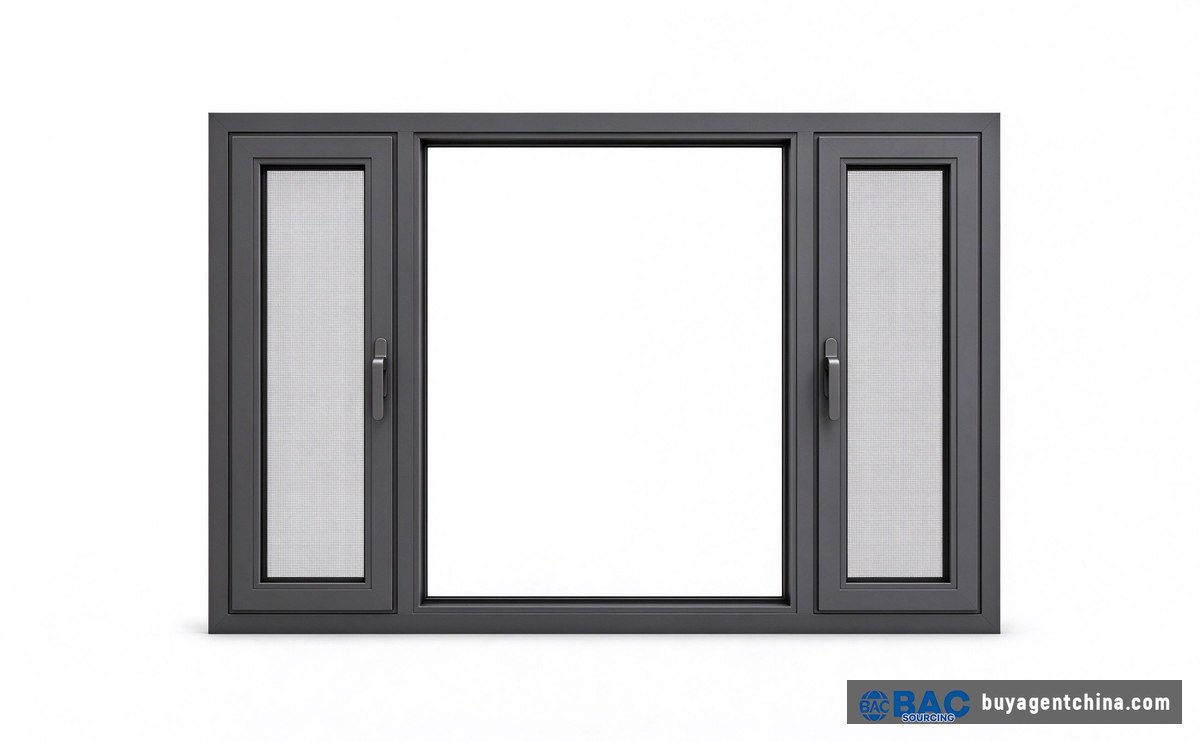
Thermal-break aluminum casement window — stock double-glazed model for residential projects
Soundproof insulated windows are a spec game — fix the glass configuration before you talk price. Foshan exported USD 270M of aluminum windows in 2025, up 35%.

1. Why We Start with the Glass Spec, Not the Quote

Fifteen years in Chinese sourcing, and I still open a window order the same way — on the spec sheet, not on the photo. The reason is simple: “soundproof window” is a marketing phrase, not a technical standard. Ask factories in Foshan, Shandong and Jiangsu to quote the same-sounding window, and the numbers can sit five times apart. The things that split them never show up in a picture: the number of panes, their thickness, the air-gap width, argon fill, acoustic PVB interlayers, Low-E coating, a thermal-break frame or not, and whether the seals are EPDM or plain PVC.

Two numbers decide everything in this category: Rw (weighted sound reduction) and the U-value for heat loss. Rw is the sound number, U-value is the thermal number. What a buyer calls “soundproof and insulated” lives in those two figures, not in any rendering. So when a window inquiry lands on our desk, the first thing we pull out of the supplier is the glass specification sheet, not the price. Price can be negotiated. A wrong glass build is a whole batch scrapped, and you only find out at the dock.
Why does the global buyer end up here at all? Because China is the only place where the full window supply chain sits inside a couple of hundred kilometres. Extrusion, hardware, tempering, insulated-unit assembly, final assembly and crating — all of it within a short drive. A buyer in Berlin, Dubai or Sydney can route one inquiry and have three complete factory ecosystems quoting back within a week. That convenience cuts both ways. The same chain that makes a USD 20/m² UPVC window possible also makes a “looks double-glazed” downgrade possible. That is why our team treats the spec sheet as the contract’s first page, before any number gets discussed.
One habit we have drilled into every client: send the glass spec, not a photo, with your first inquiry. A one-line request — “please quote 5+12A+5 tempered, argon-filled, Low-E on the inner pane, EPDM seals, with your hardware brand” — filters out half the factories immediately. The ones that quote straight on a written build are factories. The ones that ask “can you send me a picture of what you want” are usually traders. That single message saves more time than any negotiation trick we know.
The Glass Configuration Table We Use to Shortlist
Glass configurationTypical buildRw referenceBest forEx-works price reference (2026-10)
Single glazing5mm float~25Quiet suburbsUSD 15-30/m²
Symmetric double glazing5+12A+530-32Light traffic, insulation firstUSD 50-70/m² (UPVC)
Asymmetric double glazing5+16A+635-38Street-facing, moderate trafficUSD 60-110/m² (thermal break)
Acoustic laminated double6+12A+6.76PVB (acoustic PVB)38-42Main roads, rail corridorsUSD 90-160/m²
High-performance acoustic systemAsymmetric + laminate + wide argon gap43-46+Flight paths, heavy trafficQuoted per project
One line of context: symmetric double glazing — two panes of equal thickness — is the insulation favourite, but it is not the acoustic favourite. Equal panes resonate together at certain frequencies and the soundproofing dips. Quiet rooms need unequal pane thickness or a laminated layer. That confusion is the first trap buyers step into: assuming double-glazed automatically means soundproof.

2. Which Chinese Factory Clusters We Match to Your Order

Chinese windows are not one soup; they are a handful of clusters with different jobs. In July 2026, Nanhai in Foshan became the first provincial specialty cluster in China built around custom doors and windows. The numbers: 165 core companies, a cluster output of CNY 31.3 billion in 2025, more than 2,800 supporting suppliers, nine out of ten top domestic aluminum window brands born here, and over 35% of the high-end market. Foshan’s aluminum profiles have long supplied about a third of national output. More than 500 above-scale profile makers operate here.
“Foshan is the strongest” does not mean your order belongs in Foshan. Volume stock, project windows and premium custom builds match different clusters. Our internal routing table splits orders on four axes: order size, build complexity, certification demands and budget.

2.1 How We Pick Between the Big Three Clusters

ClusterPositionScale signals (2025)StrengthBest for
Foshan, Guangdong (Nanhai)Premium custom + exportCluster output CNY 31.3B; aluminum window exports USD 270M, +35%Thermal-break system windows, premium custom, brand OEMMedium-large runs, premium custom, exports to EU/AU/US
Linqu / Qingdao, ShandongProject support + profilesStrong profile and project window baseUPVC, project windows, valueProject tenders, volume, budget-sensitive
Jiangsu (Nantong/Wuxi) + ZhejiangGlass processing + exportDense Yangtze-Delta supply chainInsulated glass, system windows, AU/US-standard exportsStandardized exports, full certification
Shandong UPVC casements leave the factory around USD 20-30/m². The same-spec window from Shanghai or Nantong quotes USD 45-70/m², and a Foshan thermal-break system runs USD 79-129/m². That spread is not random pricing — it is configuration and standards talking. Our habit: send one identical spec sheet to one factory in each cluster, and compare what comes back — price, MOQ, and what each factory means by “soundproof.” The answers regularly surprise us.

2.2 How We Read a Cluster's Export Record

Export records are the best health check a buyer can ask for. Foshan customs reported in January 2026 that aluminum door and window exports reached USD 270M in 2025, up 35%. They cover more than 70 countries across Southeast Asia, Africa and the Middle East. A cluster whose exports grow steadily has lines, certifications and customs routines that have survived international inspection — worth more than any brochure. And the reverse holds too: a factory that tells you it “only serves Europe and America” but cannot produce a CE, NFRC or AS2047 certificate is selling you a phrase, not a fact.

A word on those certificates, because they are how you read a window quote without being an engineer. CE covers EU construction-product rules, NFRC is the North American energy-performance label, AS2047 is the Australian window standard, and GB/T 8485 is the Chinese sound-insulation test. None of them is a photo in a listing. A real one has a report number you can check with the issuer; a fake one has a PDF. When a factory says “we hold CE,” ask for the report number and the test lab. Five minutes of that habit kills most of the noise in a quote pile.

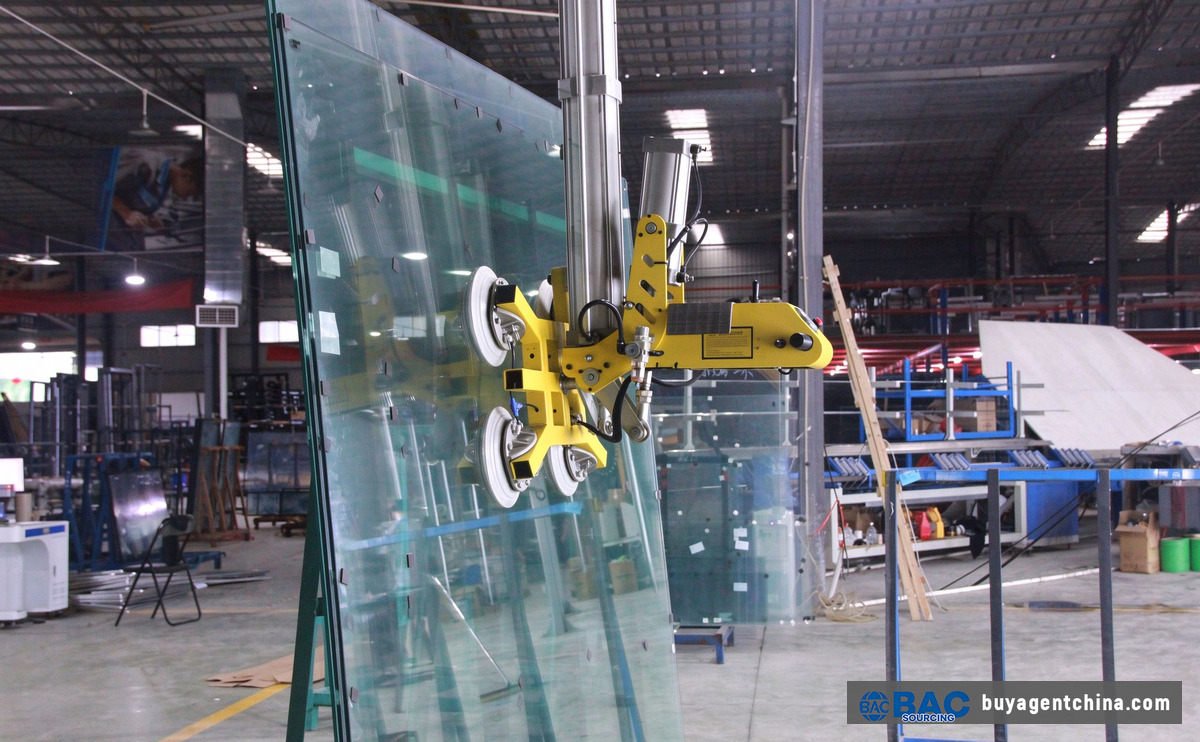
Vacuum-lifter glass handling — large sheets moved on the processing floor

Vacuum-lifter glass handling — large sheets moved on the processing floor

3. What We Check Inside a Factory Before You Order

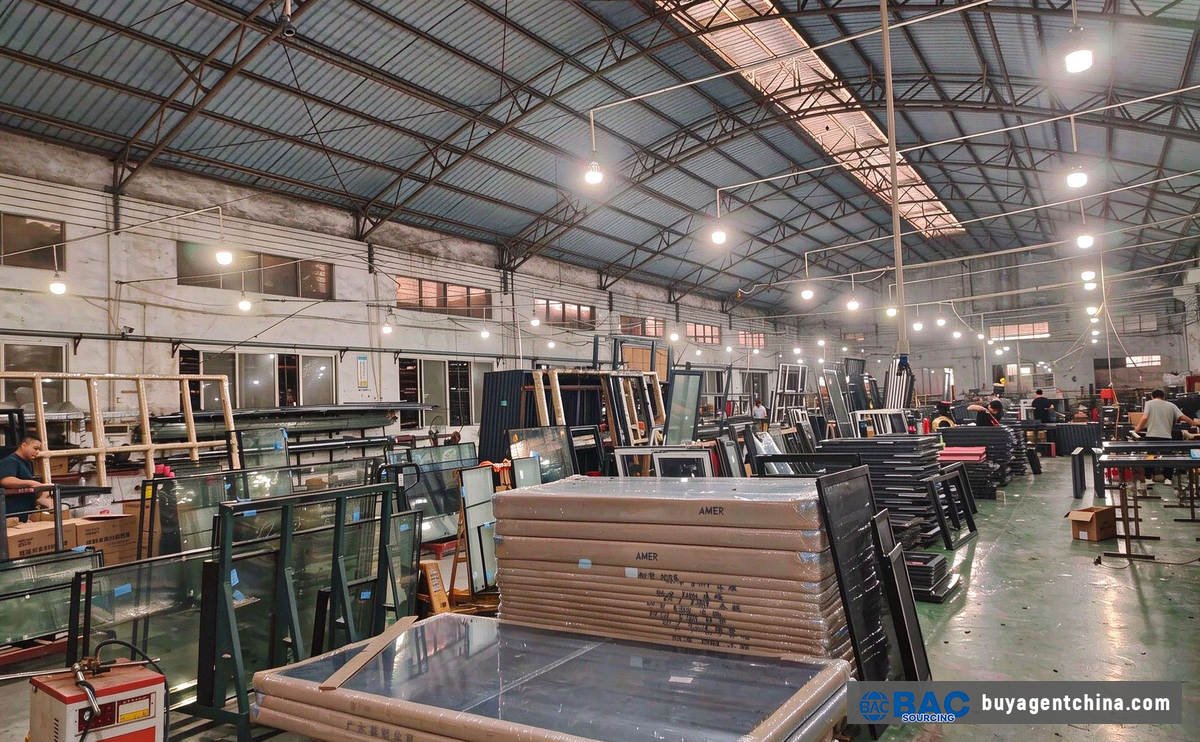
We do not audit factories from an office by watching videos. Factory checks happen on the workshop floor. I trust audit reports, but I trust my own ten minutes in the workshop more. In a window plant, four stages matter: profile extrusion, glass processing, assembly and packing. Cutting, tempering and insulated-unit assembly all sit inside the glass stage. The housekeeping of the insulated-unit line decides whether your sound and heat numbers actually land — interlayer film laid straight, desiccant filled, sealant applied evenly. All of it is visible on site in minutes.

A typical verification day runs in two halves. The morning goes to the floor: glass warehouse, insulated-unit line, profile storage, assembly benches and the QC bench — in that order. The afternoon goes to the paper: material certificates for glass and profiles, the Rw/STC or NFRC reports behind the marketing numbers, order history for similar export builds, and a walk of the packing area to see how windows are crated for sea freight. If a factory is reluctant to show the afternoon half, the morning half tells us why.

3.1 The Five Checks That Never Change

CheckWhat we look atWhat it signals
Glass warehouseRaw glass brand, measured thickness, traceable Low-E coatingWhether off-spec or downgraded sheets get substituted
Insulated-unit lineUnit cleanliness, desiccant, sealant uniformityWhether the acoustic/thermal numbers will survive
Profile storageNylon thermal-break strip or PVC lookalike, wall thickness by caliperThe profile downgrade path
Hardware and sealsHardware brand, EPDM seal resilienceAir-tightness five years out
QC benchIn use or not, records kept, acoustic/air-tightness test gearReal QC or a prop
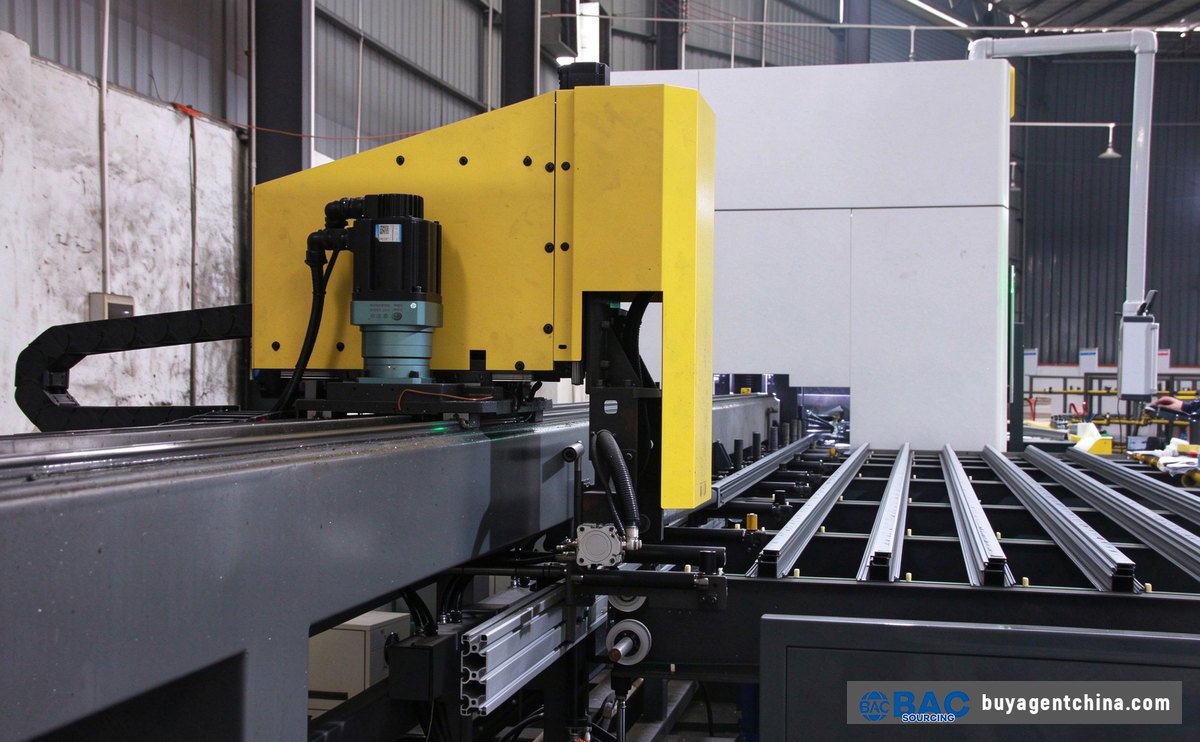
CNC aluminum profile machining station — automated profile processing equipment

CNC aluminum profile machining station — automated profile processing equipment

Samples get tested for three things, not for looks. Shut the window and listen — that is the subjective half. Flood or spray it for water tightness. Then check the Rw/STC report against the spec sheet. A sample is a sample, and mass production is mass production — I have said it for fifteen years, and windows deserve the caution more than most: a hand-picked sample can be perfect, while bulk production runs off the whole line.

3.2 Red Flags We Walk Away From

When a supplier says “absolutely no problem,” I am usually already lining up a backup. A few flags end the conversation early. A quote that writes “double glazing” without a glass build. A claimed 45 dB rating with no Rw/STC or NFRC test report. PVC pretending to be a nylon thermal-break strip. And a factory that books a rented showroom to “audit” in.

How we test the sample itself deserves a small routine. It is cheap, and it catches most problems before money moves. We shut the window and listen from two metres and from the street side if possible — a surprising number of “acoustic” windows fail this simplest test. We flood the sill with a hose or tip a bucket of water against the frame to watch for weep-hole leaks. We run a caliper over the profile wall thickness and check the glass edge for the manufacturer’s tempering mark and the spacer stamp. And we ask for the unit’s Rw/STC report and read the number against our spec sheet, not against the brochure. Forty-five minutes of this in a warehouse beats a week of email reassurance.

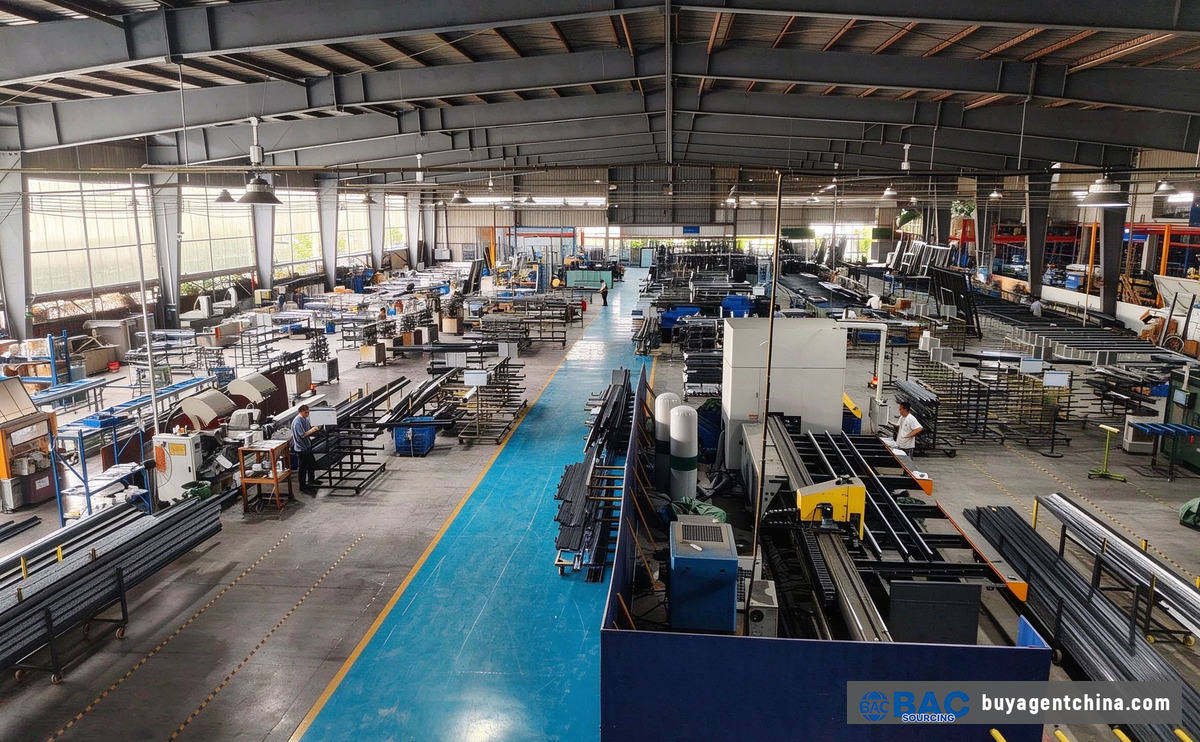
Window factory workshop floor — profile cutting and assembly area

Window factory workshop floor — profile cutting and assembly area

4. How We Price, Negotiate and Protect the Order

4.1 What the Quote Actually Contains

Window quotes are one of the easiest places in building materials to hide money. For the same-looking window, the spread lives in four places. The glass build (real double glazing or “looks double”). The hardware brand (genuine German or a domestic imitation). Profile wall thickness (1.4mm or under 1.2mm). And whether the ex-works price includes tax and packing. We ask every supplier to split a quote into four fields: glass structure, hardware brand and model, profile thickness and surface finish, and the FOB/EXW terms.

ModelEx-works price reference (2026-10)MOQ reference
UPVC casement (double glazing)USD 20-55/m² (1688: ~CNY 260-400/m²)From 10 m²
Aluminum non-thermal-break (double glazing)USD 45-70/m² (1688: ~CNY 190-260/m²)2-10 m²
Thermal-break system window (Low-E/argon)USD 60-130/m² (1688: ~CNY 360-1000/m²)From 2 m²
Premium acoustic system (laminated + argon)USD 140-200/m²Quoted per project

One paperwork note that pays for itself: aluminum windows and their frames ship under HS 7610, and the US HTS line 7610.10.00 carries a base rate of 5.7% as of October 2026 (USITC HTS Chapter 76). Get the HS code wrong, and a whole container sits at the dock while your margin disappears.

4.2 Negotiation Lines That Hold

Negotiating is fine, but do not squeeze a supplier until they cannot afford new molds — that is bargain-hunting, not sourcing. On windows, our counter-order is: ask for a price ladder first (50, 100, 300 m² at what prices), then ask what the ex-works price is without tax (that flushes out the real floor), and only then argue about the unit price. The leverage that actually saves money is not the unit price. It is standardizing the glass build (turn non-standard sizes into common ones), shortlisting two hardware brands and comparing their quotes, and staging payment — 30% deposit, balance after inspection.

We run two order plans depending on what the buyer is testing. A small test order — say 5-20 windows or 10-30 m² — uses stock configurations, standard sizes and one factory. The goal is a landing lesson, not a price victory: how the factory communicates, how the crates survive transit, how the hardware feels after installation. A bulk order — a container or more — brings the full routine. Golden sample signed by both sides. Glass build written into the contract line by line. Three-stage inspection. Upright crating on wooden frames. And a loading date that stays out of the Chinese New Year window, when lines slow and freight prices climb. Both plans matter, but the small one protects the big one.

Packed glass units with AMER markings — packing area walk-through

Packed glass units with AMER markings — packing area walk-through

4.3 Inspection, Payment, and Direct vs Agent

A small test order only needs the first leg of the three-stage check (30-50% of production, 100% completion, and loading supervision). A full container gets all three. Window inspection is different from consumer goods: check each sampled unit for glass seals, hardware operation, a continuous seal loop, and packing — windows must travel upright on wooden frames; laid flat, the glass cracks. On payment, put down the usual deposit, but never pay the balance in full before the goods pass inspection.

Freight deserves its own sentence because windows are awkward cargo: heavy, glass-heavy and cube-hungry. Get the CBM right before you compare freight quotes. Ask the forwarder for the full landed list — port charges, storage, inspection fees, destination-side handling — not a headline rate. And if you are consolidating, say explicitly that window crates must stay upright. A shared container is where “laid flat” happens. We have watched more than one margin die inside a container that was packed with good prices and bad orientation.

DimensionDirect from factoryTransparent agent (e.g. Buy Agent China)
Price truthYou usually get a trading-company price, not the factory floorOriginal ex-works price is visible
Factory auditYou fly over yourselfOn-site verification (service-page rate: USD 170/day)
Spec checkingTranslation and follow-up costs land on youGlass, profile and hardware checked line by line
InspectionYou trust the word of the supplierThree-stage checks plus loading supervision
Small test ordersEnglish + MOQ friction is realHelp with consolidation and shared containers

Our honest position: run your own first round of quotes, then decide whether you need someone to verify. A transparent agent’s value is not “buying for you” — it is checking. And because windows are a build-to-spec category, the check has a fixed shape. We take your glass build and target markets. We shortlist two factories per cluster against the spec. We verify the shortlist on site or via a live production video. We cross-check the Rw/STC and certification reports. Then we return a comparison sheet with the ex-works price each factory actually named. You see the same numbers the factory quoted us, no markup on top. The service fee is published on our services page; the factory invoice stays visible. That is the entire business model — which means the only way we make money twice is if you come back, not if we inflate a quote.

After fifteen years of this trade, my read is that a soundproof insulated window is not something you buy, it is three actions you execute: lock the spec, verify the factory, supervise the inspection. Get those right and the rest is market and luck. When you need a factory verified, a quote cross-checked or loading watched, Buy Agent China works on published service fees. We do not mark up goods. Send over your spec sheet and we will give you a free 15-minute read on direction.

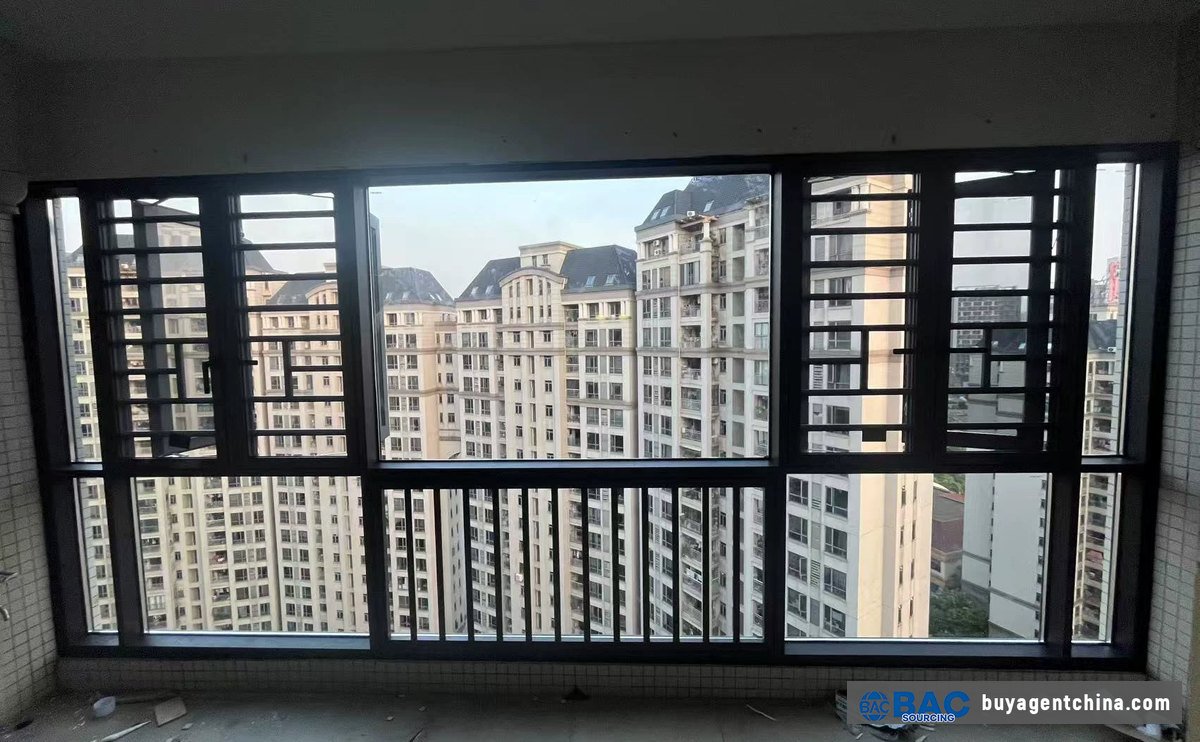
Installed result — balcony glazing in a renovation project

Installed result — balcony glazing in a renovation project

5. Frequently Asked Questions (FAQ)

Q1. What is the minimum order quantity for soundproof insulated windows from China?

A1. Standard-size UPVC casements commonly start at 10 m²; thermal-break system windows start at 2 m². Custom sizes and non-standard builds are quoted per project, and most Foshan factories accept 2-10 m² for sampling.

Q2. How much do soundproof insulated windows from China cost per square meter?

A2. In our October 2026 quotes: UPVC double-glazed units run about USD 20-55/m², thermal-break system windows USD 60-130/m², and premium acoustic laminated systems USD 140-200/m². The glass build, hardware and profile set the number.

Q3. Does double glazing equal a soundproof window?

A3. No. Symmetric double glazing — two panes of equal thickness — rates only Rw 30-32 and barely touches traffic noise. Soundproofing needs unequal pane thickness or an acoustic PVB layer (Rw 38-42). Pick double glazing for insulation, laminated or asymmetric for sound, and combine both for a true soundproof insulated window.

Q4. Can I trust a factory that claims "45 dB soundproofing"?

A4. Only with evidence. Credible numbers come from three places: a test report to GB/T 8485 or ISO 10140, an Rw (STC) rating, and whole-window measurement, not bare glass. A single marketing figure with no report is a phrase, not a spec. Frame sealing can shift real-world performance by 5-8 dB, so a lab number is never the number you will hear in your wall.

Leave a Reply

Your email address will not be published. Required fields are marked *