Procurement Guides, Sourcing Tips

How to Source the Right Formaldehyde Detectors from China?

How to Source the Right Formaldehyde Detector in China 01

Production Hubs, Export Data & Full Sourcing Guide

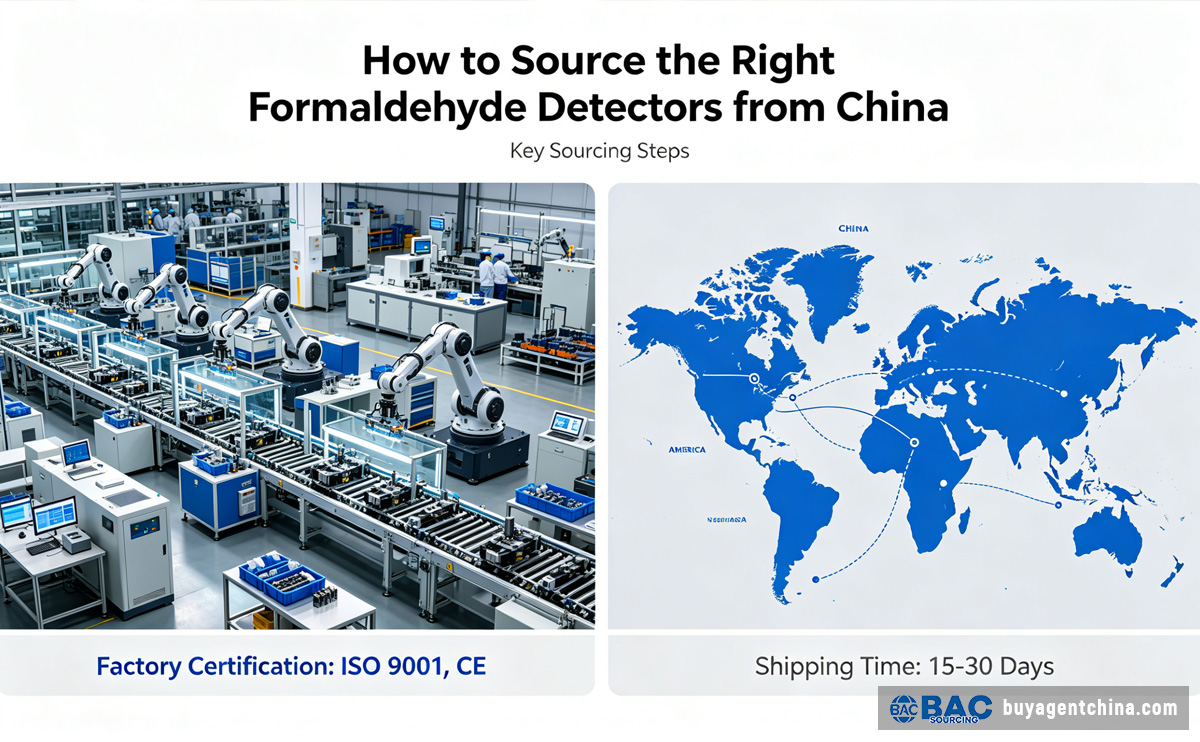
As global awareness of indoor air quality continues to rise, demand for formaldehyde detection equipment grows steadily across consumer, commercial and industrial sectors. For overseas importers, cross-border e-commerce sellers, engineering contractors and environmental service providers, China stands as the world’s most cost-competitive sourcing destination for formaldehyde detectors. Chinese factories supply 46.1% of all formaldehyde testing units sold globally, with a full product matrix ranging from budget portable household models to high-precision industrial systems, backed by a mature and highly responsive supply chain.
Yet sourcing formaldehyde detectors from China is not without challenges. First-time buyers often struggle with language gaps, complex compliance procedures and hidden quality risks. Even experienced importers face recurring frustrations with remote quality control, fragmented multi-supplier management and opaque logistics costs when dealing directly with domestic factories.
This guide breaks down China’s formaldehyde detector industry landscape, latest export data, and common cross-border sourcing pitfalls, to help you connect with reliable suppliers and reduce procurement risk efficiently.
How to Source the Right Formaldehyde Detector in China 02 Define Your Product Category
Define Your Product Category

1. Define Your Product Category First to Match the Right Supply Chain

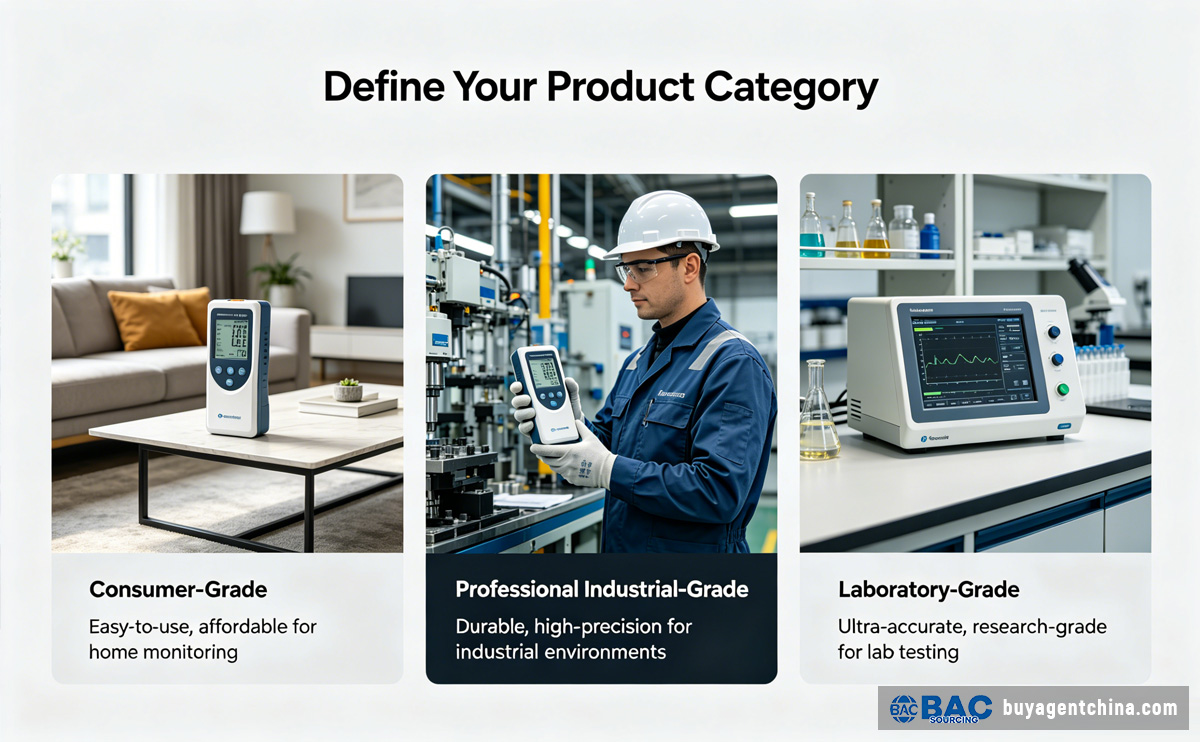
Before you start sourcing formaldehyde detectors from China, clarify your target use case. Different product categories correspond to entirely different supplier groups, price ranges and certification requirements. Mismatching your needs to the wrong supply base will drive up costs and hurt end-market performance.
  • Consumer-Grade Portable Formaldehyde Detectors
     
    Designed for residential use and post-renovation testing, these units typically combine formaldehyde, TVOC, PM2.5, temperature and humidity monitoring in one compact device. Priced between $10 and $150 per unit, they are the best-selling category on Amazon, AliExpress and Temu. These products feature short development cycles, and buyers prioritize industrial design, Wi-Fi/Bluetooth connectivity and mobile app integration. This category is ideal for B2C retail sellers looking for portable formaldehyde detector wholesale inventory.
  • Professional Industrial-Grade Formaldehyde Meters
     
    Built for environmental law enforcement, occupational health testing and project acceptance inspections, these devices deliver higher accuracy, stronger anti-interference performance and better long-term stability. Most are portable single or dual-parameter units priced from $500 to $3,000. They usually require metrology certification for the target market, and strict factory calibration is critical. This category suits B2B service providers and engineering contractors sourcing industrial formaldehyde monitor solutions from China.
  • Online Monitoring & Laboratory-Grade Formaldehyde Analyzers
     
    Used for continuous industrial emission monitoring and precision laboratory research, these are mostly fixed online systems or benchtop analytical instruments priced from thousands to tens of thousands of dollars. They are highly customized and typically procured as part of larger engineering projects.
How to Source the Right Formaldehyde Detector in China 03 China's Core Production Hubs
China’s Core Production Hubs

2. China’s Core Production Hubs: Match Suppliers to Your Exact Needs

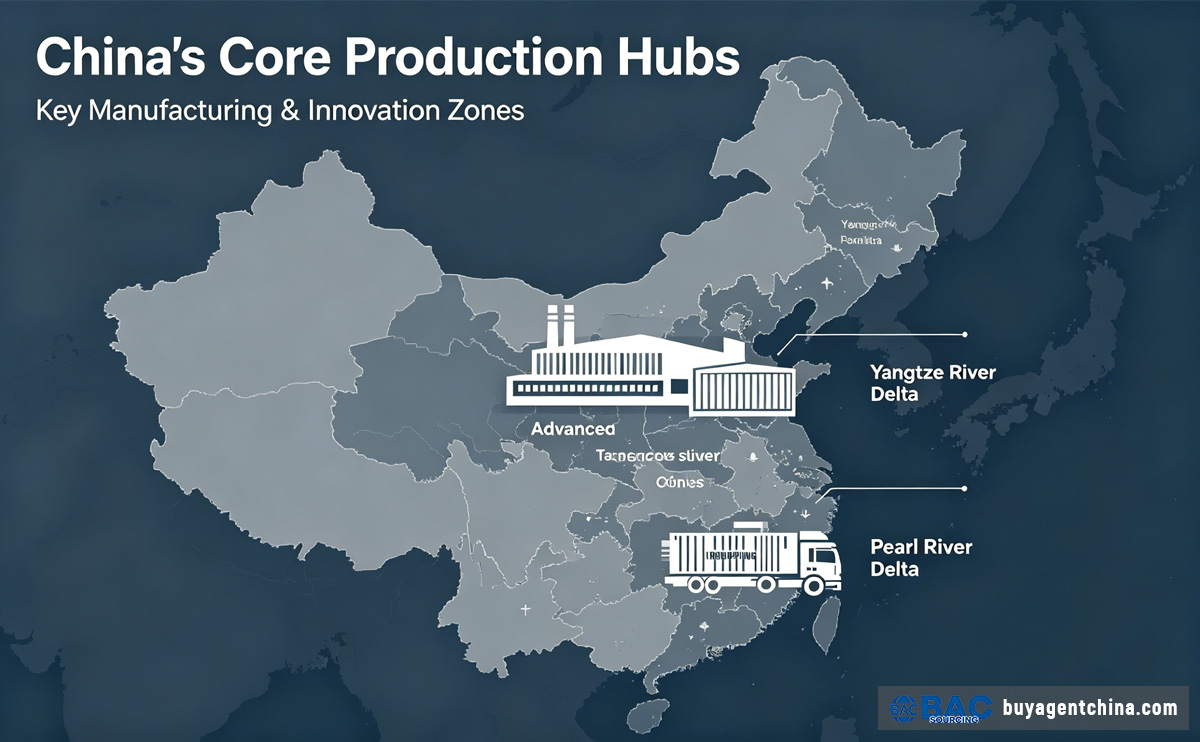
China’s formaldehyde detector industry has developed clear regional specialization, with each production zone excelling in different product types. Identifying the right hub will help you shortlist qualified suppliers faster and reduce trial-and-error costs when you buy formaldehyde test equipment from China.

2.1 Yangtze River Delta Cluster: Hub for Large-Scale Finished Device Production

The Yangtze River Delta accounts for approximately 63.8% of total industry output nationwide, boasting the most complete supply chain and strongest precision manufacturing capabilities in China. It is the top choice for large-volume B2B orders, industrial-grade customization and long-term stable supply partnerships.
 
Key manufacturing cities include Suzhou, Wuxi and Shanghai. Suzhou hosts a dense cluster of sensor and finished device manufacturers with strong nanotechnology foundations. Wuxi leverages its IoT industry expertise to focus on smart connected monitoring modules. Shanghai specializes in high-precision laboratory analytical instruments for professional testing institutions.
 
The core advantage of this region is its compact supply chain: PCB fabrication, plastic housings, display modules and calibration equipment are all available within a 100-kilometer radius. Average lead times are 30% shorter than the national average, with mature quality control systems capable of handling orders of 10,000 units and above.

2.2 Pearl River Delta Cluster: Heart of Consumer-Grade Innovation and Cross-Border Exports

Centered on Shenzhen and Dongguan, the Pearl River Delta is China’s R&D and export hub for consumer-grade formaldehyde detectors, and the primary sourcing base for cross-border e-commerce sellers.
 
Shenzhen-based companies hold 78% of China’s electrochemical sensor patents, with strong R&D and brand operation capabilities. Most are well-versed in overseas certification requirements and cross-border e-commerce operations, supporting small-batch fast turnaround and private label customization. Dongguan excels in sensor module packaging and finished product OEM/ODM manufacturing, with highly competitive production costs.
 
Product iteration in this region is fast, with an average refresh cycle of only 9 months, allowing suppliers to quickly adapt to changing feature demands in overseas markets. It is perfectly suited for cross-border sellers building out their product catalogs from a trusted formaldehyde meter China supplier network.

2.3 Bohai Rim & Central China Clusters: Specialized Supply for Niche Segments

  • Bohai Rim Cluster: Centered on Beijing and Qingdao, this zone leverages national-level testing and certification resources to focus on industrial continuous online monitoring systems and dedicated equipment for environmental law enforcement. Products are highly professional and mostly deployed in large environmental projects and occupational health testing programs, making them ideal for packaged engineering procurement.
  • Central China Cluster: Wuhan is the core city here, and the nation’s leading base for domestic electrochemical sensor substitution. Leading manufacturer Cubic Optoelectronics (688665.SH) mass-produces high-performance sensor modules. If you plan to source sensor components separately for in-house assembly, working directly with upstream manufacturers in Wuhan can further reduce your bill of materials costs.

Core Production Zones for Formaldehyde Detectors in China

Industry Cluster

Core Cities

National Output Share

Best For

Key Suppliers

Primary Product Strengths

Yangtze River Delta Suzhou, Wuxi, Shanghai 63.8% Large-volume finished device orders, industrial-grade customization, long-term supply Suzhou Huiwen Nano, Suzhou Weitian, Shanghai ANPEL Laboratory Technologies Industrial portable meters, sensor modules, laboratory analyzers
Pearl River Delta

Shenzhen, Dongguan

22.4%

Consumer-grade bestsellers, cross-border e-commerce supply, OEM/ODM

Greensource, Senergy, Honeyeagle, Dongguan Zhigan Micro

Consumer all-in-one detectors, smart connected models, multi-parameter meters

Bohai Rim

Beijing, Qingdao

~8%

Professional engineering packages, online monitoring system procurement

Beijing SDL, Qingdao Laoshan Yinghai, Qingdao Juchuang Environmental

Continuous online monitoring systems, environmental law enforcement devices

Central China

Wuhan

~3%

Direct sourcing of core sensor modules, component procurement

Cubic Optoelectronics (688665.SH)

Electrochemical formaldehyde sensor modules

Other Regions

Xi’an, Changsha, etc.

~2.8%

Custom equipment for special working conditions

Shaanxi Zhice Sensing, etc.

Military-grade and custom industrial detectors

How to Source the Right Formaldehyde Detector in China 04 Export Market Data to help Understanding Global Demand Trends
Export Market Data: Understand Global Demand Trends

3. Export Market Data: Understand Global Demand Trends

Official customs statistics and industry research data reveal clear global demand patterns and trade flows for formaldehyde testing equipment. These insights will help you refine your product selection and pricing strategy when you import formaldehyde meters from China.

3.1 Overall Export Volume: A Steadily Growing Market

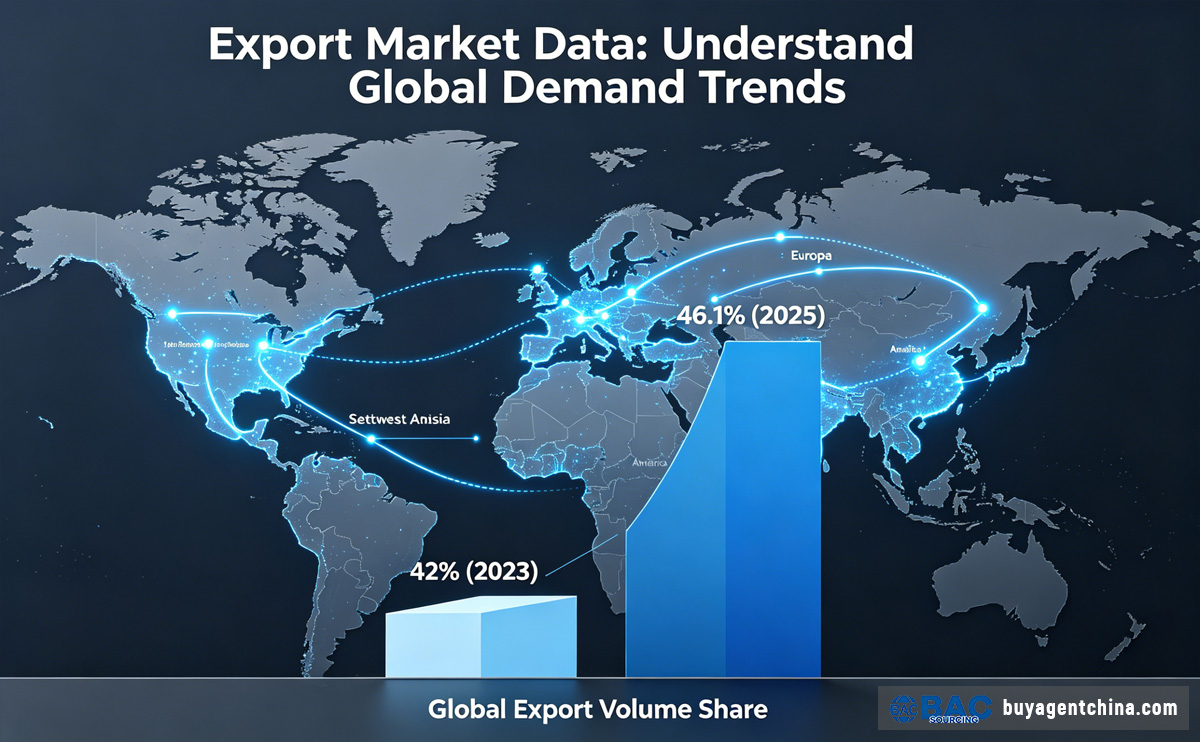
Exports of formaldehyde detectors from China have maintained stable growth in recent years, with rising global market share, making it a high-growth, low-volatility category in the environmental monitoring segment.

Year

Total Export Value (USD Billion) Year-on-Year Growth

Global Export Volume Share

2023

1.76

23.7%

42%

2024

2.0

13.6%

45%

2025

2.1

5%

46.1%

In 2025, the global export trade volume of portable formaldehyde detectors reached approximately $11.3 billion, with Chinese products accounting for nearly half of the total. No other country can match China’s combination of supply chain maturity, product range and cost competitiveness.

3.2 Regional Demand Patterns: Match Products to Your Target Market

Export flow data reveals clear demand tiers across regions, which you can use to align product selection with your target market.

Target Region

Export Share

Key Markets

Dominant Product Tier

Core Demand Drivers

Southeast Asia

28%

Thailand, Vietnam, Malaysia, Indonesia

Entry to mid-tier consumer models

Real estate expansion, growing concern over renovation pollution, rising middle-class health awareness

Europe

23%

Germany, UK, France, Spain, Russia

Mid to high-end professional grade

EU REACH regulations, green building standards, indoor air quality legislation

Middle East

16%

Saudi Arabia, UAE, Qatar

Mid-tier engineering models

Smart city development, growing demand for air quality monitoring in sealed air-conditioned spaces

North America

14%

United States, Canada

Mid to high-end consumer + industrial grade

Popularization of healthy home standards, occupational safety and health regulations

Latin America

11%

Brazil, Mexico, Argentina

Budget consumer models

Accelerated urbanization, improving indoor air quality standards

Rest of World

8%

Japan, South Korea, Australia, Africa

Diversified demand

Mixed use case requirements

In short: for price-sensitive Southeast Asian and Latin American markets, prioritize cost-effective consumer models from the Pearl River Delta. For European and North American markets with strict certification and accuracy requirements, focus on mid to high-end models from leading China formaldehyde detector manufacturers in the Yangtze River Delta and Shenzhen. For bulk engineering orders in the Middle East, mid-tier models offer the strongest market acceptance.

3.3 Customs HS Codes for Reference

Formaldehyde detectors fall under well-defined customs classifications with stable export tax rebate rates, as national policy supports exports of environmental monitoring equipment. Confirm the correct tariff code before sourcing to accurately calculate costs and arrange customs clearance.

HS Code

Product Description 

Applicable Products

Export Tax Rebate Rate

90271000.90

Other gas or smoke analyzers

Vast majority of portable and benchtop formaldehyde detectors

13%

9027100010

Continuous-operation gas detectors

Industrial online continuous monitoring systems

13%

90278990.90

Other physical and chemical analysis instruments and devices

Some laboratory-grade spectrometric formaldehyde analyzers

13%

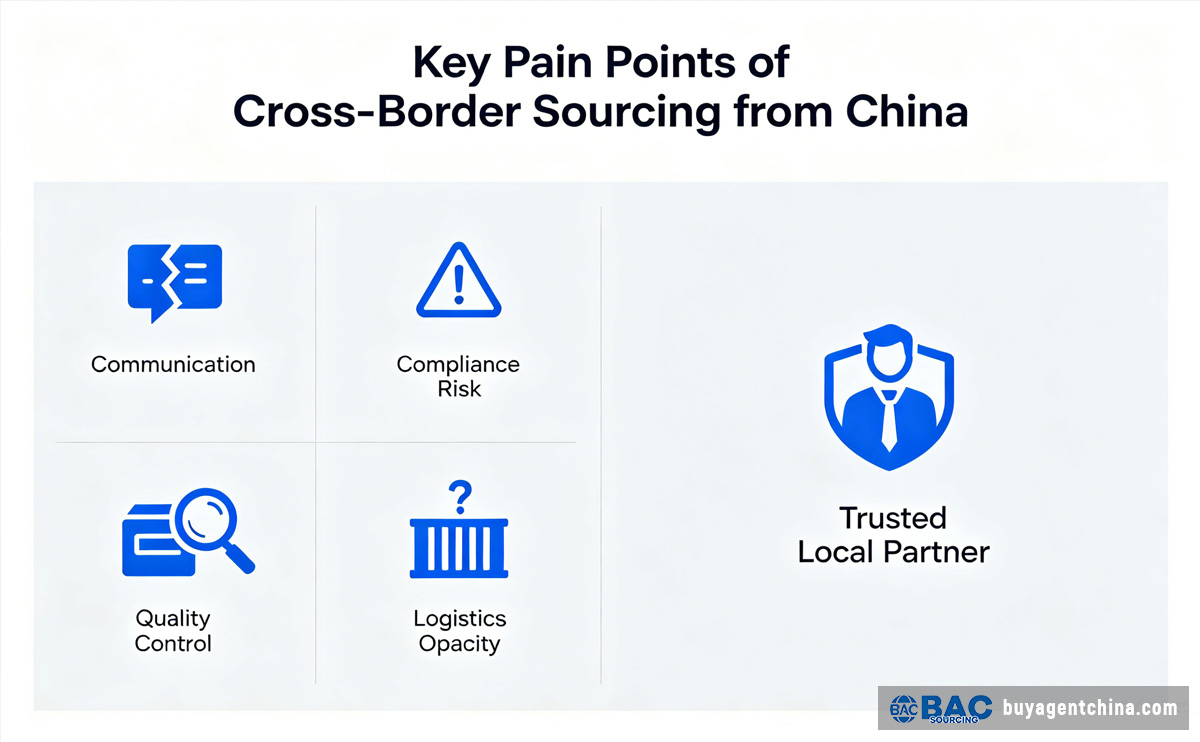
4. Key Pain Points of Cross-Border Sourcing from China

While China’s supply chain offers outstanding value, cross-border procurement comes with significant information gaps and local barriers. Many buyers assume finding a factory online is enough, only to encounter repeated setbacks in communication, quality control, compliance and logistics that drive total costs far above budget.

How to Source the Right Formaldehyde Detector in China 05 Key Pain Points of Cross-Border Sourcing from China
Key Pain Points of Cross-Border Sourcing from China

4.1 Language and Cultural Barriers: Slow Communication, Misaligned Requirements

Many small and medium-sized Chinese factories have limited international trade capacity. Sales staff often have only basic English proficiency, so complex technical specifications and customization details are easily miscommunicated.
 
Business norms also differ: Chinese suppliers often give flexible quotes and lead time estimates, while overseas buyers expect standardized contract terms and precise delivery dates. Combined with time zone differences, confirming a single detail can take two to three days of back-and-forth, dragging out the entire sourcing cycle.
 
Instead of spending weeks aligning on requirements remotely, working with a local formaldehyde detector sourcing agent in China like BAC Sourcing eliminates this friction entirely. Their bilingual team understands both international business standards and domestic factory communication norms, and can relay every specification accurately in the local language to prevent production errors caused by misinterpretation.

4.2 Compliance and Customs Risks: Complex Procedures, Hidden Clearance Delays

Formaldehyde detectors are classified as metrological electronic products. Exporting them involves HS code classification, customs documentation, certificates of origin and destination market certification verification. Inexperienced buyers often run into incorrect code classification, incomplete certification documents or even fraudulent certificates, resulting in delayed clearance, seized shipments or forced returns that incur heavy demurrage and rework costs.Without an in-house customs and compliance team, handing over the full process to a local sourcing agent is far more reliable. The team at BAC Sourcing is deeply familiar with Chinese customs policies and product certification standards worldwide. They verify supplier qualifications and certification documents upfront, so you avoid clearance disruptions before shipment.

4.3 Quality Control Gaps: Defects Often Go Unnoticed Until Delivery

The biggest risk of remote sourcing is lack of quality oversight. It is not uncommon for bulk orders to differ from pre-production samples, for low-cost semiconductor sensors to be passed off as premium electrochemical sensors, for factory calibration to be substandard, or for cosmetic defects to slip through. Without on-site inspection, buyers usually only discover problems after the goods arrive at their destination — by which point cross-border claims are costly and rarely successful, leaving most buyers to absorb the loss themselves.
 
This is the top reason experienced importers partner with a trusted local partner when sourcing formaldehyde detectors from China. BAC Sourcing operates its own in-house QC inspection team, offering pre-production confirmation, mid-production check-ins and final pre-shipment inspections. Technicians verify sensor brand and model, test detection accuracy, and check full functionality and build quality against sealed sample standards, catching quality issues before goods leave the factory.

4.4 Logistics Cost Opacity: Long Chains, Hidden Fees

There is a wide range of shipping options from China to global destinations, including express, air freight, LCL and FCL sea freight, with huge differences in cost and transit time. The full chain also includes domestic pickup, customs declaration, port charges, destination clearance and last-mile delivery, many of which carry hidden fees. New buyers are often drawn in by low quoted logistics prices, only to be hit with unexpected surcharges that push total costs well over budget.

Local sourcing agents negotiate preferential rates with multiple logistics providers. BAC Sourcing can tailor the optimal shipping solution based on your lead time requirements and budget, track shipments end-to-end, and provide fully transparent cost breakdowns with no hidden charges, keeping your total logistics spend predictable.

4.5 Multi-Supplier Management: Fragmented Workflow, Low Efficiency

If you source different product types from different production zones, you end up managing multiple factories separately. The overhead of order tracking, reconciliation, cargo consolidation and after-sales support multiplies with every additional supplier. When delays or quality issues arise, cross-border resolution is slow and difficult, dragging down overall supply chain efficiency.
 
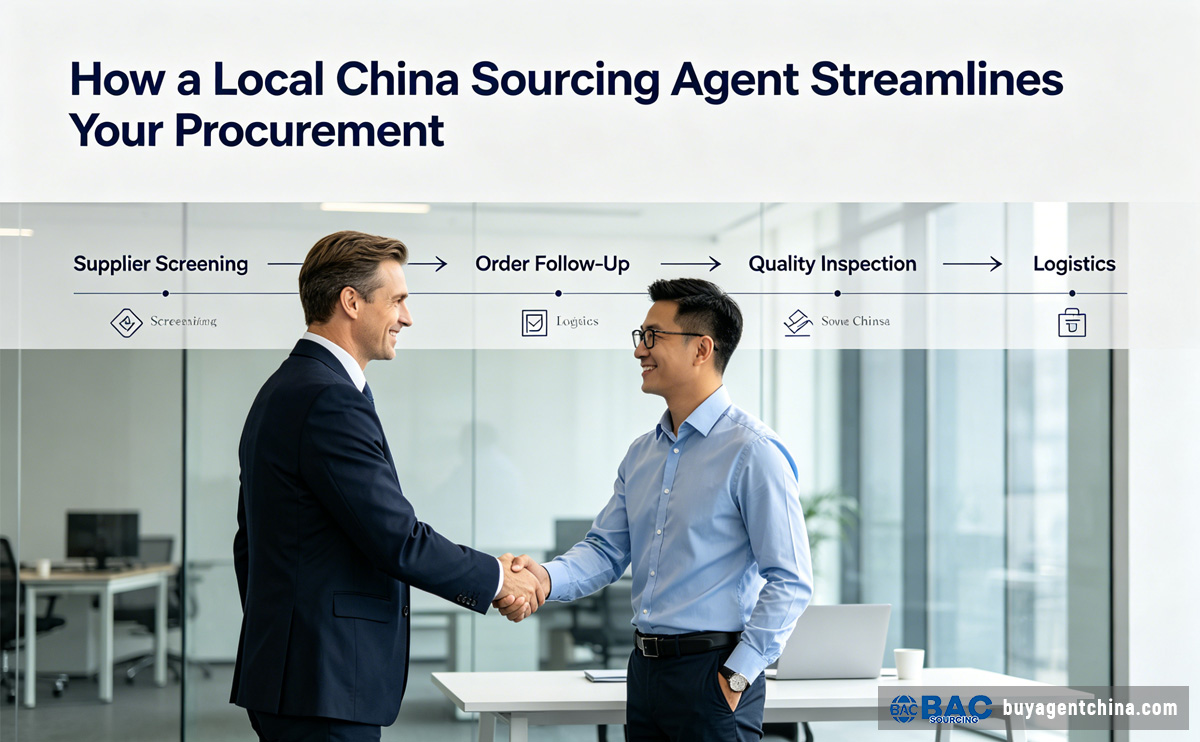
For multi-category, multi-supplier procurement, a single sourcing agent managing the entire workflow is by far the most efficient approach. You work with one dedicated account manager to handle supplier screening, order follow-up, consolidation and after-sales coordination — effectively giving you your own dedicated procurement office in China.
How to Source the Right Formaldehyde Detector in China 06 How a Local China Sourcing Agent Streamlines Your Procurement
How a Local China Sourcing Agent Streamlines Your Procurement

5. How a Local China Sourcing Agent Streamlines Your Procurement

Faced with these common cross-border sourcing challenges, a growing number of overseas buyers delegate supply chain management to a trusted local China sourcing agent. For a modest service fee, you eliminate risks across communication, quality, compliance and logistics, delivering strong overall value for money.

For formaldehyde detector procurement, BAC Sourcing (official site: BuyAgentChina.com) stands out as a highly reputable, specialized provider with years of on-the-ground experience in China. As a local procurement service provider deeply embedded in China’s formaldehyde detector supply chain, BAC Sourcing covers every step from supplier shortlisting to final delivery, and adapts to buyers at every stage:

  • First-time buyers can opt for full end-to-end management, from factory selection and price negotiation to sampling, customs clearance and shipping, without building a supply chain from scratch.
  • Experienced importers can pick and choose individual services — such as pre-shipment inspection, production follow-up, cargo consolidation or compliance verification — to fill gaps in their existing workflow.
  • Buyers sourcing multiple product categories benefit from supplier consolidation and combined container loading, significantly reducing management overhead and per-unit logistics costs.

The core value of a local agent is eliminating information asymmetry through on-the-ground expertise, freeing you to focus on growing your front-end business instead of getting bogged down in cross-border communication and day-to-day supply chain tasks.

How to Source the Right Formaldehyde Detector in China 07 Frequently Asked Questions (FAQ)
Frequently Asked Questions (FAQ)

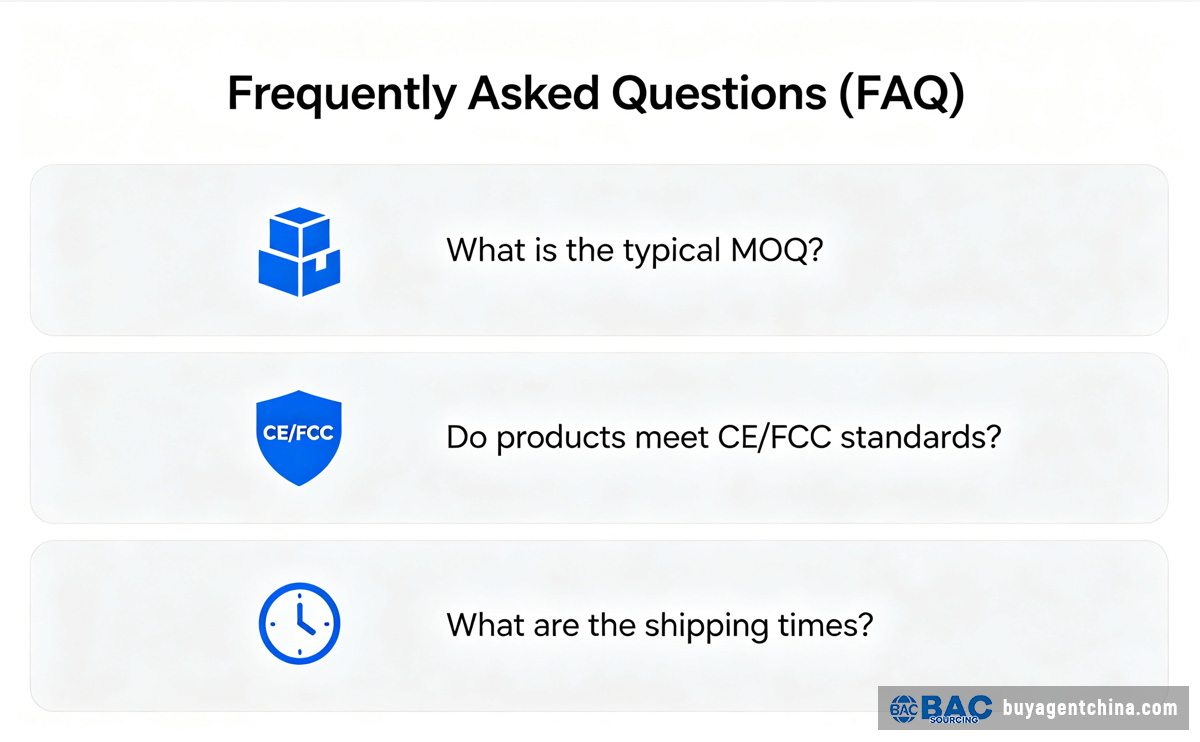
6. Frequently Asked Questions (FAQ)

1. What is the typical minimum order quantity (MOQ) for formaldehyde detectors from China?

MOQs vary significantly by product type and supplier. For consumer-grade portable detectors, small and medium factories in Shenzhen and Dongguan typically set MOQs between 50 and 200 units, and some accept even smaller trial orders. For industrial-grade equipment from Suzhou and Wuxi, MOQs usually range from 10 to 50 units. Sensor modules are typically sold in minimum batches of 1,000 pieces. For smaller order volumes, working with a sourcing agent to consolidate orders with other buyers often yields more flexible MOQ terms and better unit pricing.

2. Do Chinese-made formaldehyde detectors meet EU CE and US FCC certification requirements?

Mainstream models from leading Chinese manufacturers generally carry CE-EMC/RED and FCC ID certifications and can be legally exported to European and North American markets. However, some low-cost factories may lack valid certifications or sell counterfeit certificate documents. Always verify certificate authenticity before placing an order. If you do not have the means to verify credentials locally, a professional agent like BAC Sourcing can conduct full qualification checks and pre-screen suppliers on your behalf to avoid clearance issues. Professional metrology-grade equipment may require additional certification to meet local metrology regulations.

3. How can I avoid suppliers substituting lower-grade sensors in my formaldehyde detectors?
The sensor is the single largest cost component of a formaldehyde detector, and the most common point of cost-cutting fraud. Electrochemical sensors offer high accuracy and strong anti-interference performance, and are standard on mid-range and premium products. Semiconductor sensors are much cheaper but have poor selectivity — common gases like alcohol and perfume will cause severe reading inaccuracies. The cost difference between the two technologies can be several multiples.
The two most reliable safeguards are: first, specify the exact sensor brand, model and core parameters in your formal purchase contract. Second, retain a sealed reference sample, and conduct open-box inspection of bulk production before shipment to verify sensor model and actual accuracy. If on-site inspection is not feasible, hiring a third-party or local sourcing agent to conduct inspections is the most cost-effective solution.
4. How does a China sourcing agent charge for its services? Will it add significantly to my costs?
Reputable sourcing agents typically charge a service fee calculated as a percentage of the total order value, usually between 3% and 10%, depending on product category, order size and scope of services.
While this adds a line-item cost, a professional agent saves you money overall by identifying better-value suppliers, negotiating lower unit prices, and preventing costly quality failures and logistics mistakes. When you factor in reduced risk and the time you save on supply chain management, working with an agent almost always lowers your total cost of procurement.
5. What are the typical transit times for shipping formaldehyde detectors from China?
Formaldehyde detectors are standard electronic products with no special shipping restrictions, and can be exported normally under standard customs declaration. To major global destinations:
  • International express (DHL, UPS, etc.): 3–5 days to Southeast Asia, 5–7 days to Europe and North America. Best for small sample orders or urgent restocks, and the most expensive option.
  • Air freight: 5–7 days to Southeast Asia, 7–10 days to Europe and North America. Suitable for medium-volume restocking.
  • Sea freight (LCL / FCL): 7–15 days to Southeast Asia, 25–35 days to Europe, 15–20 days to US West Coast, 25–30 days to US East Coast. Best for large-volume bulk procurement and the lowest cost per unit.
6. I already work with Chinese factories. Can I hire an agent only for inspection and order follow-up?

Yes. Professional sourcing agents almost always offer flexible, à la carte services. You can select only final shipment inspection, in-production order tracking, logistics consolidation or any other individual service you need, without committing to full end-to-end management. For buyers with existing supplier relationships who want to reduce quality risk or free up internal time, standalone inspection and follow-up services are a low-cost way to strengthen your supply chain controls.

7. What level of accuracy should I expect from a good formaldehyde detector?

For consumer-grade devices with electrochemical sensors, the baseline accuracy standard is typically ±10% F.S. (full scale error). Professional industrial-grade devices require higher accuracy, usually within ±5% F.S., and should include temperature and humidity compensation to prevent large reading drift from environmental changes. Be wary of exaggerated claims like “±0.01mg/m³ accuracy” — always prioritize third-party test reports and metrology calibration certificates as proof of performance.

How to Source the Right Formaldehyde Detector in China 08 Final Thoughts
Final Thoughts

7. Final Thoughts

China is the world’s core manufacturing base for formaldehyde detection equipment, with a mature supply chain, complete product range and unrivaled cost-performance ratio, making it the best sourcing destination for global buyers. That said, cross-border procurement carries inherent information gaps and local barriers. New buyers who go directly to factories often run into avoidable pitfalls in communication, compliance, quality control and logistics.

For product selection: source consumer-grade models from the Pearl River Delta, industrial-grade equipment and engineering orders from the Yangtze River Delta, and sensor modules directly from manufacturers in Wuhan. If you want a smoother, lower-risk sourcing experience with predictable costs, partnering with an experienced local procurement provider like BAC Sourcing is a smart, cost-effective way to build and manage your China supply chain.

Leave a Reply

Your email address will not be published. Required fields are marked *