Factory Verification, Procurement Guides, Sourcing Tips

How to Buy Waterproof Phone Pouches from China (9 Mistakes)

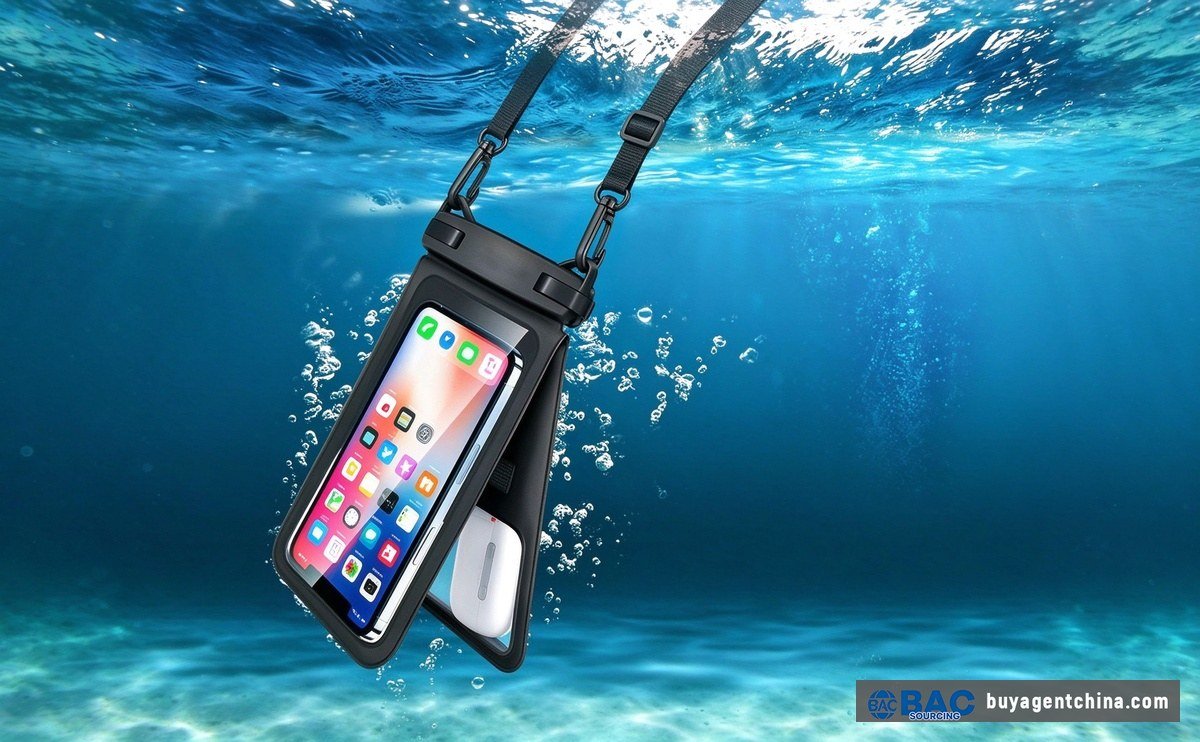
Dive-tier IPX8 pouch with double seals and a neck strap — the deep-water line.

Direct Answer: Bulk waterproof phone pouches run about USD 0.10–0.80 FOB from China; buy stock for volume, verify the IPX claim, the seal and the touch film, and inspect before you scale.

1. Mistakes 1–2: The IPX Claim and the Seal

Bulk waterproof phone pouches run from about USD 0.10 to USD 0.80 FOB, and the margin in between decides who survives the season. The global waterproof phone pouch market sat around USD 450 million in 2025, growing about 4.1% a year. Outdoor activity is the biggest application and holds most of the demand. The broader waterproof bag market — which includes dry bags and phone cases — is a USD 13.44 billion category growing at 5.4% CAGR. The demand side tells a buyer one useful thing: this is a category people buy for specific trips, not for everyday carry. The supply side is where the traps sit. China effectively owns the export lane: Volza’s US import records show 2,457 shipments from China against 38 from the United States in 2025. Volza’s US import records for waterproof phone bags confirm the same picture from the buyer side. China’s customs data for the first half of 2026 shows waterproof phone pouch exports to Europe and the US up 12.4%, while Southeast Asia and Latin America climbed 34.8% — the growth is coming from the new markets, not the old ones. So the question is never whether to buy from China. It is how to buy without handing the margin back. The nine mistakes below are ordered the way water finds them — from the claim on the listing to the seal, the film, the fit, the float, the inspection and the payment. Each one ends the same way: a drowned phone, a refund, a listing review, or all three.

1.1 Mistake 1: Trusting the IPX Depth Claim

Mistake 1 is trusting the IPX depth claim instead of the certificate behind it. IPX8 is a test condition — continuous immersion beyond one metre of depth — not a depth rating a factory can pick from a menu. IPX7 is fixed: one metre for 30 minutes. The IPX number is in the hands of whoever prints the label — two sellers can print two different numbers for the same pouch. The consequence: a pouch marketed at 30 metres but tested to five fails on the first beach snorkel. Water inside means a dead phone, one refund and one review that outlives the product — the math of a bad claim compounds. The factory saved a few cents on sealing tape; you pay the full price in returns. Fix: ask three questions — what depth is declared? Under what test conditions? Sea to Summit publishes a TPU case rated to 10 metres for one hour — that is the standard a serious claim should be able to reference. If the quote only says an IPX number without a test condition or a report, treat the claim as untested. A listing phrase like “waterproof” means nothing; the declared depth, the test report and the spec sheet mean everything.

Listing ClaimWhat It Actually MeansHow to Verify
"Waterproof"Nothing without a test conditionAsk for the declared depth and test report
IPX71 m for 30 minutesConfirm the minutes and the water type
IPX8More than 1 m, condition set by the makerAsk for the tested depth and duration
"30 m dive"A marketing numberCompare with the factory's actual test record

1.2 Mistake 2: Skimping on the Seal

A phone pouch lives or dies on one closure. The seal — not the material, not the thickness — is where the vacuum test starts and ends. The closure is the cheapest part and the most tempting place to shave, usually on the heat-seal width. None of it shows in a sample picked with care; it shows in the batch. The consequence is simple physics: water does not enter through the waterproof material, it enters through the seam you sealed. Shave the closure and you concentrate the entire failure risk in one spot — the spot that touches the customer’s phone. Fix: write the closure into the spec sheet — the number of heat-seal layers, the width, the temperature. Ask the supplier to quote the seal width and the closing mechanism, not just “waterproof PVC”. Test the seal on the sample, not the photo.

2. Mistakes 3–4: The Material and the Touch Film

2.1 Mistake 3: PVC Where You Need TPU

Mistake 3 is buying a diving pouch made of PVC — a marketing story built on the wrong material. PVC smells like new plastic, yellows and stiffens after two seasons in the sun. Material downgrades never show in the listing photo; they show in the return rate. Fix: ask for the material grade in writing — PVC or TPU, virgin or recycled — and hold the supplier to the answer. Ask for clarity and anti-yellowing data. Run three sample checks: smell it, open it, smell it again after a week in the heat.

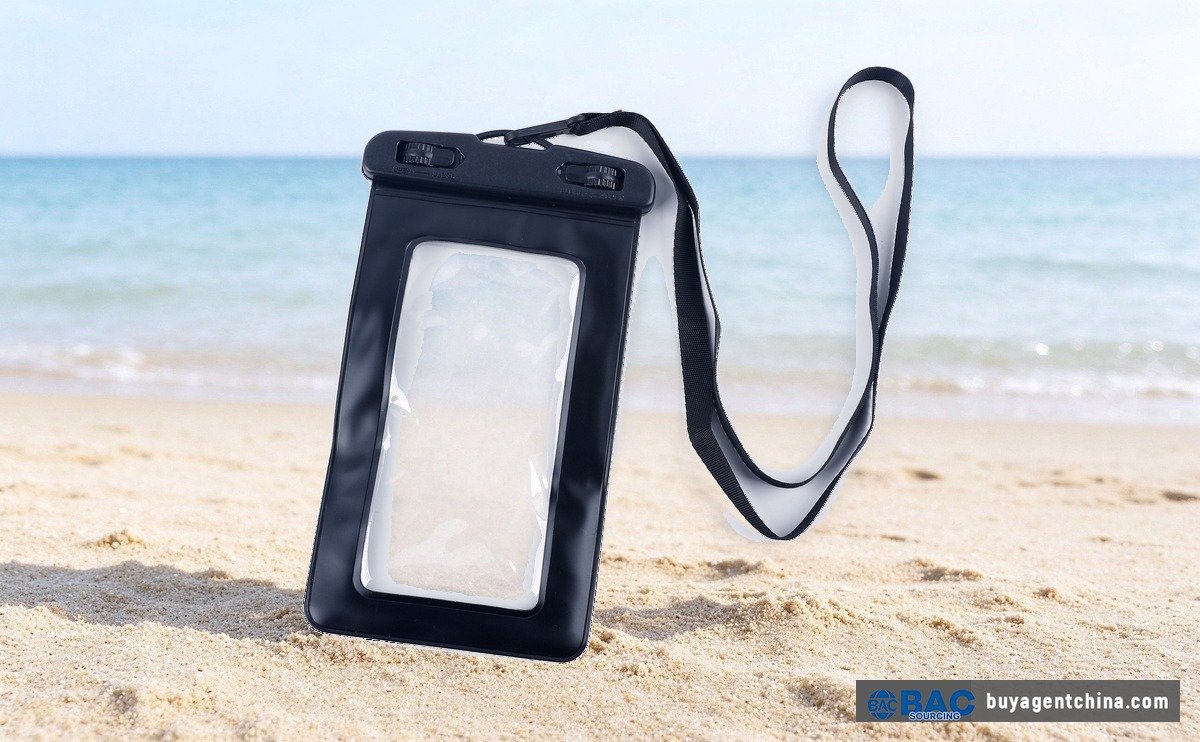
Black PVC touchscreen pouch with a lanyard — the Yiwu volume line.

Black PVC touchscreen pouch with a lanyard — the Yiwu volume line.

2.2 Mistake 4: The Touchscreen Film

Mistake 4 is assuming the touchscreen pouch’s film will work with your customer’s phone. The film’s thickness and tension sit under how tightly it mates with the screen. Vacuum models pump the air out so the film hugs the screen — hence they swipe better. A touchscreen pouch your customer cannot swipe at the beach is certainly one they cannot swipe while riding — the film either works wet or it does not. The return rate is the driver; the touch film is the nitpick that decides it. Fix: test with the exact phone you intend to sell — wake the screen, swipe, repeat. If your market swims, films or visits water parks, ask the supplier directly about wet-finger response.

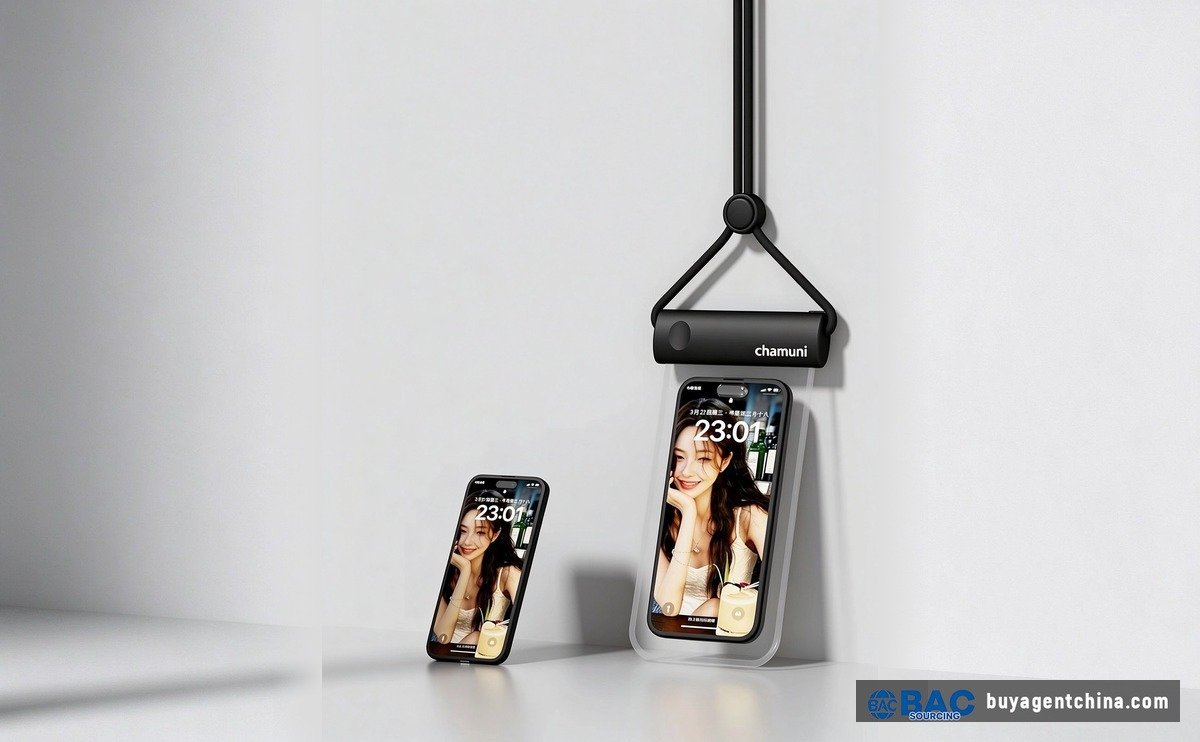
Blue TPU touchscreen pouch — the touch-sensitive line.

Blue TPU touchscreen pouch — the touch-sensitive line.

3. Mistakes 5–6: The Fit and the Float

3.1 Mistake 5: Buying Sizes from the Catalog

Mistake 5 is buying sizes from the catalog: phones keep growing and camera bumps keep thickening. A pouch marked “fits 6.1 inch” will reject a cased large phone. Shenzhen factories now push 8.9-inch models for riders and big-screen users (CNY 10.00, 7,583 sold, 1688, 2026). A pouch that fits means sales; a phone forced in means returns and cracked screens — neither is a surprise, but one is a profit. A size mistake only lands after the container is already on the water. Fix: give the supplier your phone’s length, width, thickness and case. And know the real difference between “fits 6.7 inch” and the internal pocket’s actual inch. And size the 7-inch lanyard pouch separately from the 8.9-inch handlebar mount — one hangs from the neck, the other locks onto the bars — because the customer buying a pouch for a beach trip is not the customer riding a delivery e-bike.

7.2-inch black-frame lanyard pouch — the large neck-strap line.

7.2-inch black-frame lanyard pouch — the large neck-strap line.

3.2 Mistake 6: Ignoring the Float and the Strap

Mistake 6 is ignoring the float: floating pouches stay on the surface thanks to an air bladder or foam. Straps — neck, cross-body, waist — are the profitable add-ons that decide the use case. Yiwu’s cross-body swimming and waist pouch combos sell on volume. Volume is volume; strap strength is something you verify, never assume. A phone that sinks is gone; a snorkel trip with a floating pouch is saved — the difference is one gram of foam. A strap that snaps on a boat means a customer loses a phone to the water. And that customer is never buying again. Fix: let your positioning decide — swimming and snorkeling need the floating build. Sample: hang a kilogram from the strap for five minutes and watch. A sample that survives is not the batch; mass production is a different animal — the factory said fifteen days, the calendar said thirty.

Black and blue air-bladder floating pouch — the beach line.

Black and blue air-bladder floating pouch — the beach line.

3.3 Rider Models: The E-Bike Handlebar Tier

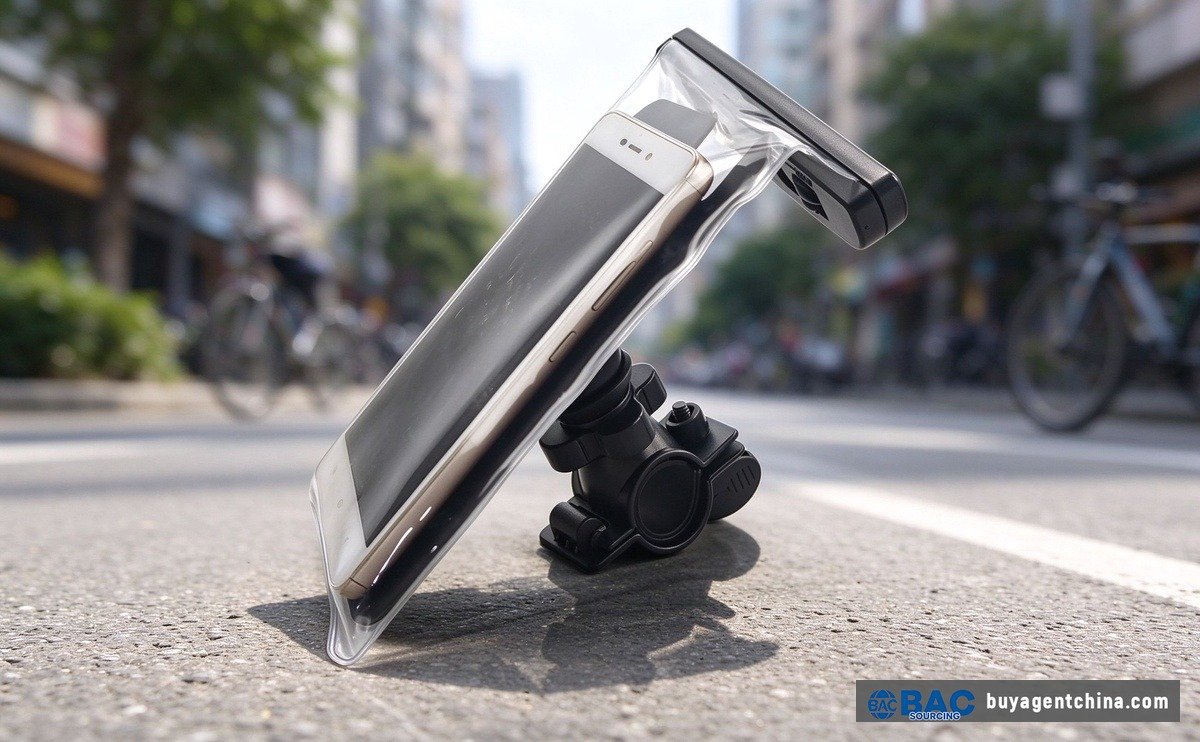
One pouch family deserves its own callout: the large-format models riders mount on e-bike handlebars, rear-view mirrors and delivery boxes. The 8.9-inch class exists for exactly this use — big screens stay readable, and a courier riding through rain cares more about a dry phone than anyone else. Three checks decide whether a rider pouch survives real riding. First, the mounting hardware: a pouch that comes loose at speed is not an inconvenience, it is a phone on the road — test the clamp, strap or Velcro seat for vibration resistance, not looks. Second, the rating: riders need rain-splash protection (IPX4–IPX6 is enough), not diving depth — do not pay the IPX8 premium for a pouch that never goes underwater. Third, the touchscreen film on the actual big-screen model: a 6.7-inch phone in an 8.9-inch pouch is only useful if swipes register with wet fingers. Shenzhen’s 8.9-inch PVC IPX8 runs CNY 10.00 (7,583 sold, 1688, 2026); handlebar-mount models start around US$5.60 FOB (MOQ 20, Alibaba, 2026). When you sample, mount it on a real handlebar, ride a bumpy street and watch the phone stay put — that is the test a listing photo cannot fake.

E-bike handlebar-mount waterproof pouch with a big-screen phone — the rider tier.

E-bike handlebar-mount waterproof pouch with a big-screen phone — the rider tier.

4. Mistakes 7–8: The Inspection and the Paperwork

4.1 Mistake 7: Skipping Inspection

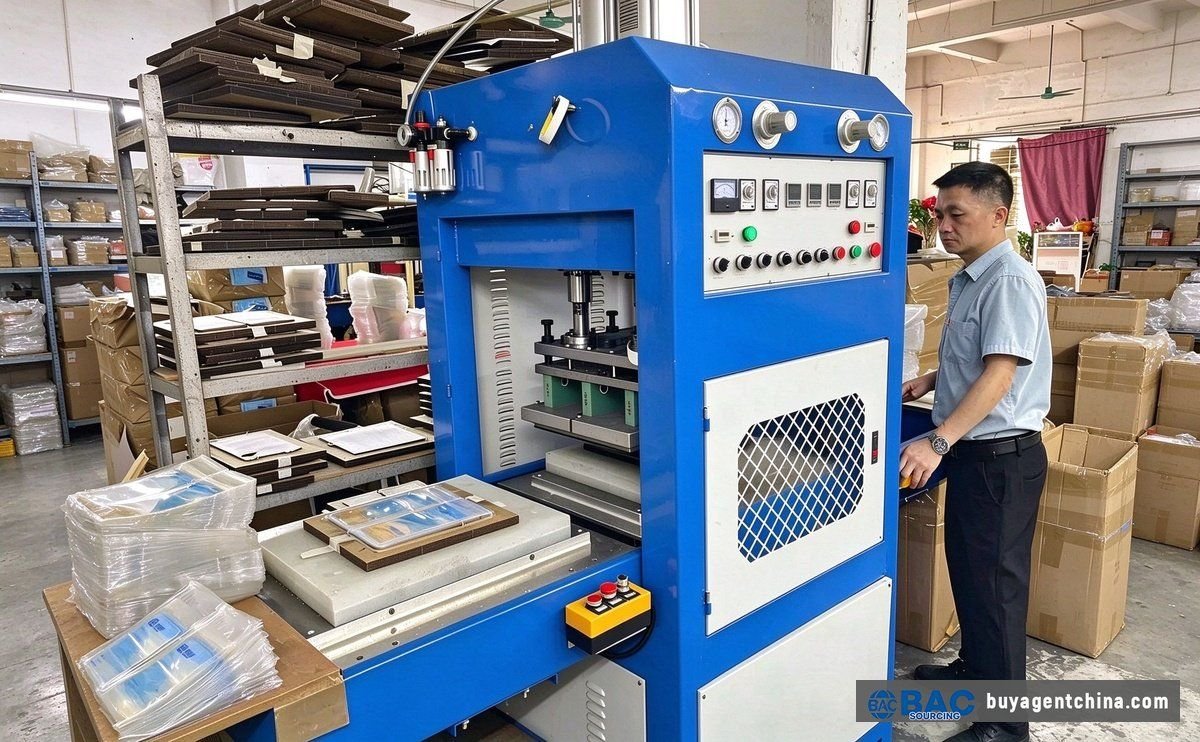
Mistake 7 is skipping inspection on a product where heat-seal pressure and film adhesion earn every cent of caution. Fix: three-stage inspection — production stage, completion stage and loading check. Fill-test the pouches, spot-check the seams, look outside the box and sign off in writing. The inspection fee you skip comes back, with interest, in returns and ratings — the cheapest insurance in sourcing is a fill-test. A whole batch with bad seals means rework, refusal or a stranded container at the destination. Fix: lock the golden sample as the sole acceptance standard. And write the three-stage inspection into the contract. Inspect even the heat-seal width and the clasp closure force — the details are the product.

Heat-seal press at a pouch factory — the production line behind every closure.

Heat-seal press at a pouch factory — the production line behind every closure.

4.2 Mistake 8: Guessing the HS Code

Mistake 8 is guessing the HS code for a waterproof phone pouch. One subheading off changes the duty rate and the inspection odds. Battery-powered models, pump and heating variants classify elsewhere. The wrong subheading leaves a container idling at the dock while a reclassification clears — and the margin was paid to sit there. Fix: classify from the finished product and a photo, not from the name. Have your forwarder or agent re-verify the code before booking. Ask the destination duty too — the US HTS under 3926.90 sits around 4.3%.

5. Mistake 9: Paying Before the Questions

The last mistake is the most human one: paying a deposit before asking the final questions. Ask what the price covers — goods, packing, labels, inspection — and write the answer into the contract line by line. Ask the MOQ per style and per colour. Every question left unasked becomes a surcharge later. Fix: pay the usual 30% deposit and never the full balance before the goods are on the water. Lock the scope — what is included, the MOQ basis and the packing standard. Tie payment milestones to inspection milestones. Control T/T exposure on large amounts; use escrow where you can. Negotiating is fine; squeezing a supplier until they cannot afford the next order is not a win — it is the seed of the defect you will receive, packaged in the savings.

6. The Production Clusters

6.1 Yiwu — Stock and Volume

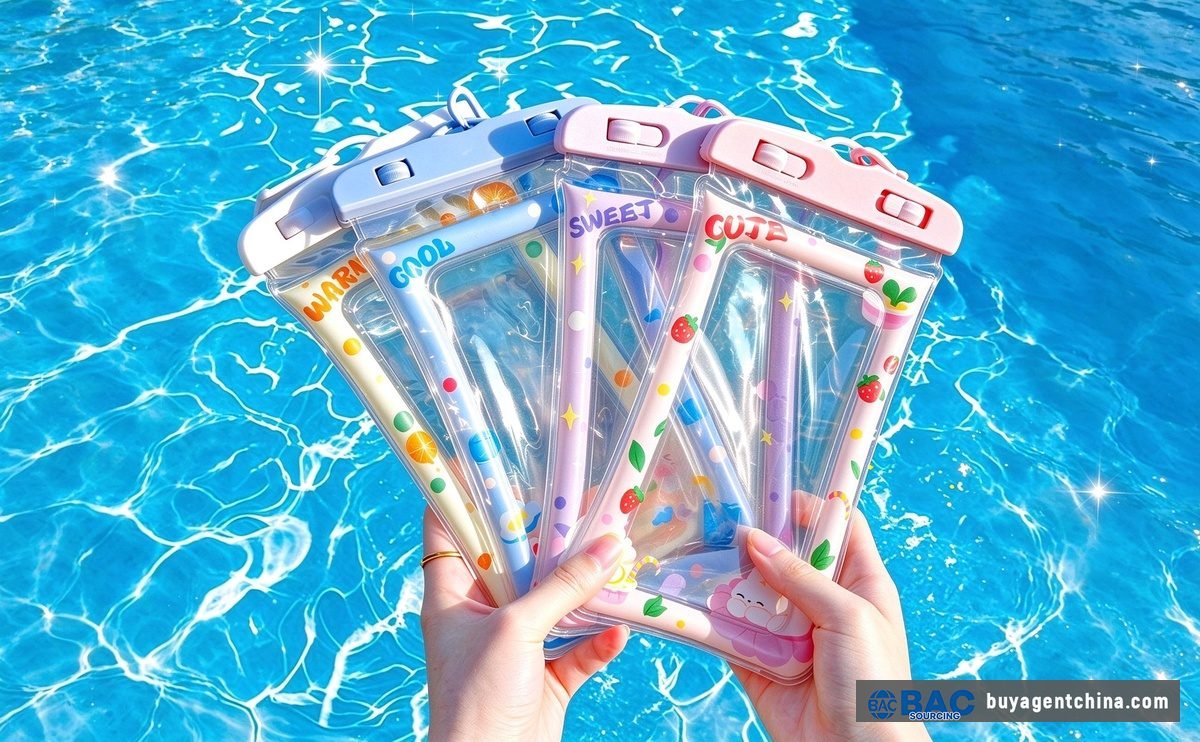
Yiwu: PVC touchscreen pouches, glow-in-the-dark trims, cross-body and waist combos (stock lots, lowest price). Printed and multi-colour PVC pouches — cartoon, fruit and gradient patterns — are a Yiwu stock line that sells by the dozen into beach shops, water parks and promotions.

Printed and multi-colour PVC pouches — the fashion stock line from Yiwu.

Printed and multi-colour PVC pouches — the fashion stock line from Yiwu.

6.2 Shenzhen — OEM and Certification

Shenzhen: IPX8 high-grade TPU, floating and underwater camera pouches (OEM, certification). The 8.9-inch PVC IPX8 runs CNY 10.00 with 7,583 sold — the diving market’s volume line. Branded and OEM diving positioning needs a factory with real test gear.

6.3 Cangnan, Longgang and Quanzhou — The Grey Channels

Cangnan/Longgang: packaging-factory clusters that moved into pouches in high volume — where test styles feed the low-price channels. Quanzhou: dry-bag factories quote USD 0.30–0.60 for waterproof lines that carry the same seal logic. This cluster runs full containers and certification — the route for sensitive markets and buyers who need paperwork.

7. The Price Ladder

One line to remember: test in Yiwu, OEM in Shenzhen, and run the full route only when the volumes justify it — the clusters exist for different reasons. Send the spec sheet to all three clusters and watch the price–MOQ spread answer your positioning.

Pouch TypeReference Price (FOB)Typical MOQBest For
PVC basic, no touch filmUSD 0.10–0.20500Promo, giveaways
PVC touchscreen, lanyardUSD 0.20–0.35500Yiwu volume lines
Printed/multi-colour PVC (cartoon, fruit)USD 0.15–0.451,000+ per designBeach shops, promotions
TPU touchscreenUSD 0.35–0.60500–1,000Touch-first markets
PVC IPX8 large (8.9″)CNY 10.00 / USD 0.50–0.80500Riders, big phones
IPX8 dive-grade TPUUSD 0.80–1.501,000Diving, snorkeling
Air-bladder floatingUSD 0.60–1.201,000Beach, water parks

8. Direct or via an Agent

The cheap sin is chasing cheap. A USD 0.20 pouch in the promo channel is fine — a step ladder for the market, not the whole business. A pouch that ships at USD 0.20 and drowns a phone at USD 800 is not cheap, it is expensive. BuyAgentChina’s current fee schedule, on the services page dated July 2026, is the transparent benchmark. The first three packages cover sourcing, purchasing, production and shipping. There is no free sourcing; upfront research fees are non-refundable.

RouteWhat You GetWhere It Breaks
Direct — YiwuFactory prices, stock, low MOQNo QC muscle, no test gear
Direct — ShenzhenOEM, certification, real test labHigher MOQ, engineering minimums
China sourcing agentFactory-direct prices, published fee schedule, inspection on siteUpfront research fee, you verify the agent's track record
1688 buying agentBulk-channel quotes, language bridge, small-lot supportBlended prices if the agent marks up goods

Go direct to Yiwu for volume stock at low MOQ with landed cost in four to six weeks. Run a handful of styles at a few hundred pieces and let sell-through decide which wins. Budget USD 1,000–3,000 including freight for the first test.

9. Small Order or Full Container

Start the inspection habit on the small order; scale the same habit with the big order.

9.1 The Trial Order

Move to Shenzhen or Quanzhou when you lock the model and can meet the MOQ.

9.2 The Full Container

By then: golden sample signed, spec in writing, contract with three-stage inspection. Every dollar in a big order must trace to something on the quote — material, seal, film, inspection, freight.

10. The Six-Item Checklist

The six-item checklist closes a pouch order: IPX claim and report, seal spec, material grade, touch film, float and strap, HS code and inspection.

11.Frequently Asked Questions (FAQ)

Q1. How can I verify an IPX8 claim from a Chinese supplier?

A1. Ask for the test report, the declared depth and the test conditions. If the quote only lists an IPX number without a condition or a report, treat the claim as untested.

Q2. What MOQ should I expect for stock waterproof phone pouches?

A2. Yiwu stock lots start around 500 pieces; TPU and floating builds run 500–1,000; Shenzhen OEM and dive-grade TPU starts near 1,000–3,000 depending on printing.

Q3. PVC or TPU — which should I import?

A3. TPU for diving, clarity and longevity; PVC for volume, glow-in-the-dark trims and low price points. Match the material to the positioning, not to the cheapest quote.

Q4. Is the touchscreen film reliable?

A4. Only when tested with the exact phone you will sell. Vacuum models hug the screen better; without testing, expect returns on touch-first markets.

Q5. Do I need inspection for a small first order?

A5. Yes. Fill-tests and seal checks cost little, and the habit scales with the order. Skipping inspection on the trial order teaches the factory your ceiling.

Q6. Which HS code covers waterproof phone pouches?

A6. Plastic pouches typically classify under 3926.90 (US duty around 4.3%). Have your forwarder or agent re-verify the code before booking, and check the destination duty.

Leave a Reply

Your email address will not be published. Required fields are marked *