Procurement Guides, Sourcing Tips

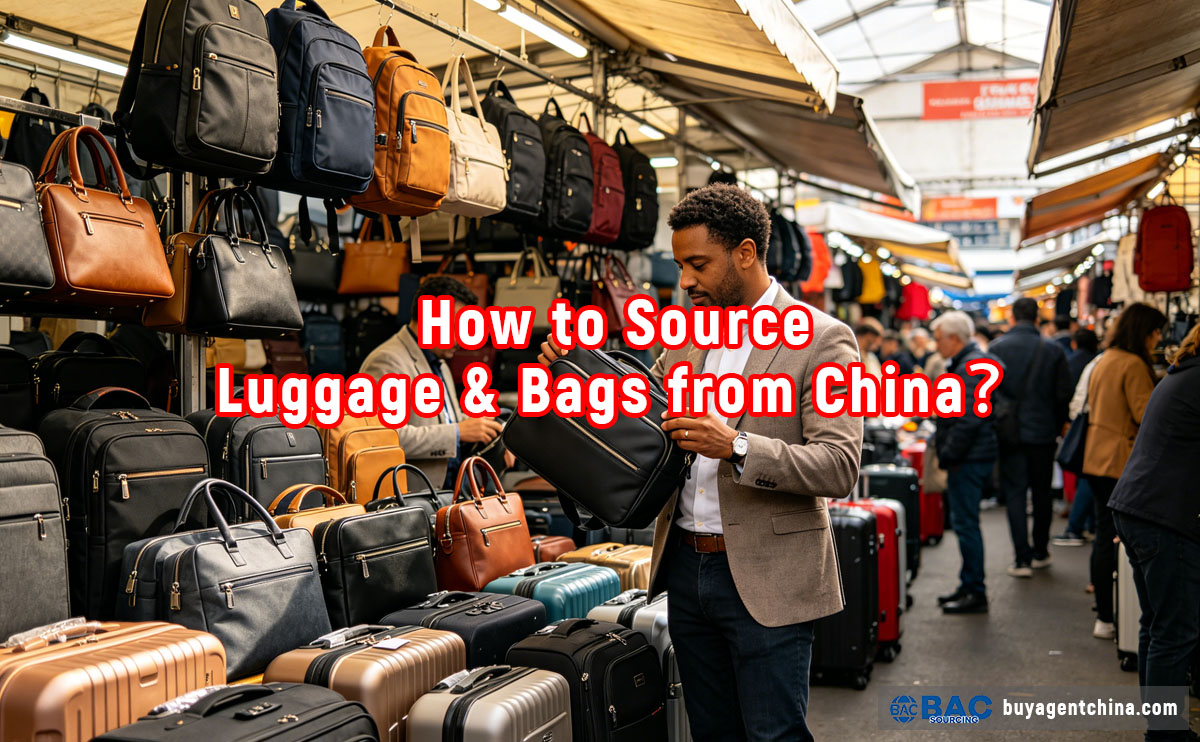
How to Source Luggage & Bags from China?

How to Source Luggage & Bags from China 01

2026 Complete Sourcing Guide: Factory Location Selection, Sourcing Channels & Risk Avoidance Tips

As the world’s leading manufacturing and export hub for luggage and bags, China recorded a total export value of USD 29.89 billion in this sector in 2025, occupying over 50% of the global market share. Boasting a fully integrated industrial chain covering raw material supply, independent design and R&D, and large-scale standardized production, China stands as the most cost-efficient, reliable and professional sourcing destination for global importers, cross-border sellers, overseas brand operators and international wholesalers in 2026.
Nevertheless, most first-time international buyers encounter numerous challenges when sourcing from China. The scattered industrial clusters, massive supplier pools and unique local business norms often create obstacles in credible factory verification, consistent quality control and stable delivery management. Even seasoned overseas purchasers frequently struggle with inefficient supplier supervision, inconsistent bulk product quality and non-standardized production cooperation.
If you are new to China’s luggage sourcing business or intend to optimize the management of your existing Chinese suppliers, partnering with a professional local sourcing agency is the most practical solution — BAC SOURCING (BuyAgentChina.com). Specializing exclusively in China’s luggage and bag supply chain, the team delivers end-to-end sourcing services, including precise factory matching, rigorous supplier vetting, full-process quality inspection, on-site production supervision, order tracking and export logistics coordination. It effectively cuts down cross-border communication barriers, minimizes procurement risks and operational costs, and ensures stable, hassle-free sourcing operations in China for global buyers.
Compiled based on official China luggage export statistics from 2023 to 2025 and the latest 2026 global cross-border procurement trends, this guide offers practical, actionable strategies tailored specifically forinternational buyers, covering core industrial zone selection, authoritative sourcing channels, standardized cross-border procurement workflows and proven risk avoidance solutions.

1. Select Optimal Manufacturing Bases: Core Industrial Clusters for Luggage & Bags

China’s luggage manufacturing industry features distinct regional clustering, with the Yangtze River Delta and Pearl River Delta jointly contributing 78% of the country’s total output capacity. Each industrial cluster has its own specialized product positioning, technical strengths and target client groups. For overseas buyers, selecting the most suitable production base is the foundation of stable product quality, reasonable pricing and market-aligned product styles.
Production Base
Province
Core Product Advantages

2025 Industrial Scale

Target International Buyers
Shiling, Huadu, Guangzhou

Guangdong

Trendy ladies’ handbags, business luggage, genuine leather bags, high-end customized leather goods

RMB 80 billion output value, over 3,000 upstream and downstream enterprises

European & American fashion brand buyers, high-end wholesalers, cross-border sellers focusing on designer and trendy products

Pinghu, Zhejiang
Zhejiang

Casual backpacks, fashion handbags, lightweight travel suitcases

RMB 60 billion output value, 967 standardized manufacturing enterprises

Mid-sized global importers, cross-border platform sellers, buyers with flexible order and fast delivery demands

Dongguan, Guangdong
Guangdong
Premium business luggage, smart travel bags, high-grade customized leather products
RMB 50 billion output value, 1,842 professional production factories
International high-end brands, corporate customized order purchasers, premium market importers
Quanzhou/Jinjiang, Fujian
Fujian
Sports backpacks, outdoor functional bags, durable travel luggage
RMB 40 billion output value, 733 core manufacturing factories

Outdoor sports goods importers, sports wholesale buyers from Southeast Asia, Europe and America

Baigou, Baoding, Hebei

Hebei
Cost-effective suitcases, daily casual bags, mass-market luggage products
RMB 30 billion output value, 7,000+ factories, annual output of 1 billion pieces
Emerging market importers, bulk wholesalers, budget-oriented global resellers
Kunshan, Jiangsu
Jiangsu
Standard business luggage, functional travel bags, export-compliant bags
RMB 30 billion output value, 500+ regulated export factories
EU & US standard-focused buyers, purchasers with strict export compliance requirements

Tailored Sourcing Advice for Global Buyers

  • Fashion & Genuine Leather Bags: Prioritize Shiling (Guangzhou). As a world-class leather goods industrial cluster, it delivers rapid trend updates aligned with European, American and Southeast Asian market preferences. Over 90% of supporting accessories are locally available, enabling fast turnaround and flexible production.
  • Budget Bulk Luggage Orders: Opt for Baigou (Hebei). The cluster offers the lowest minimum order quantities and prominent cost advantages, perfectly suited for mass orders targeting emerging global markets.
  • High-End & Customized Orders: Cooperate with Dongguan-based factories. These manufacturers serve international luxury brands, featuring sophisticated high-standard production systems and stringent quality control mechanisms for premium customized projects.
  • Sports & Outdoor Bags: Source from Quanzhou (Fujian). Factories here excel in wear-resistant, waterproof and lightweight functional craftsmanship, fully meeting the quality and performance demands of global outdoor and sports markets.
How to Source Luggage & Bags from China 04
Sourcing Steps

2. Trusted Sourcing Channels for International Buyers (2026 Updated)

Global buyers are often restricted by limited local resources and inability to conduct on-site factory inspections. Selecting reliable sourcing channels helps avoid middleman markups and fraudulent factory traps. China’s luggage sourcing channels are categorized into offline and online options, matching different order scales and procurement needs.

2.1 Offline Channels (For Stable Bulk Orders & Long-Term Partnerships)

2.1.1. Direct Factory Sourcing in Industrial Clusters

Direct cooperation with origin factories is the most cost-efficient sourcing model for international buyers. It eliminates intermediate profit markups, supports professional OEM/ODM customization, and enables stable quality supervision. This channel is ideal for buyers with monthly order values exceeding USD 15,000 and long-term supply chain layout plans.
For overseas buyers unable to travel to China frequently or lacking local supplier evaluation experience,BAC SOURCING (BuyAgentChina.com) provides full proxy services including on-site factory audits, qualification verification, production capacity assessment and business negotiation. It allows global buyers to connect with verified first-hand manufacturers without on-site visits.

2.1.2. Specialized Industrial Wholesale Markets

Key markets include Guangzhou Shiling Leather Goods City, Baigou Luggage Wholesale Market and Pinghu Luggage Market. These venues gather official factory showrooms with comprehensive product ranges, supporting on-site sample verification and small-batch trial orders. They are perfect for small and medium-sized international buyers with flexible style selection and trial procurement needs.

2.1.3. Professional Export Exhibitions

The Canton Fair, Shanghai International Luggage & Bags Fair, and Guangzhou Leather Goods Fair are core industry platforms. They allow buyers to connect with top-tier Chinese manufacturers efficiently, grasp 2026 industry development trends, and compare multiple suppliers in a short period, ideal for expanding long-term high-quality supplier resources.

2.2 Online Channels (For Trial Orders & Efficient Global Procurement)

2.2.1. 1688 Wholesale Platform

As China’s dominant domestic factory wholesale platform, 1688 covers the majority of luggage and bag manufacturers nationwide. It supports small-batch trial orders and customized sample production, making it the preferred choice for first-time international buyers with low-volume procurement demands.

2.2.2. Global B2B Platforms (Alibaba.com, Made-in-China, Global Sources)

Suppliers on these platforms possess rich export experience, familiar with EU REACH regulations, US CPSC standards and other international compliance requirements, and can provide complete export documentation. These platforms are tailored for professional overseas importers focusing on formal cross-border trade.

2.2.3. Official Factory Direct Channels

Leading luggage manufacturers release official export cases, customized solutions and product updates via their official websites. International buyers with fixed customization demands can directly contact factory sales teams for targeted business negotiations to improve communication efficiency.
How to Source Luggage & Bags from China 03

Sample of Luggage & Bags

3. Standard Cross-Border Sourcing Workflow for International Buyers

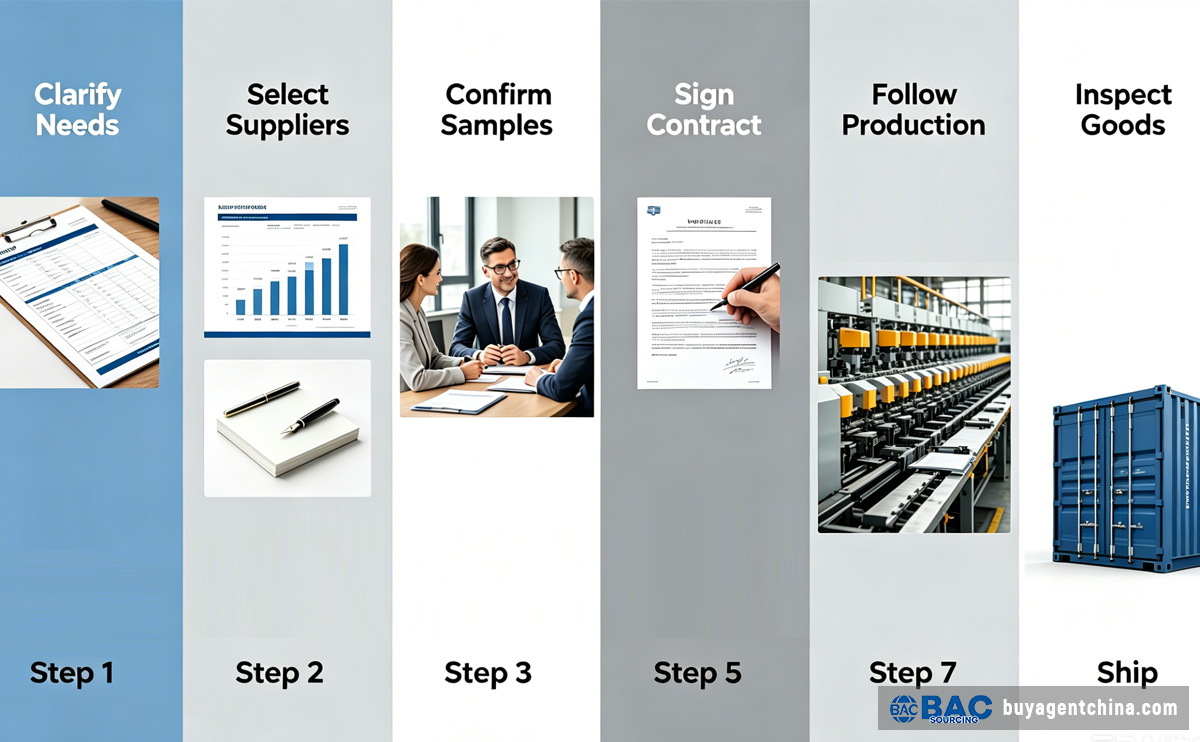
Step 1: Define Clear Procurement Requirements

Before engaging with suppliers, confirm core procurement parameters: product categories, target market compliance standards, customization demands, MOQ, budget range and delivery timeline. Clear and specific requirements enable rapid screening of qualified factories and reduce ineffective communication.

Step 2: Screen and Verify Export-Qualified Suppliers

Prioritize manufacturers with complete export qualifications, stable overseas client cases and standardized production systems, and avoid unqualified middlemen posing as direct factories. BAC SOURCING’s local professional team can conduct comprehensive supplier verification to eliminate high-risk vendors.

Step 3: Confirm Pre-Production Samples

Never place bulk production orders without sample confirmation. International buyers must verify product materials, craftsmanship, dimensions, accessories and logo details via pre-production samples, and sign official sample confirmation agreements to ensure bulk goods fully match sample standards.

Step 4: Negotiate Quotations and Finalize Cooperation Terms

Compare quotations from multiple formal factories, avoid ultra-low quotations implying hidden quality risks, and clarify all charging items including unit price, customization fee, packaging cost and export documentation fee to eliminate hidden charges.

Step 5: Sign Formal Contracts and Confirm Payment Rules (Core Key Point)

The vast majority of Chinese luggage and bag factories exclusively adopt T/T (Telegraphic Transfer) payment terms: 30% advance deposit + 70% balance payment settled before shipment.
Letters of Credit (L/C) are rarely accepted by ordinary Chinese luggage manufacturers. Complicated procedures, long settlement cycles and high bank service fees make L/C unpopular in the industry. Only a handful of top large-scale factories undertaking super-large international orders can accept L/C payments. Global buyers are advised to adapt to the mainstream T/T payment rules in China to avoid cooperation barriers.
The formal contract shall clearly stipulate quality standards, delivery schedules, compliance liabilities, after-sales terms and breach compensation clauses to fully safeguard the legitimate rights and interests of overseas buyers.

Step 6: Track Production Progress and Implement Full-Process QC

Due to geographical limitations, overseas buyers cannot monitor on-site production continuously, which easily leads to delivery delays and substandard bulk products. BAC SOURCING provides mid-production inspection, pre-shipment quality checks and real-time progress tracking services to ensure all production links comply with contractual standards.

Step 7: Conduct Pre-Shipment Inspection and Final Confirmation

Inspect the quality, quantity, packaging and export documents of bulk goods before settling the final balance payment. Only complete balance payment after full compliance confirmation to avoid receiving defective or non-conforming products.

Step 8: Arrange Export Shipment and Complete After-Sales Closed-Loop Service

Finish customs declaration, document handover and logistics coordination. Confirm cross-border after-sales warranty rules to ensure timely resolution of product quality problems, return and replacement issues, forming a complete procurement service closed loop.

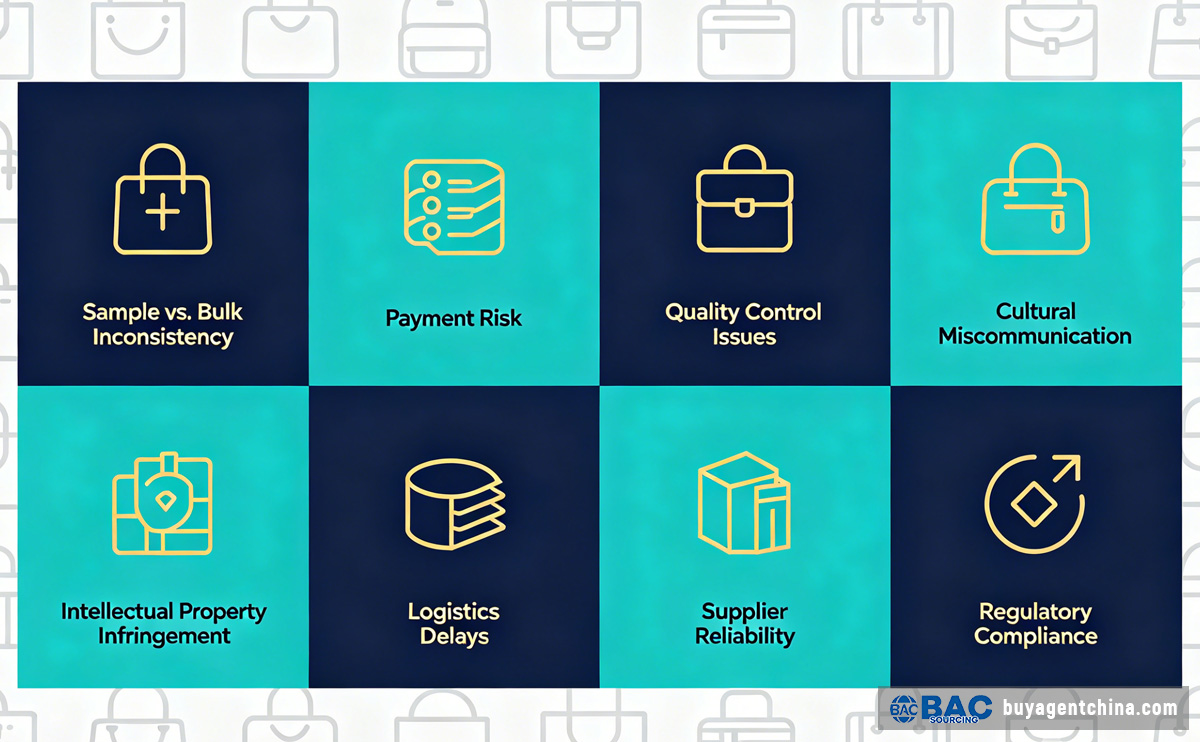
4. Eight Common Sourcing Pitfalls & Professional Avoidance Strategies

Pitfall 1: Inconsistency Between Samples and Bulk Goods

Many suppliers attract orders with high-quality samples but cut corners on materials and craftsmanship during mass production. Solution: Add sample consistency clauses in formal contracts, and arrange mid-term production inspections to lock unified quality standards.

Pitfall 2: Fake Factory Scams and Middleman Markups

Unregulated trading companies often pose as direct factories, resulting in inflated prices and uncontrollable product quality. Solution: Conduct on-site factory audits and qualification verification through professional local sourcing agencies to screen out middlemen.

Pitfall 3: Vague Contract Terms and Unauthorized Price Hikes

Suppliers use ambiguous contractual clauses to raise prices or delay delivery after receiving advance deposits. Solution: Refine all cooperation terms in detail and specify clear liquidated damages for breach of contract.

Pitfall 4: IP Infringement of Customized Designs

Some factories leak or replicate buyers’ exclusive customized designs for secondary sales. Solution: Sign formal NDA confidentiality agreements and IP protection clauses to restrict factory unauthorized use of exclusive designs.

Pitfall 5: Export Compliance Failures

Products fail to meet EU REACH, US CPSC or local customs standards, causing cargo detention, return or forfeiture. Solution: Clarify target market compliance requirements in advance and compel factories to provide valid qualified test reports before mass production.

Pitfall 6: Payment Risks and Deposit Fraud

Unscrupulous suppliers abscond after receiving advance deposits.Solution: Strictly follow the industry-standard 30% T/T deposit rule, never pay full payment in advance, and only transfer funds to official corporate bank accounts of verified factories.

Pitfall 7: Unreasonable Delivery Delays

Factory order backlogs lead to delayed shipments, disrupting overseas buyers’ sales and inventory plans. Solution: Specify daily penalty standards for delayed delivery in contracts to constrain factory delivery efficiency.

Pitfall 8: Inadequate After-Sales Guarantee

Suppliers evade after-sales responsibilities for defective bulk products after shipment. Solution: Explicitly define return, replacement and compensation terms for quality problems in contracts to ensure effective after-sales protection.
For international buyers lacking on-site supervision capabilities in China, cooperating with a professional sourcing agency is the most efficient risk control method. BAC SOURCING (BuyAgentChina.com) is deeply familiar with China’s luggage industry rules and cross-border trade risks, providing one-stop services including supplier screening, contract review, full-process quality inspection, progress supervision and after-sales rights protection, fully securing buyers’ procurement funds and cargo safety.
How to Source Luggage & Bags from China 02

5. 2026 Hot-Selling Product Categories & Global Sourcing Trends

5.1 Best-Selling Luggage & Bag Categories for Global Markets

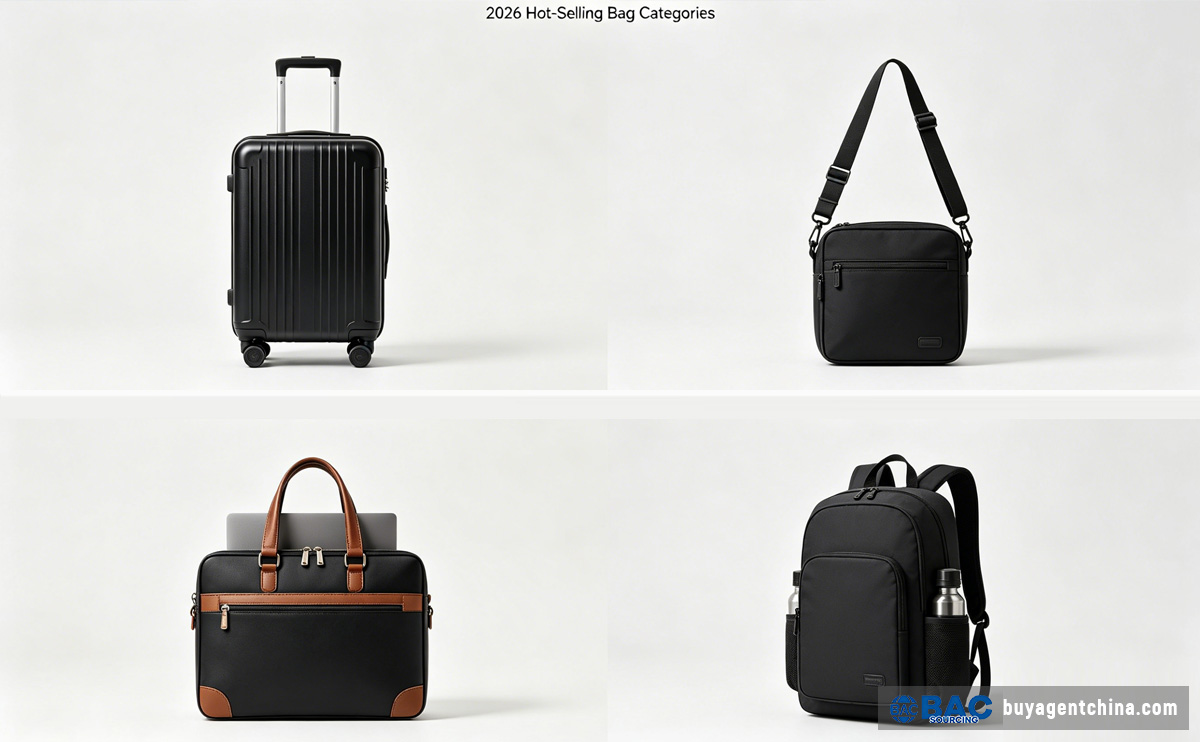
  • Travel Luggage & Trolley Cases: The largest export category with stable global travel-driven demand. 20-inch carry-on and 24-inch checked suitcases featuring lightweight construction, silent spinner wheels and TSA locks remain the most popular specifications for global importers.
  • Handbags & Crossbody Bags: Sustained stable demand in daily consumer scenarios, perfectly matching fashion retail markets in Europe, America and Southeast Asia.
  • Business Briefcases: Growing demand in global commercial scenarios, with high profit margins for mid-to-high-end customized business styles.
  • Functional Segmented Bags: Outdoor backpacks, cosmetic bags, pet carrier bags and other niche functional products feature low market competition and high added value, emerging as mainstream hot categories in 2026.

5.2 Key 2026 Sourcing Trends for International Buyers

  • Diversified Global Market Layout: While European and American markets remain mainstream, emerging markets including Southeast Asia, Russia, Latin America and South Asia maintain rapid growth, bringing low-competition, high-potential sourcing opportunities.
  • Value-Based Competition Replaces Price Competition: Excessively low-priced products face severe quality and compliance risks. Mid-to-high-end customized and functional luggage products deliver more sustainable profit margins and market competitiveness.
  • Booming Flexible Small-Batch Customization: Chinese factories have greatly improved flexible production capabilities, fully catering to the small-batch, multi-style customized procurement needs of global cross-border sellers.
  • Online Sourcing Becomes Mainstream: Cross-border e-commerce sourcing channels eliminate intermediate links, enabling global buyers to source efficiently and reduce inventory and operational risks.

Conclusion

Benefiting from a complete industrial chain and mature export supporting systems, China remains the most competitive luggage and bag sourcing base for global buyers in 2026. For international purchasers, selecting matched manufacturing bases, formal qualified suppliers and standardized cross-border procurement workflows can effectively avoid trade risks and build a stable, long-term supply chain system.
If you are new to China luggage sourcing or require professional management and quality supervision for your existing Chinese suppliers, contact BAC SOURCING (BuyAgentChina.com) for reliable one-stop China sourcing solutions, making your cross-border luggage procurement safer, more efficient and more professional.

Leave a Reply

Your email address will not be published. Required fields are marked *