Factory Verification, Sourcing Tips

How to Customize Light Steel Stud/Track Roll Forming Machine

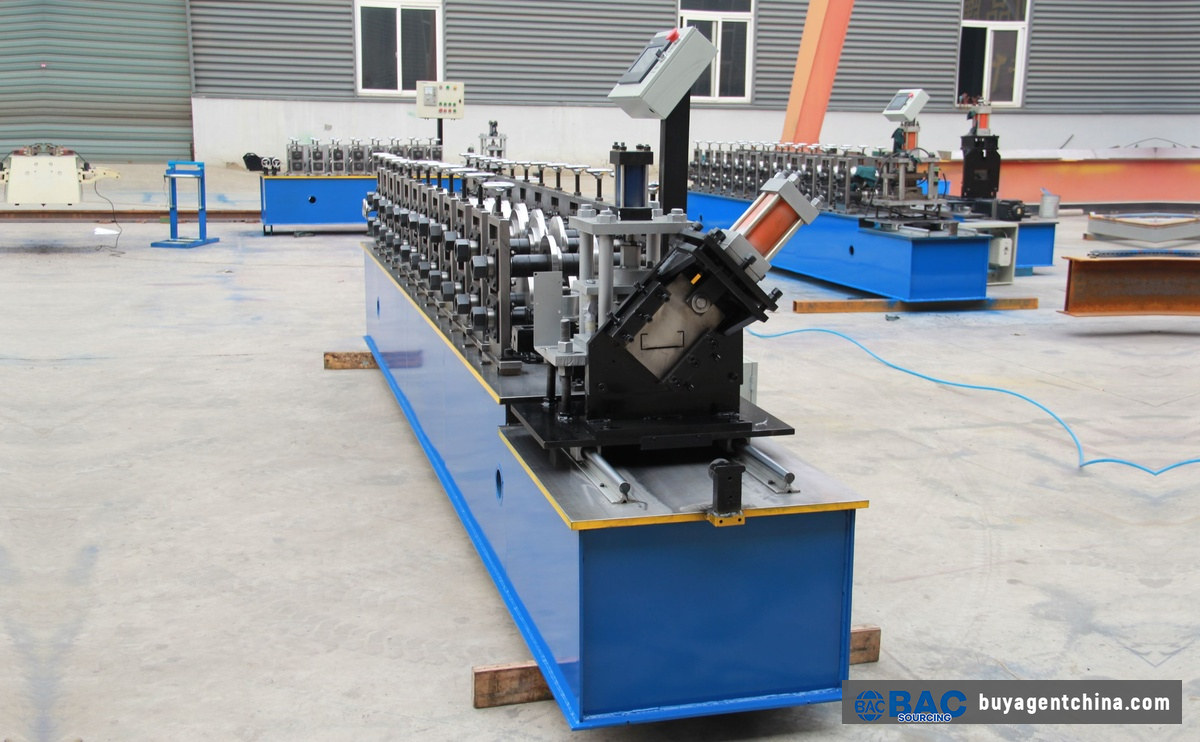
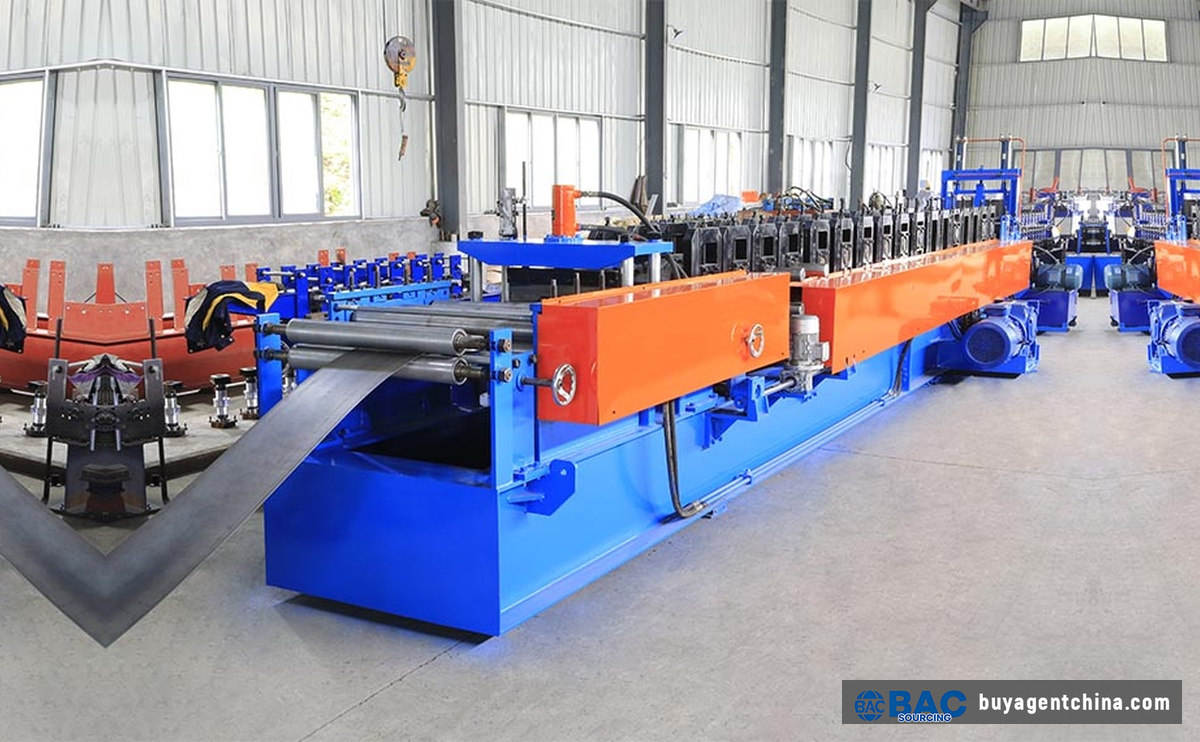
Roll forming line in a Chinese production workshop

Send an engineer drawing and coil spec first. They decide the tooling and the price. Complex profiles go to Zhejiang/Jiangsu. Simple ones go to Hebei. Payment follows delivery mode.

1. Rule One: Ask for the Engineer Drawing Before You Quote Anything

I spent four years selling roll forming machinery out of a Chinese factory. The habit that stuck is simple. When a custom stud/track inquiry lands in my inbox, I do not reach for a price list. I ask for the drawing. A quote without a drawing is a guess. A guessed price wastes two months of someone’s production calendar.

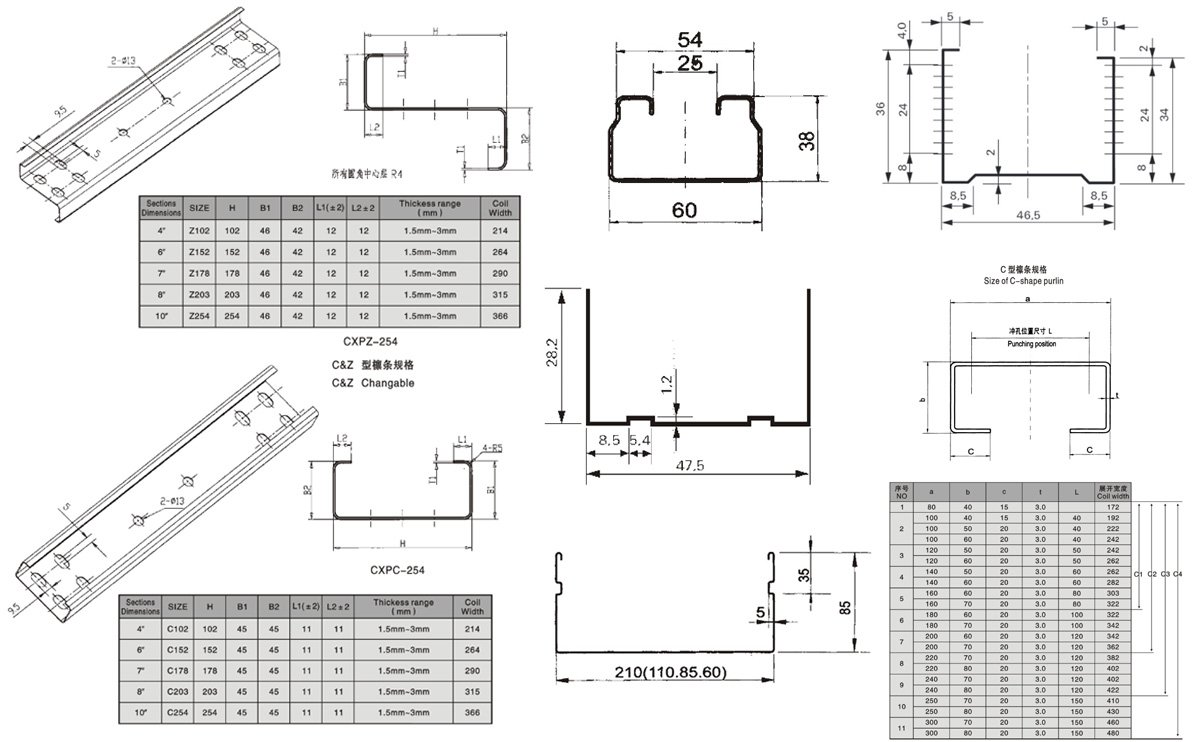
Light steel stud and track machines are non-standard by nature. Every buyer’s profile is a little different. You may need a C channel, a U track, a C/U combo, a profile with a hem, or studs with pre-punched service holes. Change any one parameter and the roll tooling changes with it. That is why the fastest way forward is an engineer drawing that pins down the geometry before a single roller is cut.

1.1 What the Drawing Must Carry: Shape, Size, Forming Angle, Punch Positions

Drawings of Light Steel Stud Track

Drawings of Light Steel Stud Track

A usable drawing does not need to be a full CAD release. It needs four things. I check for all four before I pass an inquiry to a factory’s technical team:

Drawing elementWhy it mattersWhat happens if it is missing
Profile cross-sectionDecides the pass design and forming sequenceWrong pass count, or a shape that will not form cleanly
Finished dimensions with tolerancesDrives the roll tooling dimension chainOut-of-tolerance studs scrap a whole batch
Forming angle / bend radiusDecides the deformation per passCracking at the bend, or springback that kills the angle
Punch positions, hole size and spacingDecides the punch station and servo positioningHoles land in the wrong place; nothing fits on site

With the drawing in hand, a competent factory engineer can tell you within half an hour whether the profile is formable, how many forming stations it needs, and roughly what the tooling will cost. Without it, every answer is sales talk.

The same logic applies to the coil you will feed the machine. The base steel grade — galvanized Q235, SGCC, DX51D or whatever you actually run — changes the forming force and the springback behaviour. The thickness range matters even more. A line that rolls 0.4 mm and a line that rolls 2.0 mm are different machines. The roller material, hardening and coating are specified for the range you name, not the range you vaguely hope to cover. Zinc coating wears the rollers too. A heavy zinc layer forces a harder roller surface treatment, such as chrome plating or nitriding. Skip that step and you will replace rolls within the first year.

Steel coil feeding into the forming line.

Roll forming line in a Chinese production workshop.

Put the coil spec in the contract before you put it in production. The steel coil spec decides the rollers. The rollers decide the price. Buyers who skip this step usually find out six months in, when the wear shows up and the factory says the rollers were “designed for lighter material.”

1.2 Roller Material and Surface Treatment: Where the Custom Cost Actually Goes

This is the part of customization nobody puts in the marketing brochure. The rollers are the heart of the machine. Their material and surface hardness are chosen against your steel spec, not against a catalogue default. Bearing steel and tool steel behave differently under load. The hardening depth and the surface finish are matched to the zinc layer and the forming force your material demands.

The industry lesson I keep repeating is that the pitfalls I have stepped in, you do not have to step in again. The roller spec is exactly the kind of detail that separates a machine that runs for a decade from one that limps through its first warranty year.

In practice, the price ladder mirrors this design chain. On the 2026 market, a basic C/U keel machine from the Hebei cluster quotes around USD 5,000–6,500 FOB. A mid-range fully automatic stud/track line sits around USD 8,600–15,000. A high-configuration line with multi-profile changeover and precision punching — the kind the older Zhejiang and Jiangsu engineering shops build — runs from roughly USD 15,000 up to USD 25,000. Heavy-gauge and multi-machine lines climb well beyond that. The spread is not the factory being greedy. It is the rollers, the drive and the control system being specified for a different machine.

2. Rule Two: Match the Region to the Profile Complexity

China’s stud/track machine industry has a clear geography. It maps almost perfectly onto the complexity of your profile.

2.1 Zhejiang and Jiangsu: The Early Movers with Real Design Depth

The earliest suppliers of this equipment came out of Zhejiang and Jiangsu. Those provinces still hold the deepest engineering bench for complex lines. If your profile is complicated — multiple profile changes, precision punching, heavy-gauge forming, multi-station synchronization — this is where you belong. The early players have the pass-design experience and the mould development capability to deliver a complex machine on time and on spec.

Smaller factories, especially newer entrants, often do not have complete design-and-customization capability. They can build a machine they have built before. They struggle when your drawing is genuinely new. A complex order handed to a shop without the design depth ends in schedule slips and re-cut tooling.

2.2 Hebei: The Volume Answer for Simple Profiles

Later, a large wave of suppliers entered the industry from Hebei. They did what the market needed. They mass-produced machines for simple, near-standard profiles and drove the price down hard. The cluster scale is real. Hebei and Shandong together host more than 60% of China’s metal forming machinery manufacturers. Cangzhou alone counts over 120 dedicated roll forming equipment producers, according to Accio’s 2026 supplier survey. If your production is standard C and U keels — the common drywall and ceiling profiles — the Hebei cluster is the high-value answer. The price gap versus the older Zhejiang/Jiangsu players can be substantial.

The catch is the one buyers most often get wrong. The low price is built on the simple, standard profile. Sending a complex drawing to a Hebei volume shop to chase the low price is a category error. It is like asking the cheapest kitchen in town to cater a banquet. The price was never the point; the fit was.

DimensionZhejiang / Jiangsu leadersHebei cluster
Industry entryEarly moversLate, volume-driven
StrengthComplex profiles, multi-profile changeovers, precision punchingStandard profiles, high-volume repeat builds
Design depthFull in-house design and toolingProven machines, limited new-design work
PriceHigher (engineering premium)Low (scale and standardization)
Best fitComplex custom lines, multi-station workStandard C/U keel production, cost-driven buyers

One honest note. “Low price” in Hebei is not a trap in itself. Cheap is not a sin; chasing cheap is. If the profile is standard, take the Hebei price and bank the saving. If the profile is complex, pay the Zhejiang or Jiangsu engineer. The machine has to do something your market, not the price list, demands. A useful field test: send the same spec sheet to one supplier from each cluster and compare how their technical teams reply. The one that asks a sharper question about your drawing is usually the one with the deeper engineering bench.

China is also, by a wide margin, the world’s leading exporter in this category. Volza’s HS 8455 export records list 98 Chinese suppliers, more than Italy, South Korea and Germany combined. Nearly all custom stud/track inquiries that reach an overseas buyer’s desk will be answered from one of these two clusters. The region decision matters more than the factory decision.

3. Rule Three: Let the Machine Length Decide How It Ships

Custom roll forming lines are built around containers. The length of the main machine is the single biggest logistics decision you will make.

3.1 6 m and 12 m: Factory-Assembled, Container-Ready

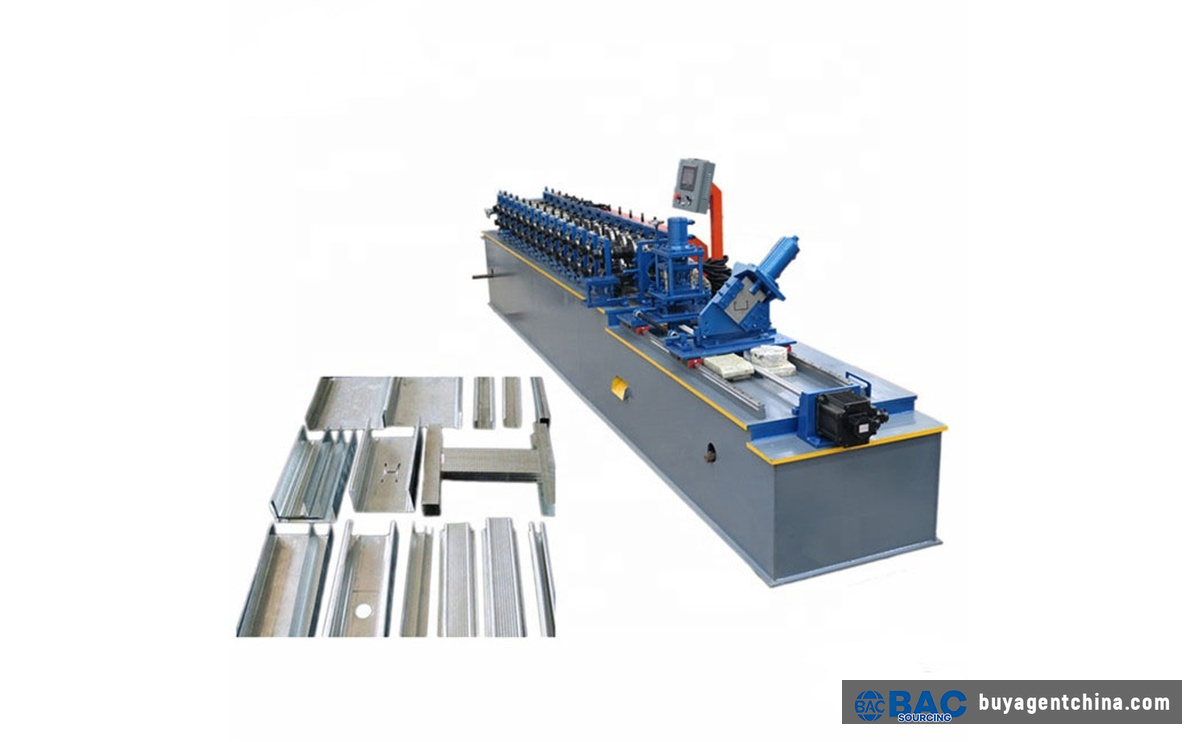
Most suppliers design the main machine to fit within 6 m or 12 m. That way the line ships in a 20-foot or 40-foot container. Within those lengths, the whole line is assembled and debugged at the supplier’s factory. Your job is to fly in for the trial run before shipment. Bring the actual steel you will produce with, run it through the line, and confirm it forms cleanly at production speed. What you inspect at the factory is a finished machine, not a half-built promise.

Factory-assembled stud and track roll forming line.

Factory-assembled stud and track roll forming line.

One paperwork note while we are here. These machines classify under HS 8455.22 (cold-forming mills and rolls). The US HTS rate for 8455.22.00.00 is duty-free at the base column-1 level, per the 2026 tariff schedule. Do not bank on that number alone. Country-of-origin measures such as Section 301 or the 2026 steel and aluminum adjustments can add duty on top. Have your forwarder confirm the total landed rate for your destination before you commit to a shipping term.

3.2 Over 12 m: Split Shipping and On-Site Assembly

If your customized line is genuinely long — more than 12 m — it has to be disassembled into sections, shipped in separate containers, and re-assembled at your factory. That changes the whole delivery contract. Three things have to be written down before you sign:

  • – The dispatch detail and the cost. How many technicians, how many days, who pays for visas, flights and accommodation. China suppliers will normally send a technical team to assemble, debug and run trial production at your factory in any country that is not in an active conflict zone. The terms must be in the contract, not left to a phone call.
  • – Do not overestimate your own assembly capability. These machines need experienced hands for the mechanical alignment and the control-system wiring. Most buyers do not have that capability in-house. A cheap local fitter is not a substitute for the factory’s own commissioning engineer.
  • – The acceptance point moves. With factory delivery, you accept before shipping. With split shipping, you accept after the supplier’s team has assembled the line at your site and proven it in trial production.
Delivery modeMachine lengthAssembly siteAcceptanceBest fit
Factory delivery≤ 6 m / ≤ 12 mSupplier factoryBuyer trial-run before shipmentStandard and mid-complexity lines
Split shipping> 12 mBuyer's factorySupplier on-site assembly + trial runExtra-long, complex lines
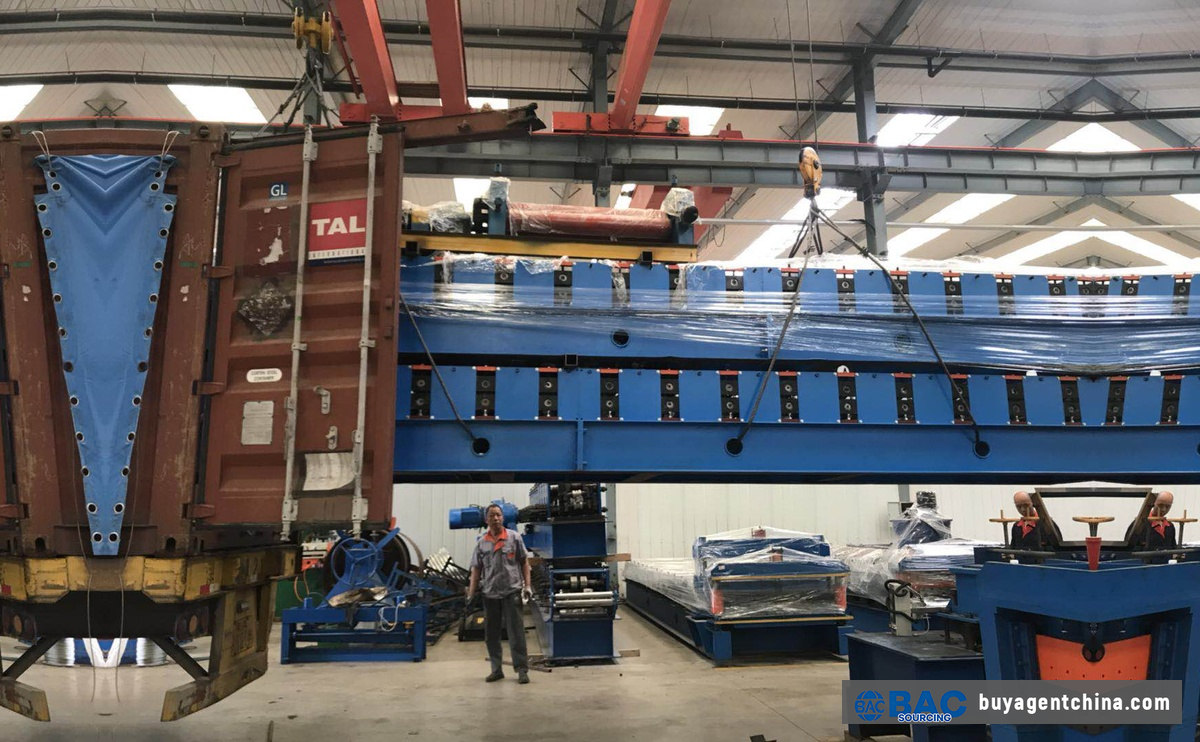
Roll forming machine loading into a shipping container.

Roll forming machine loading into a shipping container.

The 6 m / 12 m rule is not a manufacturing limit. It is a shipping decision wearing a tape measure. Decide your building layout and your container budget first. The machine length follows.

4. Rule Four: Tie the Payment Schedule to the Delivery Mode

Custom equipment does not follow the payment logic of stock goods. The payment pattern follows the delivery mode. It is remarkably consistent across the industry.

4.1 Factory Delivery: 40% Deposit, 90–120 Days, Trial Run, Then Balance

For a machine that is assembled and accepted at the supplier’s factory, the standard pattern is simple. A 40% T/T deposit when the contract is signed. A build cycle of roughly 90–120 days. Then a factory trial run where you test with the actual coil you will use. Once the line runs cleanly, you pay the balance and the machine ships.

Make the trial run count. Bring not just a sample of your steel but the actual production coil. Run it at the speed you will run it at home. Punch the holes your market needs. The trial run is the one moment in the whole deal where you see the machine do its job before you hand over the last dollar.

4.2 Split Shipping: Hold a Balance Until Commissioning

When the machine ships disassembled, the supplier usually holds a portion of the payment until their team has assembled the line at your factory and it is running in trial production. For larger projects — multiple machines, a whole production hall — it is also normal to hold about 3–5% as retention until the equipment has run normally at the destination.

Payment milestoneFactory deliverySplit shipping
Contract signing40% deposit40% deposit
Build cycle~90–120 days~90–120 days
Before shipmentTrial run at factory → pay balanceBalance partially held
After arrivalMachine shipsSupplier on-site assembly → pay balance
Large projects—3–5% retention until running normally

And here is the blunt part that most guides are too polite to print. Do not plan to skip the final payment after the machine is up. These machines run on a control system. The factory can shut a machine down remotely. It is not a threat; it is engineering reality. The balance is the price of the commissioning engineer’s work and the warranty that follows it. Treat the payment schedule as a contract you intend to keep, not a negotiation you hope to win twice.

5. Rule Five: Keep the Supplier Close — They Are the Only Ones Who Can Fix It

The last rule is the one buyers forget first. It is the one you cannot see in a brochure.

5.1 Equipment Breaks, and Only the Supplier Can Fix It Fast

A stud/track line is a mechanical, electrical and control-system machine in one. When it faults six months after installation, the first person who can actually fix it is the factory that built it. Your local maintenance contractor has never seen the control parameters. A general mechanic does not know the pass alignment. The factory’s engineers can diagnose remotely, ship the right spare, and talk your operator through the fix. That only works if the relationship and the after-sales terms exist.

Put the after-sales terms in the contract with the same care as the machine spec. List the spare parts with prices. Commit to a response time for remote diagnosis. Write down a clear procedure for warranty claims. A machine that runs three shifts a day will eventually need a roller or a sensor. The difference between three days down and three weeks down is usually written in that clause.

5.2 The Relationship Is the Cheapest Insurance You Will Buy

Keeping the supplier close is not courtesy. It is commercial sense. A supplier who sees you as a repeat customer answers the emergency call first, prices spares at the partner rate, and treats your next project as a reference sale. I have watched buyers squeeze the last cent out of a machinery contract and then sit for weeks waiting for a spare part from a supplier who had no reason to hurry. Putting the spec in the contract beats sending a smile across the dinner table. Treating the after-sales relationship like part of the deal works the same way — because it is part of the deal.

If you would rather not learn all five rules the expensive way, a China purchasing agent who has already run this category is a cheap shortcut. That is the job Buy Agent China does on custom machinery orders — we keep the drawing clear, the factory honest and the payment schedule safe, and you keep the direct factory contract.

6. Frequently Asked Questions (FAQ)

Q1. What is the MOQ for a custom stud/track roll forming machine?

A1. One set. These are non-standard custom machines, so the MOQ is effectively a single line. What varies is the tooling cost. Complex profiles need more forming stations and custom rolls, which is where the real budget sits.

Q2. How long does a customized machine take to build?

A2. Typically 90–120 days from contract to factory acceptance for a standard custom stud/track line. Add sea freight. For machines over 12 m, add the on-site assembly and commissioning time at your factory.

Q3. What payment terms do Chinese factories usually accept for custom machines?

A3. The standard custom-equipment pattern is a 40% T/T deposit on signing. The balance comes after a factory trial run for factory-delivered machines. For split-shipped machines, a held balance is paid after on-site assembly. Large multi-machine projects often include a 3–5% retention until the line runs normally.

Q4. Can the supplier send technicians to assemble the machine at my factory?

A4. Usually yes, for countries outside active conflict zones. Agree the technician count, duration, visa, travel and accommodation costs in the contract before signing. Do not leave any of it

Leave a Reply

Your email address will not be published. Required fields are marked *