Custom Sourcing, Procurement Guides

How to Import Toilet Brush Sets from China (2026 Pricing & Sourcing Guide)

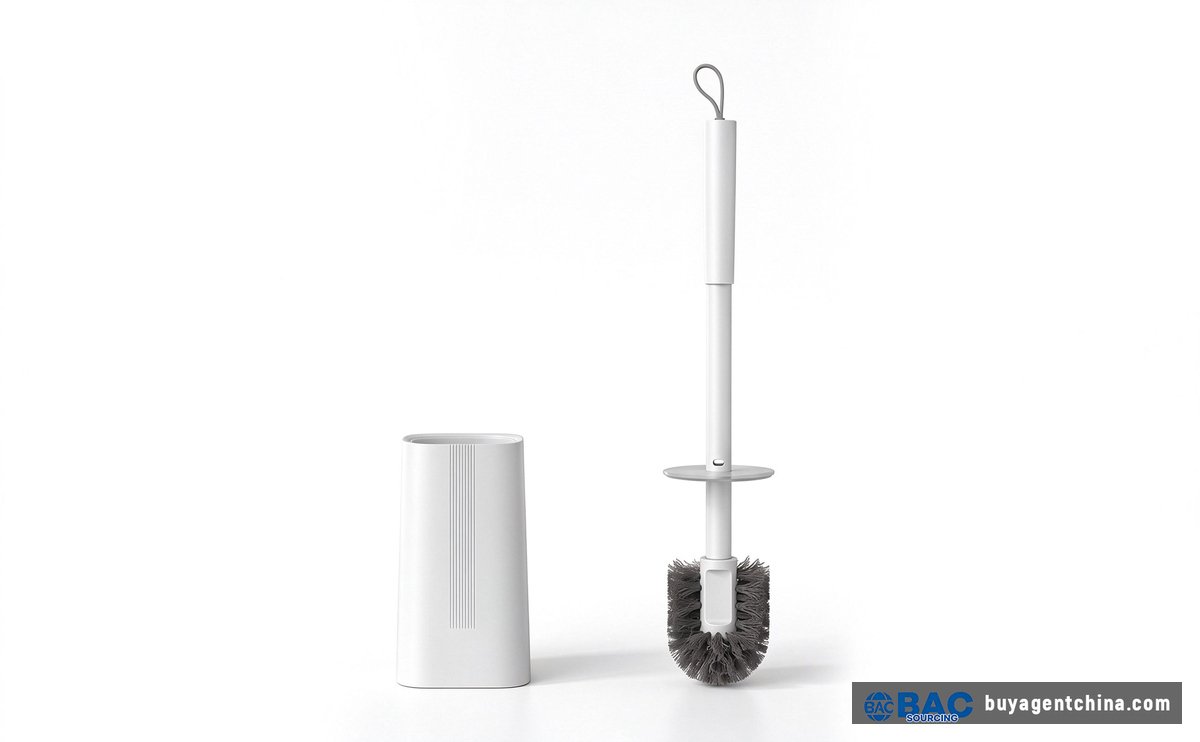
Classic plastic bristle toilet brush set with ventilated holder — the volume workhorse.

China makes the bulk of the world’s toilet brush sets; stock sets run about USD 0.45–2.50 FOB, and most ship under HS 9603.90 — start with stock, verify materials, then scale.

1. The Short Version: Prices, MOQs and Where the Goods Come From

Most sourcing guides save the conclusion for the last page. This one puts it on top, because with a low-ticket item like a toilet brush set, the difference between a profitable import and a hobby is decided early.

Quoted prices in October 2026 tell the story. A plain plastic bristle set with a ventilated holder runs about USD 0.45–0.65 FOB from Ningbo factories. MOQs sit at 100–1,000 sets. Add a soap dispenser or a thicker base and you are at USD 1.10–1.30. The Yiwu volume sellers sit at USD 1.65–1.96 with a 100-set minimum. Disposable sponge-head sets — cleaner-loaded refills plus a wall-mount base — are the fastest-growing tier. They usually quote USD 1.50–2.50 at 3,000 sets (Made-in-China and Alibaba listings, fetched October 2026). On the domestic 1688 side, the same tiers run from about ¥0.73 to ¥6.18. In plain terms, the ladder runs from a few dimes to a couple of dollars per set. Every rung maps to a different bristle material, base structure and channel on your end.

Now the scale. Independent trackers valued the global toilet brush market at about USD 3.35 billion in 2025, projecting USD 5.11 billion by 2032 at a 7.4% CAGR (Statsmarketresearch, 2025 report). Regionally, North America holds roughly USD 1.03 billion, Asia Pacific about USD 960 million, and Europe about USD 864 million (PW Consulting, toilet cleaning tools scope, 2025). On the supply side, the answer is basically one country: China. Trade database Volza logs 118,122 shipments under HS 96039000 — the “other brushes” bucket — with 7,675 Chinese exporters among them (data as of November 2025). Yiwu, Taizhou and Ningbo alone cover the whole price ladder from volume plastic to export-grade combos.

Three currents are pushing this category right now. Post-2020 hygiene spending raised the bar for bathroom cleaning tools across North America and Europe. Short-term rentals and serviced apartments normalised the disposable refill model, which turns a one-time SKU into recurring revenue. And e-commerce made light, low-ticket sets cheap to ship and easy to A/B test. None of that changes the sourcing basics — it just makes the buyers who get them right harder to beat.

So here is the conclusion-first version of this guide: buy stock, verify materials, then scale. Use the first order to test color acceptance, price band and return rate with off-the-shelf goods. Once the numbers support it, talk molds and customization. The six sections after this one go step by step. You will learn how to pick the type, how to read the factory map, and where the hidden costs live in a cheap quote. Then comes the route decision — direct or a local buying agent. Last is the import-side work: HS code, duty and inspection windows. Nobody can run that part for you from 8,000 miles away.

Table 1 · Toilet brush set price reference by type (2026 asking prices)

TypePositioningFOB reference (USD/set)Typical MOQBest channel
Classic plastic bristle + ventilated holderEntry volume0.45–0.65 (Ningbo); 1.65–1.96 (Yiwu)100–1,000Supermarkets, discount stores
Soap-dispenser / reinforced comboMid upgrade1.10–1.30100–500Home retail, e-commerce
Silicone / TPR headHygiene mid-tier1.30 (Jiangmen, MOQ 2,000); ~0.9–1.2 (Langfang, MOQ 80)80–2,000Boutique homeware
Disposable sponge-head set + cleaner refillsFastest-growing1.50–2.503,000Hotels, guesthouses, rentals
Bamboo / wood handle eco setEco premium0.56–2.03 (Ningbo 6-pc set)500EU / North America eco lines
Electric rotating brushNiche premiumfrom ~USD 7.1 (¥51.40, MOQ 5,000 sets)5,000Premium, gifting
Stainless handle + plastic baseDurable mid-high1.3–2.5500–3,000Brand lines, contract

Sources: Made-in-China / Alibaba / 1688 listing pages (fetched October 2026). FOB = ex-works plus port handling; duty and destination charges excluded.

2. Decide What You Are Importing: Types, Configurations, Stock vs OEM/ODM

2.1 Types and use cases

A toilet brush set is not one SKU; it is a product line. Seven variants dominate the line. The classic plastic bristle brush with ventilated holder is the volume workhorse. Silicone/TPR heads sell on quick-dry and stain resistance. Disposable sponge-head sets with cleaner-loaded refills are the hotel and guesthouses favourite. Bamboo or wood handle eco sets play to Europe and North America. Then come stainless-steel handle durables, electric rotating brushes, and combos that bundle a brush with a plunger, a soap dispenser or a full six-piece bathroom kit.

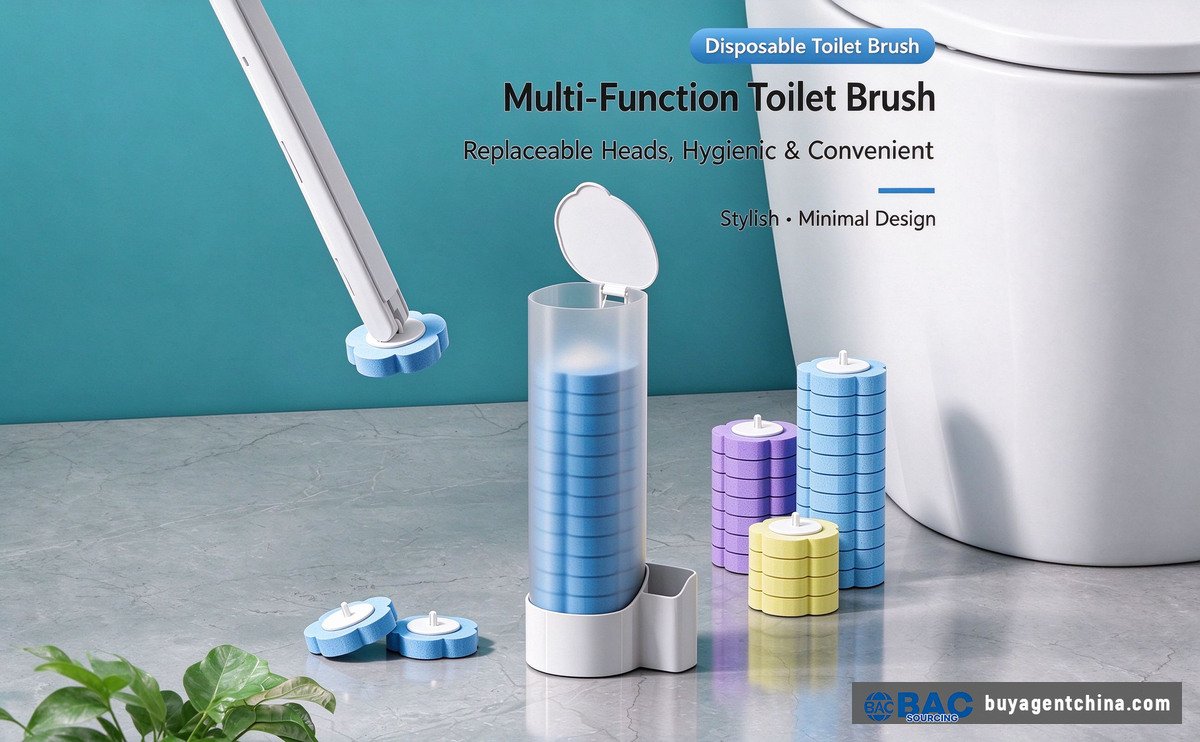
Disposable sponge-head toilet brush set with cleaner-loaded refills and a storage cylinder.

Disposable sponge-head toilet brush set with cleaner-loaded refills and a storage cylinder.

The first cut is reusable versus disposable. Reusable sets are cheaper and live on volume; disposable sets sell for 2–5 times more per unit and create recurring revenue through refill heads. Once a hotel or gueshouse adopts them, the reorders run all year. The second cut is your market. Japan, Korea and Europe respond to silicone and bamboo “hygiene plus eco” narratives; North American big-box retail still buys plastic volume SKUs and disposable combos.

Combo sets deserve a separate look. A brush bundled with a plunger, a soap dispenser or a full six-piece bathroom kit lifts the ticket price two to three times without much extra factory cost. Retailers slot them into “bathroom refresh” promotions, which move units in bursts. For private-label sellers, the combo is usually the fastest route to a differentiated SKU without touching a mold.

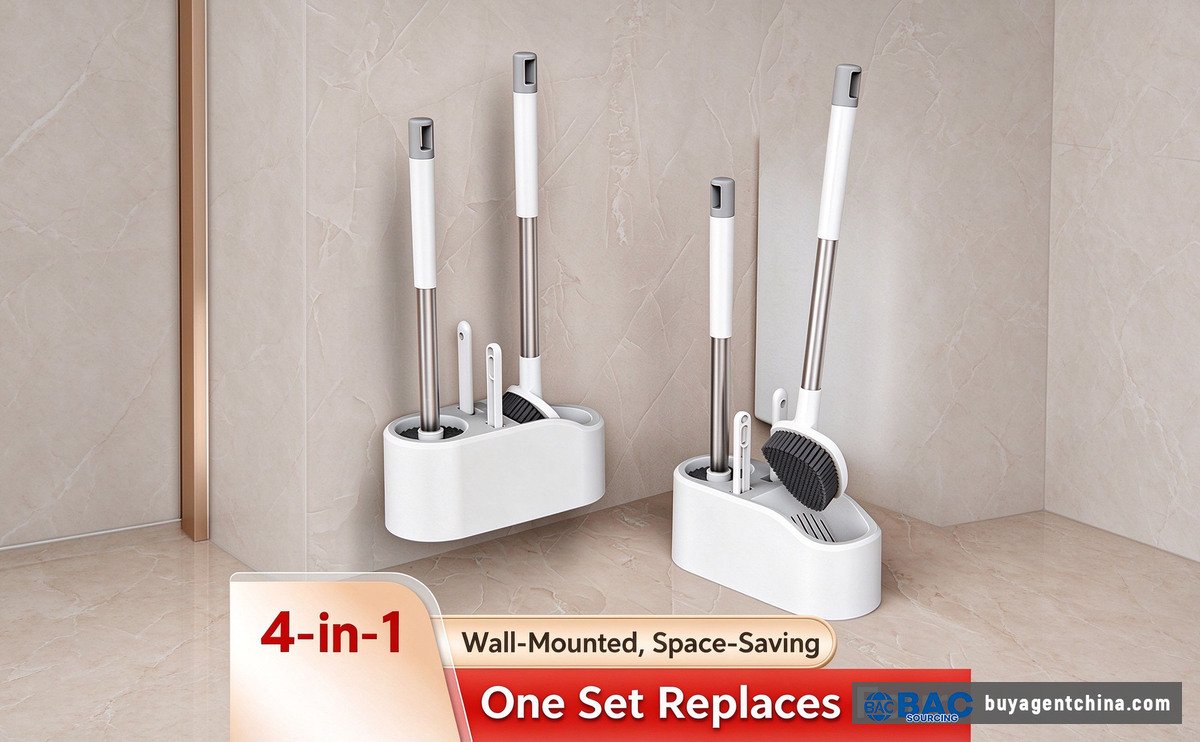
Wall-mounted four-in-one toilet cleaning set — brush, scraper and holders on one bracket.

Wall-mounted four-in-one toilet cleaning set — brush, scraper and holders on one bracket.

Wall-mounted four-in-one sets put brush, scraper and holder on one bracket — the no-counter-space bundle retailers reorder all year.

2.2 Stock wholesale or OEM/ODM: where your first order should land

Table 2 · Stock wholesale vs OEM/ODM customization

DimensionStock wholesaleOEM/ODM custom
MOQ100–3,000 setsMolded designs usually 3,000–10,000 sets
Lead time7–20 days7–15 days sampling + 30–60 days production
Unit priceLow (factory volume price)20–50% higher (sampling + mold amortization)
DifferentiationAlmost none; competes on priceFull control: color, logo, packaging, structure
Biggest riskSame-model price warSunk mold cost + bulk drifting from sample

2.3 The decision rule

Make the first order stock. Measure colour acceptance, the price band that moves, and the return rate — then talk molds. For a low-price, high-frequency item like this, money spent on tooling can equal the entire profit of your first shipment. If you must customize, start with light customization on existing molds: colour change, logo, packaging. MOQs stay low, risk stays contained, and you only commit to a full new mold after the sales numbers justify it.

3. China's Factory Map: Who Makes What, Where

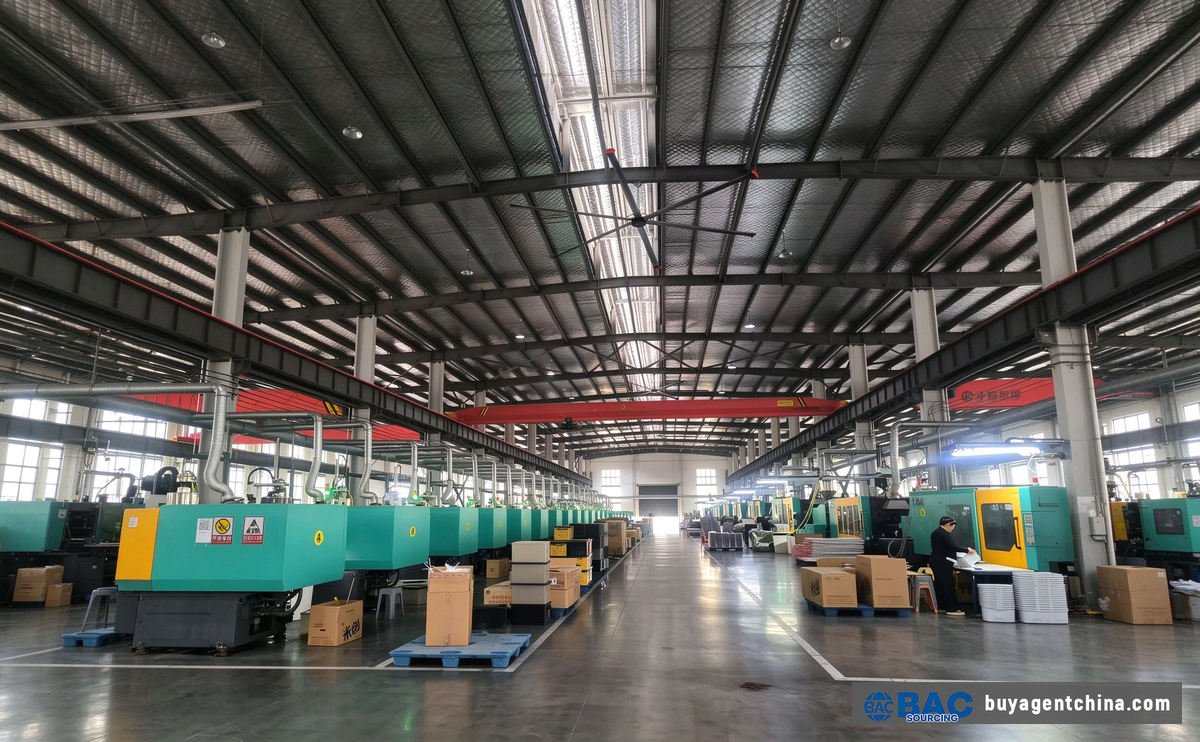
Injection-molding workshop where most stock toilet brush sets are produced.

Injection-molding workshop where most stock toilet brush sets are produced.

3.1 The major producing regions at a glance

Table 3 · Main toilet brush set producing regions

RegionPositioningNotesMOQ / price characterBest for
Yiwu (Jinhua)Global commodity hubWidest range, messiest stock, floor prices on volume linesLow MOQs (dozens), ¥0.73–6.18 across tiersSmall test orders, mixed-SKU carts
Taizhou (Luqiao/Huangyan)Injection-molding beltStrong mold and molding capability; high self-produced plastic partsMid-volume pricing, ¥2.40–13.90Stable supply of plastic sets
Ningbo (Ninghai/Cixi)Export-oriented home goodsExperienced export documentation, clean FOB quotes100–3,000 export MOQsEU/US orders, combos
DongguanDisposable sponge-head supply chainPolymer sponge raw material and finished heads integratedRefill heads from ¥0.45Disposable sets, refill consumables
LangfangTPR/silicone brush workMature silicone head processSmall batches possible (MOQ 80)Silicone mid-tier
Jieyang/Shantou, YongkangSupplementary plastics beltFlexible pricing, many small millsMOQ from 50Low-cost fill-ins, urgent orders
Sources: 1688 supplier pages and Alibaba supplier pages (fetched October 2026).

3.2 Picking a region for your order size

No catchy slogan here; just a practical filter: lay out your list and let the regions sort themselves. Volume plastic hits its floor price in Yiwu and Taizhou. Export-grade combos belong with Ningbo, where communication and paperwork run smoothest. Disposable sponge heads point to Dongguan and Jinhua. TPR/silicone work sits in Langfang and Jiangmen. Bamboo eco lines come out of the Yiwu and Ningbo export factories. Language frictions start exactly here: technical specs get distorted in translation, and words like “antibacterial”, “food-grade” and “leak-proof” can mean different things to different plants. Put material grades in every RFQ, in writing.

A practical way to use the map: send one identical spec sheet to three regions and compare what comes back. The same set spec — PP base, nylon bristles, ventilated holder — will return different prices, different MOQs and, often, different interpretations of “nylon”. That spread is not noise. It is the first real negotiation data you have.

4. The Costs Hiding in a Cheap Quote — and How to Verify Them

Cheap is not a sin; chasing cheap is — and toilet brush sets are a perfect test bed for that rule. Four costs vanish most easily from a quote sheet: substituted materials, hygiene claims without evidence, translation losses, and skipped inspection.

Two of those costs are decided at the factory. Two are decided by you: how carefully you translate a spec, and whether you actually inspect. The factory part you can test. The you part is discipline.

4.1 Bristle and sponge materials

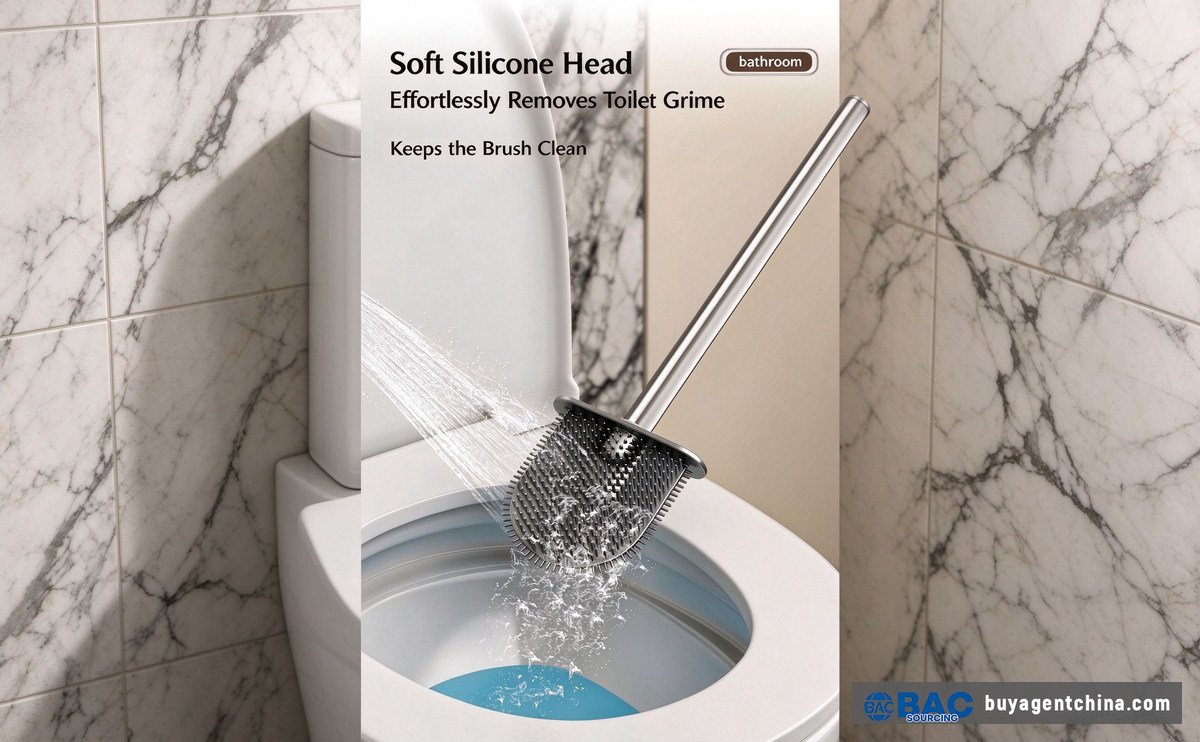
Soft silicone-head toilet brush that rinses clean under running water — the hygiene-focused mid-tier upgrade.

Soft silicone-head toilet brush that rinses clean under running water — the hygiene-focused mid-tier upgrade.

When quotes are three times apart, the difference lives in what a listing photo never shows. Bristles: PP and nylon cost differently. Their stiffness and wear differ even more.

TPR/silicone heads sell on softness and non-absorption. Silicone content varies, and so does rebound and stain resistance. Sponge heads: the value sits in the cleaner formulation inside the sponge and its density — too low, and the head collapses after two soaks. The checks are basic. Demand a material certificate with the grade written into the contract. Order samples and scrub them in water. Press the sponge heads and watch them rebound.

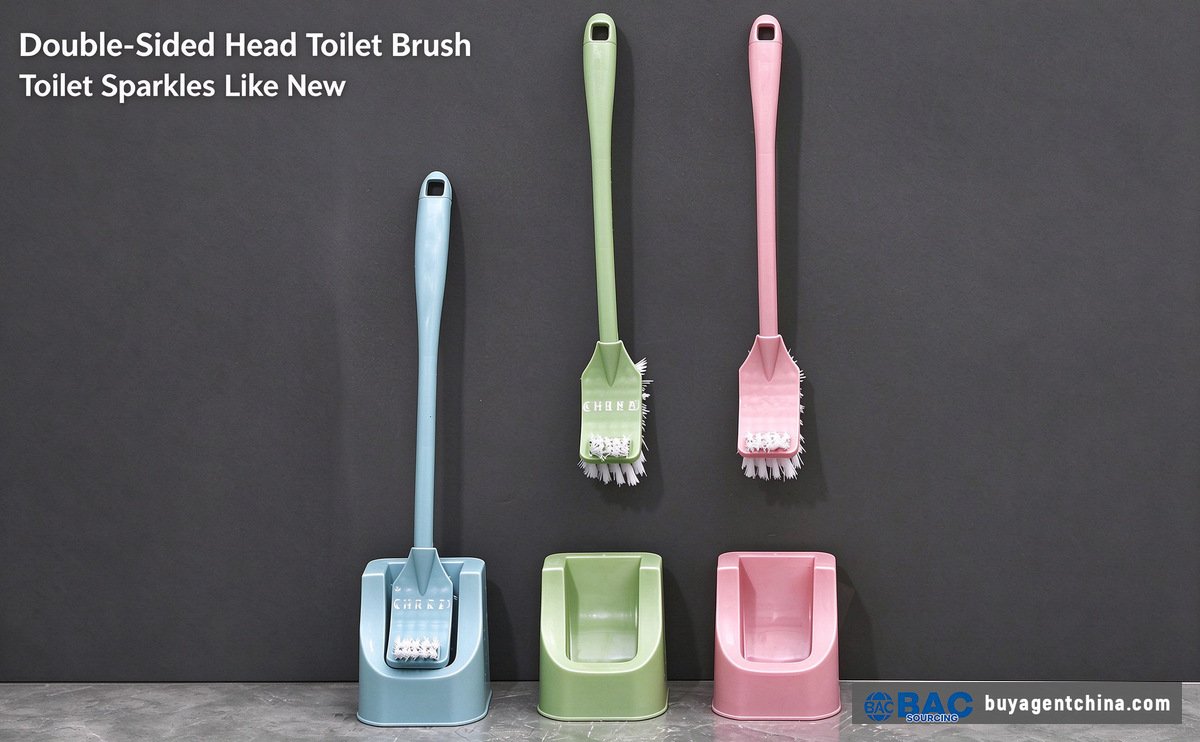
Double-sided brush-head toilet sets in three colour ways — one SKU, two cleaning faces.

Double-sided brush-head toilet sets in three colour ways — one SKU, two cleaning faces.

Bristle layout is part of the spec too — double-sided heads put two cleaning faces on one handle, which some channels read as a value SKU.

Table 4 · Material verification checklist

PartCommon downgradeCheck
Bristles (PP/nylon)Nylon priced as PP; sparse bristlesMaterial cert + water scrub test + hand stiffness
Head (TPR/silicone)Inflated silicone content; poor reboundPress-rebound test; stretch edge and look for whitening
Sponge headLow density; diluted cleaner loadWater absorption test; compare refill pricing
BaseThin-wall plastic; no drainage holesKnock test; count drain holes in the base

4.2 Hygiene claims and certification

“Antibacterial” and “99.9% germ removal” are the most common claims on toilet brush listings — and the most common source of trouble. A claim needs evidence: a third-party ISO 22196 antibacterial test report from SGS or similar, or documented in-house test data. Verbal assurance does not count. Keep “food-grade” language in its place. A toilet brush is not a food-contact item. Still, markets scrutinize cleaning goods that touch the body — EU REACH restricted substances, California Prop 65. Electric models add electrical safety (CE/LVD, UL), and battery-equipped ones bring shipping compliance for lithium cells.

A practical way to use the map: send one identical spec sheet to three regions and compare what comes back. The same set spec — PP base, nylon bristles, ventilated holder — will return different prices, different MOQs and, often, different interpretations of “nylon”. That spread is not noise. It is the first real negotiation data you have.

Table 5 · Claims and certification checks

Claim / certificateEvidence requiredIssued by
Antibacterial / germ-removal rateISO 22196 third-party report or in-house dataSGS-type lab or factory lab
EU material complianceREACH restricted-substance testingThird-party lab
Electric model safetyCE / LVD / UL certificatesFactory + certifier
Battery transport (if any)UN38.3 / MSDSFactory or battery supplier

4.3 Inspection windows

Table 6 · Three-stage inspection windows

StageTimingWhat to check
Mid-production30–50% producedBristle material, sponge batches, printing/decals, packaging
Finished-goods100% completeCount, cosmetics, assembly, drain holes, packing method
LoadingOn loading dayCarton counts, mixed loads per contract, container bracing

A sample is a sample, and mass production is mass production — I have said it for fifteen years. Injection-molded parts hide colour drift, flash and sponge-head assembly tolerance on a sample; they all surface in bulk. Do not skip this window.

5. Direct Sourcing or a China Buying Agent: Which Route Fits Your Order

5.1 The two routes, side by side

Table 7 · Direct factory vs buying agent

DimensionDirect factoryChina buying agent
CostNo agent fee, but you carry the mistake costsFixed service fee, materially fewer mistakes
CommunicationTranslation losses, specs driftLocal team checks specs line by line
Quote accuracyInflated or intermediated quotes possibleYou see the factory's original ex-works price
InspectionNo on-the-ground resourceLocal factory audits and staged inspection
PaperworkYou research HS and duty yourselfHelp with HS classification and document checks
Supplier managementYou fly over when problems hitLocal follow-up on production and after-sales
Best forLarge volume, on-the-ground team, veteransSmall-to-mid orders, first imports, remote buyers

Direct and agent are not either-or for most buyers. A common hybrid: source the volume SKU direct from a regional factory, and use a local buying agent for inspection, paperwork and the sponge-refill line where batches vary. You keep the price advantage where it matters and buy eyes where you have none.

5.2 A test order that fits 500–3,000 sets

The goal is to test the goods, not to run a perfect process. The path is short. Screen 3–5 sellers on 1688 or Yiwu stock. Order 20–50 sample sets from each. Scrub them in water; check drain holes and assembly. Place the first order with one or two suppliers. Ship LCL or a small air parcel. Confirm duty at the destination before release. Payment is T/T: put down the usual 30% deposit, and never pay the balance in full before the goods pass inspection. At this order size, what most buyers are really paying for is local legs-and-eyes plus inspection — exactly the job of a China import sourcing agent like Buy Agent China. The current standard (July 2026, verified on the site’s services page) is simple. The USD 29 Entry package returns 3 supplier quotes with assessment in 3–5 business days. The USD 140 DIVE package returns 4–6 qualified factories with original quotes and workshop videos. A standalone inspection runs USD 200 per visit. Fees are fixed in the contract, commission is transparent, the factory is paid directly — no markups.

5.3 Bulk container plan

Pick the region before you negotiate price. The sequence matters. Shortlist 2–3 factories in the region, then walk the floor: molding machines, mold maintenance, and whether the QC bench is actually in use. Sign the golden sample. Put material grades and acceptance criteria in the contract. Pay 30/70. Run three-stage inspection, review the HS code, complete the document set, then book and load. On container orders the killer is always “save five cents, lose fifty thousand” — mold material, sponge batches and mixed-loading clauses all belong in the contract. Want the whole chain managed? The Growth package charges 5–8% of order value, plus a USD 280 base fee covering two SKUs. It includes sourcing, sampling, negotiation, escrow order placement, production monitoring, AQL 2.5 pre-inspection, logistics coordination and after-sales.

6. The Import Side: HS Code, Duties, Documents and Inspection

6.1 HS code and duty

Toilet brush sets classify under the HS 9603.90 family (“other brushes”). Chinese export declarations commonly use 9603909090. A UK advance tariff ruling (600005466, issued 2023) placed a plastic brush with holder in 9603909100. The US splits the family across HTS 9603.90 subheadings by model and material. Duty on this family is usually single digits. Add Section 301-style measures, anti-dumping actions and material splits, and the real rate moves. Have your broker recalculate for your exact SKU. Do not copy a rate from an article and ship on it.

One rule for the whole family: classify from the final product, not the listing. A set with an electric rotating handle can sit in a different subheading than a passive brush. A battery version adds lithium-battery shipping rules. If the buyer’s market applies duty preferences or origin rules, the certificate of origin matters as much as the code itself.

Table 8 · HS classification and duty reference

MarketClassificationNotes
China export9603909090"Other brushes" line; export rebate rate can be checked
EU9603.90 familySplit by material and model
UK9603909100HMRC ruling 600005466 (issued 2023; plastic brush with holder)
USHTS 9603.90 subheadingsExact number by model; rate per your broker

Sources: China Customs HS query, HMRC Advance Tariff Ruling 600005466, USITC HTS chapter 96 (2025–2026).

6.2 Documents, shipping and a closing checklist

Get the HS code wrong, and a whole container sits at the dock while your margin disappears. So run the paperwork in order: commercial invoice, packing list, bill of lading, certificate of origin, and test reports where the buyer requires them — complete before the goods move. On LCL, keep the rhythm in mind: consolidation → booking → customs cut-off → loading, with buffer at every step. In the peak season (the August–October restocking window for Europe and the US), book the vessel before the container; space tightens and freight rises. Ocean freight bills by CBM, and toilet brush sets are light-bulky cargo — volume weight counts. Air freight only makes sense for emergency top-ups under 500 sets.
Inspection coordination is where most remote buyers trip. Confirm dates with the factory first, then book the inspector — not the other way round. A factory that is “too busy” on your chosen week is its own signal. Keep one copy of the signed golden sample at the loading point; it is the physical reference the inspector compares against.
Before you pay anything, run this eight-point checklist. ① Material grades go into the contract. ② Samples get scrubbed in water, not just looked at. ③ Antibacterial claims come with a report. ④ MOQ is sized from your channel, not from a sales pitch. ⑤ Your broker verifies the HS code. ⑥ Three-stage inspection is in the contract. ⑦ The balance is paid only after inspection. ⑧ Booking keeps a buffer for the season. Tick all eight and the worst of this category’s traps are behind you.

7. Frequently Asked Questions (FAQ)

Q1. What is the MOQ for toilet brush sets from China?

A1. Stock plastic sets commonly start at 100–500 sets, and some 1688 suppliers ship from a few dozen. Disposable sponge-head sets usually need 3,000 sets; custom molded designs typically start at 3,000–10,000 sets.

Q2. How much does it cost to import toilet brush sets from China?

A2. As of 2026, classic plastic sets run about USD 0.45–1.30 FOB, silicone/TPR sets around USD 0.9–1.3, and disposable sponge-head sets USD 1.50–2.50. Add freight, duty and destination charges to get landed cost.

Q3. Which is better, a classic bristle set or a disposable sponge-head set?

A3. It depends on your channel. Bristle sets are cheaper and win on volume; disposable sponge-head sets cost 2–5 times more per set but create repeat refill revenue in hotels, guesthouses and rental apartments.

Q4. What HS code covers toilet brush sets?

A4. The HS 9603.90 family ("other brushes"). China commonly declares 9603909090; a UK ruling (600005466, issued 2023) placed a plastic brush with holder in 9603909100; the US classifies under HTS 9603.90 subheadings. Confirm the exact code with your broker before shipping.

Q5. Can I customize toilet brush sets with my own brand?

A5. Yes. Start with light customization — colour, logo and packaging on existing molds — which usually needs only 3,000–5,000 sets. A full new mold means 10,000+ sets and 30–60 days of production.

Q6. How do I verify a Chinese toilet brush supplier before paying?

A6. Ask for a material certificate with the grade in the contract, order 20–50 samples and test them in water, demand third-party antibacterial reports if hygiene is claimed, and arrange three-stage inspection — or have a local buying agent run the checks for you.

Leave a Reply

Your email address will not be published. Required fields are marked *