Procurement Guides, Sourcing Tips

How to Buy Electronic Products in China? 2026 Complete Sourcing Guide

How to Buy Electronic Products in China 04
China ranks first globally as the largest electronics manufacturing base and supply chain hub, covering consumer electronics, smart hardware, security equipment, and electronic components of all specifications. Supported by mature industrial clusters, cost-effective pricing, and reliable OEM/ODM customization capabilities, China has become the preferred sourcing destination for global importers, trading companies, and cross-border sellers.
International buyers can directly source from Chinese original factories and wholesale suppliers to obtain competitive factory prices. Nevertheless, cross-border procurement commonly faces language barriers, geographical differences, unfamiliar platform rules, complicated customs clearance procedures, and inefficient after-sales communication. Independent purchasing often leads to extra costs and operational risks. This article systematically introduces mainstream Chinese B2B electronics platforms, standard sourcing workflows, common overseas purchasing challenges, and neutral sourcing suggestions, delivering clear, practical content for international electronics buyers.

1. Core Advantages of Sourcing Electronics from China

Compared with procurement in Europe, America, and Southeast Asia, Chinese electronics sourcing offers irreplaceable strengths that support long-term global supply chain cooperation:
  • Full-category Supply Chain Coverage: China’s electronics industry covers complete product lines, including precision components such as chips, resistors, and circuit boards, as well as finished products including smartphones, laptops, smart home devices, security systems, and digital accessories. It supports bulk orders, customized production, and small-batch restocking.
  • Significant Cost Advantages: Industrial clusters located in Shenzhen, Dongguan, and Huizhou concentrate massive original manufacturers. Direct factory supply eliminates intermediate markups, offering far lower wholesale prices than overseas retail and channel prices.
  • Mature Customization Capacity: Most Chinese factories support flexible OEM and ODM services, including parameter adjustment, appearance redesign, personalized packaging, and logo printing to meet regional certification and market standards worldwide.
  • Stable and Efficient Production Capacity: Most suppliers maintain sufficient stock for spot orders, while large-scale factories guarantee stable output and fixed lead times. Complete supporting systems for quality inspection, warehousing, logistics, and customs clearance ensure smooth global delivery.

2. Mainstream Chinese B2B Electronics Platforms (2026)

Chinese professional B2B platforms are divided into comprehensive marketplaces and vertical electronics portals, serving finished-product wholesale, component procurement, small-batch purchasing, and customized manufacturing. Below is a classified platform overview with authentic strengths, applicable scenarios, and objective sourcing evaluations.

2.1 Comprehensive B2B Platforms (General Electronics)

Platform Name
Official Website
Core Advantages
Best Sourcing Scenarios
Neutral Evaluation
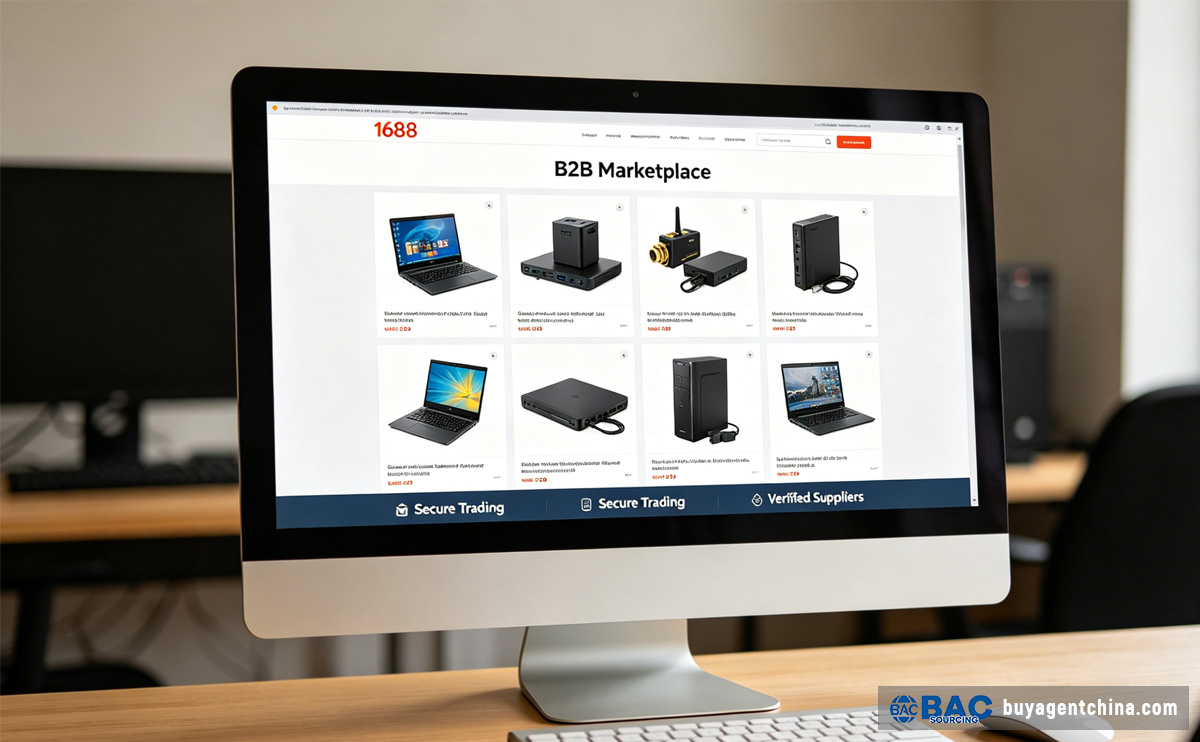
1688 (Alibaba Domestic)
www.1688.com

China’s leading domestic B2B platform with massive verified factories and wholesalers. It features full category coverage, transparent pricing, flexible small-batch mixing, and fast spot shipment.

Bulk procurement of digital gadgets, smart hardware, and electronic accessories; sample ordering and small-batch restocking.
1688 provides the most abundant electronics resources and the lowest factory prices in China. However, it is Chinese-language oriented with high entry barriers for foreign users. Supplier quality varies greatly, requiring manual screening, cross-border arrangement, and independent after-sales handling.

Alibaba.com (International Site)

www.alibaba.com
Global cross-border B2B marketplace with multi-language support, trade assurance, and mature export-oriented suppliers specializing in international orders.
Large-volume export orders, long-term strategic cooperation, and customized manufacturing.
User-friendly for overseas buyers with standardized export services. Nevertheless, product prices are generally higher than 1688 domestic offers, making it less cost-effective for small and medium batch purchases.
How to Buy Electronic Products in China 03
1688 (Alibaba Domestic)

2.2 Vertical Electronics B2B Platforms (Components & Precision Electronics)

Platform Name
Official Website
Core Advantages
Best Sourcing Scenarios
Neutral Evaluation
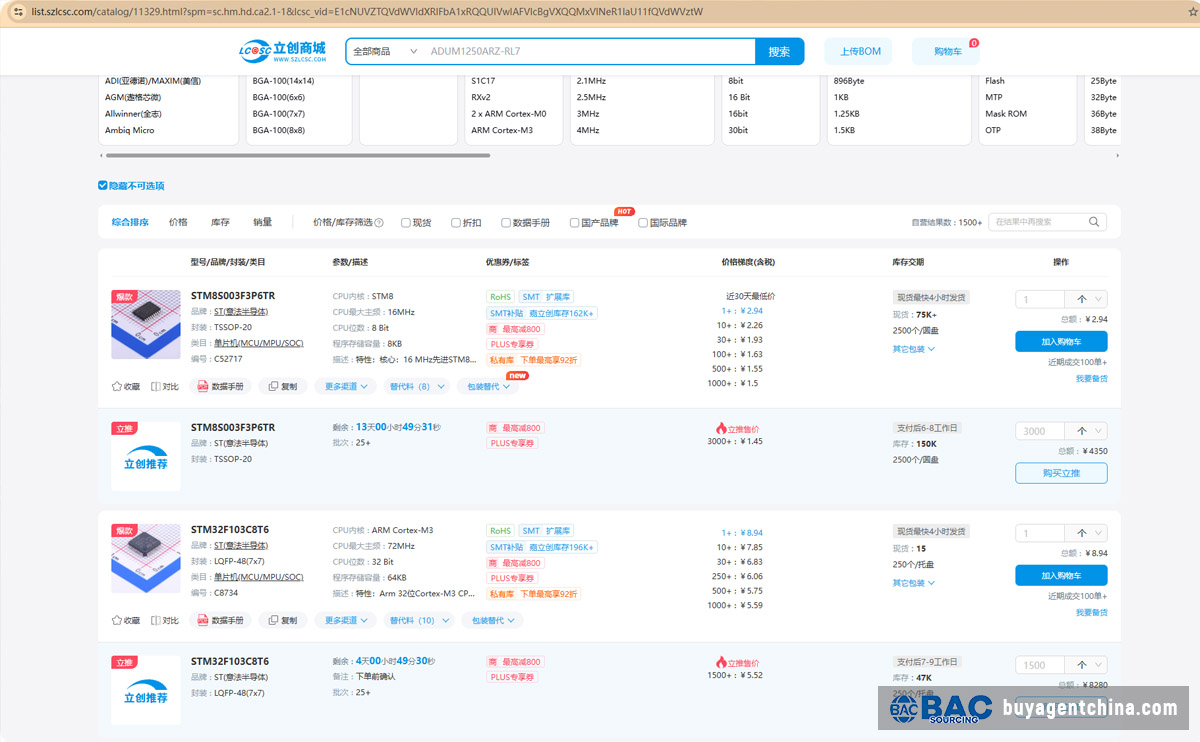
LCSC (SzLCSC)

www.szlcsc.com

Professional electronic component platform with genuine stock, single-piece purchasing support, and integrated EDA design and procurement solutions.

Procurement of chips, resistors, capacitors, and PCBs; R&D sampling and small-batch production stocking.

Highly professional with stable genuine component supplies. It focuses purely on electronic parts without finished consumer products. The Chinese interface and complicated cross-border procedures increase operational difficulty for foreign buyers.

Huaqiang Electronic Network

www.hgew.com

Backed by Shenzhen Huaqiang industrial belt, combining physical wholesale markets and online trading with abundant industrial components and second-hand electronic resources at flexible prices.

Bulk industrial component purchasing, accessory restocking, and overstock inventory sourcing.

Offers strong industrial resource advantages and flexible negotiation space. However, product quality varies significantly, requiring professional inspection. Independent overseas procurement faces high uncertainty and operational risks.
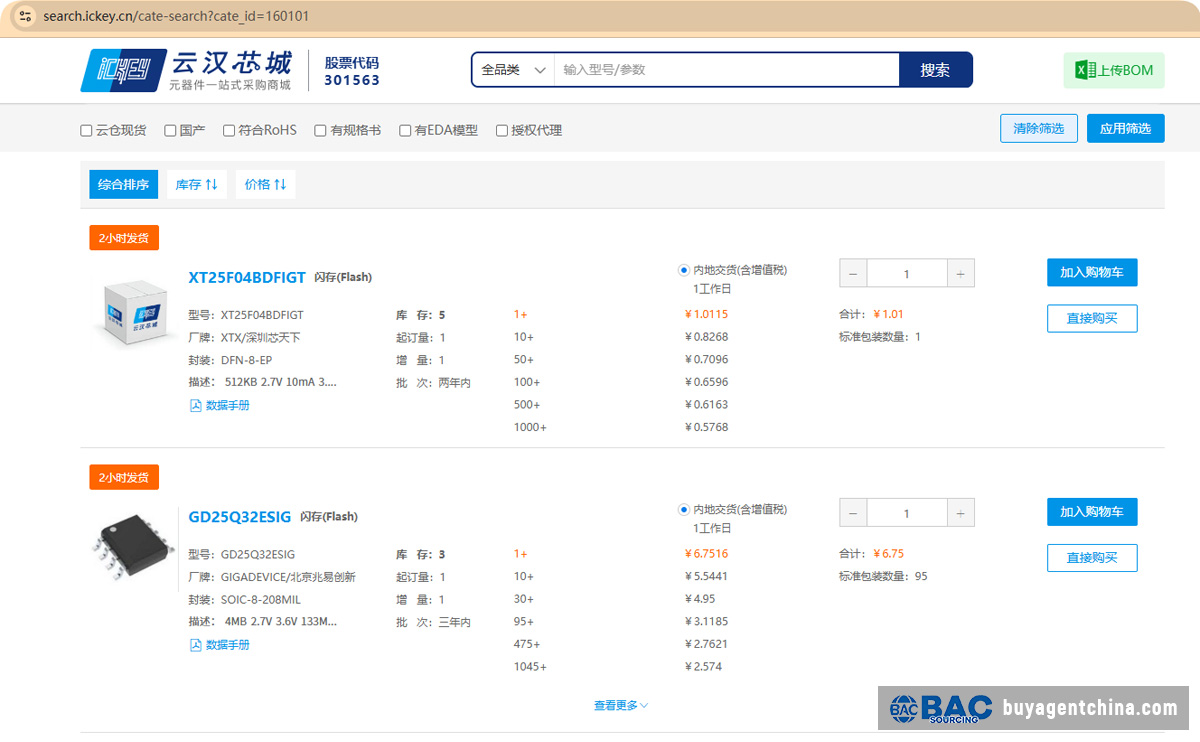
Ickey (Yunhan Xincheng)
www.ickey.cn
Cross-border-focused component platform with rich domestic and imported part inventory and direct international delivery services.

High-precision electronic parts procurement and cross-border component bulk stocking.

Better adapted for international logistics than general domestic platforms, yet limited exclusively to components. It only suits specialized part procurement with limited value for comprehensive electronics sourcing.
How to Buy Electronic Products in China 01
LCSC (SzLCSC)
How to Buy Electronic Products in China 02 ickey
Ickey (Yunhan Xincheng)

3. Complete Independent Procurement Process for Foreign Buyers

Overseas purchasers can register and order directly on the above B2B platforms. The standardized step-by-step procurement workflow is as follows:

3.1 Product Research & Supplier Screening:

Select suitable platforms based on product categories, filter qualified suppliers with stable sales and positive reviews, and compare specifications, quotations, MOQs, and lead times.

3.2 Demand Confirmation & Business Negotiation:

Confirm product standards, certification requirements, packaging specifications, customization demands, shipping fees, and payment terms with suppliers.

3.3 Sample Verification:

Request pre-production samples for functionality, appearance, and parameter testing before placing bulk orders to avoid mass production discrepancies.

3.4 Order Placement & Payment:

Complete orders via official platform channels and prefer secured transaction modes to ensure capital safety.

3-5. Pre-shipment Inspection:

Verify product quantity, quality, and technical parameters before factory delivery.

3-6. Customs Declaration & International Shipping:

Arrange international logistics, complete declaration, clearance, and tax filing procedures for overseas delivery.

3.7 After-sales Follow-up:

Handle restocking, order adjustment, and quality issue negotiations independently after order completion.
How to Buy Electronic Products in China 01

4. Core Pain Points of Independent Overseas Sourcing (Language, Culture & Regional Barriers)

Although Chinese B2B platforms open registration and purchasing access to international users, cross-border independent procurement suffers from inherent barriers caused by geographical distance, language gaps, and different business cultures, resulting in low efficiency and high operational risks:

4.1 Severe Language Barriers:

Major domestic platforms adopt Chinese interfaces, negotiations, and contract terms. Machine translation often causes parameter misunderstanding, distorted demand communication, and order errors.

4.2 Asymmetric Market Information:

Foreign buyers lack familiarity with Chinese industrial chain conditions, making it difficult to distinguish real manufacturers from middlemen, which often leads to overpriced purchases, inferior goods, and delayed production.

4.3 Complicated Cross-border Procedures:

Most overseas purchasers are unfamiliar with domestic logistics, commodity inspection, customs rules, and tax policies, resulting in time-consuming operations, detention risks, and extra tariff costs.

4.4 Business Culture Differences:

Negotiation logic, delivery confirmation, and after-sales dispute mechanisms differ greatly between China and foreign markets. Cross-border rights protection is extremely difficult with low success rates.

4.5 Low Overall Procurement Efficiency:

Independent sourcing requires massive time and manpower for product comparison, supplier verification, order tracking, and quality control, creating heavy burdens for small and medium purchasing teams.

5. Neutral Sourcing Advice: Independent Purchase vs. Professional Agent Sourcing

Based on actual Chinese market conditions and common overseas procurement difficulties, this section provides objective and practical suggestions for choosing the most suitable sourcing mode:

5.1 Suitable Scenarios for Independent Platform Purchasing

Independent procurement is feasible if your order meets all of the following conditions: single product category, small-volume sample orders, available Chinese communication capability, proficient cross-border logistics and customs experience, and full risk-bearing capacity.

5.2 Suitable Scenarios for Professional China Sourcing Agents

Professional local agency services are highly recommended for bulk stock procurement, long-term repeated orders, multi-category mixed purchasing, and OEM/ODM customized projects. Agents efficiently solve cross-border obstacles, reduce comprehensive costs, and minimize operational risks for buyers without local teams and market experience.

6. Recommended Professional China Electronics Sourcing Agent: BAC SOURCING (BuyAgentChina.com)

To resolve the full range of cross-border electronics sourcing pain points for international buyers, we recommend a reliable local China procurement agency — BAC SOURCING (BuyAgentChina.com). With years of deep experience in China’s electronic supply chain, the platform specializes in serving global overseas purchasers with professional, stable, and transparent one-stop sourcing solutions.

6.1 Core Service Advantages of BAC SOURCING

6.1.1 Eliminate Language & Regional Barriers:

The multilingual professional team is familiar with Sino-foreign business etiquette and negotiation logic, acting as the exclusive local communicator to accurately deliver purchasing requirements and eliminate translation errors.

6.1.2 Authentic Supplier Verification & Cost Control:

Leveraging deep resources in Shenzhen, Dongguan, and Huizhou electronic industrial zones, the team quickly screens verified original manufacturers, removes intermediate markups, secures factory-direct prices, and conducts strict supplier qualification audits for guaranteed quality stability.

6.1.3 Full-process One-stop Sourcing Management:

Comprehensive services cover product comparison, sample confirmation, order supervision, pre-shipment inspection, warehouse consolidation, customs clearance, cross-border delivery, and after-sales dispute handling, enabling buyers to place orders without onsite operations.

6.1.4 Full-category Electronics Adaptability:

Supports sourcing for consumer electronics, smart hardware, electronic components, security devices, and industrial electronics, covering small-batch mixed orders, large-volume bulk purchases, and personalized OEM/ODM customization.

6.1.5 Risk Control & Complete After-sales System:

The team monitors product quality, production schedules, and transaction safety throughout the entire process. For defective goods, incorrect specifications, or delayed delivery, BAC SOURCING actively negotiates replacements, replenishments, and compensation to protect overseas buyers’ interests.

6.2 Why Agent Sourcing Outperforms Independent Purchasing

For overseas trading enterprises, cross-border sellers, and medium-sized buyers, cooperating with BAC SOURCING effectively cuts labor costs, time costs, and trial-and-error losses. It avoids language obstacles, unfamiliar local rules, and cross-border risks while retaining genuine factory-low prices and stable supply resources, making it the most reliable long-term solution for China electronics sourcing.

7. Conclusion

China owns the world’s most complete and mature electronics supply chain system. Mainstream B2B platforms including 1688, LCSC, and Huaqiang Electronic Network provide abundant product resources covering all electronics procurement demands. However, language gaps, geographical distance, cultural differences, and complex cross-border regulations cause widespread difficulties in independent overseas purchasing, including poor communication, high risks, low efficiency, and difficult rights protection.
Independent platform ordering is workable for small sample orders and occasional single-item restocking. For bulk procurement, long-term cooperation, multi-category mixed sourcing, and customized manufacturing, partnering with BAC SOURCING (BuyAgentChina.com) delivers a one-stop solution for efficient, safe, and cost-effective electronics procurement in China.

8. FAQ – FAQ – Frequently Asked Questions from Global Buyers

Q1: Which Chinese B2B platform is the safest choice for new overseas electronics buyers?
A: New buyers should select platforms based on product types instead of registering on multiple platforms blindly. For consumer electronics and smart gadgets, 1688 offers the lowest factory spot prices. For precision chips and circuit components, vertical platforms such as LCSC and Huaqiang Network are more professional. For large export orders, Alibaba International is more suitable. Given the Chinese-language limitations and localized rules of domestic platforms, new international buyers can cooperate with BAC SOURCING to access all formal platform resources safely and professionally.
Q2: What are the key risk differences between vertical electronics platforms and comprehensive B2B marketplaces?
A: Comprehensive B2B platforms feature mixed supplier quality, with major risks including intermediate markup and unstable finished-product quality. Vertical component platforms focus on industrial parts, where the primary risks are counterfeit goods, refurbished components, and inconsistent batch quality. Each platform has unique pros and cons, which are difficult for overseas buyers to identify accurately. Professional sourcing agents match platforms according to product categories and conduct targeted qualification verification and quality inspection to avoid category-specific risks.
Q3: What external factors cause most overseas China sourcing failures?
A: Sourcing failures rarely result from product pricing. The core reasons are cross-border information asymmetry and Sino-foreign business culture differences. Varying communication logic, unspoken industrial rules, and different after-sales judgment standards, together with translation deviations, unfamiliar customs policies, and unknown market conditions, lead to misaligned requirements, incorrect lead time judgment, cargo detention, and failed dispute resolution.
Q4: Which procurement risk control links cannot be replaced by remote overseas operation?
A: Five critical links cannot be completed efficiently through remote operation: onsite supplier qualification verification, hidden fault detection before shipment, localized price negotiation, real-time factory production supervision, and domestic after-sales rights protection. Electronic products commonly have hidden defects and parameter inflation that cannot be identified simply through online chatting and sample checking. BAC SOURCING’s local team fills overseas buyers’ operational blind spots with full-process risk control.
Q5: Why is direct factory contact not recommended for overseas OEM/ODM electronics customization?
A: Electronics customization requires frequent technical communication covering drawing confirmation, parameter debugging, calibration, certification adaptation, and trial production. Pure Chinese-language technical communication causes inevitable machine translation errors, easily leading to batch product scrapping. Additionally, overseas buyers cannot supervise production progress, mass quality stability, and delivery deadlines onsite. Professional sourcing agents act as bilingual technical coordinators, standardizing customization details and ensuring accurate and on-time mass production.
Q6: How to reduce international logistics costs for multi-category and scattered batch sourcing?
A: Separate shipping from multiple suppliers and platforms generates extremely high fragmented logistics fees and inconsistent delivery schedules, increasing inspection and management difficulty. Most overseas buyers lack domestic warehousing and consolidation resources. BAC SOURCING provides free warehousing, cargo consolidation, repacking, and reinforcement services, combining multiple scattered orders into one international shipment to drastically cut logistics expenses.
Q7: How to avoid counterfeit and refurbished industrial electronic components at the source?
A: Industrial electronic materials and second-hand components belong to a high-risk chaotic market segment. Online store displays cannot fully verify authenticity or refurbishment traces. Ordinary overseas buyers lack professional testing capabilities and industry traceability resources. Local sourcing agents conduct onsite factory audits, batch traceability, functional testing, parameter calibration, and qualification screening to eliminate inferior and counterfeit goods fundamentally.
Q8: What unspoken Chinese electronics industry rules do foreign buyers usually miss?
A: Many localized industry rules are unknown to international purchasers. Factory quotations differ greatly among spot orders, bulk orders, and customized orders. Basic prices usually exclude after-sales services, product certifications, and customized packaging. Verbal lead times are merely estimated and easily delayed without local constraint. Unfamiliarity with these rules often causes low-price traps and unreasonable trading terms. Professional agents lock unit prices, lead times, and after-sales rights in advance based on local industry practices.
Q9: Can agent sourcing retain the low factory prices of mainstream Chinese B2B platforms?
A: Yes completely. Sourcing through an agent does not change the original supply channels. BAC SOURCING’s local team operates on behalf of buyers to access the same 1688, LCSC, and factory resources, retaining original wholesale prices, spot inventory, and customization conditions. Agency services only make up for overseas buyers’ weaknesses in language, logistics, risk control, and after-sales support, ensuring low-cost yet risk-free procurement.
Q10: How to determine whether a sourcing project requires a professional agent?
A: Judgment standards are clear and practical. Independent purchasing is feasible only for occasional, small-volume, single-category sample orders with experienced bilingual and cross-border teams. Agency cooperation is strongly recommended for bulk stocking, long-term repeated orders, multi-category mixed procurement, OEM customization, and teams without local China operation experience, which effectively reduces trial-and-error risks and comprehensive costs.
Q11: What customs compliance risks exist for electronics imports and how to avoid them?
A: Electronic products have complex classification standards and strict customs supervision. Independent declaration easily causes incorrect commodity coding, inconsistent declared value, and missing certification documents, resulting in detention, fines, and delivery delays. BAC SOURCING possesses rich experience in electronics customs clearance, providing compliant classification, accurate declaration, and document sorting to ensure smooth customs passage and on-time delivery.
Q12: What after-sales advantages does agent sourcing have for quality problems and delivery delays?
A: Independent overseas buyers face huge obstacles in cross-border after-sales disputes, including distance barriers, language difficulties, unfamiliar rules, and insufficient evidence, usually bearing losses passively. In contrast, all orders via BAC SOURCING are fully documented with clear accountability. The local team directly negotiates with manufacturers for quality verification, responsibility judgment, product replacement, restocking, and compensation, delivering reliable after-sales protection and safeguarding overseas buyers’ legitimate interests.

Leave a Reply

Your email address will not be published. Required fields are marked *