Sourcing Tips

Wholesale Pet Slicker Brushes from China: 2026 Prices, MOQ

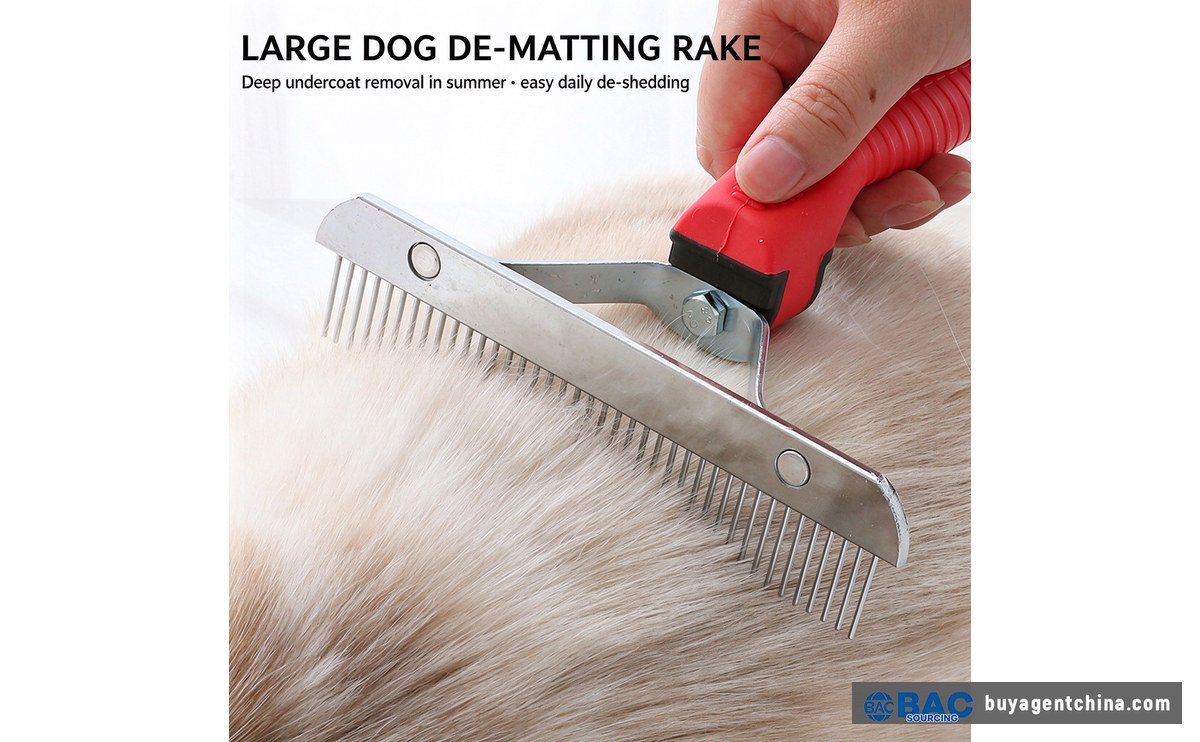
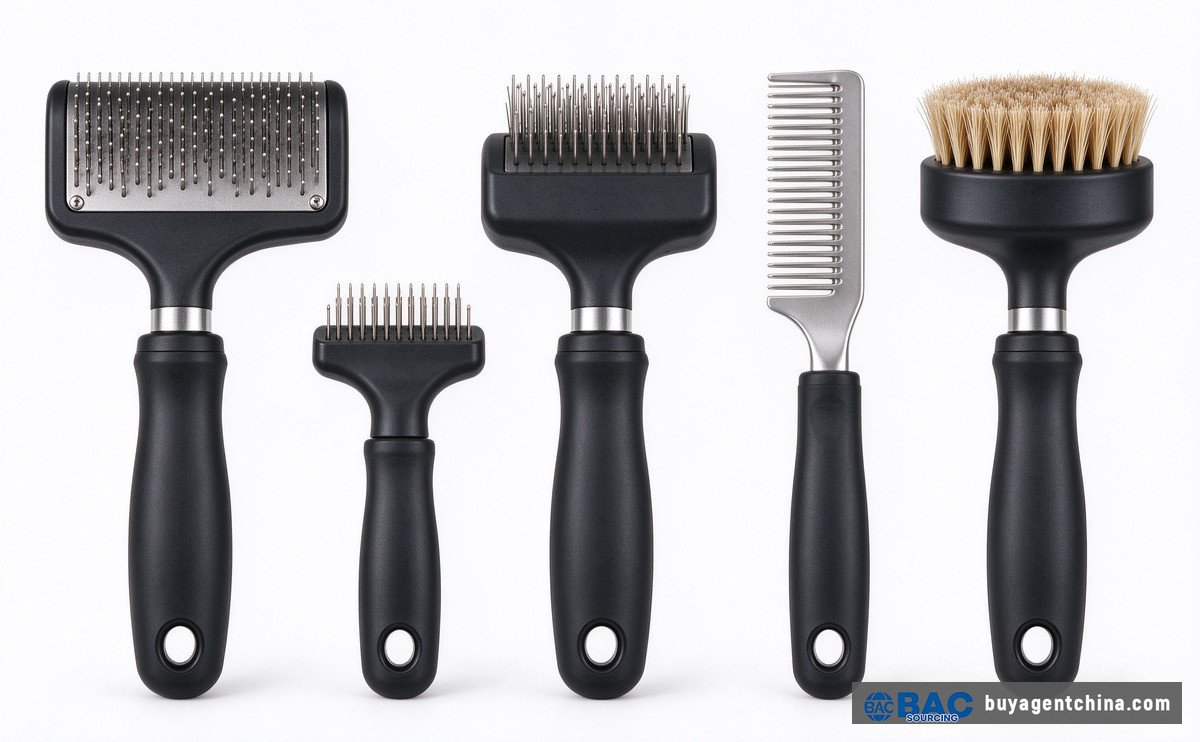
Wood-handle de-shedding rake — the mid-tier workhorse in most grooming kits

China makes most of the world’s pet slicker brushes, FOB from $0.51. Your real cost is inspection and paperwork, not the price. A transparent buying agent removes that risk.

1. Why Every Grooming Buyer Ends Up Sourcing Pet Slicker Brushes from China

Ask ten suppliers for a pet slicker brush and you will get ten prices from about $0.50 to $6. The difference is not the brush — it is which costs you are actually paying for. Some of those quotes are for a single brushed-steel model; others quietly assume you will handle your own inspection, packaging, and export paperwork. This guide walks you through the real cost structure so the number you compare is the number you actually pay.

1.1 The Four Brushes in a Dog and Cat Grooming Kit

Pet grooming is a four-tool business. A slicker brush lifts and separates undercoat, a pin brush smooths long coats, a rake or de-matting comb cuts through tangles, and a bristle brush adds the final shine. Most brands bundle two or three of these, and the slicker is the workhorse that sells in the highest volume. When you wholesale from China, you are usually deciding which of these four to lead with, and the answer depends on your market’s coat types — short-hair markets pull more slickers, long-coat markets pull more rakes, and mat-prone double coats pull more de-matting tools. Understanding that split before you order keeps you from buying a container of the wrong tool.

1.2 What the Export Numbers Say

China’s pet product exports reached roughly USD 18.6 billion in 2025, up about 22.4% year over year, with grooming tools among the fastest-growing lines (qosun.com, 2025). Yiwu alone runs an 8,000 m² pet-supply zone that books over CNY 2 billion a year and supplies a meaningful slice of the national pet export total (Yiwu municipal data and Chaoxin News, 2025). In 2025 the customs authority also added pet brushes and sixteen related categories to its encouraged-export list, which simplifies the paperwork path for exporters. The category is big, and the margin sits in the gap between a sub-dollar FOB price and a ten-dollar shelf price — a gap that only survives if you handle the sourcing correctly. The importers who keep that margin treat the brush as an engineering spec, not a commodity. The ones who do not eat the difference on returns.

2. Set Your Budget Before You Ask for a Quote

The cheapest mistake in this category is asking for a price before you know what you are actually buying. A pet slicker brush is five small cost blocks: the bent stainless steel pins, the pad or backing they sit in, the handle, the assembly, and the carton. The pins are where quality lives — thin or poorly heat-treated wire bends under a heavy coat and scratches the skin, and that becomes a return you eat on the freight back. The handle is where cost shows — cheap ABS feels hollow and cracks in a cold warehouse, and a cracked handle is the fastest way to a one-star review. The pad material matters too: a rigid plastic backing distributes pressure unevenly on a curved coat, while a slightly flexible pad follows the animal’s shape. Decide your budget tier first, because it decides which factory you should be talking to.

Your BudgetBest RouteWhat You Get
Under US$1,000Self-service on Taobao or a small 1688 lotTest volume only; no inspection, no paperwork support, slow
US$1,000 – 10,0001688/Alibaba order with a China buying agentA few SKUs, inspection optional, one consolidator
US$10,000 and upEnterprise package with agent + factory visitMulti-SKU programs, QC schedule, packing control, HS handled

Budget and MOQ are the same conversation. A $0.55 brush is only cheap if you can order the volume the price assumes. At 500 pieces your FOB is real; at fifty pieces you are paying sample economics and wondering why the quote tripled. Match the budget tier to a realistic first order, not to a fantasy volume.

3. Match the Region to Your Order

China’s pet brush production is not one factory — it is a set of clusters with different specialties, and picking the wrong one wastes both money and lead time. Yiwu is the volume and distribution hub, best for mixed carts and fast reorders, and it is where most first-time buyers start because the sourcing is easy and the prices are aggressive. Yangzhou (Jiangdu) is the traditional pin-brush and wire-brush specialty area, where the tooling and the wire know-how already exist — if your spec is a particular pin gauge and heat treatment, Jiangdu speaks that language natively. Suzhou Xiangcheng leans mid-to-high ODM, good when you want your own shape and logo and are willing to pay a little more for the engineering. Puyang in Henan does high round-tip pin volume, useful for sensitive-skin lines, and Hangzhou pulls the multi-tool kits and ODM programs together. Zhenjiang Yaogiao supplies pin raw material to the trade, which matters when you are cost-modeling the wire.

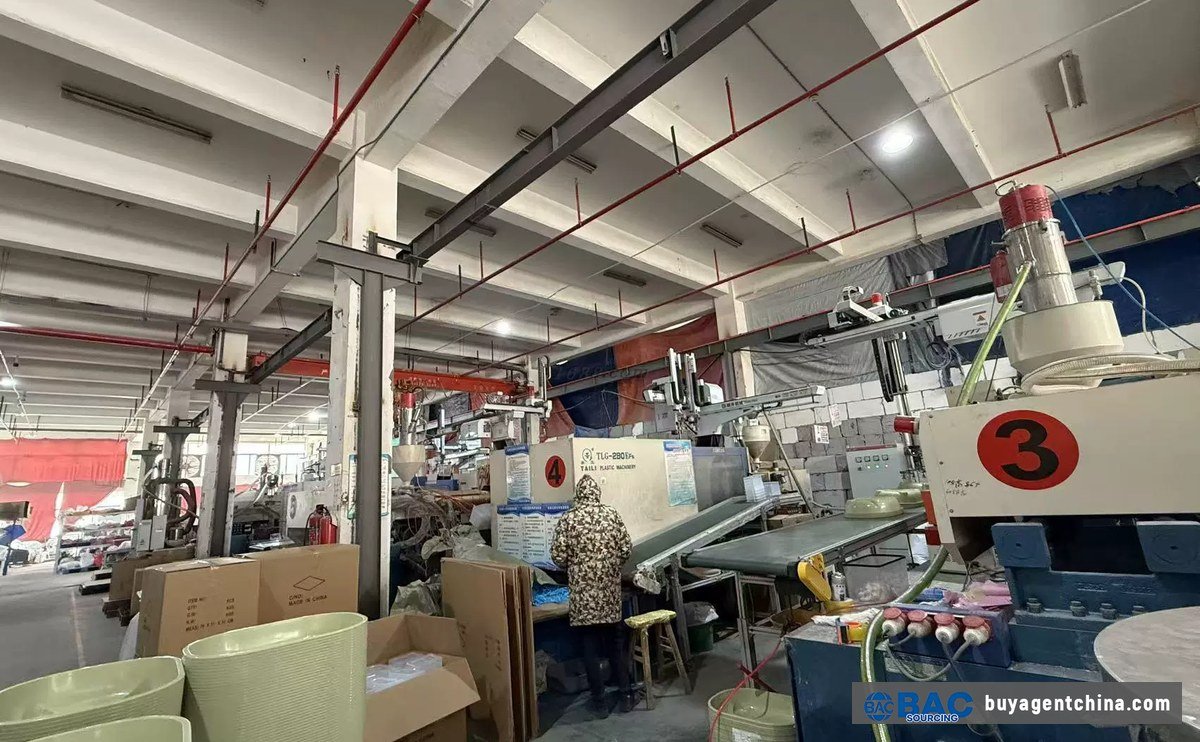
Pet grooming brush workshop — where the volume clusters do the work

Pet grooming brush workshop — where the volume clusters do the work

The short version of the map: volume stock and mixed carts go to Yiwu, specialty wire work goes to Yangzhou, your own design goes to Suzhou, round-tip sensitive-skin lines go to Puyang, and kits go to Hangzhou. Match the cluster to the order and you cut both lead time and rework.

4. The Four Real Difficulties That Eat Your Margin

The number on the quote is the one buyers fight over and the one that matters least to the final margin. What actually eats an importer’s margin in this category are four problems that show up after the quote, and none of them appear on the invoice.

4.1 Language and Culture

Translation distorts technical specs faster than any other failure. “Good stainless steel pins” means nothing — you need the wire grade, the pin gauge, and the heat treatment written into the contract, not described over WeChat. A supplier might agree to “bent stainless pins” in good faith and ship a grade that rusts in a humid market. The dispute is unwinnable, because the words in the chat were never binding. Culture shows up in timing: the 30% deposit is standard, the CNY holiday shutdown is real and can add two weeks you did not plan for, and a supplier who says “absolutely no problem” is usually already negotiating their own buffer. When a supplier says that, I am usually already lining up a backup. None of this is malice — it is a difference in how business gets done, and the fix is written specifications, not better vibes.

4.2 Paperwork and Shipping

Pet slicker brushes usually clear under HS 9603.90.9090, though the round-tip rake can sit under a nearby subclassification depending on handle material and construction. Get the HS code wrong, and a whole container sits at the dock while your margin disappears — the duty difference is small, but the delay and the inspection are not. Shipping also punishes this product class: bent pins and thin handles arrive bent if the carton is under-packed, so the inspection window matters more than the freight quote. A sample is a sample, and mass production is mass production — I have said it for fifteen years. The golden sample protects the finish, but it does not protect the other 10,000 pieces in the container. Only the QC window does that.

5. What a Slicker Brush Really Costs, by Type

Now the numbers you came for. These are 2026 ex-works and FOB reference ranges from active clusters; your quote will move with wire prices and order size, so treat them as the shape of the ladder, not the final bid.

TypePrice (per piece)Typical MOQBest For
Self-cleaning steel slicker$0.51 – 0.61500Entry volume, Amazon/FBA SKUs
Wood-handle de-shedding rake$0.55 – 1.3910Long-coat markets, fast tests
Wood-handle round-tip pin brush$1.79 – 2.53100Mid-tier custom, retail shelves
Round-tip no-scratch slicker$2.21 – 2.62500Sensitive-skin branding
Custom-logo wood brush$1.49 – 6.22100Private-label programs
5-in-1 grooming kit$14 – 16.8100 setsPremium bundles, gifting

5.1 Self-Cleaning Steel Slicker

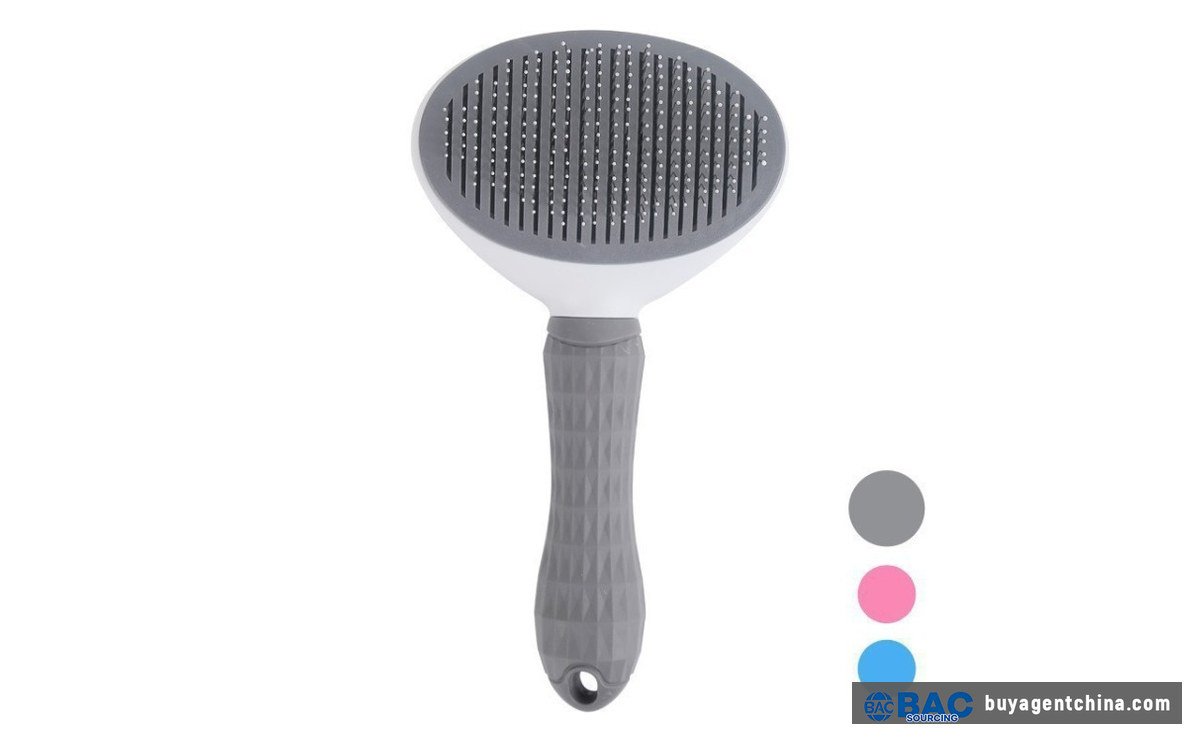
The self-cleaning slicker is the entry-volume favorite because it gives a retail-visible feature — push a button, the pins retract, and the hair drops off — for a sub-dollar FOB price. It is also the easiest to get wrong: the retract mechanism is plastic-on-metal, and the first generation of these broke in transit on more than one import. Test the mechanism, not just the look, and demand a drop test on the carton before you commit a full run. On 1688 the self-cleaning lots commonly list around CNY 3.8 per comb for the lower tiers, which is where the quality variance lives.

Self-cleaning steel pet slicker brush — the entry-volume FOB favorite

Self-cleaning steel pet slicker brush — the entry-volume FOB favorite

5.2 Round-Tip No-Scratch Slicker

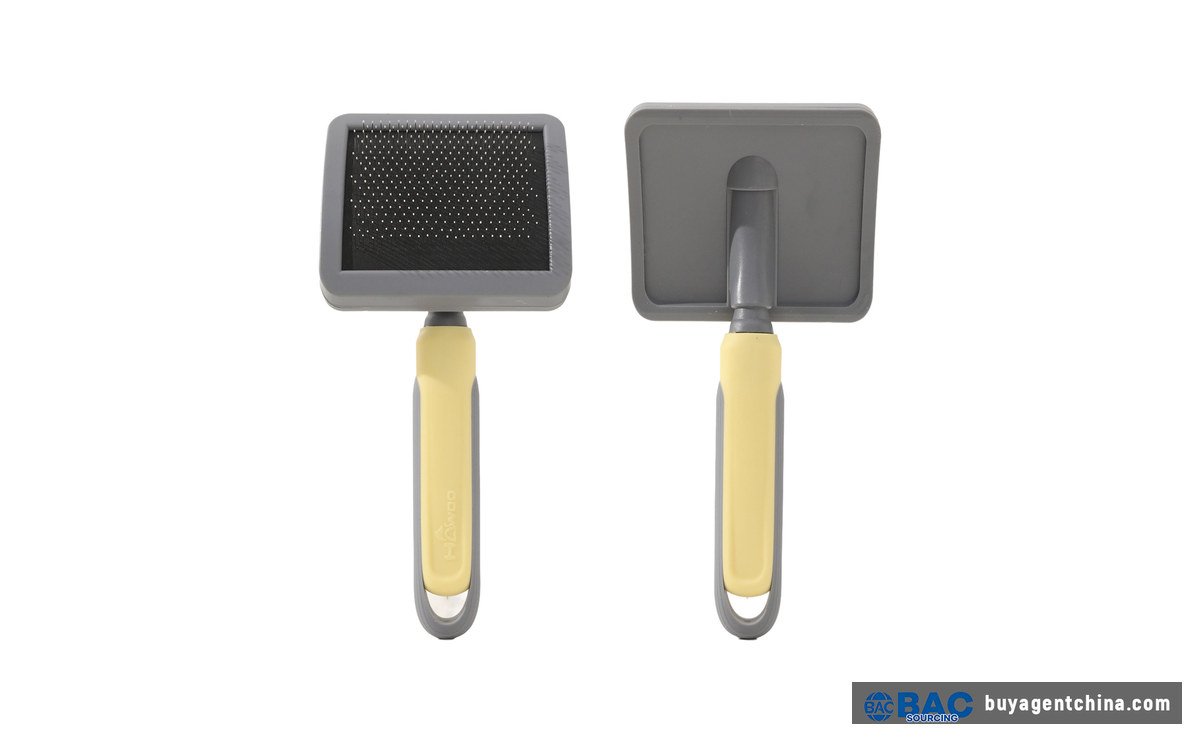
The round-tip no-scratch slicker is where sensitive-skin lines and private-label programs meet. The ball-ended pins clear tangles without dragging across the skin, which is the complaint that drives returns on standard sharp-tipped slicks. Priced at roughly $2.21–2.62 FOB at an MOQ near 500, it sits a clear step above the entry steel slicker, and the round-tip story gives your listing a claim that is easy to defend. On 1688, most of the round-tip volume comes out of Puyang in Henan, where the pin output is high enough to keep the per-unit cost honest.

Round-tip no-scratch pet slicker brush — the sensitive-skin line

Round-tip no-scratch pet slicker brush — the sensitive-skin line

5.3 The 5-in-1 Kit Premium

At the top of the ladder sits the 5-in-1 kit, bundling a slicker, pin brush, de-matting comb, bristle brush, and often a trimming tool in one box. At $14–16.8 per set it is the profit driver for premium brands, but the multi-piece carton is a QC headache — ten components, ten chances for a missing or broken part. Pack the inspection accordingly, and check every component against the packing list at the carton, not just the hero piece. A kit with a missing de-matting comb is a full refund and a damaged listing.

5-in-1 pet grooming kit — the premium bundle for brand shelves

5-in-1 pet grooming kit — the premium bundle for brand shelves

6. Stock Wholesale vs OEM/ODM Customization

Decide this before you spend a dollar, because the two routes use different factories, different money, and different timelines.

6.1 Stock: Existing Models, Fast Turnaround

Stock means existing models, existing tooling, fast lead time, and low MOQ. The downside is zero differentiation — your competitor can buy the identical brush tomorrow and undercut you on the same shelf. Stock is the right move when you are testing a new market, learning the category, or building volume to justify a custom run later. It is also the honest way to discover which brush your buyers actually want before you pay for tooling on a guess.

6.2 Custom: Your Shape, Your Logo

Customization means your handle shape, your logo, your packaging, and often your color. The payoff is a product nobody else stocks, and the cost is MOQ, tooling, and a slower first run. Custom is not a fixed price — it is quoted per project, driven by the number of SKUs, the tooling, and the sampling rounds, so a two-SKU logo program and a six-SKU color line quote very differently. Put the pin spec, the handle material, and the QC standard in the contract before you approve the golden sample.

7. Going Direct to a Manufacturer vs Hiring a China Buying Agent

For a one-off box you can buy direct on 1688 and learn by paying tuition. For a repeatable program, a buying agent pays for itself because the unit price is a small fraction of the landed cost, and the risk is concentrated where the agent adds the most value.

DimensionDirect SourcingChina Buying Agent
CommunicationWeChat + translator, specs driftContract-grade spec, handled in English
Quote accuracyWhat you asked, maybe not what you meantVerified against the written spec
Compliance / HSOn you, errors are expensiveChecked before you commit
InspectionNone unless you fly outScheduled QC windows, AQL 2.5
Factory riskDistance hides itEyes on the line
Best forOne-off test lotsRepeat programs, brand builds

Getting you the right goods is not about the priciest or the cheapest — overpay and you pay the tuition; underpay and I do. A small order is not a scaled-down big one; it is a different business — do not drive a tricycle with a train license.

8. How a Transparent-Fee Agent Prices a Pet Brush Order

This is the part most sourcing guides skip. Here is exactly what Buy Agent China charges, current as of the live service page, so you can model your own landed cost before you send a single dollar.

8.1 The Five Service Packages

The price structure is a fixed source fee plus a percentage on the goods value, with no markup on the product itself. The first three packages cover sourcing only; the management packages cover the procurement work. For a pet brush order, the practical split is simple: pay a flat fee to find and vet suppliers, then pay a percentage only on the orders the agent actually manages.

ServiceFeeWhat It Covers
Entry$29 / productLocate and shortlist suppliers for one product
DIVE$140 / productDeep sourcing, background check, negotiation support
Factory Visit$170 / dayOn-site audit; travel billed at cost
Basic3–5% of order value$10K–30K = 5%, $30K–100K = 4%, over $100K = 3%; base $220, SKU add-ons $50/$35/$20
Growth5–8% of order valueBase $280, escrow-backed payments
Inspection$200 / sessionIndependent QC at AQL 2.5

8.2 Inspection, Honest Terms, and What We Do Not Do

For a brush order the QC checklist reads like this: pin retract mechanism on self-cleaning models, pin gauge and tip roundness, wood handle finish and seam, logo and pad printing durability, and carton packing that survives a 1.2 m drop. The honest terms matter as much as the fees. The first three packages source only — they do not buy, produce, or ship your goods. There is no free sourcing and no refund on the upfront sourcing fee, because the work happens before you commit. Mainstream, high-volume items get quantity guarantees; niche or monopoly lines do not, because no one can promise volume on a market that barely exists.

We do not own factories, do not stock goods and do not mark up prices — we earn only from standardized service fees. That is why the cost model above is stable enough to print.

9. Action Checklist for Three Types of Buyers

For a first-time buyer: start with stock self-cleaning slickers from a Yangzhou or Yiwu supplier, MOQ near 500, and spend your first order learning the carton, the HS code, and the drop test. For a mid-size brand builder: move to a wood-handle pin brush under your logo, MOQ near 100, with one inspection session before shipment and a second at packing. For an experienced-but-burnt buyer: stop renegotiating unit price and put the QC window, the pin spec, and the packing standard into the contract, then let a China buying agent manage the follow-through so the margin stops leaking in the back half of the order.

10. Frequently Asked Questions (FAQ)

Q1. Is the MOQ for pet slicker brushes really as low as 500 pieces?

A1. For stock self-cleaning steel slickers, yes — 500 is common. Wood-handle rakes can start around 10, and pin brushes around 100. Custom-logo and kit orders push MOQs higher.

Q2. What is the HS code for a pet slicker brush?

A2. Most slicker brushes clear under HS 9603.90.9090. Rakes with a specific handle or construction can fall under a nearby subclassification, so verify the final code against the bill of materials before booking the container.

Q3. What is the difference between a slicker brush and a de-matting comb?

A3. A slicker brush has bent steel pins on a flat or curved pad for lifting undercoat and removing loose hair. A de-matting comb has widely spaced blades for cutting through mats and tangles — you usually need both in a grooming line.

Q4. How much does a China buying agent charge for a pet brush order?

A4. Entry sourcing is $29 per product and DIVE is $140 per product. Management packages run 3–5% (Basic) or 5–8% (Growth) of order value with a base fee, plus $200 per inspection session. Custom OEM work is quoted per project.

Q5. Can I test the pet brush market with a small order before committing to customization?

A5. Yes, and you should. Run 50–200 stock units through your channel first to confirm color, size, and price point, then invest in a logo and custom handle only after the numbers support it.

This guide is written by the sourcing team at Buy Agent China — a transparent-fee China buying agent. We earn only from standardized service fees, never from marking up your goods.

Q6: When is the worst month to order pill organizers?

Chinese New Year (Jan–Feb) and the National Day week (early October) cut capacity sharply, and orders placed then commonly run 2–4 weeks late. Also, never treat anything as confirmed before the deposit lands — production only really starts once the money is in.

Leave a Reply

Your email address will not be published. Required fields are marked *