Procurement Guides, Sourcing Tips

How to Source Outdoor Folding Tables and Chairs from China

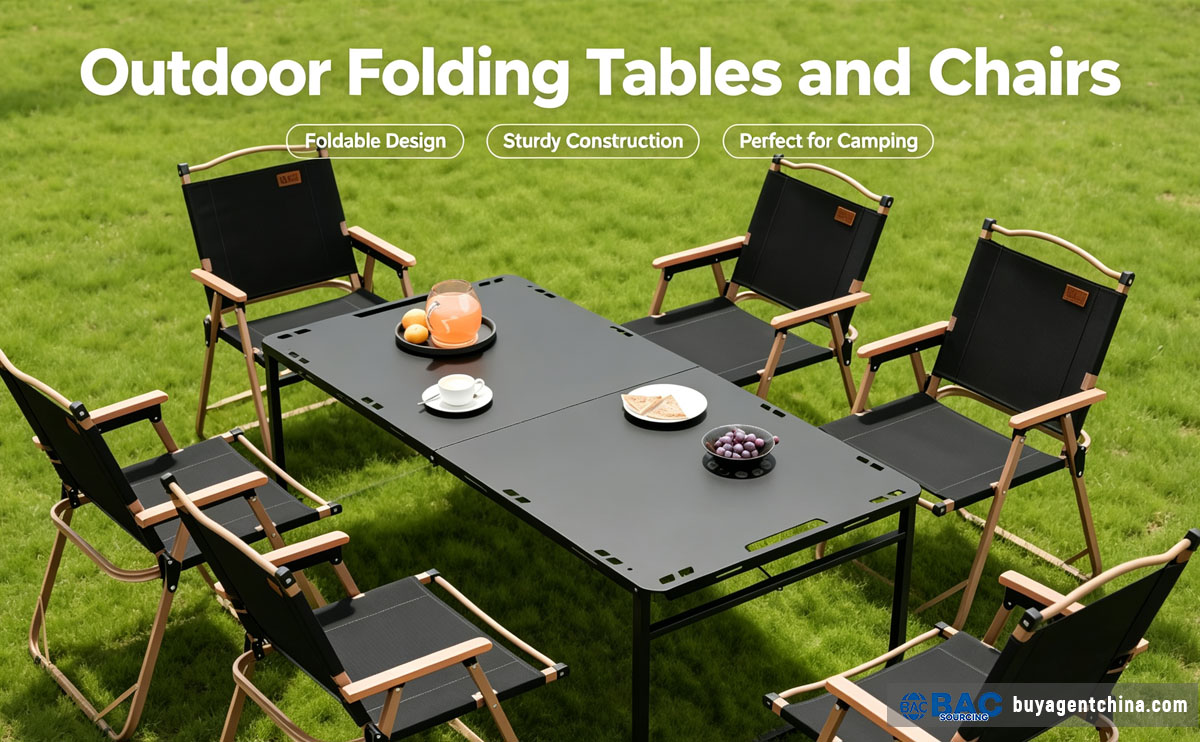
Outdoor folding tables and chairs 01

Complete Sourcing Guide for Overseas Buyers

1. Introduction: Industry Overview of Chinese‑made Outdoor Folding Tables and Chairs

China is the world’s largest manufacturing‑and‑export hub for outdoor folding tables and chairs. Production is heavily concentrated in three core industrial clusters: Yongkang / Taizhou (Zhejiang), Foshan (Guangdong), and Shengfang‑Bazhou (Hebei). These regions cover the full product spectrum, from low‑cost market‑stall sets and mid‑range camping gear through to high‑end patio furniture. Large‑volume shipments go to Europe, North America, Australia, Southeast Asia and other global markets.
 
Relevant HS codes are 94032000 (metal furniture) and 94018000 (metal seating). Outdoor folding tables and chairs count as bulky light‑volume cargo; ocean‑freight costs exert a substantial impact on total landed procurement cost.

1.1 Major Production Regions and Product Profiles

Production AreaCore Product RangeTypical Application ScenariosFOB Ex‑factory Price Range (CNY)Industry Characteristics
Yongkang & Taizhou (Zhejiang)Moon chairs, Kermit‑style folding chairs, aluminium roll‑top tables, tactical folding tables; lightweight camping gear built with 600D Oxford fabric and aluminium framesCamping, picnic, cross‑border e‑commerce, Amazon / Shopify sellers; supports small‑to‑medium OEM / ODM samplingChairs: 35‑95 CNY; Tables: 70‑220 CNY; Table‑chair sets: 120‑320 CNYChina’s dominant export cluster for camping‑outdoor gear. Complete local supply chain for fabrics and hardware. Strong sampling capability for small‑batch runs; high export proportion.
Foshan (Guangdong)PE‑rattan folding furniture, cast‑aluminium patio sets, UV‑resistant high‑end outdoor furniturePrivate patios, resort & hotel projects, premium western retail chains; full‑container‑oriented ordersSingle chair: 80‑260 CNY; Complete sets: 450‑1600 CNYSolid track‑record with export compliance testing (REACH, California Prop 65). Superior weather‑resistance performance. Generally higher minimum‑order quantities.
Shengfang‑Bazhou (Hebei)Carbon‑steel square‑tube folding tables, basic folding chairs, economy‑grade market‑stall furniture; powder‑coated steel‑frame designsStreet‑market stalls, event‑exhibition use, value‑oriented retail; high‑volume mass ordersChairs: 22‑55 CNY; Tables: 50‑130 CNY; Table‑chair sets: 80‑180 CNYLarge‑scale northern metal‑furniture base. Mass‑production capacity and competitive pricing. Limited custom‑modification capability.
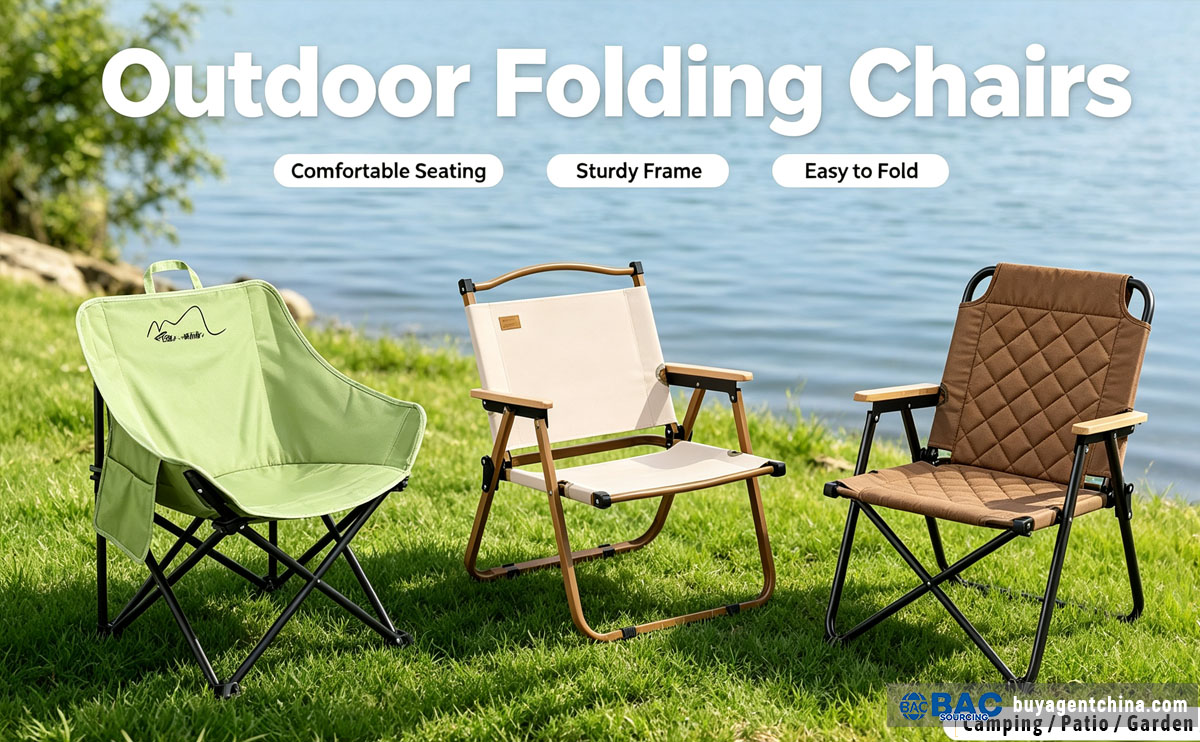
Outdoor Folding Chairs 02

Outdoor Folding Chairs

1.2 Main Product Styles, Application Scenarios and Export Price Reference

Product ModelPrimary MaterialsTypical Use‑caseFOB Reference Price per Set (USD)Key Export‑market Preferences
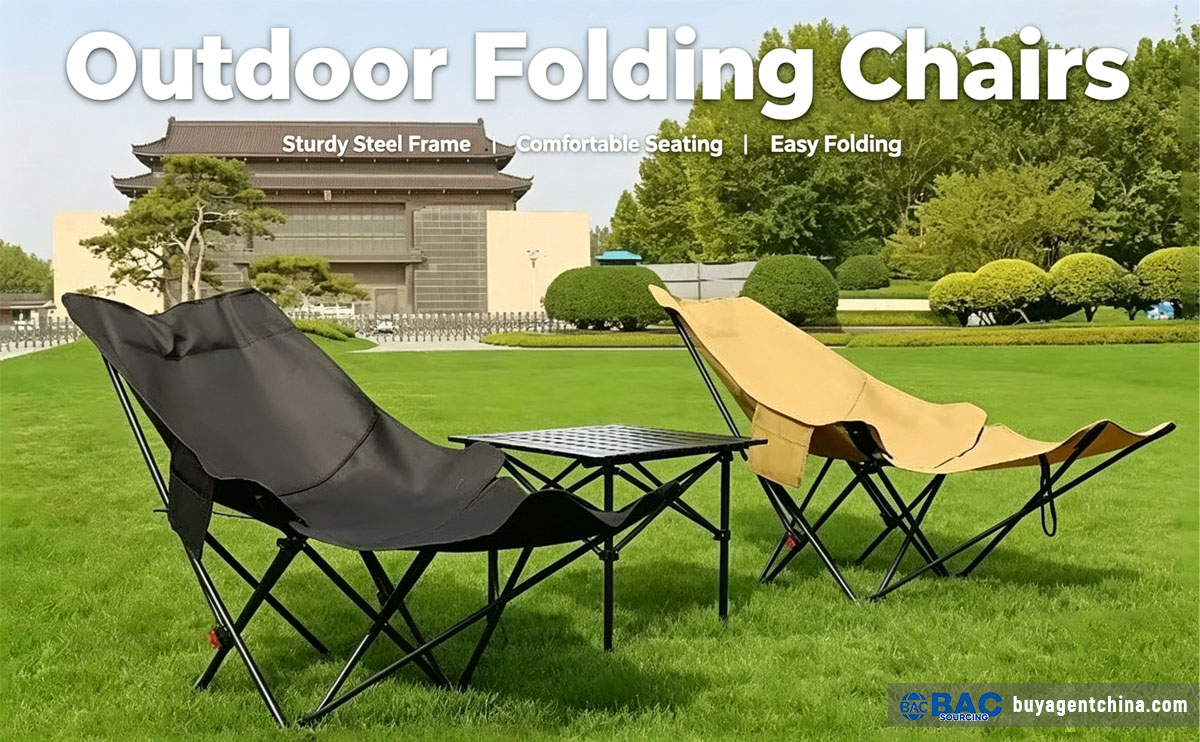
Moon Chair (high‑back folding chair)600D Oxford fabric + aluminium / carbon‑steel frameCamping, beach‑side leisure, cross‑border retail bestseller7.5‑22 USDAmazon & Shopify stores in North America & Europe; strong small‑order demand
Kermit‑style Folding ChairBeech‑wood armrests + carbon‑steel / aluminium frameGlamping, residential‑patio relaxation9‑26 USDStrong sales across Europe, North America and Australia
Aluminium Roll‑top Folding TableAluminium slat tabletop + folding steel frameCamping & picnic; frequently sold bundled with folding chairs12‑40 USDGlobally popular; bundled‑set export volume keeps rising
Economy Square‑tube Folding Table‑chair SetCarbon‑steel square tube + Oxford‑fabric / PVC upholsteryMarket‑stall operations, outdoor events, budget‑patio procurement18‑45 USDLarge‑volume purchases for Southeast Asia, the Middle East and Eastern Europe
PE‑rattan Patio Folding SetAluminium frame + PE synthetic‑rattan wickerVilla patios, hotel‑resort projects55‑140 USDPremium offline retail channels in EU and North America
Outdoor Folding Chairs 01

Outdoor Folding Chairs

1.3 Export‑Market Performance & Industry Data

  • Primary export destinations: United States, EU member states (Germany, United Kingdom, France), Australia, Japan, plus RCEP Southeast‑Asian markets. North America accounts for the largest export share, followed by the European Union. RCEP‑region purchasing volume has grown rapidly in recent years.
  • Product‑mix breakdown: Folding chairs represent approximately 38 % of export volume, folding tables 42 %, and complete table‑chair sets 20 %. Export volume for bundled sets continues to increase year‑on‑year.
  • Seasonality & compliance risks: Factory production peaks from June through October. Vessel space tightens and delivery delays become common. Different territories impose mandatory compliance requirements: EU markets require CE and REACH‑SVHC reports; US imports demand California Prop 65 hazard‑substance declarations; wooden components need FSC certification. Many factories will not pro‑actively supply these documents. Buyers must explicitly request compliance files, otherwise cargo may be detained at destination ports with costly demurrage charges.
  • Logistics note: These goods are bulky light‑volume cargo. Volumetric weight rules inflate ocean‑freight costs. Most Chinese‑factory FOB quotations only cover delivery to the Chinese port. Inland haulage, cargo insurance and destination‑port clearance remain the buyer’s responsibility.

2. Practical Challenges for Overseas Buyers Sourcing Directly from Chinese Manufacturers

2.1 Language and Time‑zone Barriers

English proficiency among factory sales staff varies widely. Misunderstandings frequently occur around technical specifications: tube‑wall thickness, Oxford‑fabric density, salt‑spray anti‑rust testing, AQL inspection standards and REACH compliance. An 8‑12‑hour time difference between China and western markets creates multi‑day turnaround for email‑based confirmation. Sample revisions and quality‑claim resolution get dragged out, raising the risk of missed delivery windows.

2.2 Risks Arising from Cross‑cultural Business Differences

Standard factory payment terms are 30 % deposit upon order confirmation, balance payable against copy of bill‑of‑lading. Verbal promises regarding price adjustments, complimentary samples or delay compensation generally carry no contractual weight. Some factories raise minimum‑order quantities after order confirmation or downgrade raw‑material specifications without advance notice. Compliance documentation is rarely volunteered, exposing consignments to port‑detention risks overseas.

2.3 Quality Discrepancies Between Pre‑production Samples and Mass‑production Goods

Critical quality benchmarks for outdoor folding tables and chairs include frame‑tube wall thickness, Oxford‑fabric grammage, welding integrity and powder‑coating anti‑rust performance. Many factories produce high‑quality pre‑production samples yet downgrade materials for mass‑production batches. Without on‑site inspection in China, overseas buyers only discover loose frames, fabric tearing or premature rust after full‑container cargo arrives overseas. Return‑shipping charges can exceed the value of the goods themselves.

2.4 Export Documentation, Compliance and Logistics Complications

As bulky light‑volume goods, outdoor furniture generates high volumetric‑weight freight charges, which are often not fully disclosed within factory‑supplied FOB pricing. Incorrect HS‑code classification creates tariff‑calculation errors. Factories normally deliver goods only to the Chinese seaport. Inland haulage, cargo insurance and destination‑port clearance fall to the buyer. When cargo damage or loss occurs, overseas buyers lack local representation to negotiate with freight forwarders and manufacturers.

2.5 Labour Costs for Long‑term Multi‑supplier Management

Ongoing re‑ordering requires continuous supplier vetting, price negotiation and production‑schedule follow‑up. During peak manufacturing seasons, factories prioritise customers with local‑country representation. If you source mixed SKUs from multiple industrial zones ‑ camping chairs from Zhejiang, premium rattan furniture from Guangdong, value‑range sets from Hebei ‑ you must manage numerous vendors simultaneously, creating substantial administrative overhead.

Outdoor Folding Tables and Chairs

3. Sourcing‑model Comparison: Direct‑factory Sourcing vs. Retaining a Local China‑based Buying Agent

Comparison ItemDirect Sourcing from Chinese FactoriesEngaging a Local China‑based Buying Agent
CommunicationTime‑zone and language gaps create misinterpretation risk; buyer handles the full workflowBilingual local agent accurately transmits specifications; mitigates cross‑cultural misunderstanding
Quality controlReliant on factory self‑inspection; high risk of sample‑to‑mass‑production deviationPre‑order specification validation, mid‑production patrols, pre‑shipment AQL inspection; photo‑video evidence retained
Pricing & MOQBuyer negotiates independently; high minimum‑order thresholds; receives factory export retail pricingAgent consolidates purchasing volumes across global clients to secure better ex‑factory rates; can negotiate lower trial‑order MOQ
Compliance documentationBuyer must repeatedly request certificates; risk of customs detention due to incomplete paperworkAgent validates CE, REACH, Prop 65 and other reports before order placement, matching import‑market requirements
Logistics & customsBuyer independently compares freight‑forwarder quotes, calculates tariffs, manages damage‑claim proceduresAgent co‑ordinates sea‑air freight, validates HS codes, compiles shipping documents and assists with cargo‑loss claims
Dispute resolutionNo local‑country representative in China; difficult to pursue remedies for quality defects or delivery delaysOn‑the‑ground representation negotiates rework, replacement shipments or price adjustments directly with factories, shortening dispute‑resolution cycles
Best‑fit user profilesBuyers with permanent procurement staff based inside China; very large full‑container ordersFirst‑time importers, cross‑border e‑commerce sellers, small‑and‑medium wholesalers, multi‑SKU mixed orders; buyers with existing suppliers who only need inspection & supply‑chain oversight
Hidden‑cost exposureTranslation fees, third‑party inspection charges, port demurrage, return‑cargo losses, extensive manual labourService fees are fully transparent. Full original factory quotations are shared with the buyer; no hidden markup on product unit prices
Key takeaways:
 
1. First‑time buyers, cross‑border e‑commerce merchants and small‑and‑medium wholesalers are strongly advised to use a China‑based buying agent to mitigate most sourcing risks.
 
2. Enterprises with large‑volume annual procurement and on‑the‑ground Chinese‑based teams may source directly. They may also retain agents selectively for inspection and logistics tasks only.

4. Actionable Sourcing Strategies by Order Volume

4.1 Small‑batch Trial Orders (Order Value < USD 10 000)

Target users: Amazon / Shopify cross‑border sellers, brick‑and‑mortar outdoor‑goods retailers, early‑stage wholesalers. The objective is market testing with mixed‑SKU small‑quantity runs, for example mixed trial quantities of moon chairs, Kermit‑style chairs and folding tables.


‑ Under 1 000 USD: Focus on sample procurement to verify real‑world workmanship, material quality and packaging.


‑ 1 000‑10 000 USD: Small‑batch market‑trial orders. Prioritise manufacturers accepting low minimum‑order quantities.

Practical guidance

Avoid placing large‑volume orders without physical sample validation. Use an agent’s supplier‑sourcing service to screen 3‑6 pre‑vetted factories, obtain genuine ex‑factory quotations, material‑specification sheets and risk assessments. Confirm samples before releasing trial‑order production. You may select flat‑fee‑based services without binding future‑order obligations; you remain free to contact factories directly after trial‑order completion.

4.2 Full‑container Large‑volume Orders (Order Value ≥ USD 10 000)

Target users: Overseas retail‑chain buyers, outdoor‑goods brands, resort‑project procurement teams. Full‑container production with repeat‑order potential, requiring OEM / ODM customisation such as logo printing, dimension adjustment or fabric modification.

Practical guidance

Adopt full‑cycle agent support: supplier screening, sample validation, price negotiation, order administration, production tracking, pre‑shipment inspection, logistics co‑ordination and post‑order‑dispute mediation. Tier‑based commission structures are available. Optional on‑site factory audits verify production capacity, welding lines and coating workshops to prevent delivery‑date breaches. Consider escrow‑style payment arrangements whereby factories receive final payment only after passing inspection, lowering risk for large‑value orders.

4.3 Existing‑supplier Scenario: Only Inspection and Process‑management Support Required

If you already maintain stable relationships with Chinese manufacturers and do not require new‑supplier development, but need local‑based oversight of production progress, pre‑shipment quality checks and rapid response to unexpected production issues, you may select a basic agent‑managed package limited to production supervision, inspection and logistics co‑ordination. This carries lower commission rates.

5. Fee‑model Reference for China‑based Buying Agents

Official service page: https://buyagentchina.com/services
 
Available service packages include entry‑level supplier matching, flat‑fee deep‑dive sourcing, on‑site factory audits, basic managed‑procurement packages, full‑cycle procurement solutions and long‑term subscription plans.
 
Two primary charging frameworks apply: one‑off flat service fees, or tier‑percentage commissions calculated against order value. All original factory quotations are shared in full with the buyer. No markup is added onto product unit prices; agent revenue comes solely from disclosed service‑fee structures.

6. Frequently Asked Questions

Q1 ‑ Which Chinese manufacturing regions are best‑suited for different styles of outdoor folding tables and chairs?
A:
 
‑ Yongkang & Taizhou (Zhejiang): moon chairs, Kermit‑style chairs, aluminium roll‑top tables and other lightweight camping‑focused products, ideal for cross‑border‑e‑commerce sourcing.
 
‑ Foshan (Guangdong): PE‑rattan and cast‑aluminium high‑end patio furniture, for western‑market premium retail and resort‑project buying.
 
‑ Shengfang‑Bazhou (Hebei): economy‑grade carbon‑steel folding furniture for market‑stall use, event‑venue deployment and high‑volume low‑margin orders.
 
A buying agent can match you with factories from the correct industrial zone based on your target market, budget and quality requirements.
Q2 ‑ What certifications are mandatory for outdoor folding‑table‑and‑chair exports to EU and US markets? What can I do if factories refuse to provide required certificates?

A: EU‑bound shipments generally require CE general‑product‑safety certification plus REACH‑SVHC chemical‑substance test reports. Shipments to the United States need California Prop 65 hazard‑substance declarations. Wooden components demand FSC forest‑management certification. Many manufacturers will not pro‑actively compile complete documentation sets. Missing papers may trigger costly demurrage and port detention. A buying agent validates all required reports before order placement to avoid customs‑hold risks.

Q3 ‑ Factory minimum‑order quantities are too high for small‑batch trials. Can an agent help lower MOQ requirements?
A: Yes. Buying agents consolidate purchasing requirements from multiple international clients and negotiate flexible‑production terms with manufacturers. For many product lines, single‑item MOQ can be reduced from 300 units down to 50‑100 units. Sourcing packages clearly flag factories that support small‑batch trial‑order capability.
Q4 ‑ Pre‑production samples pass inspection, yet mass‑produced goods arrive with thinner‑gauge tubing, inferior fabric or poor‑quality welding. How should I resolve this?
A: When sourcing directly from factories, cross‑border dispute resolution is slow and financial losses are hard to recover. Under a full‑cycle‑agent arrangement, mid‑production and pre‑loading inspections are performed on‑site inside China, so defects are identified before goods leave the country. Where mass‑production output deviates from approved samples, the local agent negotiates rework, replacement shipments or price adjustments directly with the factory, greatly shortening resolution timelines.
Q5 ‑ Outdoor folding tables and chairs are bulky and incur high ocean‑freight costs. Can an agent help reduce logistics‑related expenses?
A: Yes. Agents instruct factories to adopt flat‑pack knock‑down packaging and minimise redundant packaging material to lower volumetric‑weight charges. Multiple freight‑forwarder quotations are compared to deliver full landed‑cost projections: product value + ocean freight + tariffs + insurance. This prevents unforeseen destination‑port‑related extra charges.
Q6 ‑ Will paying agent‑service fees raise my overall procurement cost?
A: No. Agents do not mark‑up product unit prices. Consolidated‑volume negotiation often yields better ex‑factory rates than individual‑buyer outreach. After deducting service fees, total landed‑cost is frequently lower than direct‑factory sourcing. All original‑factory quotations are shared transparently for your reference.
Q7 ‑ I cannot read Chinese. How do I prevent translation errors for dimensions, fabric‑specifications, logo‑printing and other technical details?
A: Professional buying agents employ bilingual staff familiar with outdoor‑furniture‑industry terminology. Tube‑specifications, fabric grammage, hardware details and weather‑resistance requirements are translated accurately both ways. Drawings and design files are relayed without distortion. Factory feedback is returned within working‑day timeframes, minimising costly production‑run mistakes caused by miscommunication.
Q8 ‑ What total lead‑time should I expect when ordering outdoor folding tables and chairs from China?

A:


‑ Sample‑only orders: 7‑15 days for sample‑making plus courier transit time.


‑ Small‑to‑medium‑batch orders: 15‑30 days production; 25‑40 days ocean‑transit time to major European‑North‑American ports.


‑ Large‑volume custom full‑container orders: 30‑60 days production; complete end‑to‑end cycle 60‑110 days.


Your agent shares weekly production‑status updates and provides early warning for potential delivery‑schedule slippage.

7. Next‑step Recommendations

If you are new to sourcing outdoor folding tables and chairs from China, or if direct‑factory‑sourcing has exposed you to recurring communication‑, quality‑control or logistics‑related headaches, you may book a complimentary 15‑minute procurement consultation with Buy Agent China.


Service‑details page: https://buyagentchina.com/services

Tip: Request the agent’s service‑comparison PDF. Match your order scale to the appropriate service tier to build a stable Chinese‑market supply chain.

Leave a Reply

Your email address will not be published. Required fields are marked *