Procurement Guides, Sourcing Tips

How to Source Wineware & Drinking vessels from China?

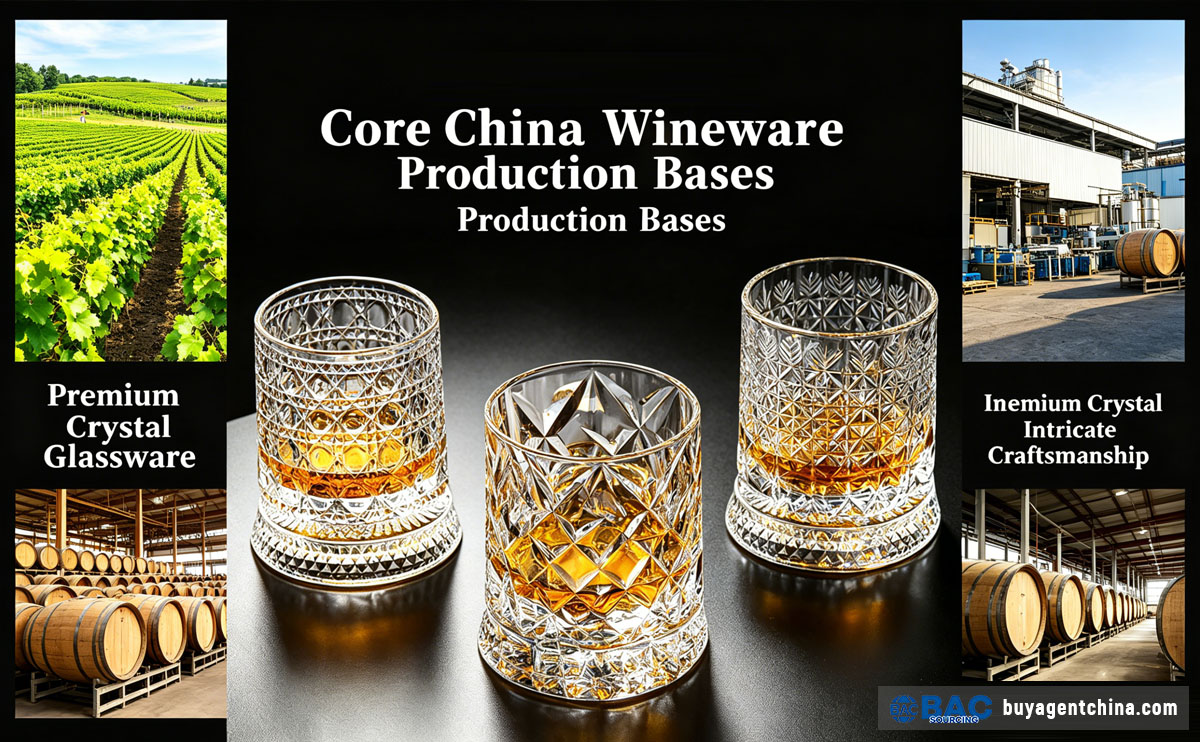
How to Source Wineware from China 01 core China Wineware Production Bases

Complete Guide to Factory Locations, Product Trends, Export Data & Sourcing Tips

Wineware is a high-demand staple for alcohol retail, gift packaging, hospitality supplies, and cross-border e-commerce stores. For businesses looking to source wineware from China, the market offers unmatched scale and value: as the world’s largest wineware manufacturer and exporter, China hosts a fully integrated industrial chain covering ceramic wineware, glass wineware, stainless steel wineware, and bamboo wooden wineware, with exceptional cost efficiency and reliable production capacity.

However, most overseas buyers face common hurdles when they first import wineware from China: fragmented supplier resources, unfamiliar regional industrial clusters, unclear product grading standards, and difficulty distinguishing high-end lines from mass-market goods. Without on-the-ground industry experience, it is easy to partner with mismatched factories, resulting in thin profit margins or substandard bulk shipments.
This guide is built exclusively for international importers, Amazon and eBay sellers, wholesale distributors, and brand merchants who plan to source wineware from China. Based on verified 2024 China wineware industry data and official export statistics, we break down core production bases, top-performing product categories, and leading overseas destination markets.

Sourcing directly from unvetted Chinese wineware factories often comes with hidden risks. Language gaps, unfamiliar local customs clearance rules, inconsistent product quality standards, and fragmented cross-border logistics can easily lead to delayed shipments, defective inventory, unexpected costs, and lost profits. Whether you are new to China procurement or an experienced importer tired of recurring sourcing issues, partnering with a trusted local team streamlines your entire workflow. Many global wineware importers work with BAC SOURCING (BuyAgentChina.com) for reliable end-to-end support, covering factory verification, custom negotiation, quality inspection, document coordination, and full supply chain supervision.

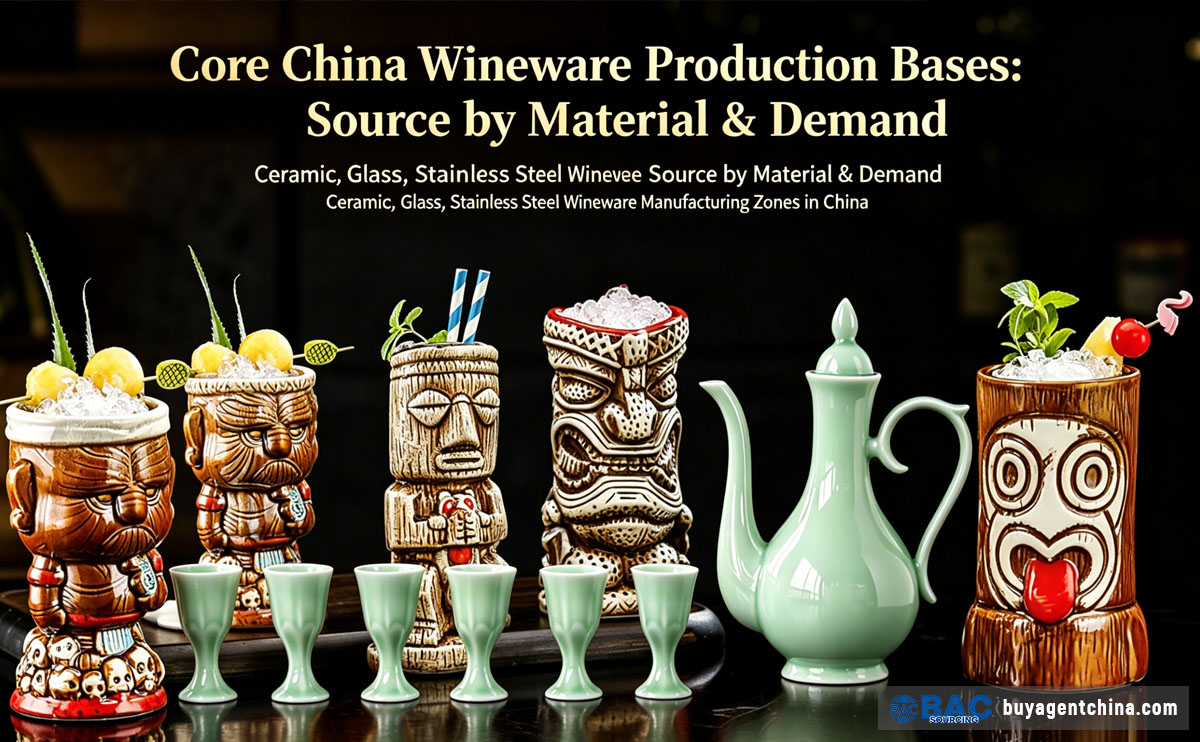
How to Source Wineware from China 05 Core China Wineware Production Bases of Sourcing by Material and Demand

Core China Wineware Production Bases: Source by Material & Demand

1. Core China Wineware Production Bases: Source by Material & Demand

China’s wineware manufacturing industry follows a clear regional clustering pattern. Each production hub specializes in specific materials and product positioning. Choosing the right origin when you source wineware from China directly improves procurement efficiency, cuts out middleman markups, and aligns your product mix with your target market.

1.1 Ceramic Wineware & Drinking vessels: High-End Custom, Mass Production & Bottle Manufacturing Hubs

Ceramic wineware accounts for the largest share of China wineware exports. With broad global appeal, it is widely used for wine gift sets, daily catering, and brand packaging for baijiu, rice wine, and sake.
  • Jingdezhen, Jiangxi: The core base for high-end artistic and cultural ceramic wineware in China, holding over 35% of the national high-end ceramic wineware market. Specializing in hand-painted, retro, and new Chinese-style custom wine sets, it is the top choice for high-end gift orders, boutique cross-border listings, and branded custom products.
  • Liling, Hunan: China’s leading production base for high-grade ceramic wine bottles, capturing more than 50% of the domestic high-end wine bottle market. It maintains long-term partnerships with top Chinese liquor brands, focusing on high-standard custom ceramic packaging for spirits brands.
  • Dehua, Fujian: An export-focused white ceramic production zone, known for minimalist, durable white porcelain wineware that matches aesthetic preferences across Europe, the US, and Southeast Asia. Dehua contributes over 20% of China’s ceramic wineware export volume, making it ideal for small and medium-batch standardized export orders.
  • Chaozhou, Guangdong: China’s largest export hub for daily-use ceramic wineware. With mature large-scale production lines and competitive pricing, it accounts for more than 25% of national daily ceramic wineware exports, perfectly suited for full-container bulk orders and supermarket wholesale distribution.
  • Longquan, Zhejiang: The exclusive origin of Longquan celadon wineware, controlling over 90% of China’s celadon wineware market. Focused on artistic, collectible high-end wine sets, it delivers unique differentiated products for high-end gift and boutique market segments.

1.2 Glass Wineware: Premium Hand-Blown Cups & Liquor Glass Bottles

Glass wineware is the best-performing category in European and American overseas markets. Wine glasses, decanters, beer mugs, and spirit glass sets maintain steady export growth, with strong demand from high-end overseas retail channels.
  • Qixian, Shanxi: Widely known as China’s glassware capital, Qixian produces 80% of China’s hand-blown goblets and makes up over 70% of national high-end glass wineware exports. It specializes in lead-free premium glass, shaped wine cups, and professional decanter sets, serving high-end importers across Europe and America.
  • Yuncheng, Shandong: A professional industrial cluster for liquor packaging glass products. It mainly produces glass liquor bottles and large-capacity glass wine jars, covering more than 30% of China’s domestic liquor bottle market. It is the preferred supplier for brand liquor packaging and bulk wholesale orders.

1.3 Stainless Steel & Metal Wineware: Professional Production Base

Based in Yongkang, Zhejiang – China’s renowned hardware capital – this manufacturing cluster accounts for more than 60% of the country’s stainless steel wineware output. Local factories specialize in stainless steel wine cups, hip flasks, temperature-preserving wine servers, and portable outdoor drinkware. Built for durability and strong value, these items are consistent top sellers across Southeast Asia, the Middle East, and outdoor retail channels. For buyers looking to source durable, travel-friendly wineware from China, Yongkang factories deliver the best balance of price and performance.

1.4 Bamboo & Composite Wineware: High-Growth Niche Segment

No single region dominates this category. Most production is concentrated in light industrial zones across Zhejiang, Guangdong, and Fujian. These eco-friendly, lightweight, natural-finish products resonate strongly with younger demographics in Europe, North America, Japan, and South Korea, making them the fastest-growing wineware subcategory in recent export data.

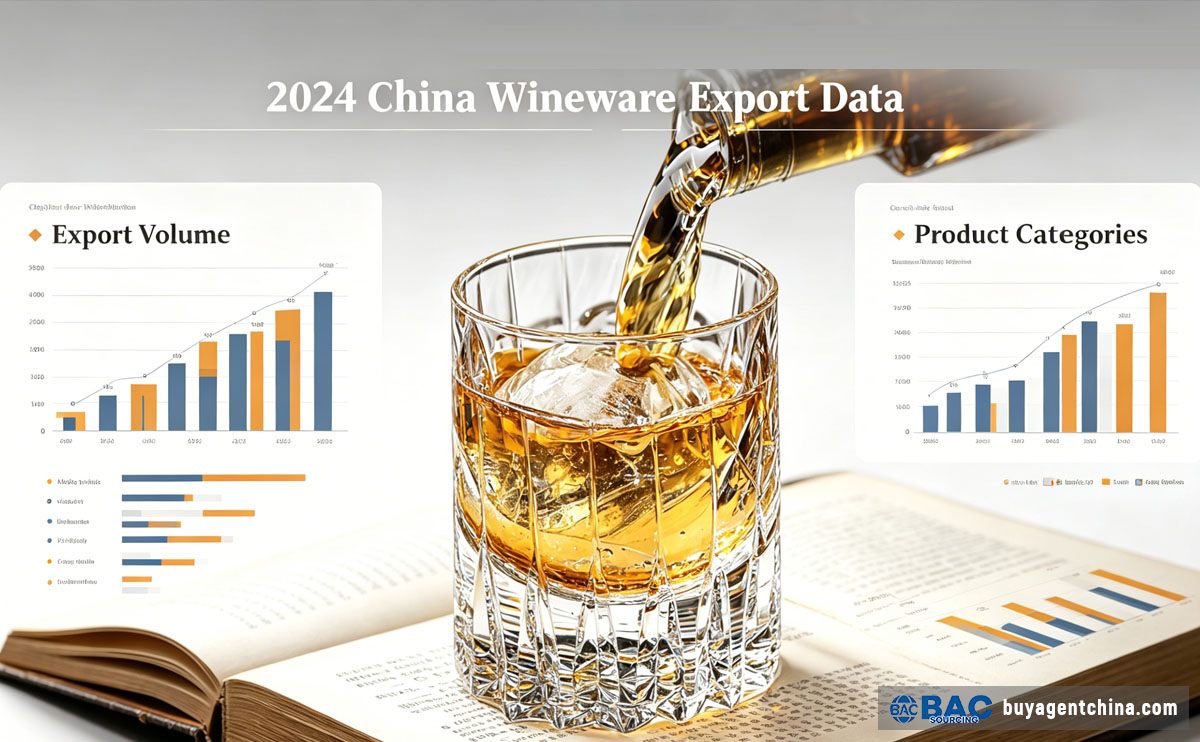
How to Source Wineware from China 02- 2024 China Wineware Export Data
2024 China Wineware Export Data

2. 2024 China Wineware Export Data: Top-Performing Categories for Importers

China wineware exports maintained solid upward momentum in 2024. Total export value reached USD 8.56 billion, up 9.5% year on year, while export volume hit 34.28 million tonnes, growing 6.6% YoY. The market follows a clear two-track pattern: traditional categories anchor the stable core of demand, while newer fast-growth segments open fresh profit opportunities for businesses that source wineware from China.

The table below breaks down export performance, market share, growth rates, and ideal use cases for each major category. You can use it as a direct reference when selecting products to import wineware from China.

Wineware Category 2024 Export Value (Billion USD) Value Share YoY Growth Key Sourcing Strengths & Suitable Channels
Ceramic Wineware

3.85

45.0%

8.7%

Broad product range, universal market appeal, and low market risk. Ideal for cross-border listings, overseas wholesale, and gift sets, with especially strong demand in developing economies.
Glass Wineware

2.91

34.0%

10.2%

Mature premium craftsmanship and highly competitive wine and spirit glassware. A mainstream bestseller in European and American markets, suited for mid-to-high end foreign trade orders.
Stainless Steel & Metal Wineware

1.28

15.0%

12.5%

Growth outpaces the industry average. Durable, portable, and well suited for outdoor use, supermarket retail, and high-demand markets in Southeast Asia and the Middle East.
Bamboo & Composite Wineware

0.32

3.7%

15.8%

Fastest-growing category overall. Eco-friendly minimalist aesthetic, popular with younger shoppers in Europe, the US, Japan, and Korea, and a strong fit for boutique cross-border stores.
Other Materials

0.2

2.3%

7.2%

Dominated by artistic and craft-focused designs, with steady demand in high-end gift customization. Suitable for refined made-to-order projects.

Key Sourcing Takeaways:

  • For stable, high-volume orders: Prioritize ceramic wineware and glass wineware, which benefit from large market bases and consistent demand.
  • For growth and differentiation: Focus on stainless steel wineware and bamboo wineware, which deliver faster growth and relatively lower competition.
  • For premium boutique assortments: Source high-end glass from Qixian, artistic ceramics from Jingdezhen, and celadon from Longquan.

3. Top Global Destinations for China Wineware Exports

Successful sourcing starts with aligning your product mix to local market preferences – best-selling items vary widely by region. Below is the 2024 breakdown of China’s core wineware export destinations, to help you match product selection to your target market when you source wineware from China.

Rank Country / Region 2024 Export Value (Billion USD) Share of Total Exports Top-Selling Wineware Types

1

United States 1.82 21.3% Glass wine glass sets, portable stainless steel drinkware, everyday ceramic wineware

2

European Union

1.56

18.2%

Premium lead-free glass wineware, artistic ceramic sets, refined metal barware

3

Southeast Asia

1.28

15.0%

Affordable everyday ceramics, stainless steel wineware, lightweight bamboo drinkware

4

Japan

0.85

9.9%

Minimalist ceramic wineware, glass sake sets, compact artistic gift sets

5

South Korea

0.62

7.2%

Light-luxury ceramics, shaped glassware, portable metal barware

6

Middle East

0.58

6.8%

Large-capacity metal wineware, premium ceramic gift sets, custom-branded pieces

7

Oceania

0.32

3.7%

Outdoor glassware, chip-resistant ceramics, portable stainless steel drinkware

8

Rest of World

1.53

17.9%

Everyday value-priced wineware across all materials, suitable for general wholesale distribution
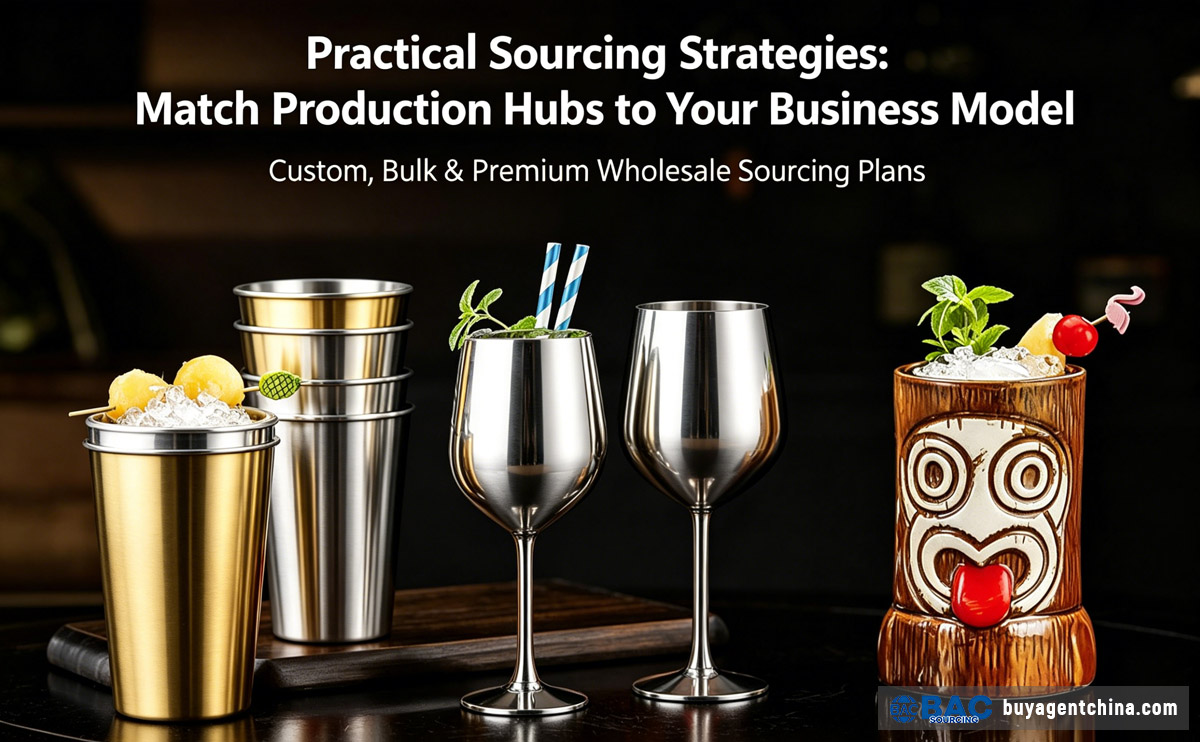
How to Source Wineware from China 07 Practical Sourcing Strategies Match Production Hubs to Your Business Model

Practical Sourcing Strategies Match Production Hubs to Your Business Model

4. Practical Sourcing Strategies: Match Production Hubs to Your Business Model

Combining production hub strengths with export market data, we’ve put together a clear decision framework you can apply directly to your plan to source wineware from China.

4.1 For premium EU/US orders & boutique cross-border retail

Top picks: High-end glass wineware from Qixian, Shanxi + artistic ceramic sets from Jingdezhen + precision stainless steel pieces from Yongkang

Why it works: Superior craftsmanship, premium finish, and strong compliance records that meet strict Western market standards. If you don’t have existing contacts in these inland industrial zones, BAC SOURCING can pre-vet factories, validate quality samples, and negotiate production terms on your behalf.

4.2 For value bulk orders in Southeast Asia & the Middle East

Top picks: Everyday ceramic ware from Chaozhou + entry-level stainless steel drinkware + basic white porcelain lines from Dehua

Why it works: Excellent price-to-value ratio, abundant production capacity, and fast lead times, built for high-volume mass markets. For buyers consolidating multiple SKUs across different factories, a local partner can streamline scheduling and keep production aligned across all suppliers.

4.3 For liquor brand packaging & custom bottle projects

Top picks: Ceramic wine bottles from Liling, Hunan + glass bottles and jars from Yuncheng, Shandong

Why it works: Both regions have long track records supplying top Chinese liquor brands, with mature customization workflows and reliable quality control.

4.4 For differentiated niche bestsellers & gift cross-border lines

Top picks: Longquan celadon, bamboo composite wineware, new Chinese-style artistic gift sets

Why it works: Lower market competition, higher profit margins, and strong alignment with the global premium lifestyle and gifting trend.

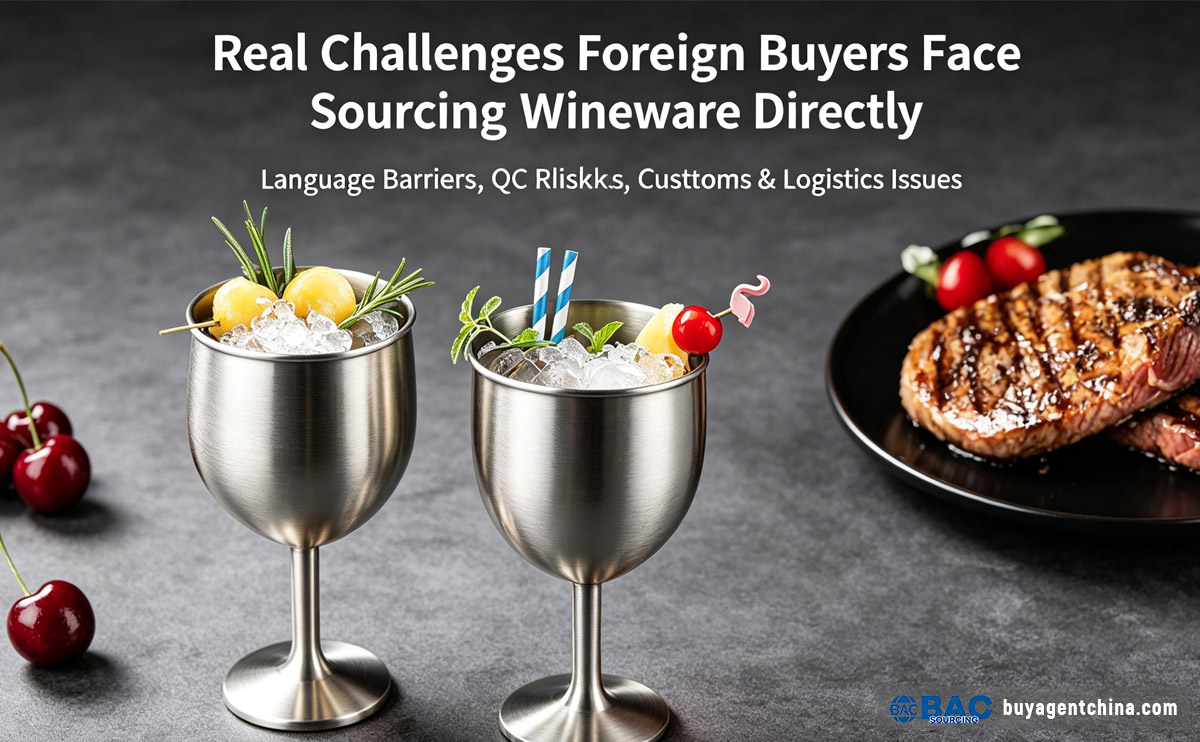
5. Real Challenges Foreign Buyers Face Sourcing Wineware Directly

Whether you are new to China sourcing or an experienced importer, sourcing wineware directly from Chinese wineware factories almost always comes with hidden friction points. These issues rarely get resolved over email alone, and often lead to delayed shipments, defective stock, inflated costs, and even lost orders. The core challenges fall into four areas: language and cultural gaps, compliance complexity, inconsistent quality, and fragmented logistics.

How to Source Wineware from China 09 Real Challenges Foreign Buyers Face Sourcing Wineware Directly

Real Challenges Foreign Buyers Face Sourcing Wineware Directly

5.1 Language & Cultural Communication Gaps

Most specialized wineware manufacturers in China are based in industrial towns with very limited English-speaking staff. Frontline sales teams can usually handle basic price quotes, but technical details – craft standards, material specifications (lead-free glass, food-safe ceramic glaze), custom logo application methods, and batch-to-batch quality variation – are difficult to communicate accurately in English.

Beyond language, factory working norms, quoting conventions, and MOQ policies follow local business practices. Pricing often shifts based on order size, lead time, and relationship, which overseas buyers can rarely read accurately. Misaligned expectations on production details frequently result in bulk deliveries that fall short of market requirements. Working with a local wineware sourcing agent eliminates most of these miscommunication risks.

5.2 Complex Export & Compliance Procedures

Exporting China wineware involves formal customs declaration, product inspection, document verification, and foreign exchange settlement. For overseas buyers, assembling the full set of required paperwork – commercial invoices, packing lists, bills of lading, and food-contact safety certificates – is far from straightforward. Incorrect HS coding, missing test reports, or inaccurate document details can directly result in customs detention, fines, or even returned shipments, carrying heavy financial and time costs.

On top of that, European and American markets enforce strict food-safety standards for glass and ceramic products. Many smaller factories cannot provide full compliance documentation. Without professional screening, buyers can easily end up with goods that cannot legally be sold in their target market. Working with a local partner that understands both Chinese export rules and destination market requirements dramatically reduces this risk. BAC SOURCING verifies compliance capabilities upfront for every factory in its network, so you avoid non-compliant inventory.

5.3 Quality Inconsistency & Limited On-Site Oversight

Wineware quality can vary noticeably from batch to batch: ceramic glaze uniformity, glass bubbles and scratches, stainless steel polishing finish, and print alignment all determine whether a piece is sellable. Most overseas buyers cannot conduct long on-site inspections, and factories sometimes mix acceptable and defective units into the same shipment. Once goods have sailed, making claims becomes slow and difficult.

This is especially true for custom wineware sets and gift packaging, where color mismatch, misprinted logos, and inadequate packaging are common. Without professional pre-shipment inspection, defect rates in bulk orders can easily exceed acceptable industry thresholds.

5.4 Fragmented Logistics & Supply Chain Management

Domestic trucking, container booking, space allocation, and warehouse consolidation in China are highly localized. Independent buyers rarely qualify for preferred freight rates, and it is hard to get real-time visibility into production, warehousing, and shipping status. During peak seasons, space shortages, rate spikes, and delays are common.

If you source from multiple suppliers – ceramic from one factory, glass from another, metal from a third – independent warehousing, consolidation, and shipping become cumbersome, error-prone, and time-consuming. Building a unified, well-managed wineware supply chain is extremely difficult to do remotely.

6. How a Local Sourcing Partner Simplifies Your Wineware Procurement

For first-time buyers navigating Chinese supply chains for the first time, and for seasoned importers tired of recurring quality and logistics headaches, partnering with a trusted local wineware sourcing agent is the most cost-effective way to remove friction and de-risk orders. BAC SOURCING (BuyAgentChina.com) is a professional one-stop procurement service focused on Chinese light industrial products, including the full wineware category.

7. What BAC SOURCING Delivers for Wineware Importers

7.1 Clear, accurate communication across language and culture:

Bilingual procurement specialists translate your product specs, customization requirements, pricing expectations, and after-sales terms directly with factory teams, eliminating misinterpretation caused by language and cultural gaps.

7.2 End-to-end compliance and document handling:

An in-house team manages export declaration, inspection paperwork, and import documentation, and verifies that all wineware items carry valid food-contact safety certificates. This ensures full alignment with EU, US, Southeast Asian, and other regional import standards and helps prevent customs holds.

7.3 Rigorous on-site quality inspection:

Pre-production sample approval, in-production process checks, and comprehensive pre-shipment inspections are all built into the workflow. Defective units are filtered out before loading, so you receive consistent, sellable quality across every batch.

7.4 Consolidated logistics and cost optimization:

Long-term partnerships with major logistics providers secure competitive freight rates. BAC also supports multi-supplier cargo consolidation, unified warehousing, and single-point shipment, cutting both logistics costs and total lead times.

7.5 Ongoing supply chain management:

The team vets and selects verified high-quality wineware manufacturers in China across Jiangxi, Shanxi, Shandong, Zhejiang, and other core hubs, cuts out middlemen, tracks order progress in real time, and monitors supplier performance. The result is a stable, long-term supply base you can rely on.

In practice, BAC SOURCING functions as your dedicated local supply chain manager in China – handling language barriers, procedural complexity, quality control, and logistics coordination so you can focus on sales and growth.

8. Common Sourcing Pitfalls to Avoid

8.1 Mid-market commoditization and price pressure:

Entry-level generic ceramic and glass wineware face intense price competition and thin margins. New buyers are advised not to flood their listings with undifferentiated basic items; instead, prioritize niche or upgraded designs.

8.2 Raw material cost volatility:

Glass, ceramic, and metal raw material prices fluctuate with commodity markets. For large orders, consider locking in pricing over a quarter to hedge against sudden cost increases.

8.3 Compliance first for regulated markets:

European and North American markets enforce strict food-contact safety rules for glass and ceramic goods. Always confirm compliance requirements upfront and request third-party test reports before placing bulk orders to avoid clearance delays.

8.4 OEM vs. in-house design capability:

Most Chinese wineware factories specialize in OEM production. If you are building a private label or boutique assortment, look for manufacturers with dedicated R&D and design teams, or work with a sourcing partner that can help you identify them.

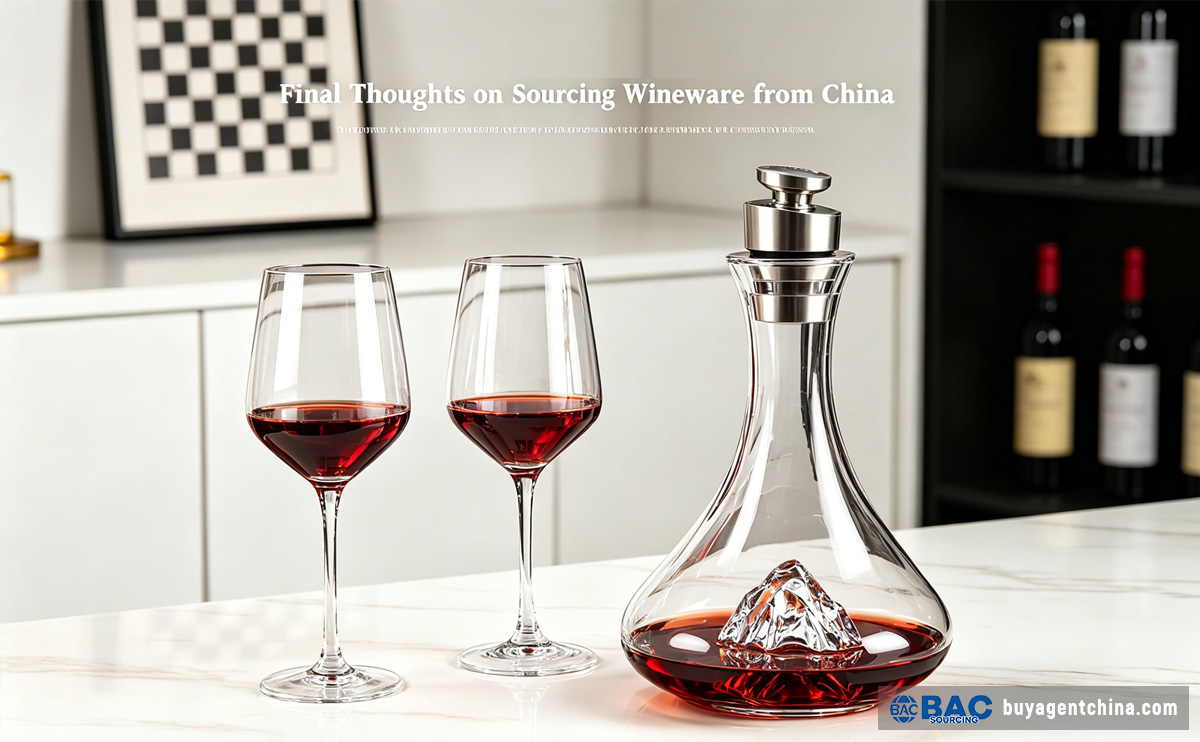
9. Final Thoughts

When you source wineware from China, the smartest strategy is not simply to chase the lowest price. It is to match the right production hub to your market, select categories with strong growth momentum, and mitigate the hidden risks of cross-border procurement.

For ceramics, look to Chaozhou, Dehua, and Jingdezhen; for glass, focus on Qixian and Yuncheng; for stainless steel barware, Yongkang is the clear leader; and for differentiated growth items, explore bamboo and celadon lines. Backed by 2024 wineware export data, prioritizing fast-growing stainless steel and bamboo wineware, while keeping ceramic and glass as your core stable assortment, will help you balance consistent order flow with upside from expanding global markets.

If you want to streamline your sourcing workflow, reduce quality risks, and build a reliable long-term supply base, BAC SOURCING (BuyAgentChina.com) can support you from factory selection through to final delivery.

How to Source Wineware from China 04 Final Thoughts on Sourcing Wineware from China
Final Thoughts on Sourcing Wineware from China

10. Frequently Asked Questions (FAQ)

1. What is the typical MOQ for wineware from Chinese factories?
MOQs vary by material and factory tier. Standard mass-produced ceramic and glass wineware usually starts at 500–1,000 pieces per SKU; stainless steel items often start at 300–500 pieces. High-end handcrafted and custom items may have higher MOQs. For smaller trial orders, working with a wineware sourcing agent can help you access lower MOQs by combining orders or partnering with flexible factories.
2. How long does production and shipping take when I source wineware from China?
Standard bulk production takes 25–45 days, depending on order size and customization level. Sea freight from major Chinese ports to the US West Coast takes roughly 14–21 days, and to Western Europe about 25–35 days. Air freight takes 5–10 days but comes at a much higher cost. A local partner can help you schedule production and book freight in advance to avoid peak-season delays.
3. Are Chinese ceramic and glass wineware products food-safe for EU and US markets?
Reputable factories can produce wineware that meets FDA (US) and LFGB/EC 1935/2004 (EU) food-contact standards, but not all factories do. Always confirm compliance requirements upfront and request third-party test reports. BAC SOURCING pre-screens factories for compliance capability and verifies documentation before shipment, so your goods meet destination market standards.
4. Can I combine wineware from different factories into one shipment?
Yes, mixed-container consolidation is very common when you import wineware from China. You can source ceramic, glass, and stainless steel wineware from different production hubs and consolidate them into one full container shipment to save freight cost. However, coordinating pickup, warehousing, inspection, and loading across multiple factories remotely is complex. A sourcing agent handles all consolidation logistics for you in one coordinated workflow.
5. How can I check product quality before my wineware order ships from China?

The standard approach is pre-shipment inspection (PSI), where inspectors visit the factory and check a sample of finished goods against your quality criteria. This covers appearance, craftsmanship, function, packaging, and labeling. BAC SOURCING includes inspection services as part of its standard sourcing support, so you get full visibility and quality assurance before goods leave the factory.

6. Do I need a sourcing agent even if I only place small trial orders?
For small first orders, a sourcing agent still adds clear value: it saves you time researching and vetting wineware manufacturers in China, reduces communication errors, ensures basic quality control, and handles export documentation. Many buyers use agents for trial orders to validate factories and product quality before scaling to larger volumes.

Leave a Reply

Your email address will not be published. Required fields are marked *