Custom Sourcing, Factory Verification, Sourcing Tips

Which Desktop Folding Phone Stand Should You Import?

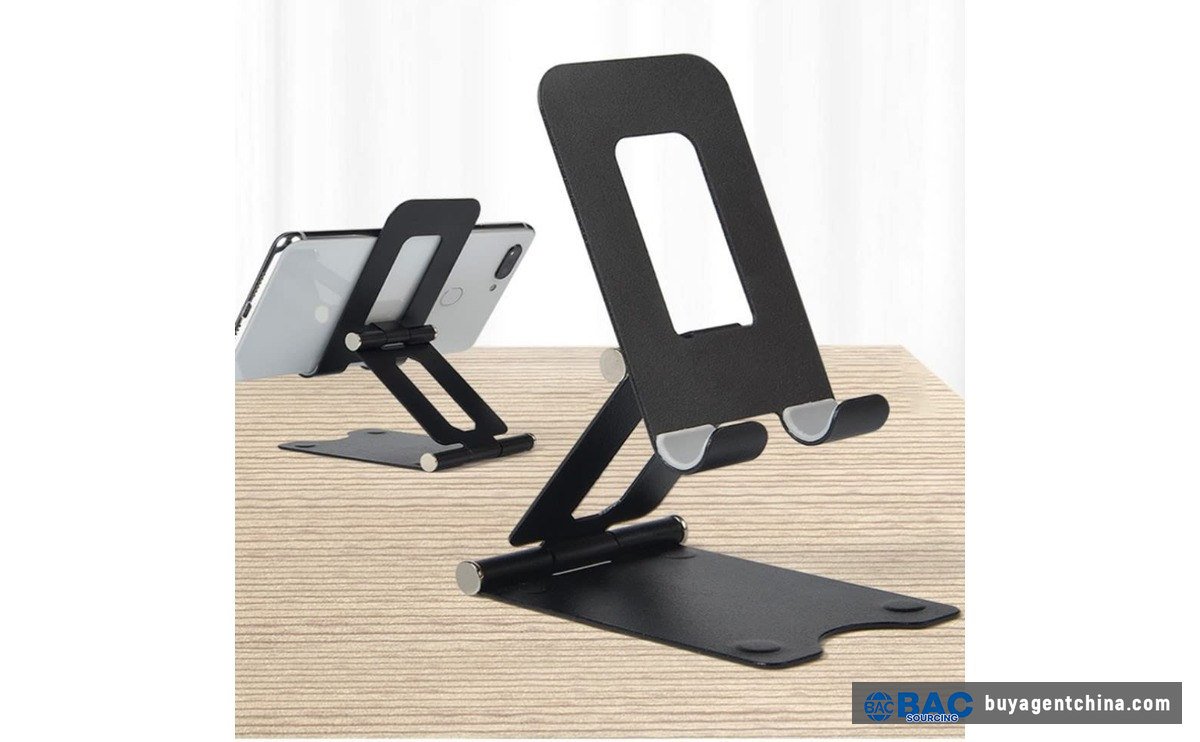
Aluminum alloy folding stand (FOB USD 1.08–2.58, MOQ 100–2,000) — the USD 15–40 retail tier that carries most brand-building margin

A stock plastic foldable stand ships around USD 0.30–1.30 FOB; a CNC-machined aluminum unit runs USD 3–15. Material choice, not price, decides your margin.

Most buyers treat a desktop folding phone stand as a one-dollar product — and that is the most expensive way to buy it. The four materials below are scored by what a wrong choice costs, not what it costs to buy.

1. Why the Material, Not the Price, Decides Your Margin

Set the scale first. The global phone stand and mount market was estimated at about USD 3.2 billion in 2025, with forecasts pointing toward roughly USD 4.9 billion by 2032 and growth around 7% a year (Electronics Hub, citing market reports, 2026). This is not a fading accessory category. It is a volume product that keeps growing, which is exactly why so many sellers keep entering it.

The trouble with volume products is that the tolerance for mistakes is thin. A desktop folding phone stand leaves the factory at anywhere from a few dimes to fifteen dollars — a spread close to 20x on one product. Get the material right and that cost gap becomes your margin. Get it wrong and the money you “saved” comes back as returns, replacement stock, and a second freight bill.

In fifteen years of sourcing, I have watched first-time buyers die on the same point: not overpaying, but picking the wrong material without knowing it. Plastic units arrive with mold-line flash that scrapes hands and hinges that loosen after a week. Aluminum shows anodizing color drift and anti-slip pads that detach by month three. Bamboo cracks. Silicone picks up dust and goes tacky. None of these defects shows in a listing photo, but every one of them shows up on a return form.

So this guide does not compare “which factory is cheaper.” It puts the four mainstream materials through the same set of questions, so you know which one you should be importing — and where the bill lands if you pick wrong.

Who loses in this category? Usually not the factory and not the big brand. It is the middle seller who ordered by price alone. The seller who picks the cheapest plastic unit and lists it at a premium price gets the returns. The seller who over-specs a CNC aluminum stand for a promo-gift channel sits on inventory. Both are material mistakes, not price mistakes. That is the whole thesis of this guide, and the tables below are built to make it concrete.

2. Four Materials, Five Questions

Buying decisions fall apart when everyone argues on different grounds. The plastic factory says plastic sells; the aluminum factory says metal looks premium; the bamboo factory says eco is the trend. They are all right, and none of it is comparable. So fix the scoring first: whatever the material, answer the same five questions — unit cost, load and stability, fold longevity, surface quality, and return risk. Once the questions are fixed, the differences stop being feelings and start being numbers.

2.1 Plastic Phone Stand (ABS / PC): The Volume King and the Return King

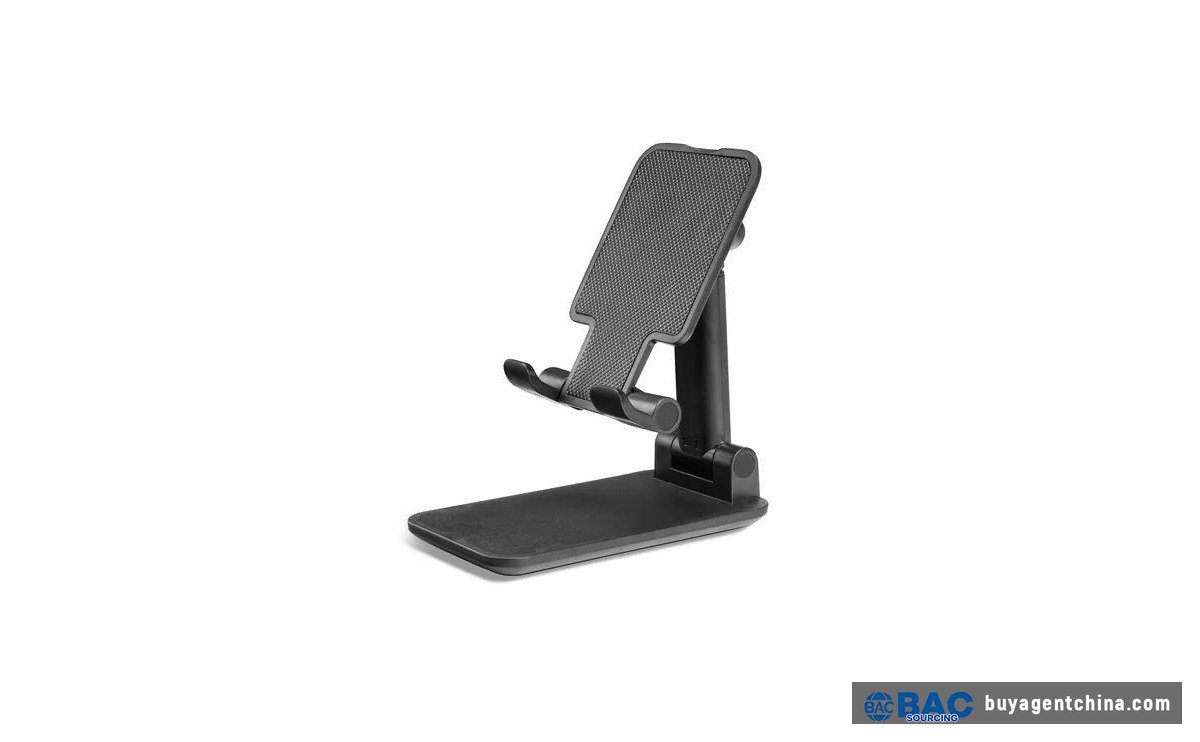
Plastic foldable stands are the biggest mover on 1688. A single Chenghai factory can sell hundreds of thousands to over a million units a month of a single model (1688, 2026-10 snapshot). Ex-works prices run ¥0.13–2.50, roughly USD 0.29–1.30 FOB at MOQs of 100–500.

On cost, nothing touches it. The problem is what “cheap” buys: mold-line flash that scrapes, thin walls that crack under a heavy phone, hinges that loosen after a few dozen folds. Sell it as a promo gift and you are fine — gift buyers do not return. Sell it as a real product and the first return wave eats the margin of the whole batch. Choosing plastic is choosing a low-margin, high-volume, self-managed-return game.

Plastic foldable stock model (ABS/PC, ex-works ¥0.13–2.50, FOB USD 0.29–1.30) — the promo-gift and low-cost test workhorse

Plastic foldable stock model (ABS/PC, ex-works ¥0.13–2.50, FOB USD 0.29–1.30) — the promo-gift and low-cost test workhorse

2.2 Aluminum Alloy Phone Stand: The Mid-Range Workhorse

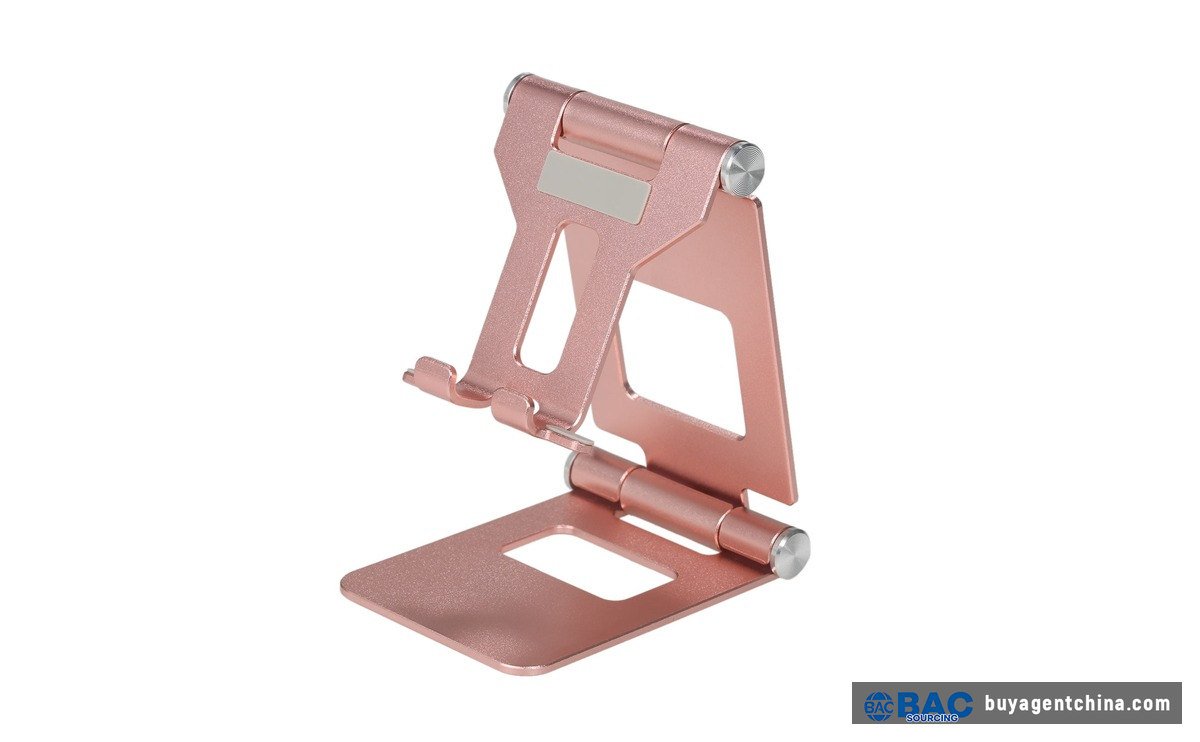
Aluminum folding stands are the tier that behaves most like a business: ¥1.45–6.80 ex-works on 1688 (2026-10), about USD 1.08–2.58 FOB on Made-in-China (2026-10), retailing at USD 15–40. Several times the cost of plastic, and a completely different class of feel, load capacity, and fold life.

The real traps here are process, not material: anodizing color drift between batches, inconsistent brushing direction on the surface, and hinge shafts whose tolerances are loose enough to wobble. The Shenzhen factories that do this well — Xinsurui, Flyoung and their peers — have the process down. But write surface-finish standards and a hinge open-close test into the contract. Skip that and you spend the delivery week arguing with the supplier about what “uniform brushing” means.

2.3 Bamboo: A Real Selling Point, a Picky Market

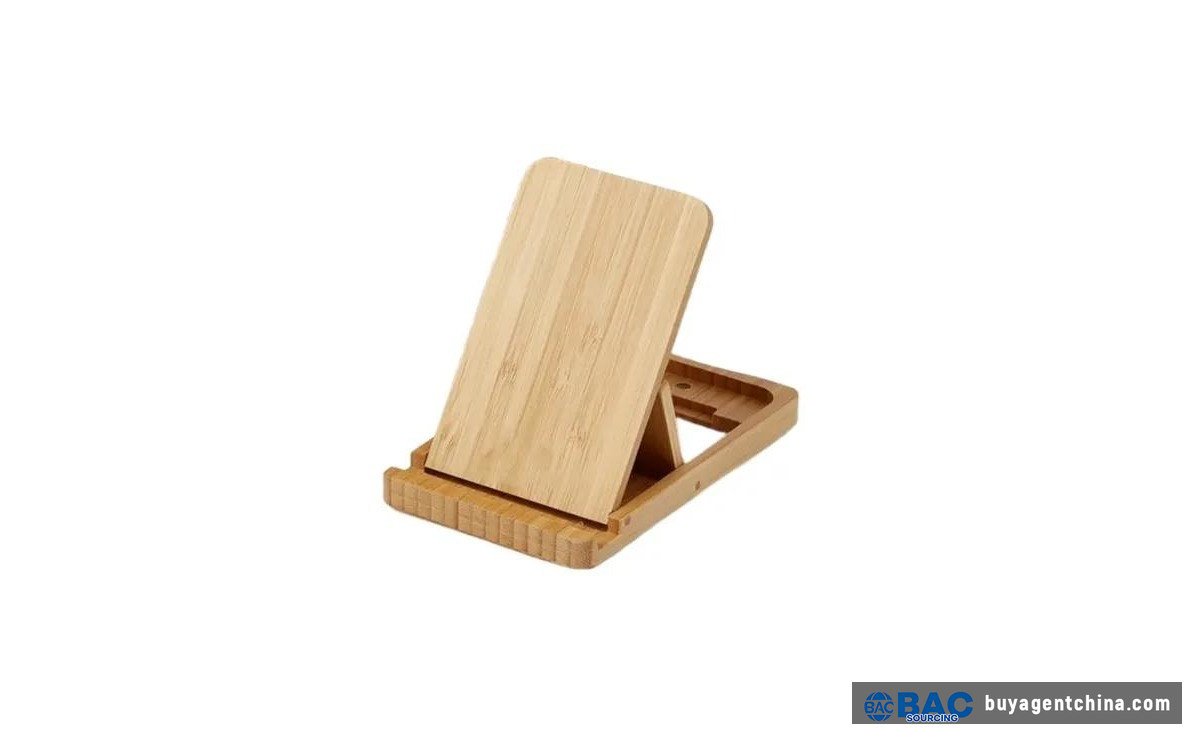
Bamboo stands run about USD 0.28–1.22 FOB (Made-in-China, 2026-10, mainly Fuzhou and Nan’an suppliers), and the retail story writes itself: eco, natural wood, ins-aesthetic. North American and European buyers respond; Japan responds too.

Two structural problems come with bamboo. First, cracking and warping — if the moisture content and sealing coat are not handled right, ocean humidity changes everything. Second, yield variation: grain is natural, and batch-to-batch color drift is simply not controllable. Bamboo is not a bad product. It is a market-picky product — right for Japanese sundries and Nordic-style home channels, wrong for anyone selling on durability.

Bamboo phone stand (FOB USD 0.28–1.22) — the eco pick for Japanese-sundries and Nordic-style home channels

Bamboo phone stand (FOB USD 0.28–1.22) — the eco pick for Japanese-sundries and Nordic-style home channels

2.4 Silicone: Small, Flexible, and Specific

Silicone flexible stands run about USD 0.68–1.95 FOB (Made-in-China, 2026-10). The pitch is honest: it bends to any angle, grips, and will not scratch the phone. It solves the “fixed angle is never right” problem — live streaming, bedside, kitchen.

The trap is the material itself: dust pickup, tackiness from plasticizer migration, and discoloration over time. Ask whether the silicone is food-grade or industrial-grade before you talk price — the cost gap is large, and plenty of suppliers quote industrial grade when you asked for food grade. Silicone is a differentiation play for small orders, not a volume play against plastic.

3. The Price Ladder: What Each Tier Really Costs

Put the four materials on one table and the ladder becomes obvious. Read the FOB column as the cost of process, yield, and return risk — not as “who is honest and who is greedy.”

TypePositionEx-works (1688, 2026-10)FOB (2026-10)MOQRetail ref.Best for
Plastic foldable (ABS/PC)Volume / promo¥0.13–2.50USD 0.29–1.30100–500USD 5–15Gifts, promos, low-cost tests
Iron-wire triangle standLow-cost volume¥1.70–6.80USD 0.55–1.00500USD 8–20Livestream props, huge quantities
Aluminum foldingMid-range mainstay¥1.45–6.80USD 1.08–2.58100–2,000USD 15–40Real sellers, brand entry
Aluminum 360° / magneticMid-to-high—USD 1.11–2.15100–500USD 20–45Office, MagSafe ecosystems
Premium CNC aluminumHigh-end¥20.90–35 (Shenzhen)USD 2.75–15.0710–500USD 30–80Brands, premium office
BambooEco / ins—USD 0.28–1.22100USD 10–25Japanese / Nordic channels
Silicone flexibleDifferentiation¥4.00–6.00USD 0.68–1.95100USD 10–20Livestream, bedside, kitchen

One way to read this table: start from the retail price your market will pay, work backwards to the FOB band you can afford, and only then pick the material inside that band. Going the other way — grabbing the cheapest row first — is how most first orders become tuition.

Two prices on the ladder need explaining. The 1688 column is a domestic Chinese wholesale price — no export packing, no English labels, no FOB fees. The FOB column is what an exporter actually charges you: domestic freight, export paperwork, and the margin the trading arm adds. That gap is not waste. It is the price of making the goods importable. And in this category it is also where the bait price lives — the quote that looks unbeatable until you ask what it includes.

Premium CNC aluminum stand (Shenzhen factories, ex-works ¥20.90–35, FOB USD 2.75–15.07) — the high-ticket tier for brand and premium-office positioning

Premium CNC aluminum stand (Shenzhen factories, ex-works ¥20.90–35, FOB USD 2.75–15.07) — the high-ticket tier for brand and premium-office positioning

4. The Factory Map: Where Phone Stand Manufacturers Cluster

The phone stand industry divides more cleanly than most buyers expect: volume goes to Shantou, metal goes to Shenzhen, cross-border gifts to Yiwu, eco to Fujian.

4.1 Shenzhen (Bao'an / Longgang): Aluminum and OEM

Shenzhen is the aluminum and customization center. Flyoung runs a 2,000 m² workshop with about 5 million units of annual capacity; Xinsurui operates 3,000–5,000 m² dedicated to CNC-machined stands; Duduo Technology alone has 30,000 m² and 32 stamping presses from 110 tons up (supplier profiles, 2026). OEM/ODM capability is the strongest here, MOQs run higher (custom work from 500), and this is where you go for brand quality.

4.2 Shantou Chenghai: The Plastic Volume Factory of the World

Chenghai makes plastic phone stands the way the word “volume” is meant: single models with monthly sales of 31,539 to 1,753,054 units are on record (1688, 2026-10 snapshot). MOQs flex down to a few dozen, and prices sit on the floor. The trade-off is sameness — the model you sell is the model ten neighbors sell. Chenghai fits promo orders, gift orders, and the “test a style before you upgrade” first step.

4.3 Dongguan, Yiwu, Yangjiang, Ningbo, Fujian: The Division of Labor

Dongguan does metal and injection molding (factory Lichend, nine years in desktop stands, 1688 2026-10). Yiwu runs cross-border gift bestsellers — a Douyin-style metal stand with 86,578 monthly sales lives here. Yangjiang does iron-wire triangle stands. Ningbo hosts die-casting and export trading houses. Fujian (Fuzhou / Nan’an) does bamboo. Small mixed-batch gift orders go to Yiwu; iron-wire volume to Yangjiang; export trading to Ningbo; bamboo only to Fujian.

Send the same spec sheet to three regions and the quotes and MOQs will come back different. That is not a problem. It is the cheapest market research you will get this month.

5. Stock vs Custom: One Line of Decision

Nine out of ten new buyers get the first step wrong: they want their own design, their own logo, their own mold before the market has said anything.

Run the two ledgers first. Stock: the factory already owns the mold and the inventory, MOQ drops to a few dozen, delivery runs 3–15 days, price is lowest, and the downside is that everyone carries the same model. Custom (OEM/ODM): logo and color work usually starts at 300–500 pieces, a brand-new mold at 1,000–3,000, sampling takes 2–4 rounds, and the timeline stretches to 30–60 days with a step-change in money and risk.

One line to remember: test with stock, and let the sales numbers decide when you customize. Tooling belongs to designs the market has already paid for, not to designs you hope will sell. I have watched too many buyers pay for a mold, watch the product stall, and turn the mold into the most expensive souvenir in their warehouse.

Two details buyers skip. On stock, ask for the exact SKU and batch photo — shelves rotate, and the photo that sold you may be a different batch. On custom, the golden sample is not a decoration: fold it three hundred times, load your heaviest phone, and sign it as the only acceptance standard. The real line between stock and custom is the line between testing the market and committing to it.

6. Match the Material to Your Market

No material is objectively better. Each one matches some channels and punishes others. Work from the buyer profile you actually serve — that beats starting from “which is cheap.”

Buyer profileRecommended materialWhyAvoid
Promo gifts, giveawaysPlastic foldableLowest cost, fastest volume, gift buyers do not nitpickBamboo (pricier, fragile)
Amazon / independent-site sellerAluminum foldingFeel supports the price, returns stay manageableCheap plastic (review killer)
Premium office, brand positioningCNC aluminumHigh ticket, repeat orders, brand premiumIron-wire (cannot carry the tier)
Japanese / Nordic home channelsBambooEco story landsSilicone (style mismatch)
Livestream props, bedsideSilicone flexibleDifferentiation, clear use-caseAluminum (overkill)
Huge low-price volumeIron-wire triangleCost floor, scale is the gameAny "premium" material

The logic here is reverse-cost: decide first what a failed batch costs you — dead inventory, bad reviews, or brand damage — and then pick the material that can carry it. If a material cannot carry the failure, it is not cheap enough to matter.

7. Direct Sourcing vs a China Buying Agent: What a Wrong Pick Costs

Going direct saves the agent fee and, for many buyers, quietly loses more elsewhere. Run the comparison on your own numbers.

DimensionDirect with the factoryTransparent-fee China buying agent
CommunicationLanguage layer, specs distorted in translationChinese handled directly, specs checked line by line
QuotesYou guess the padding, hard to reach the floorOriginal ex-works prices, you see the factory's bottom line
Factory checksFly there or trust the photosOn-site: mold lines, hinges, whether the QC bench is really used
QualitySample is sample, bulk is bulk — risk on youThree-stage inspection holds sample-to-bulk consistency
Paperwork / HSYou own it, one mistake holds a containerHS codes checked, documents and bookings handled
CostNo agent fee, hidden costs self-paidFixed service fees, written into the contract
Best forExperienced buyers, big orders, someone on the groundNew buyers, mid orders, anyone burned once

Current published standards at Buy Agent China (services page, 2026-07): the Entry plan at USD 29 delivers three supplier quotes; the DIVE plan at USD 140 deep-sources 4–6 factories with original quotes and workshop videos; a factory visit runs USD 170 per working day; order management runs 3–5% plus a USD 220 base (Basic) or 5–8% plus a USD 280 base (Growth), with a standalone inspection at USD 200 per visit. These are public numbers — take any agent’s quote and check it against them.

On what a wrong pick costs: direct sourcing is not forbidden, but price your own time. A new buyer learning plastic material traps, hinge standards, and anodizing process from zero usually pays two or three orders of tuition — and those losses typically exceed a full year of a transparent agent’s fees.

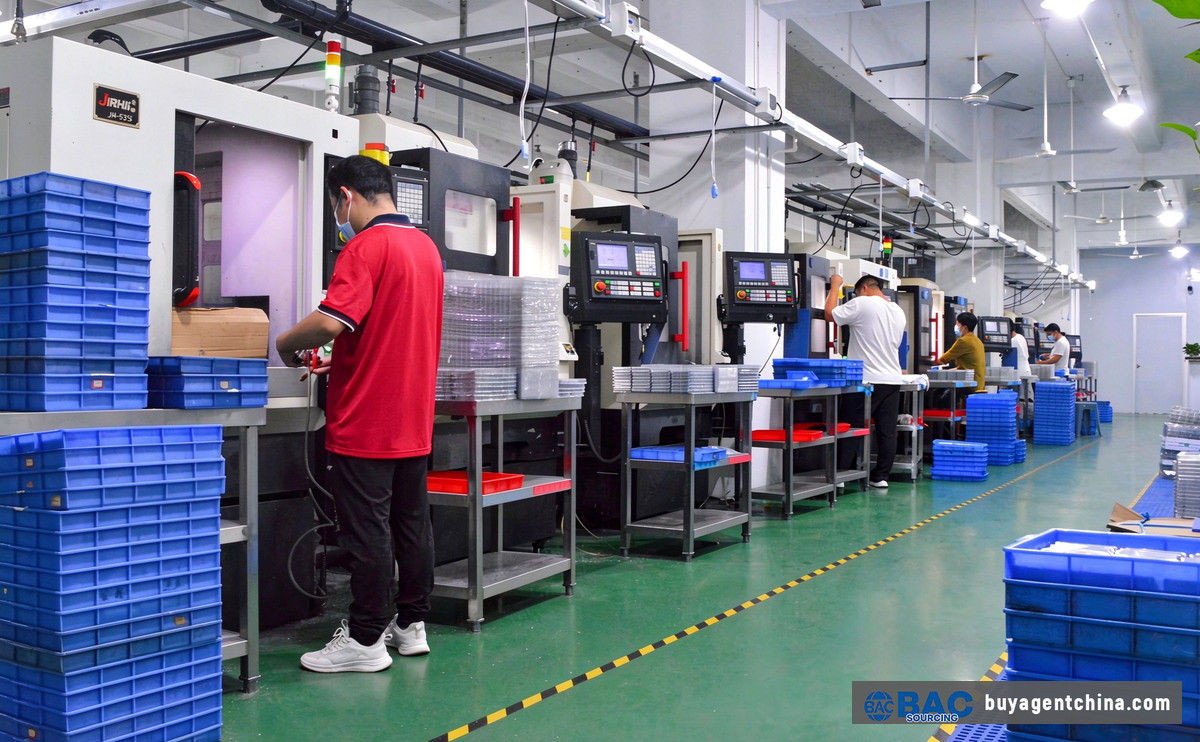
CNC machining workshop in Shenzhen — the production floor you would walk during a factory audit before a bulk order

CNC machining workshop in Shenzhen — the production floor you would walk during a factory audit before a bulk order

8. Two Order Plans

8.1 Small Test Order: Phone Stand MOQ from 100 Pieces

The goal is to validate the market with the least money, not to make money. Region: Shantou Chenghai for plastic stock, Yiwu for mixed gift batches. Method: pick a stock model, no new mold, buy samples first and test them yourself — fold smoothness, load, anti-slip pad adhesion — then ship small by express or air. Budget reference: plastic foldable at USD 0.30–1.30 FOB; a 100-piece test including freight is a one-to-two-hundred-dollar bet. A small order is not a scaled-down big order; it is a different business. Do not drive a tricycle with a train license.

8.2 Large Bulk Order (20,000+ Pieces / FCL)

The goal is to lock cost and stand up a brand. Region: Shenzhen for aluminum and custom work. Method: put the material grade, surface finish, hinge test count, and anti-slip pad adhesion standard into the spec sheet; sign a physical golden sample as the only acceptance standard; pay 30% deposit with the balance after inspection — never the full amount up front; run three-stage inspection — 30–50% production check, 100% finish check, and loading supervision. When a supplier says “absolutely no problem,” I am usually already lining up a backup.

9. Phone Stand HS Codes and the Costs Nobody Quotes

The last place money leaks is paperwork. Desktop folding phone stands classify by material: aluminum stands generally go under HS 7616.99 (China exports commonly use 7616999000, as marked by Made-in-China suppliers, 2026); plastic and silicone stands under 3926.90 (3926909090). Classify wrong and you get delays at best, a held container and back duties at worst. Get the HS code wrong, and a whole container sits at the dock while your margin disappears.

MaterialHS directionNotes
Aluminum stand7616.99Classify the finished product; magnetic add-ons can move the subheading
Plastic stand3926.90Clean single-material item; do not mix with electronics
Silicone / composite3926.90 or by main materialAsk the declarer for the composite rule
Magnetic / rotating featureMay differConfirm with forwarder or agent before booking

Beyond the HS code sit the costs nobody quotes: domestic freight, port charges, sea or air freight, destination fees, duty and VAT, inspection fees, and the hours you spend on communication. Price the total landed cost, not the unit price — it is the only way this category makes money.

The paperwork itself is short: commercial invoice, packing list, and a customs declaration are the core set, plus a certificate of origin when your market needs one. What trips buyers is consistency, not volume. The invoice description must match the HS code, the packing list must match the carton contents, and the declared value has to survive a customs officer’s glance. In a category with unit prices under a dollar, an over-declared invoice can double your duty; an under-declared one can trigger a hold.

10. Frequently Asked Questions (FAQ)

Q1. What is the MOQ for desktop folding phone stands from China?

A1. Stock plastic foldable stands commonly start at 100–500 pieces, and some Chenghai suppliers ship from a few dozen. Aluminum folding stands run 100–2,000; custom logo and color work usually starts at 300–500; a brand-new mold needs 1,000–3,000 pieces.

Q2. Which is better for import, plastic or aluminum desktop phone stands?

A2. It depends on your channel. For promo gifts and price-driven listings, plastic wins on cost and speed. For a real brand, Amazon, or a retail shelf, aluminum alloy is the safer pick — better feel, fewer returns, and it supports a USD 15–40 retail price. Test both in small batches before you commit.

Q3. How much does a desktop folding phone stand cost wholesale from China?

A3. In 2026-10 data: plastic foldable USD 0.29–1.30 FOB; aluminum folding USD 1.08–2.58; 360° rotating aluminum USD 1.11–2.15; premium CNC aluminum USD 2.75–15.07; bamboo USD 0.28–1.22; silicone USD 0.68–1.95. MOQs range from 10 to 2,000 depending on the model.

Q4. What are the hidden costs when importing phone stands from China?

A4. Beyond the unit price: domestic freight, port charges, sea or air freight, destination duty and VAT, inspection fees, and rework or returns from quality gaps. Add a 10% buffer to FOB plus freight plus duty when pricing. Get the HS code right the first time — 7616.99 for aluminum, 3926.90 for plastic — or clearance delays eat the margin.

Q5. How can I verify a phone stand factory in China?

A5. Ask for live workshop video, not photos; check the business license; order a sample and test it yourself — fold mechanism, hinge tightness, anti-slip pad adhesion — then place a small order before any big one. If you cannot visit, use a third-party inspection or a China buying agent. A factory that refuses inspection is a factory you do not need.

Q6. What is the best time of year to order phone stands from China?

A6. Avoid Chinese New Year (January–February, factories close for 2–4 weeks) and the National Day holiday (early October). The cross-border peak season (September–November) keeps factories busy, so book early. Place bulk orders in off-peak months and put a delay-compensation clause in the contract.

Leave a Reply

Your email address will not be published. Required fields are marked *