Custom Sourcing, Procurement Guides, Sourcing Tips

Extension Springs Buying Guide: Compare Materials, Suppliers and Costs

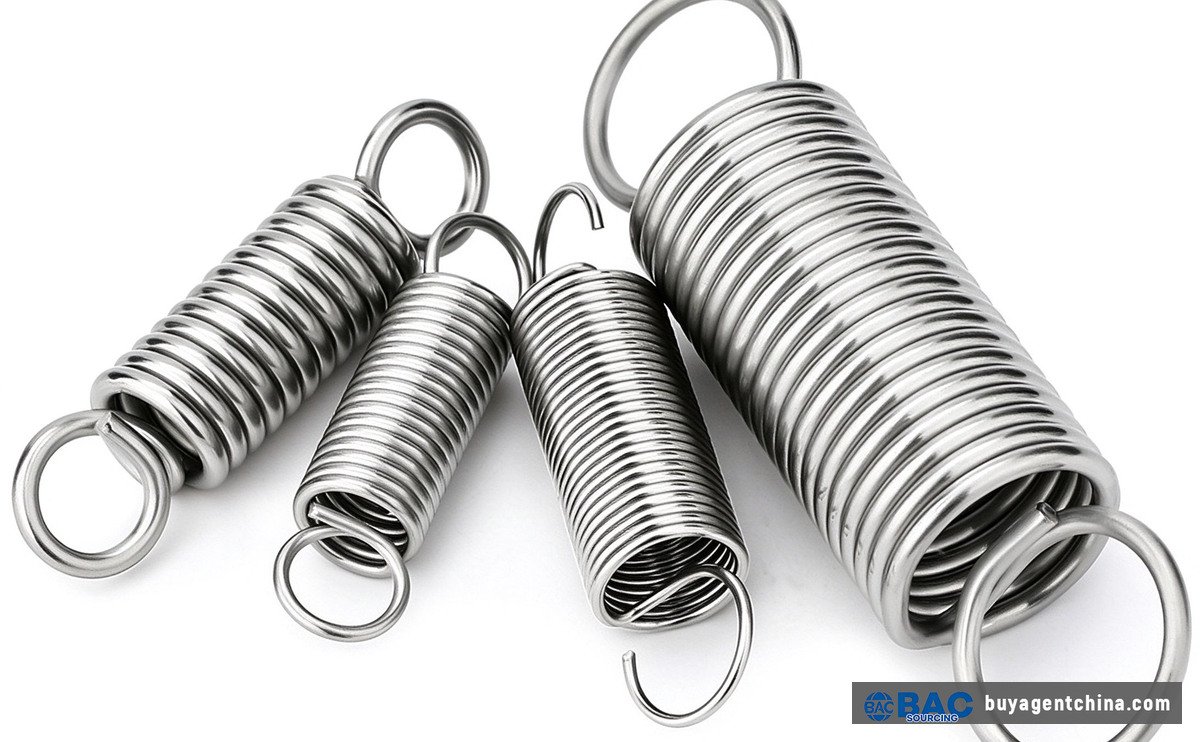
304 stainless extension springs with closed and open hooks — match the hook style to the load

An extension spring resists a pull with a closed-coil body and end hooks; stock starts at ¥1.08/pc and custom MOQs go as low as 10 pieces (2026 market data).

1. Why the Spec Sheet Beats the Photo

Open a catalog page and two extension springs can look identical while sitting twenty dollars apart in price. I trained as a mechanical engineer, so I read a part before I look at it, and that habit matters most with springs. They live hidden inside machines where nobody sees them — buried in a trampoline frame, tucked behind a garage-door pulley, soldered into a carburettor. A buyer holds the finished product, never the spring. Every decision has to be justified by numbers on paper, not by how the part photographs.

1.1 What an Extension Spring Actually Is

An extension spring is designed to resist a pulling force. The coils are wound tight against each other when unloaded, and each end carries a hook or a loop that connects to the load. Stretch it and it extends; let go and it pulls back. That is the opposite of a compression spring, which resists being pushed together and pushes back when compressed. One directional difference, and yet it changes the whole selection logic — material, wire diameter, cost, inspection, every decision downstream of the order. If you pick the wrong type, the part cannot be swapped late; you throw the batch away and start over.

1.2 Where China Makes Them

China is the center of the global spring industry. According to the China Iron & Steel Association (2023), more than 78% of industrial spring capacity sits in southern China, and Guangdong alone hosts about 42% of the country’s metal-spring makers. Drill down on extension springs and the clusters become concrete: Jiangmen, Nanhai in Foshan, Dongguan and Shenzhen in the Pearl River Delta, then Xiamen in Fujian, Hangzhou in Zhejiang, and Ganzhou in Jiangxi — each with its own precision-spring shops, its own mix of wire suppliers and coiling machines.

The good news is that one country covers your whole price ladder, from a few-cent stock standard part to a precision non-standard part made to your drawing, all inside the same cluster. The bad news is that “cheap to buy” is not the same as “right to buy.” Cheap springs are sold by the thousand; correct springs are engineered, tested and documented. Both come from China, and telling them apart is what the rest of this guide is for.

Demonstration of the Extension Springs Production Process Video

2. Two Decisions Decide Everything

Buying springs is different from buying most goods because there are two fast decision forks, and getting either one wrong wastes most of what you do afterward. Take the time to answer both before a single quote lands in your inbox.

2.1 Stock or Custom

If you want to test demand fast, start with stock — standard parts the factory already makes, at most a color or surface-finish tweak. Stock is the cheapest way to put springs in front of your customers and learn what actually sells. If you want your own brand, or your application needs a size nobody carries, you go OEM/ODM custom — built to your drawing or sample. The two paths have completely different MOQs, lead times, pricing and inspection regimes, and I break each down in the material and pricing sections below. The rule that saves most beginners: test with stock first, customize only after the numbers justify it.

2.2 Application Decides Material

Ask one question first: what environment does this spring live in? Normal indoor air, humid coastal air, engine heat, or exposure to chemicals? Environment drives material, material drives price and service life. A music-wire spring that is perfect inside a desk lamp will rust in a year on a boat. Sort this line out before you compare quotes — otherwise you are comparing springs that are not the same part at all, and the cheapest one wins for the wrong reason.

3. Material Comparison: Music Wire, Stainless or Oil-Tempered

The common extension-spring materials are few, and each has its own temperament. There is no “best” material, only the right one for your load and your environment, and the table below is the one buyers should keep handy.

Material

What it does

Typical use

FOB reference

Music wire (high-carbon)

High strength, cheap, good springback

Small springs, normal environments

Lowest

302/304 stainless

Corrosion-resistant, bright finish

Electronics, appliances, outdoor

Mid

316 stainless

Stronger corrosion resistance, marine-grade

Marine, medical, chemical

Higher

Oil-tempered spring steel

Long fatigue life, built for bigger parts

Auto suspension, farm machinery

Higher

Galvanized steel

Cheap, surface protection

Garage doors, trampolines, garden tools

Low

The one-line rule: if you can pin down the environment and just want to save money, use music wire or galvanized; if it runs damp or rust worries you, start at 304; if it must survive years of cycling, oil-tempered; if it faces marine or aggressive media, 316. Two practical warnings before you order. First, put the exact grade in the contract and ask for a material certificate — the same discipline as writing “304, not 201” on a bottle order, because a supplier who swaps a cheaper wire under the same name saves himself a few cents and costs you a field failure. Second, remember that surface finish is not the same as material: a bright galvanized spring can look stainless in a photo, and only the certificate tells you what you actually bought.

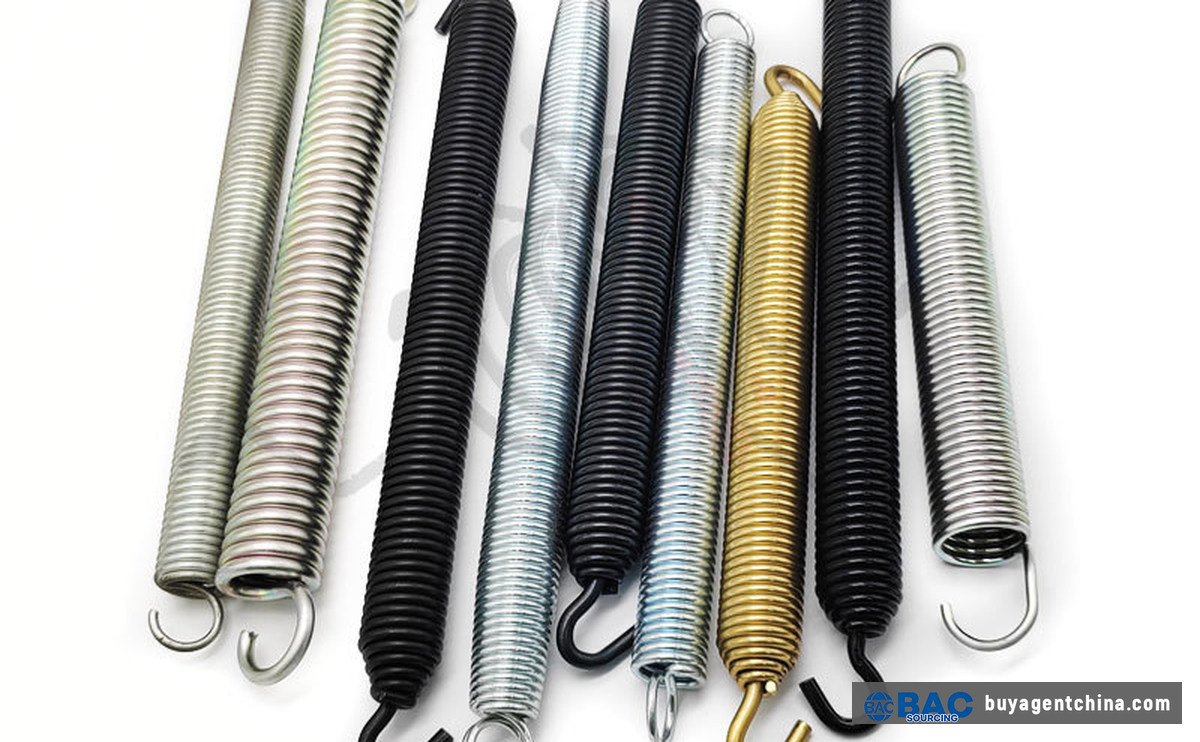
Extension springs in black e-coat, galvanized and yellow-zinc finishes — finish follows the environment

Extension springs in black e-coat, galvanized and yellow-zinc finishes — finish follows the environment

If your application is safety-critical — a brake pedal return, a trampoline frame, a latch — go a step further and ask whether the supplier can run a fatigue or salt-spray test on a sample batch, and whether they can provide the result. Springs fail in two ways: they take a set and stop returning, or they fracture after cycling. Both are invisible in a listing photo and both show up in a test a good factory can run in a day. A supplier who cannot document either is a supplier for a decorative product, not a load-bearing one.

4. Extension vs Compression vs Torsion: Pick the Right Spring

Do not order before you confirm you actually need an extension spring and not a different type. This is the category’s most expensive trap — they all look like springs to a non-engineer, and the wrong type scraps the whole mechanism.

Spring type

How it loads

Typical shape

Typical use

Extension spring

Resists a pull, pulls back when stretched

Closed coils + hooks/loops

Garage doors, trampolines, throttle return, washing machines

Compression spring

Resists a push, pushes back when compressed

Open coils

Suspension, valves, buffers

Torsion spring

Resists a twisting moment

Wound around an axis

Hinges, clamps, garage torsion bars

A fast way to tell them apart: look at the coils when the part is unloaded. An extension spring has coils pressed together with no visible gap; a compression spring shows gaps between coils. If your application applies a pulling force, you want the closed-coil part; if it applies a pushing force, you want the open one; if the force is rotational, you are in torsion territory. Get the spring rate right and the whole mechanism works; get it wrong and the order is scrap. That is an engineering problem, not a price problem — solve it before you shop, and write the spring type on the inquiry so every quote you get is for the same class of part.

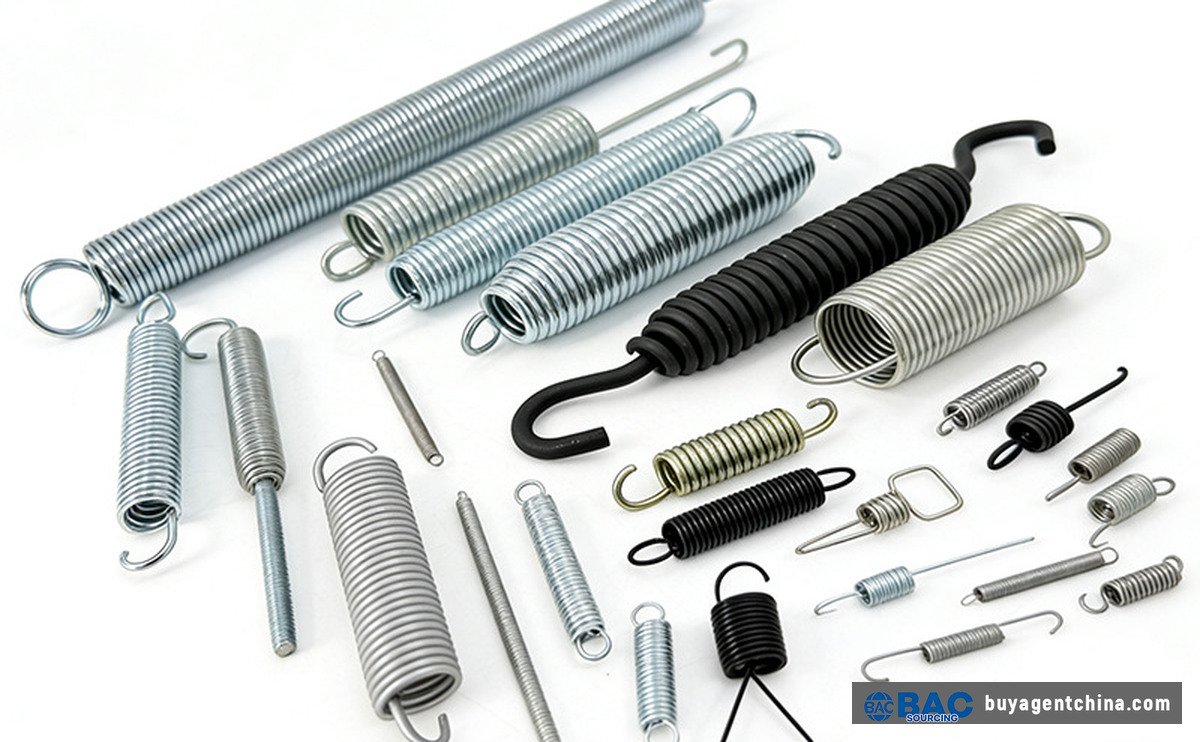
Extension, compression and torsion springs side by side — pick the type that matches the force

Extension, compression and torsion springs side by side — pick the type that matches the force

5. The Spec Sheet: Wire Diameter, Spring Rate, Initial Tension

For a custom spring, three numbers on the spec sheet matter most. The table spells out what each one is and why it moves both performance and price.

Parameter

What it is

Why it matters

Wire diameter

Thickness of the spring wire

Thicker wire carries more load and costs more

Spring rate

Force needed per unit of stretch

Sets the mechanism’s feel and load

Initial tension

Preload holding the coils together

Coils only separate once you exceed it

Free length / outside diameter

Size

Defines the mounting space

End hook / loop style

How the end attaches

Sets how the load connects


When you write to a supplier, spell out these parameters, add a drawing or a physical sample, and it beats a hundred lines of “I want something better.” Two details most buyers skip. First, spring rate and wire diameter are linked — a thicker wire means a stiffer spring, so if your application needs a specific feel, decide the rate first and let the supplier size the wire to it. Second, initial tension is invisible until the part is in your hand; a spring with the wrong preload feels loose even when the dimensions match perfectly. Translation bends technical specs, so verify every item — written numbers survive the trip from Chinese to English far better than adjectives ever do.

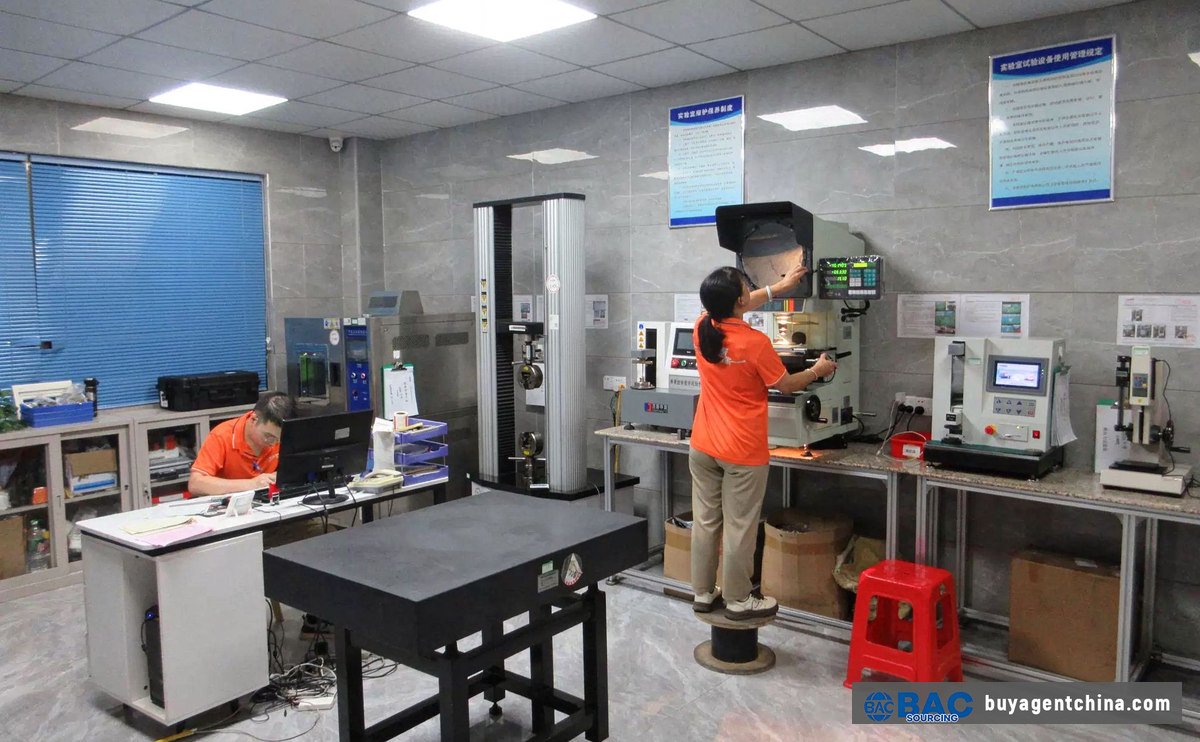
Before you commit to a batch, order samples and check them with tools, not your eyes. A digital caliper confirms the wire diameter and free length in seconds, and a simple spring tester, or even a hanging weight and a ruler, confirms whether the rate matches the drawing. Lay the samples from two suppliers side by side and compress or stretch them the same way; the difference in feel tells you more than any quote sheet. And keep the golden sample after sign-off — it is the only objective standard that protects you when the bulk arrives and looks “close but not quite.”

Materials testing machine in a testing laboratory — verify springs with tools, not eyes

Materials testing machine in a testing laboratory — verify springs with tools, not eyes

6. What an Extension Spring Really Costs

Price swings widely with material, wire diameter, order ladder and whether it is stock or custom. The ranges below are what the market actually showed in 2026 sourcing data.

Buying route

Reference price

MOQ

Note

Stock standard (1688)

from ¥1.08/pc (304, open hook, 2000+)

500–2000

Fastest for volume

Custom non-standard (1688)

from ¥5.00/pc

10–1000

To drawing or sample

316 stainless custom (Alibaba)

¥0.67–1.67/pc

100

Corrosion resistance

Galvanized stock (Alibaba)

$0.06–0.10/pc

500

Surface protection

Overall stock/custom (Made-in-China)

$0.006–3.00/pc

10–1000

Widest coverage


Two rules to carry. First, ask for the ladder price — “what are the prices at 500, 2,000, 5,000 and 20,000 pieces?” — never just “how much per piece.” A supplier who only gives you a single unit price has not thought about your volume, and you can almost always find a better tier by asking. Second, ask whether the quote includes tax and local delivery to the port, so nothing gets added later. And add a third habit that separates professionals from hobbyists: work out landed cost, not just FOB. Freight, duty and inspection on a low-value part can double its real price, and the cheapest spring at the factory is not always the cheapest spring in your warehouse. Cheap is not a sin; chasing cheap is.

7. Where China Makes Springs: Reading the Factory Clusters

The Chinese spring industry divides labor clearly, so pick the region that fits the order instead of hunting the lowest quote nationwide.

Region

Positioning

Strength

Best for

Guangdong (Jiangmen/Foshan/Dongguan/Shenzhen)

Precision-spring hub

Full supply chain, tight tolerances, export experience

Custom non-standard, precision parts, export

Xiamen, Fujian

Hardware & precision springs

Good cost control, OEM-savvy

Mid-volume OEM

Hangzhou, Zhejiang

Auto-parts cluster

Auto supply chain

Auto springs

Ganzhou, Jiangxi

Absorbing coastal transfer

Low labor cost, vertical chain building out

Mid-low-end volume


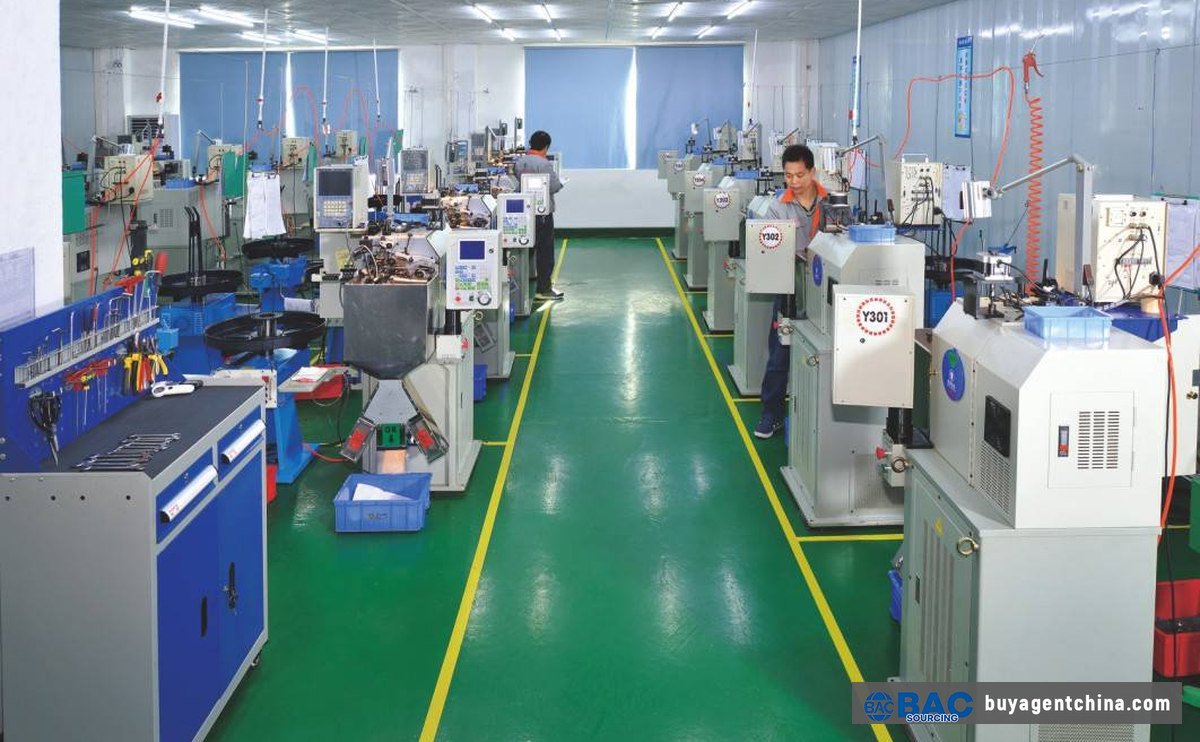
When you shortlist factories, do not judge from a quote sheet alone. Spend ten minutes in the workshop. Are the coiling machines running or sitting idle? Are the molds and dies numbered and maintained? Is the QC bench actually used, with inspection records you can flip through? Does the floor have oil everywhere or is it swept? A shop too lazy to wipe the oil off the floor is not one you expect to hold your tolerances. Springs fail on fatigue and dimension, and both are decided in the workshop long before the part ships. A real factory can show you a hardness tester and a spring-load tester; a trading desk that resells someone else’s stock usually cannot.

One more vetting habit that pays off: ask for a short factory video of the coiling line running your type of part, and a close-up of the load tester reading. A live clip is far harder to fake than a logo on a website, and it tells you whether the shop is making springs or just marketing them. Cross-check the video against the address and phone on the business license; if the details do not line up, treat that as a red flag and move on.

Precision spring workshop in Guangdong — judge the factory in the workshop, not the quote

Precision spring workshop in Guangdong — judge the factory in the workshop, not the quote

8. Direct Factory vs Sourcing Agency

Beyond choosing the spring, this is the other big fork. For an engineered component like an extension spring, whether to use an agency depends on what your time is worth, how big the orders are, and how much risk you want to carry. The honest answer is that neither route is always right; the right one depends on your situation.

8.1 Direct Factory vs Agency

Dimension

Direct from factory

Using an agency

Paper cost

Lowest (no fee), high hidden costs

A service fee, low hidden costs

Communication

Slow — language, time zones, distortion

Fast — the agency talks to factories in Chinese

Quote accuracy

Hard to judge, padded quotes common

Knows the market, pushes quotes near the floor

Inspection

Almost none unless you fly over

Core value: on-site checks, line follow-up

After-sales

You argue alone

A supplier ledger and dispute handling

The verdict: if you are a veteran moving dozens of containers a year with someone on the ground in China, direct sourcing leaves you the most margin. If you are new, your orders are mid-sized, or you have already been burned by language and inspection, a transparent-fee agency is often cheaper on total cost — the price it negotiates off the factory usually exceeds what it charges. The single most important thing to check with any agency is fee transparency: can you see the original factory invoice, is the commission separate from the factory price, and is inspection actually performed on the line? An agency that hides its markup is just an expensive middleman.


8.2 Small Test Order vs Bulk Order

A small order is not a scaled-down big one; it is a different business. For a small test run (100–1,000 pieces), buy stock or a re-branded shell, ship by courier or air, and skip sea LCL — the fixed fees eat your margin. Even on a small order, arrange one inspection or you are not testing real quality; a sample that passes in a photo can arrive with hooks bent and coils sprung. For bulk (5,000+ pieces or a full container), go OEM/ODM, put the spec in the contract, sign a physical golden sample that becomes the only acceptance standard, split payment as 30% deposit with the balance after inspection, and book FCL two to three weeks ahead. Between the two, most buyers who treat a test order as a miniature version of a big order — same paperwork, same inspection, same payment discipline — come out ahead, because they learn the supplier before they commit the capital.

9.Frequently Asked Questions (FAQ)

Q1. What is the minimum order for extension springs?

A1. Stock standard parts usually start at 500 pieces, and some factories ship from 200; custom non-standard parts can go down to 10–100 pieces depending on wire diameter and process complexity (2026 market levels).

Q2. How do I choose between music wire and stainless steel springs?

A2. Judge by environment. For dry indoor use on a budget, music wire or galvanized; for damp or outdoor use where rust matters, start at 304; for marine or aggressive environments, use 316. Put the grade in the contract and request a material certificate.

Q3. What happens if I get the spring rate wrong?

A3. The rate sets the mechanism's feel and load. A wrong figure means at best a stiff or loose mechanism, at worst a scrap batch — it is an engineering decision, so fix the drawing before you fix the price.

Q4. How long does custom spring sampling take?

A4. Non-standard parts typically sample in 3–7 days, then bulk production runs 15–25 days, depending on wire diameter and hook complexity. Lead times stretch noticeably during peak season or around Chinese New Year.

Q5. Which HS code covers extension springs?

A5. Steel springs fall under HS 7320: helical springs under 732020, and other springs under 73209090. Classify by material and function, and confirm with customs — a wrong code can hold or fine a shipment.

Q6. Is a sourcing agency or direct sourcing more cost-effective?

A6. Direct looks cheaper on paper, but inspection, communication and after-sales are hidden costs. For mid-sized orders, a transparent-fee agency is usually cheaper on total cost — what it negotiates off the factory price often beats its fee. For big orders, veterans with people in China, direct wins on margin.

Leave a Reply

Your email address will not be published. Required fields are marked *