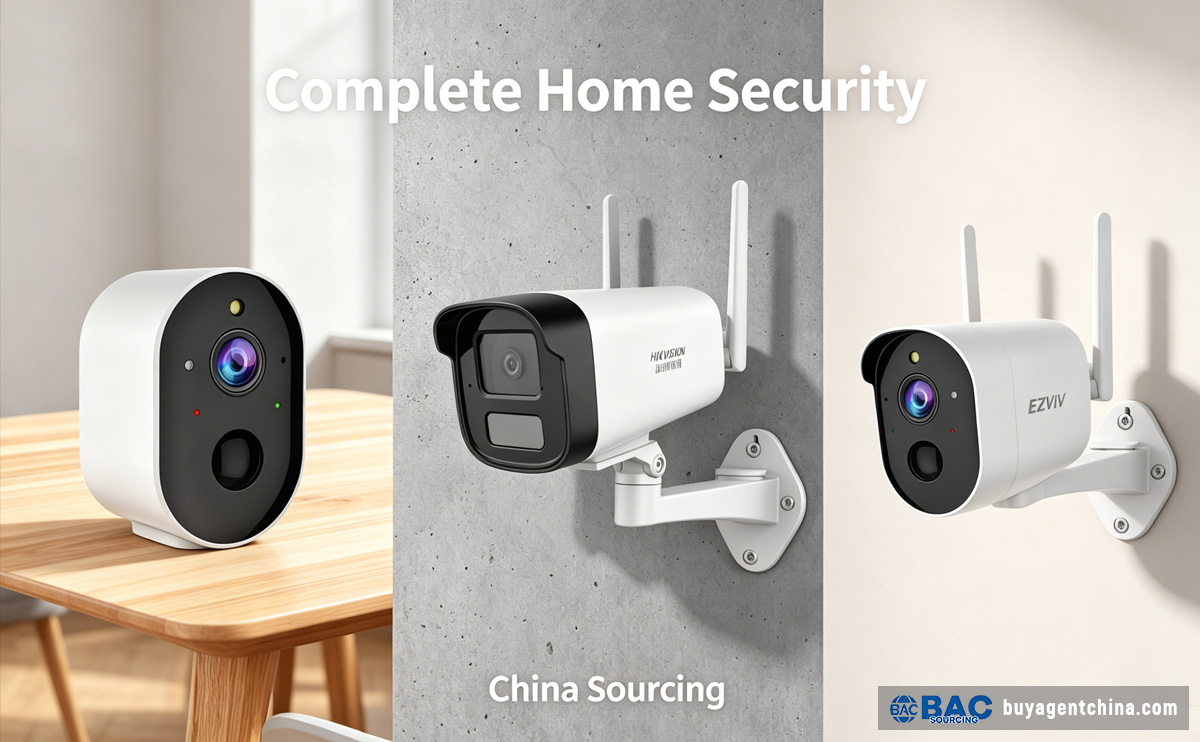
Procurement Guides, Sourcing Tips

How to Source Security Cameras from China ?

How to Source Security Cameras from China 00

Hubs, Products, Challenges & Agent Guide 2026

For importers, distributors and cross-border e-commerce sellers worldwide, China remains the undisputed global hub for security camera manufacturing, supplying over 62.5% of the global surveillance market. With mature industrial clusters, a full spectrum of product tiers and robust export infrastructure, it offers unrivaled cost and variety advantages for buyers of all sizes.

However, navigating the Chinese supply chain is rarely straightforward. First-time buyers often struggle to identify the right production regions, select market-fit products and avoid low-quality traps. Even experienced importers face persistent on-the-ground frictions from language gaps to quality control failures that erode margins and delay shipments.

This complete guide breaks down China’s security camera production landscape, top product categories, latest 2026 export data, the real-world challenges of direct factory sourcing, and a full comparison of working with a local sourcing agent, plus answers to the most frequently asked questions for international buyers.

How to Source Security Cameras from China 01

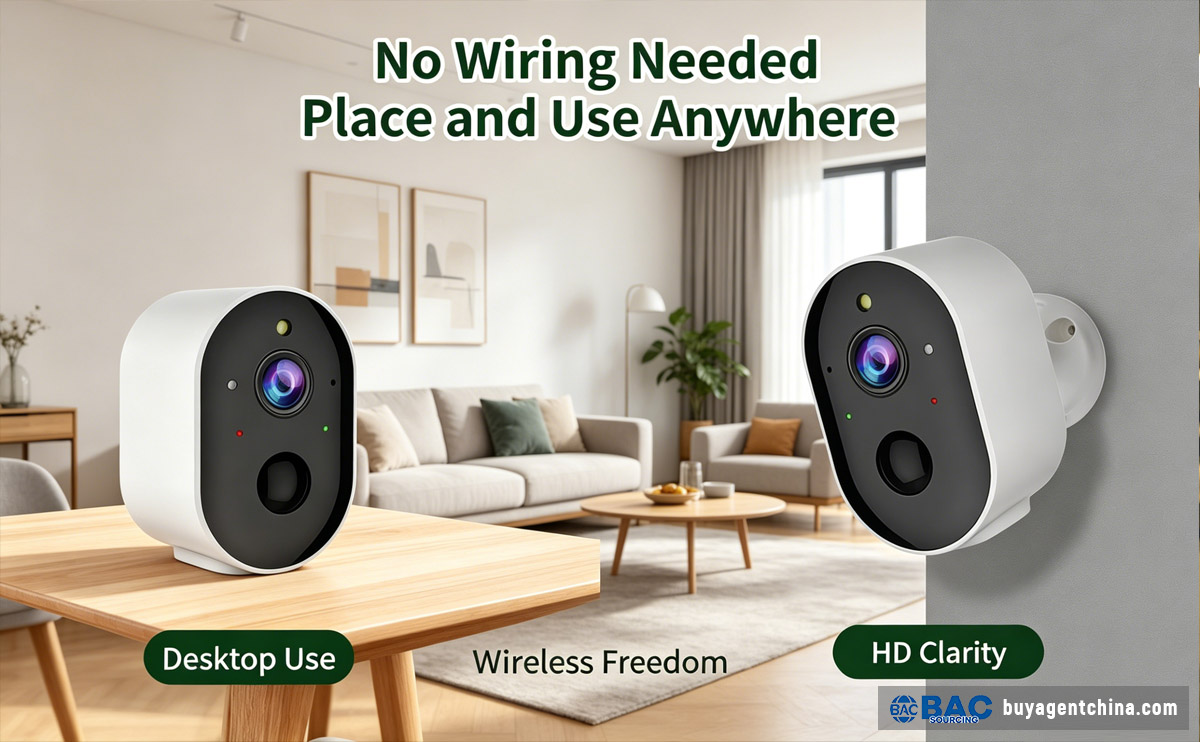
How to Source Security Cameras from China 01 No Wiring Needed Place and Use Anywhere

1. China Security Camera Production Landscape & 2026 Export Trends

Before you source security cameras from China, understanding the regional industry layout, product mix and market trends is the first step to cutting trial-and-error costs by over 30%.

1.1 Major Production Hubs: Strengths & Ideal Use Cases

China’s surveillance industry has formed a clear specialized division of labor across five core clusters. Each region differs in product positioning, pricing structure, after-sales capability and target export markets.

Production Cluster

Core Cities

2025 Output Share

Core Strengths

Sourcing Advantages

Key Considerations

Ideal Export Markets

Pearl River Delta Cluster

Shenzhen, Dongguan, Guangzhou

~39%

Full supply chain support, strong mass production capacity, convenient export logistics, mature OEM/ODM services

Fast lead times, customizable options, widest product range, accepts both small and large orders, broad price range

Highly mixed manufacturer quality; build quality and chipset solutions require verification; white-label products lack standardized warranty

Global full-category demand, cross-border e-commerce, small-to-medium overseas buyers

Hangzhou Bay Cluster

Hangzhou, Huzhou

~27%

Headquarters of top brands, industry-leading AI R&D, mature solution portfolios, consistent quality

Extremely low failure rates, advanced smart features, strong brand recognition, complete after-sales system

Higher unit prices, high customization thresholds, costly for small-batch orders

High-end European & American markets, government & enterprise projects, smart city initiatives

Yangtze River Delta Component Cluster

Suzhou, Nanjing

~13%

Leading high-end optical lenses, special-purpose cameras, industrial-grade equipment manufacturing

Strong competitiveness in industrial, explosion-proof and weather-resistant products; top-tier core component quality

Average cost-performance for consumer-grade models; product line leans toward niche industrial use cases

Industrial projects, energy & chemical engineering, high-end security installations

West Taiwan Strait Production Zone

Fuzhou, Xiamen

~9%

Ultra-low costs, high concentration of export-focused manufacturers, strong low-end mass production capacity

Unbeatable low pricing, ideal for volume orders, healthy margins for bulk purchases

Limited smart features, average build quality, only suitable for entry-level markets

Southeast Asia, Africa, Latin America and other value-focused markets

Other Regional Hubs

Hefei, Beijing-Tianjin, Chengdu

~12%

Strong industry customization and overseas project solution delivery capabilities

Mature project-based solutions, well-suited for overseas smart city and infrastructure projects

Limited small retail order availability; focuses on large-scale project partnerships

Middle East, Africa, Belt and Road infrastructure markets

Quick Sourcing Match Guide

1. For cross-border e-commerce, mixed small-batch trial orders and full-category stock: prioritize Shenzhen and Dongguan, home to the densest network of China security camera manufacturers.
2. For overseas government & enterprise projects, high-end AI deployments and branded orders: partner with top Hangzhou brands including Hikvision, Dahua and Uniview.
3. For industrial explosion-proof equipment, special security systems and high-end lenses: source from Suzhou and Nanjing.
4. For low-end volume distribution and budget-focused orders for developing regions: consider manufacturers in Fuzhou and Xiamen, Fujian.

1.2 Top Product Categories & 2026 Export Market Share

Poor product selection is the top cause of slow-moving inventory — either overloaded with unnecessary features that drive up costs, or underconfigured to meet local demand. The table below shows the latest export value shares and typical use cases for each core category, based on 2026 customs data.

Product Category

Core Features

Ingress Protection Rating

Primary Use Cases

2026 Export Value Share

Sourcing Recommendation

IR & Full-Color Bullet Cameras

All-in-one housing, built-in illumination, water & dust resistant, simple installation

IP66/IP67

Residential communities, industrial parks, roads, outdoor storefronts

~34%

The top-selling volume driver globally and a must-have core SKU; prioritize full-color upgraded versions

Standard Box Cameras

Interchangeable lenses, long-range telephoto capability, excellent heat dissipation

Indoor standard / outdoor housing required

Toll gates, entry/exit points, long-range perimeter monitoring

~28%

A staple for engineering projects, ideal for overseas infrastructure and industrial park projects

Turret Dome Cameras

Low-profile, vandal-resistant, wide-angle coverage, designed for indoor use

IP40 / IP66 options

Malls, offices, elevators, hotel interiors

~19%

A standard pick for indoor scenarios with low inventory risk and high reorder rates

PTZ Speed Dome Cameras

360° rotation, optical zoom, smart cruise, auto-tracking

IP66+

Public squares, traffic intersections, border zones, large campuses

~9%

A high-margin category for mid-to-high end engineering projects; not recommended for low-price volume distribution

Indoor PTZ Home Cameras

WiFi wireless, two-way audio, motion tracking, no wiring required

No outdoor protection

Home monitoring, small shops, short-term rentals

~6%

A top seller for cross-border e-commerce, lightweight, low price point, fast turnover

Fisheye Panoramic Cameras

360° blind-spot-free coverage, wide area coverage per unit

Customizable

Convenience stores, small offices, elevators

~4%

A niche category; stock in moderate quantities and reorder based on targeted demand

Key Technology Upgrade Trends for 2026

1. Prioritize AI-enabled IP cameras: AI models already account for over 45% of total export value, making them the only category growing in both volume and average price. With face recognition, license plate recognition and behavior analysis features, they fit high-end demand in Europe, North America and the Middle East.
2. Exercise caution with analog/coaxial inventory: Legacy AHD/CVI formats only serve retrofit markets in Southeast Asia and Africa, with steadily shrinking market share. Large-volume stockpiling is not recommended.
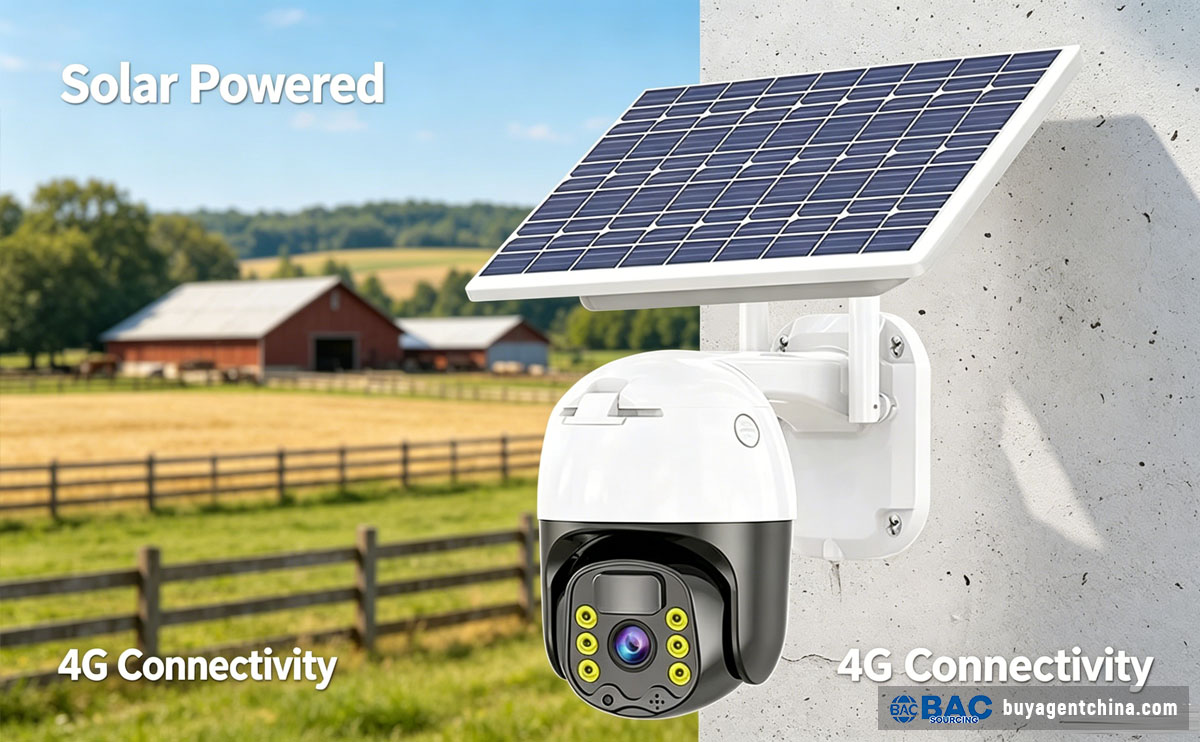
3. Focus on high-growth niche categories: Solar 4G off-grid cameras, low-power battery cameras and starlight full-color models have seen explosive overseas demand in 2026 and offer strong differentiated competitive advantages.

1.3 Latest Export Data & Global Market Performance

Official customs data from 2023 to 2026 shows clear shifts in industry growth logic and market demand, which should guide your purchasing strategy when you buy bulk security cameras from China.

Time Period

Export Value (USD Billion)

Export Volume (Billion Units)

YoY Value Growth

Average Price Change

Sourcing Market Insight

Full Year 2023

15.70

1.29

Post-pandemic recovery baseline, industry focused on low-price volume

Full Year 2024

17.165

1.43

+9.3%

-1.2%

Volume growth with price declines; fierce competition among low-end white-label productsz

Full Year 2025

17.82

1.48

+3.8%

+0.7%

Structural upgrade underway; AI models drive slight recovery in average prices

Jan–May 2026

7.23

0.57

+10.5%

+4.2%

Stable volume, rising prices; high-end smart products become core profit driver

Key Market Takeaway: The industry’s growth logic has shifted from “volume and price competition” to “intelligence, quality, and integrated solutions.” Overall average prices continue to rise, profit margins for low-end white-label goods keep shrinking, and AI-enabled, full-color and 4G solar categories deliver the most stable profit potential.

Top 8 Global Sourcing Destinations (Jan–May 2026)

Rank

Country / Region

Export Value (USD Billion)

YoY Growth

Recommended Product Focus

1

United States

1.72

-8.3%

Compliant white-label and OEM models to avoid brand-related tariff risks

2

Netherlands (European transit hub)

0.98

-2.1%

Standard HD IP cameras, commercial-grade models compliant with EU standards

3

Saudi Arabia

0.57

+42.6%

AI-enabled cameras, high-end domes, outdoor full-color engineering models (ultra-high growth)

4

Japan

0.47

+12.3%

High-quality, high-reliability commercial models with strict certification requirements

5

Vietnam

0.39

+18.5%

Full range of standard models for broad market distribution

6

India

0.36

-5.2%

Ultra-budget entry-level models; exercise caution with large bulk orders

7

Poland

0.29

+57.4%

Top-performing Eastern European market; surging demand for outdoor weatherproof cameras and engineering domes

8

United Arab Emirates

0.25

+35.8%

Smart security solution packages, premium residential and commercial full-category models

How to Source Security Cameras from China 02

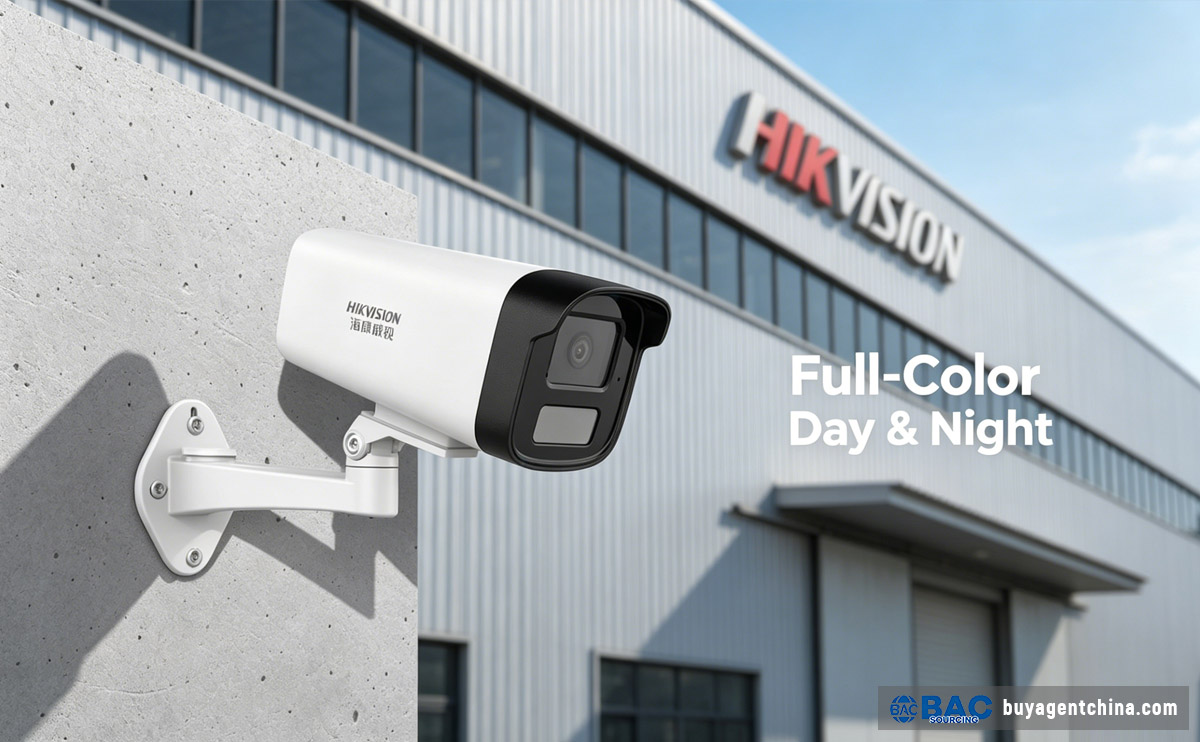
How to Source Security Cameras from China 02 Full-Color Day & Night

2. Core Challenges of Sourcing Security Cameras Directly from China

Even with clear knowledge of production hubs and product trends, sourcing directly from Chinese factories comes with consistent hidden barriers for overseas buyers. These frictions apply to both first-time importers and experienced procurement teams.

2.1 Language Barriers & Business Cultural Misalignment

Most sales staff at small and mid-sized factories only have basic English proficiency. When discussions move to technical specifications, custom design requirements and warranty terms, misinterpretation is extremely common.

Beyond language, differences in business culture create further friction: negotiation styles, lead time expectations and accountability norms vary greatly from Western standards. It is not unusual for buyers to receive samples that match requirements perfectly, only to find bulk production falls short of agreed standards due to miscommunicated expectations.

2.2 Supplier Verification & Quality Control Risks

China is home to tens of thousands of security camera suppliers spread across Shenzhen, Hangzhou and Fujian. Remote buyers cannot audit actual production capacity, quality control systems or factory credentials on site.

Trading companies frequently pose as direct manufacturers, and some factories cut corners on internal components to lower costs. Without independent pre-shipment inspection, quality issues are often only discovered after goods arrive at the destination port — at which point returns, replacements and cross-border claims are slow, expensive and often unproductive.

2.3 Compliance & Customs Clearance Complexities

Import rules for electronic security products vary widely by market. The EU requires CE and RoHS certification, the US mandates FCC compliance, and many emerging markets demand CB certification or local approval documents.

Many small manufacturers do not hold valid, up-to-date certification files, and lack experience with export declaration, tariff classification or certificate of origin processing. New buyers regularly face cargo detention, steep demurrage fees and rework costs due to incomplete or incorrect paperwork.

2.4 Logistics & Shipping Uncertainties

Moving goods from a Chinese factory to an overseas warehouse involves multiple stages: domestic trucking, export customs, sea/air freight, destination clearance and last-mile delivery.

Small-volume buyers rarely qualify for competitive freight rates. Coordinating across multiple service providers also makes it difficult to assign responsibility for damage, loss or transit delays. During peak seasons, port congestion and container shortages can cause weeks of delay, disrupting sales schedules and project deadlines.

2.5 High Overhead for Multi-Vendor Supply Chain Management

If you source different product lines from multiple suppliers across different regions, coordinating orders, tracking production, arranging consolidated shipping and handling after-sales issues consumes enormous time and energy. Building and maintaining an in-house sourcing team in China is prohibitively expensive for most small and mid-sized buyers.

How to Source Security Cameras from China 03

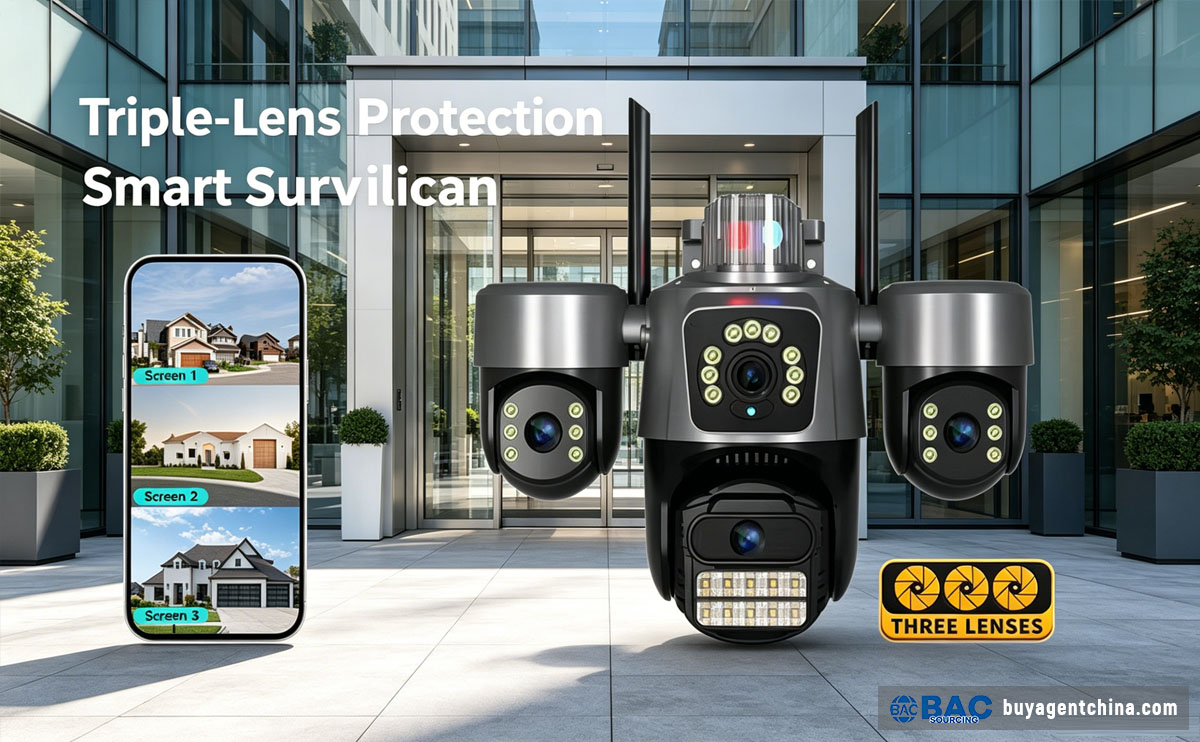
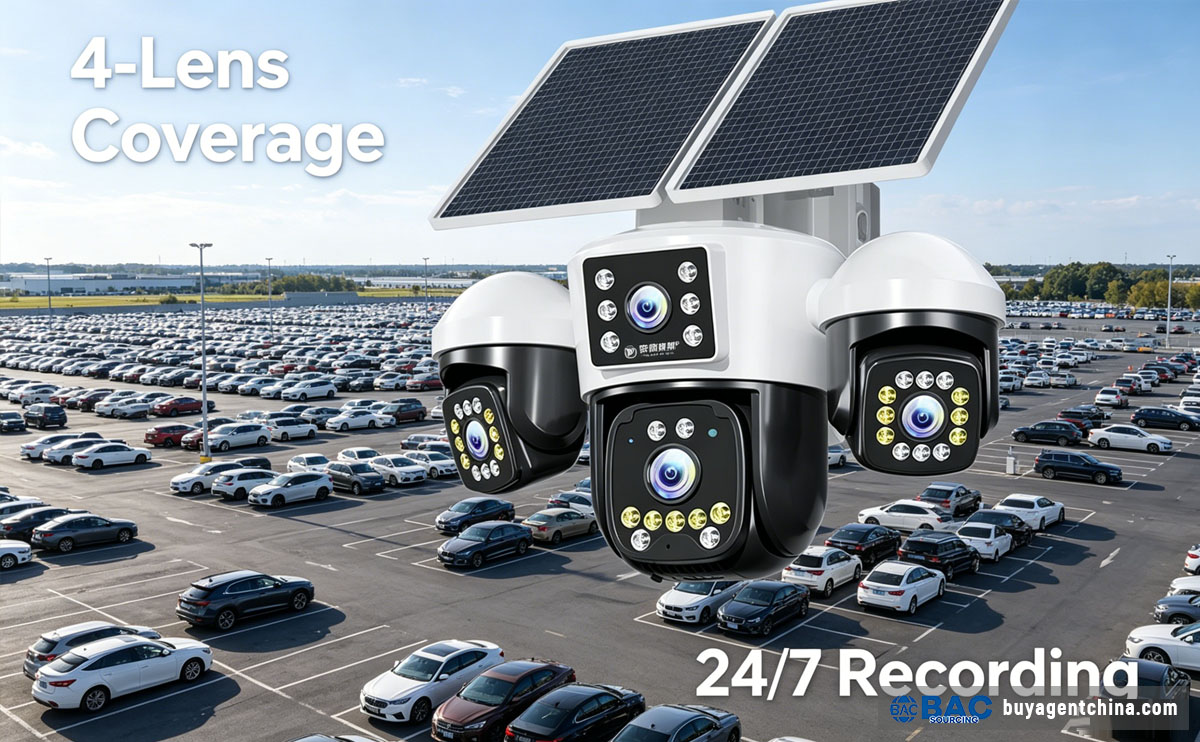
How to Source Security Cameras from China 03 Triple-Lens Protection Smart Survilican

3. Direct Factory Sourcing vs. Local China Sourcing Agent: Full Comparison

There are two primary procurement models for sourcing security cameras from China, each with distinct advantages and drawbacks. The right choice depends on your order volume, in-house resources and risk tolerance.

Aspect

Direct Factory Sourcing

Working with a China Sourcing Agent

Cost Structure

No intermediary service fee, so unit prices appear lower; but small orders rarely qualify for the best factory rates, and standalone logistics costs are higher

Charges a transparent service fee, but secures lower factory prices through consolidated order volume; LCL consolidated shipping reduces per-unit logistics costs for predictable total spend

Communication Efficiency

Requires coordinating with multiple factories directly; time zone and language gaps cause delays, errors and repeated follow-ups

Local native-speaking team familiar with factory operations; clear requirement transmission and dedicated account management with fast, consistent response

Quality Assurance

Relies solely on factory self-inspection; no independent verification for bulk goods; cross-border warranty claims are difficult and slow

Multi-stage inspection available: pre-production, in-line and pre-shipment checks based on agreed AQL standards; issues are resolved domestically before goods leave China

Compliance & Customs

Buyers must research certification rules and prepare all documents independently; high risk of cargo detention due to non-compliance

Familiar with import standards across major markets; assists with certification applications and full set of customs documentation to reduce detention risk

Time & Effort

Significant time spent on supplier screening, order tracking, problem solving and logistics coordination

End-to-end handling; buyers only confirm requirements and receive goods, freeing up time for front-end sales and business growth

Risk Management

All quality, delivery and logistics risks are borne entirely by the buyer; cross-border dispute resolution is slow and high-cost

Agent oversees risk across the full process; on-site mediation of issues delivers much faster resolution and lower financial exposure

Ideal Buyer Profile

Large enterprises with established China sourcing teams and deep on-the-ground supply chain experience

First-time buyers, small-to-mid sized businesses, multi-product sourcing, and buyers requiring strict, consistent quality control

How to Source Security Cameras from China 04

How to Source Security Cameras from China 04 Solar Powered 4G Connectivity

4. How a Trusted Local Sourcing Agent Streamlines Your Procurement

A reputable China-based sourcing agent acts as your dedicated on-the-ground procurement office, addressing every pain point of direct sourcing at the source.

4.1 Targeted Supplier Matching & Negotiation

Experienced agents know the real capacity, quality positioning and pricing structure of factories across every major industrial cluster. They match you with factories aligned to your target market, budget and certification requirements, and filter out trading companies posing as manufacturers and low-quality low-price traps. Their consolidated purchasing power also secures better pricing than most individual buyers can negotiate, often offsetting the service fee entirely.

4.2 End-to-End Quality Control & Inspection

From sample confirmation and raw material verification, to mid-production checks and pre-shipment AQL standard sampling, an agent enforces your quality standards at every production stage. Defective products are intercepted early, and any issues can be negotiated with the factory for rework or replacement immediately — before goods leave the country.

4.3 One-Stop Compliance & Logistics Support

A good agent assists with product certification applications, export customs declaration, certificate of origin processing, and preparation of full destination customs documentation. They also integrate sea freight, air freight and express delivery resources, offering LCL, FCL and door-to-door services with full tracking, eliminating the need to coordinate with multiple logistics vendors.

4.4 Long-Term Supply Chain Management

For buyers with regular sourcing needs, an agent manages all your Chinese suppliers on your behalf, handling order follow-up, reconciliation, reorders and new product development coordination. You work with one single point of contact to manage your entire China supply chain, reducing management overhead and improving supply chain stability.

For buyers seeking a dependable local partner with deep experience in the security equipment supply chain, BAC Sourcing (BuyAgentChina.com) offers on-the-ground support across supplier vetting, production tracking and pre-shipment quality inspections, helping overseas buyers reduce communication friction and quality risks when sourcing from China.

How to Source Security Cameras from China 05

How to Source Security Cameras from China 05 4-Lens Coverage

5. Frequently Asked Questions (FAQ)

Q1: Which Chinese region is best for sourcing different types of security cameras?

For general cross-border e-commerce and white-label bulk orders, Shenzhen and Dongguan in the Pearl River Delta are the best starting points for their wide product range and flexible MOQs. For high-end branded and AI-enabled projects, Hangzhou is home to the industry’s top manufacturers. For ultra-budget volume orders for developing markets, Fujian’s Fuzhou and Xiamen offer the most competitive pricing. For industrial and explosion-proof specialty cameras, Suzhou and Nanjing deliver the highest component quality.

Q2: What is the typical minimum order quantity for security cameras from China?

For standard white-label models, the MOQ usually ranges from 50 to 200 units. Orders with custom branding, packaging or unique technical specifications will have higher MOQ requirements, and top-tier brands also set higher minimums for authorized distribution. For small trial orders, working with a sourcing agent to consolidate orders can help lower the minimum threshold and reduce upfront trial costs.

Q3: How can I ensure bulk production matches the quality of my samples?

The most reliable method is to arrange independent pre-shipment inspection, with sampling of appearance, functionality, technical parameters and packaging according to an agreed AQL standard. You should also clearly define component models, quality standards and breach clauses in your purchasing contract. A professional sourcing agent will intervene at every production stage to maximize consistency between approved samples and finished bulk goods.

Q4: What certifications and documents are required to import security cameras?

Requirements vary by market. The EU requires CE certification and RoHS compliance; the US requires FCC certification; most Southeast Asian countries accept CB certification or require local market approval. Standard customs documents generally include a commercial invoice, packing list, bill of lading and certificate of origin. A reputable sourcing agent can verify the specific requirements for your target market in advance and help prepare a full set of compliant documentation.

Q5: How long does shipping take for security cameras from China?

For port-to-port sea freight: around 7–15 days to Southeast Asia, 25–35 days to major European ports, 15–20 days to the US West Coast and 25–35 days to the US East Coast. Add 3–7 days for customs clearance and last-mile delivery. Air freight takes approximately 3–7 days for urgent small orders. Exact timelines may vary due to port congestion, public holidays and seasonal demand.

Q6: How do China sourcing agents charge for their services?

The most common pricing model is a service fee calculated as a percentage of total order value, typically ranging from 3% to 8% depending on order size and product complexity. Some agents also offer separate pricing for one-off inspections, customs declaration and standalone logistics services. Legitimate professional agents operate with fully transparent fees and do not take hidden kickbacks from factories. The cost savings they deliver through better pricing and risk avoidance usually cover the service fee.

Q7: What should I do if I receive defective products from a Chinese supplier?

If you work with a sourcing agent, you can contact them immediately and use inspection records to negotiate rework, replacement or a refund with the factory. If the goods have already arrived at destination, the agent can mediate after-sales solutions on your behalf, with much faster resolution than remote communication from overseas. If you source directly from the factory, you will need to resolve disputes based on contract terms, which typically involves much longer communication cycles and higher administrative costs.

How to Source Security Cameras from China 06

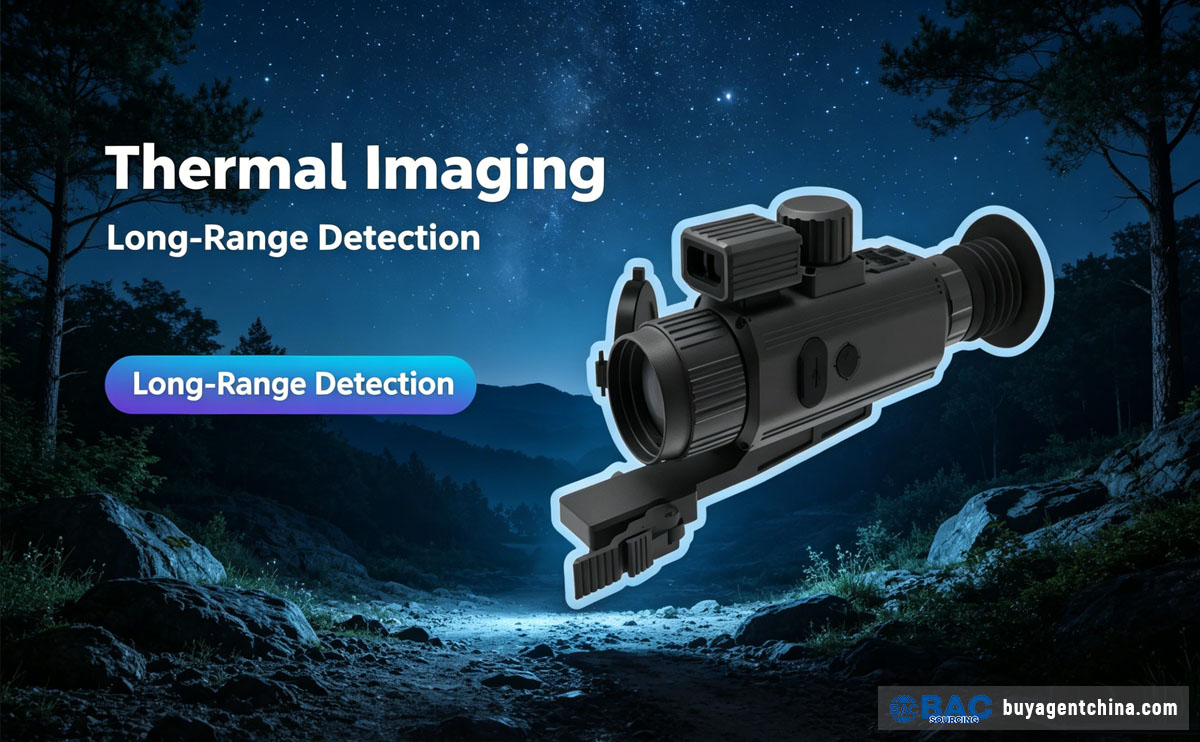
How to Source Security Cameras from China 06 Thermal Imaging

6. Final Thoughts

Sourcing security cameras from China in 2026 is no longer just about chasing the lowest unit price. Success starts with matching the right production region and product category to your target market, then mitigating operational and quality risks through a reliable local partner.

Whether you are a first-time buyer navigating the Chinese supply chain for the first time, or an experienced importer looking to streamline quality control and supplier management, aligning with the right resources will help you capture stable growth in fast-growing global markets while avoiding costly common pitfalls.

Leave a Reply

Your email address will not be published. Required fields are marked *