Custom Sourcing, Procurement Guides

How to Buy TSA Combination Locks in Bulk from China

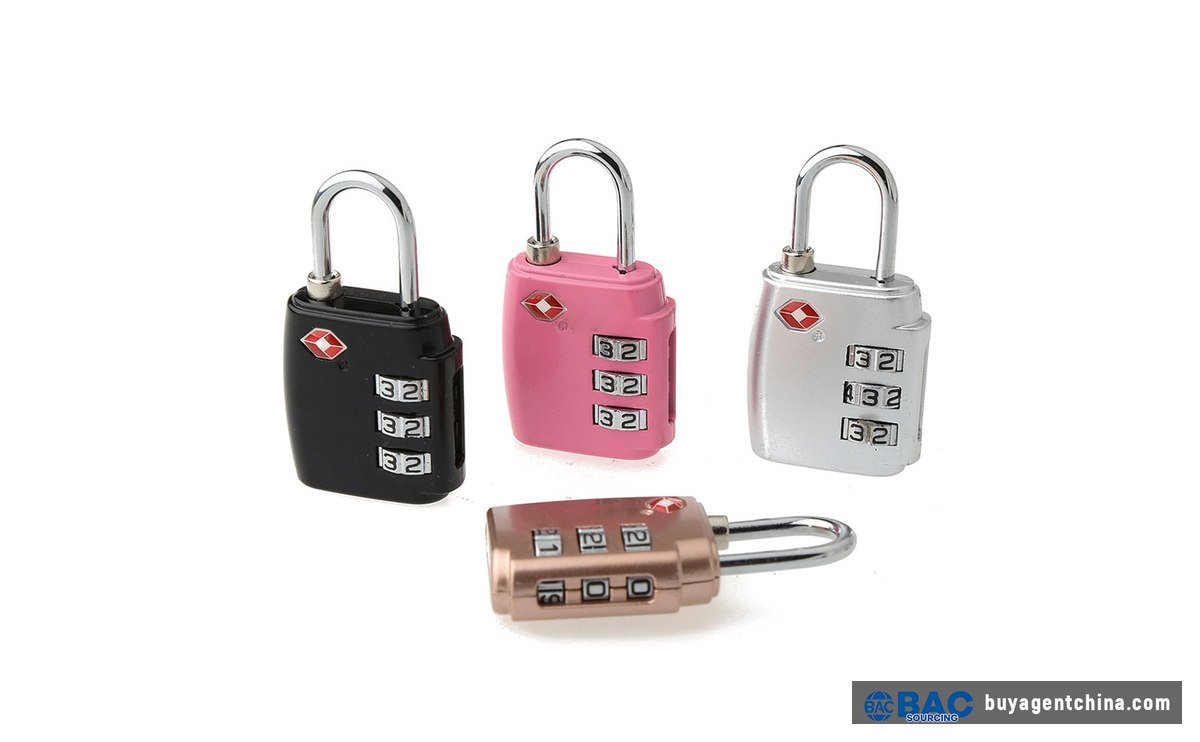
Three-dial TSA combination locks in four colours — the stock volume line

Direct Answer

Buy stock 3-dial zinc-alloy TSA cable locks at roughly USD 1.5–2.5 FOB, verify the Travel Sentry licence, then scale. China leads the world’s TSA lock supply, from Wenzhou to Guangdong.

1. Why This Guide Runs on a Six-Week Timeline

TSA combination locks are a small line in the luggage business and one of the most underestimated. The TSA-approved combination lock segment alone was worth about USD 500 million in 2025 and grows at roughly 7% a year. Count the keyed and fixed versions too, and the whole TSA luggage lock market sits near USD 1.15 billion in 2025, projected to reach about USD 2.15 billion by 2033 at a compound 8.13%. Demand is warming up on the buying side as well: US buyer activity in Alibaba’s Travel Locks category rose 86.36% year on year, with the seller count up 84.21%. Cross-border sellers are piling in.

The supply side is just as concentrated. China leads global cable-lock exports by a wide margin — about 10,000 tracked shipments and a 69% world share on Volza’s data — and padlocks under HS 8301100000 show over 6,700 export records from Chinese companies, far ahead of the next country. Wenzhou alone, the country’s self-styled lock capital, counts more than 600 lock makers and turns out over 700 million locks a year to 160-plus countries. If you are buying TSA combination locks in bulk, the map starts and ends in China.

Six weeks is enough to run a full round on this category: from the first inquiry to a landed batch. The condition is that you sequence the steps right.

Most buyers sequence them wrong. They spend two weeks on price and zero days on certification; they pick the model on instinct and leave inspection to luck. When the container reaches the dock and the red diamond on the locks turns out to be printed on, with no master-keyway behind it, that is not a two-cent mistake anymore. This guide moves week by week, and each week settles one decision that makes or breaks the order. Week 1 verifies the certification. Week 2 locks the model. Week 3 matches the region. Week 4 tests the sample hard. Week 5 watches production. Week 6 closes out paperwork, payment and landed cost.

It is written for two readers: cross-border sellers buying TSA combination locks from China for the first time, and importers a few rounds in who keep getting stuck on certification, inspection and the real cost of landing the goods.

2. Week 1 — Know What "TSA-Approved" Actually Means

The biggest trap in this category is not the price, it is the certification. Spend this week getting it straight, and the next five weeks you will be buying the right thing.

“TSA-approved” is not a certificate you can purchase. It is a licensing system, and the licensing is real. Only two organizations are licensed to manufacture TSA-recognized locks, and Travel Sentry is one of them. Travel Sentry set the technical standard for the TSA lock, built the testing and certification process new locks must pass, and licenses factories to use its marks. Every lock produced under that license carries a small royalty. The system went live across US airports in November 2003, and the master key sets now cover hundreds of airports. A screener uses the master key to open a licensed lock, inspects the bag and re-locks it without cutting anything. The red diamond is the visual signal that tells the screener this lock is part of the system. The other licensed system, Safe Skies, works on the same principle with its own mark.

That mechanism is why the mark has value and why fakes exist. Printing a red diamond costs nothing; paying the royalty and passing the testing costs real money. The gap between those two costs is exactly what a lookalike factory is trying to keep for itself.

2.1 Licensed vs Lookalike: What to Check

CheckpointLicensed lockLookalike
Red diamond / TSA markClear mark, correct placement, traceable to the systemRandomly printed, nothing behind it
Licence numberFactory shows a licence number (e.g. the LGM series)Cannot name one; “we are TSA” is all you get
Master-keywayMechanism tested by Travel Sentry; master key opens and re-locksKeyhole is decoration; the master key does not enter
PriceA few dimes to a dollar above the same unlicensed specCheaper, because the royalty was skipped
Real-world riskClears customs; inspected bags open and re-lockUnlicensed use of the mark is trademark infringement; US customs can hold the shipment; a checked bag gets the lock cut

2.2 What "TSA007" Actually Means

Plenty of purchase orders just say “TSA007” and the buyer assumes it is a model number. TSA007 is the inspection-keyway mark: you open the lock with your combination, and an authorised screener can also open and re-lock it with the compatible inspection key. The numbers that follow the T prefix are mostly the factory’s own models — TSA007, TSA330, TSA523 and TSA527 are all common market numbers. So when you ask for a quote, do not stop at “TSA007.” Ask which licensing system it belongs to, whether a licence number exists, whether the body is zinc alloy or ABS, how thick the cable is, and how many dials.

One line closes week 1: make sure you are buying the licence, not the print. That single decision decides whether the next five weeks buy you a compliant product or tuition for customs.

Video of  introduce about one supplier related to Lock

3. Week 2 — Pick the Model Before You Pick the Price

Week 2 is model selection. The model decides price, MOQ and which customers you can serve, so the order matters: ask for price first and the numbers you get back are meaningless.

3.1 Dials: Three or Four

Three dials give 1,000 combinations; four give 10,000. One extra dial adds a few dimes of cost at the factory and lets you ask two or three more dollars at retail. Volume models are almost all three-dial (price-sensitive, good enough); travel and business lines use four, where the sense of security is the selling point. Most factories make both, but the MOQ and unit price differ, so write the dial count into the inquiry.

The retail logic is the same at every shelf price. A three-dollar lock with a third dial still sits in the impulse zone. The four-dial version gives the customer a reason to pay two dollars more at the counter. The factory cost of that difference is under a dime in volume, so the margin move is almost pure upside for the seller who orders the right dial count.

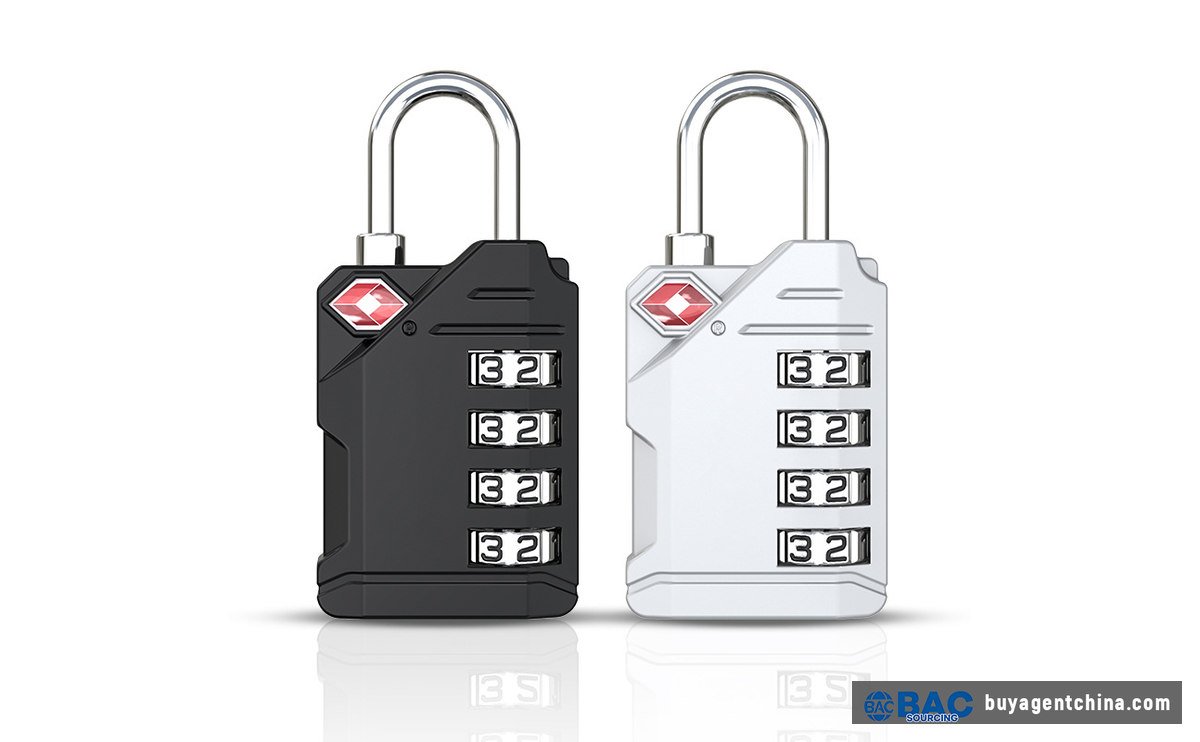
Four-dial TSA combination padlocks — the security-feel upgrade for travel lines

Four-dial TSA combination padlocks — the security-feel upgrade for travel lines

3.2 Form: Cable, Shackle, Fixed Zipper or Keyed

Cable locks are the export workhorse (69% of world cable-lock exports come from China) and thread through zipper pulls or around the handle. Shackle padlocks read more like a “real lock” to retail customers and photograph well for listings. Fixed zipper locks snap straight onto the zipper head, dominate soft luggage and carry the lowest volume price. Keyed models serve the customers who never trust a combination and quietly absorb the “I forgot my code” complaints. Write the form and the dial count into the inquiry together, so the factory cannot improvise either one.

Form also decides packaging. Cable locks and shackle padlocks hang comfortably on blister cards. Fixed zipper locks pack flat and cheaply. Keyed models need room for the key card. When you price a listing, remember: the cheapest form to make is not always the cheapest to present. A flat fixed zipper lock ships tighter and eats less carton space than a bulky cable coil.

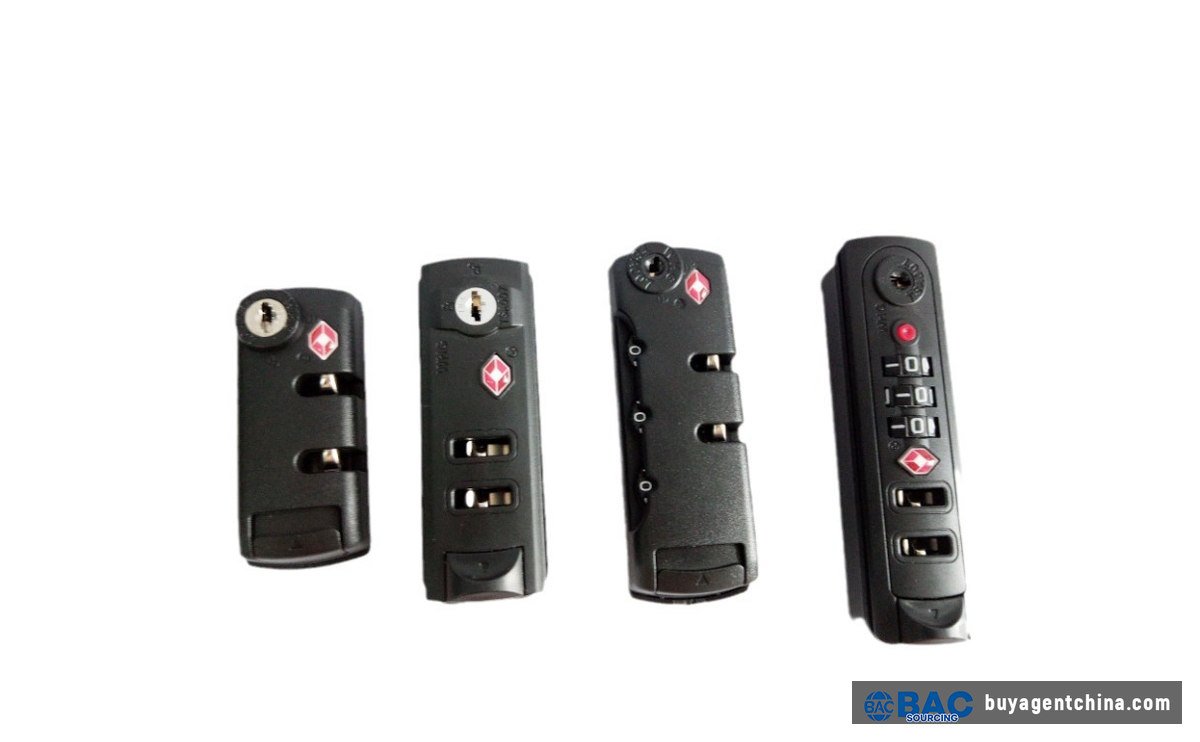
Fixed zipper TSA locks — the classic TSA007-style form for soft luggage

Fixed zipper TSA locks — the classic TSA007-style form for soft luggage

3.3 Price Ladder by Type (October 2026 inquiry basis)

TypeSpecFOB per pieceMOQ
ABS 3-dialEntry plastic bodyUSD 1.29–1.59300
PC 3-dialLight clear shellUSD 1.26–1.493–100
Zinc-alloy 3-dial cableStock volume modelUSD 1.55–2.40200–500
Zinc-alloy 4-dialTravel / business lineUSD 1.99–2.59200–500
IP66 waterproofOutdoor / business travelUSD 1.99–2.59100+
Premium customCustom colour/logo/new mouldUSD 3.50–5.501,000+

Use the domestic market as a cost check, not a bargaining chip. On 1688, a TSA335 plastic lock sits around CNY 9.7 (2,055 monthly sales). A zinc-alloy cable lock runs around CNY 9.5 (70,000+ transactions), and custom work around CNY 40. On Alibaba’s China site, 3-dial cable locks run CNY 7.24–13.87 at a 500-piece MOQ. Domestic prices carry domestic freight and channel structure — a physical exam for the price ladder, not leverage.

One worked example from an October 2026 inquiry shows the shape of a real quote. A Ningbo maker, Rato RP-064, quoted a 3-dial zinc-alloy cable lock — 3 mm cable, 80-gram body — at USD 3.68 for 100 pieces, falling to 2.53 at 500, 2.23 at 3,000 and 2.03 at 5,000. MOQ is 100, and the stated daily capacity is 50,000 units. The factory is Travel Sentry approved, prints HS 8301400000, and takes OEM customisation. The price moves with your quantity, and the licence claim is verifiable before you commit.

4. Week 3 — Match the Region to the Order, Send One Inquiry

4.1 The Region Map

RegionPositionScale anchorBest suited for
WenzhouChina’s lock capital, volume + export600+ lock makers, 700M+ locks a year, 160+ countries3-dial cable, padlock stock and large lots
NingboIndustrial base + OEMRato RP-064 3-dial cable, 50,000/day capacity, USD 2.03–3.68 at scaleCustom cable locks, mid-batch OEM
Guangdong (Dongguan/Zhongshan)Foreign-trade quality lineYifeng Lock 42M sets/year capacity, Travel Sentry licensedLicensed locks, brand and retail orders

Three regions reading the same brief will answer three different ways, and that is the point. Wenzhou comes back fast with stock lots and the tightest unit prices on cable and padlock volume. Ningbo talks tooling, plating options and OEM lead times. Guangdong leans on licensed production and retail-grade finishing for brand orders. You are not picking a winner from a brochure — you are reading three pricing philosophies against one spec sheet.

4.2 Stock vs OEM/ODM Custom

DimensionStockOEM/ODM custom
MOQ200–500Custom logo/colour 1,000+, new mould 3,000+
Lead timeFast; stock often ships within two weeksSampling 2–4 weeks + production 4–6 weeks
PriceLadder pricing, lowerSimilar unit price, plus sampling/mould fees
DifferentiationWeak; the same listing photo everywhereStrong; colour, logo and packaging are yours
RiskLow; validate the market firstHigh; sign off a golden sample before volume

One line: run the stock tier until your channel proves the price point, and let the mould follow a proven seller rather than lead it. Write the brief once and send it to all three clusters in the same week. Three regions reading the same spec sheet is the fastest education in what your order is really worth — and it is exactly the step an agent handles for you.

Channels decide how fast you get there. 1688 lets you sample a few pieces of stock at domestic prices. Alibaba’s China site gives export-ready quotes with MOQs from 500. A paid factory sample — a few dollars plus courier — puts the actual product in your hand. For a first order, take the cheapest path that achieves that, before you commit to tooling or a container.

Two language and culture notes that decide quote quality. First, write the spec sheet in both languages and ask for confirmation from a technical owner, not just the sales desk. Translation is where “3 mm cable” becomes “3 mm wire” — and nobody notices until the calliper. Second, treat the standard 30% deposit as a serious signal, not a discount point. In this category, a factory that takes your deposit lightly will treat your quality requirements the same way.

5. Week 4 — Test the Sample Hard, Sign Off a Golden Sample

A sample is a sample, and mass production is mass production — I have said it for fifteen years, and locks deserve the caution more than most: the sample that wins your approval is usually the one picked with care, while the batch arrives with flash, colour drift and a sloppy dial. Run every checkpoint below on the sample before you talk volume.

Order samples in week 3 so they land in week 4: two to three factories, one model each, the exact spec you intend to sell. Paid samples are cheap insurance — a few dollars plus courier — and they buy you the right to weigh, calliper and cycle every lock instead of trusting a photo.

What to Test

CheckpointHowFail signal
WeightScale against the spec sheetMore than ~5% light — the zinc wall was shaved
Cable diameterCalliper checkSpec 3mm, measured 2mm
Dial feel50 rotations per dial, watch for skipJumping, sticking or misaligned digits
Open-close cycle100 full cyclesLoose by cycle 80 — loose on the customer’s first trip
Master-key overrideInsert the inspection key, open, re-lockKey will not enter — fake TSA
Red diamond + licenceMatch the mark to an LGM-series numberPrint only, nothing traceable
Zipper-head fit (fixed locks)Measure the head openingUnder ~5mm it will not install — whole batch scrap

A factory that shaved the zinc wall by half a millimetre shows up on the scale before it shows up on your customer’s luggage. Sign the golden sample, photograph it, weigh it, and name it as the single acceptance baseline for the bulk run.

What you sign at that point is a contract, not a courtesy. Photograph the packaging and the carton marking as well, so the pre-shipment inspector knows what “as approved” looks like at arm’s length.

6. Week 5 — Watch Production, Run Three-Stage Inspection

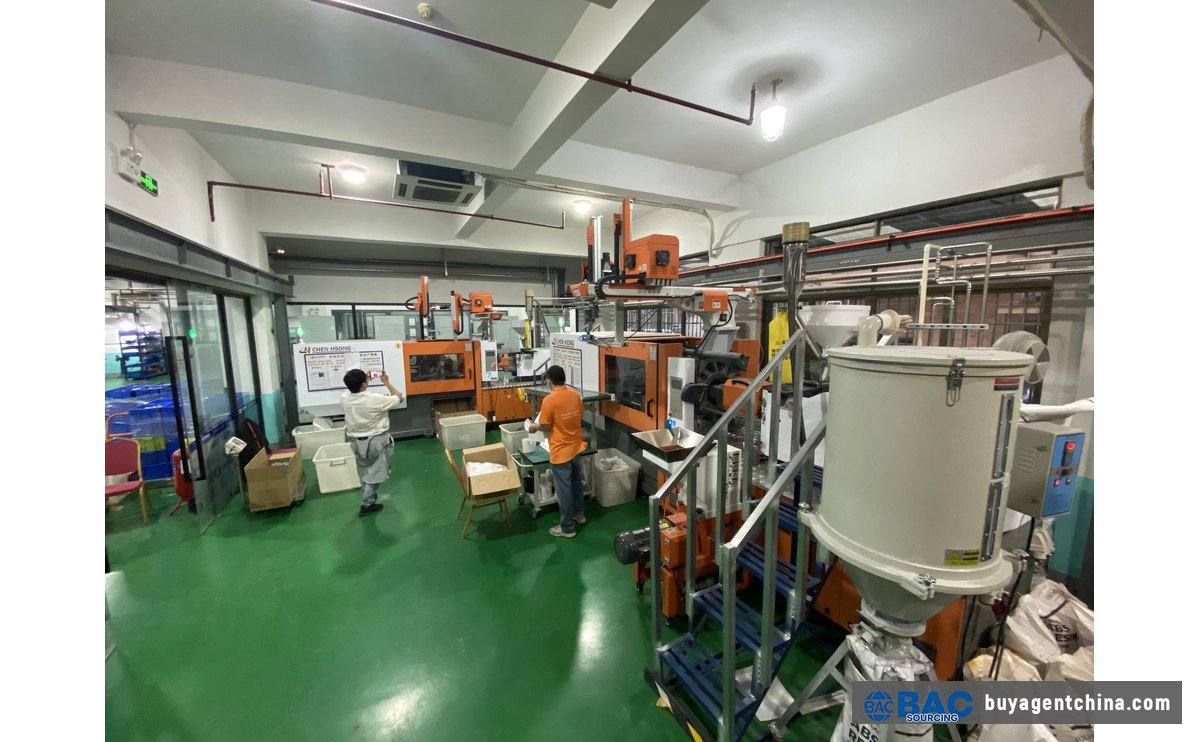
Injection-moulding workshop where ABS lock bodies are made — Chinese lock factory floor

Injection-moulding workshop where ABS lock bodies are made — Chinese lock factory floor

Inspection is not a cost. It is the only window where you can see what the bulk run actually made. Stage it three times:

StageTimingWhat to check
In-processProduction at 30–50%Dial assembly, plating, cable spec against the golden sample
Pre-shipment80–100%, before loadingAQL sampling, open-close tests, blister-card packaging, markings
Post-arrivalAfter customs clearanceCompare against the retained samples, keep evidence for claims

What the three stages actually watch for: in-process, the plating and dial assembly against the golden sample. Pre-shipment: an AQL draw with open-close tests, blister-card printing and markings. Post-arrival: a comparison against retained samples. Carton specs are part of the inspection, too. A typical 3-dial cable lock ships 360 pieces per carton at 84 × 35 × 32 cm, about 30 kg gross (supplier spec card). A 40-foot high-cube at roughly 68 CBM fits around 700 such cartons. The packing list you approve becomes the loading plan you get.

Chinese New Year (late January–February) and National Day (October 1) shut lines for one to two weeks, so place sampling and inspection windows around both dates when you schedule. Shipment before the holiday rush, not after: lines fill their remaining capacity with bigger orders first, and your batch slides to the back of the queue. A third-party inspection day runs about USD 170–200 on published agent schedules — and the inspection fee you saved comes back, with interest, in returns and ratings.

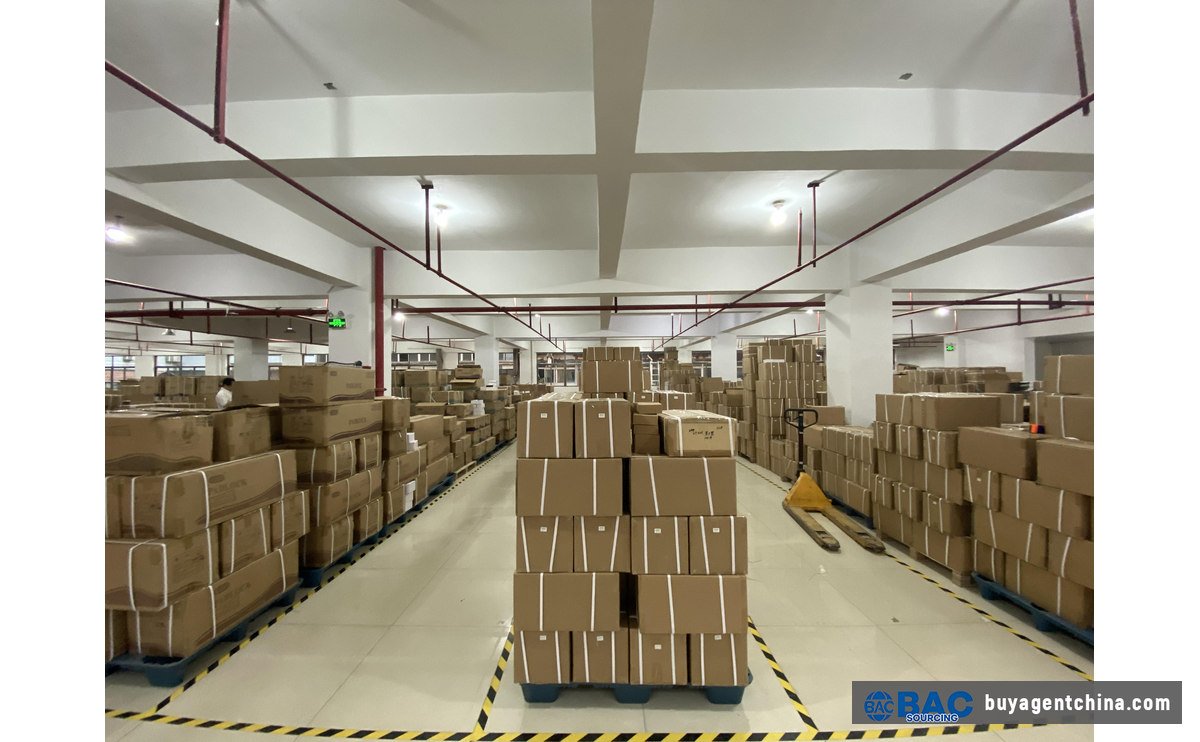
Packed cartons on pallets in the export warehouse

Packed cartons on pallets in the export warehouse

7. Week 6 — Paperwork, Payment and the Landed-Cost Math

7.1 HS Classification and Duty

ItemCode / basis
Most common for China TSA lock exports83014090 (9,872 Volza records)
Padlocks generally8301.10 (6,751 Chinese export records); China exports padlocks as 8301100000
US HTS8301.10.20, effective rate from China about 10% (2026, incl. Section 301 stacking)
EU / UK8301100000, exact rate confirmed in Access2Markets
NoteClassify from the finished product; electronic/powered variants take a different code plus battery transport rules

Get the HS code wrong, and a whole container sits at the dock while your margin disappears. When in doubt, pay for one classification consultation — it is cheaper than a container parked on the wrong code.

Why the code matters beyond the rate: 83014090 versus 8301100000 changes what the customs broker declares, which schedule the duty comes from, and which end-user checks apply in the destination market. China’s TSA locks most often move under 83014090 (9,872 Volza records) because that heading covers the lock type as a finished product; padlocks under 8301.10 are the broader family. Electronic or powered variants take a different code entirely and add battery transport rules, so a “smart lock” line is not the same import as this one.

7.2 Size the Order: Trial Lot or Full Container

Two honest sizes cover almost every first import: a trial lot that proves the model sells, or a full container that locks in the bottom of the price ladder.

DimensionTrial lotFull container
Volume1,000–5,000 piecesOne 40HQ (depends on unit weight and packing)
Channel1688/Alibaba stock + one or two factory sample ordersEnterprise package, production-line booking
PricingUpper-middle of the ladderBottom of the ladder + negotiation room
RiskLow; prove the price point and the sellable modelHigh; golden sample and all inspections must pass
ExecutionRuns even on an Entry/DIVE serviceNeeds factory visit, in-process and pre-shipment checks, full paperwork

A small order is not a scaled-down big one; it is a different business — do not drive a tricycle with a train license. If you cannot fly to the factory, the checks above are exactly what a transparent-fee agent performs for you.

7.3 Direct from Factory vs a Purchasing Agent

DimensionDirect factoryPurchasing agent (Buy Agent China style)
CostNo agent fee, but hidden costs are yoursEntry USD 29 / DIVE USD 140 / factory-visit day ~USD 170; management 3–5% (Basic) or 5–8% (Growth)
CommunicationYou carry the language and spec distortionBilingual handling, technical confirmation included
InspectionRemote = you trust photosOn-site AQL checks, staged across production
PaperworkYou research HS and duty yourselfClassification checked against current schedules first
Best forExperienced buyers, big orders, people on the groundFirst orders, mixed small lots, or when you cannot fly over

Hire a China purchasing agent for the first order, a small mixed lot, or any time you cannot be at the factory yourself. The value sits in the verification that never happens when you are remote. A transparent-fee agent, with rates and inspection standards written into the contract, is very often cheaper on a landed-cost basis. Overpay and you pay the tuition; underpay and I do.

A quick landed-cost sketch, with assumptions you can change. Take a 3-dial zinc-alloy cable lock at USD 2.00 FOB. Add ocean freight of about USD 0.08–0.12 per piece in a full container, duty near 10% on the US HTS line, plus broker and port charges. It lands at roughly USD 2.35–2.55 before local delivery. Run the same arithmetic with an agent’s fixed fees — Entry USD 29, DIVE USD 140, factory-visit day about USD 170 — spread across the batch. The per-piece cost of verification stays small. The per-piece cost of a bad batch does not. Cheap is not a sin; chasing cheap is.

8. Frequently Asked Questions (FAQ)

Q1. What is the typical MOQ for TSA combination locks?

A1. Stock zinc-alloy 3-dial cable locks commonly start at 200–500 pieces; some ABS/PC factories quote from 3–100. Custom logo/colour work usually needs 1,000+, and a new mould 3,000+. Domestic 1688 stock can be sampled from a few pieces.

Q2. How do I verify a "TSA-approved" claim? Is there a licence number to check?

A2. Look for two things: the licensed mark from the Travel Sentry system (the red diamond) and a licence number the factory can show (the LGM series, for example). A licensed lock carries a small royalty, so it costs a little more than a lookalike. A factory that cannot name a licence number and only says "we are TSA" is selling the print, not the licence.

Q3. Should I buy 3-dial or 4-dial combination locks?

A3. Three dials give 1,000 combinations; four give 10,000. Volume lines use three (price-sensitive, good enough); travel and business lines use four, where the security feel is the selling point. The extra dial costs a few dimes at the factory and lets you price two or three dollars higher at retail.

Q4. What HS code and duty apply when importing TSA locks from China?

A4. Padlocks commonly fall under 8301.10; China's TSA locks most often export under 83014090 (9,872 Volza records). The US effective rate on HTS 8301.10.20 from China is around 10% (2026, including Section 301 stacking); the EU/UK code is 8301100000, with the exact rate confirmed in Access2Markets. Electronic or powered variants classify from the finished product.

Q5. Is it cheaper to buy direct from the factory or use a purchasing agent?

A5. Go direct if you are experienced, your orders are big and you have people on the ground. Use an agent for a first order, a small mixed lot, or any time you cannot fly to the factory — the value sits in the verification that never happens when you are remote. A transparent-fee agent, with rates and inspection standards written into the contract, is very often cheaper on a landed-cost basis.

Leave a Reply

Your email address will not be published. Required fields are marked *