Custom Sourcing, Procurement Guides

How to Source Brooches from China: Factories, Prices & MOQ

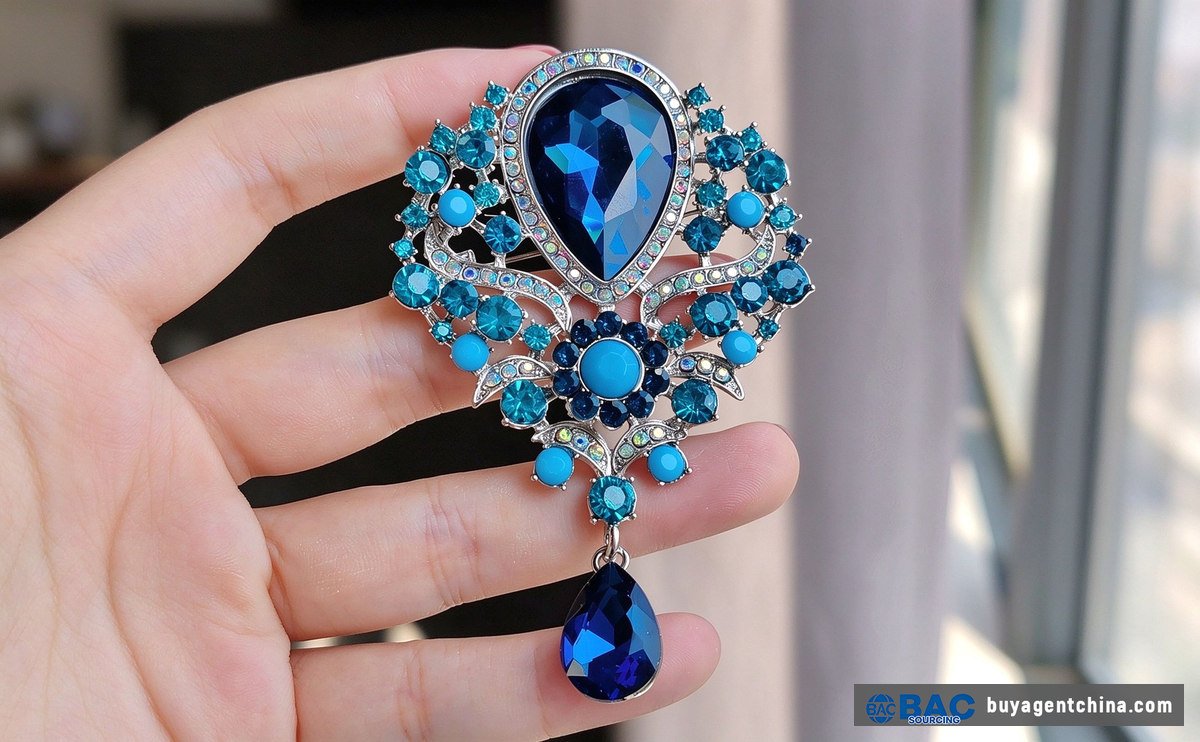
Crystal flower brooch with pendant drop — premium rhinestone tier

Most wholesale brooches run USD 0.10–1.50 FOB from Yiwu, Cangnan or Guangdong; start with stock enamel pins, then customize.

China exported roughly USD 4.7 billion of imitation jewellery in 2025, up 14.85% year on year, with about 31% of it going to the United States. The global brooch market, by the broadest counts, sits around USD 30 billion and grows roughly 7% a year. And yet most wholesale brooches leave the factory at USD 0.10–1.50 a piece.

That gap is not free money. It is a trap with a price ladder inside it. A brooch is a two-inch product with a five-step list of places to lose money — plating that tarnishes, enamel that chips, backings that bend, MOQs that trap your cash, and a container that waits at the dock on a wrong HS code. This guide follows one order the way we actually run them for buyers — from the first artwork to the last carton on the truck — and shows where the margin lives, and where it dies, at every stop.

It is written for two kinds of people: first-time importers who do not know where to start, and buyers who have sourced before but keep losing the margin somewhere between the quote and the shelf. If you fall into either group, read the factory regions, the craft table and the two order plans below before you send anyone a deposit.

1. First, Pick a Business Model: Stock Wholesale vs OEM/ODM Custom

Brooch manufacturing has no third way. You either buy models the factory already made and boxed, or you open tooling for your own design. The two routes carry completely different MOQs, lead times, prices and risks, and choosing wrong costs you the first quarter.

AspectStock WholesaleOEM/ODM Customization
Best forTesting demand, retail restock, promo gifts, small cross-border sellersPrivate label, premium lines, brand building
MOQLow: Yiwu stock suppliers talk from 1–100 pcs; Guangdong factories 10–100 pcsLogo/colour change 100–500 pcs; new mould 1,000–5,000 pcs
Lead time3–15 daysSampling 7–15 days plus bulk 20–35 days
Unit priceLowest — no mould, no design costHigher — mould, sampling and management are in the number
DifferentiationNearly none — the same model sells on a hundred listingsDesign, finish and packaging are all yours
Biggest riskCommodity price war, no moatSunk mould cost; a bad golden sample means a bad container
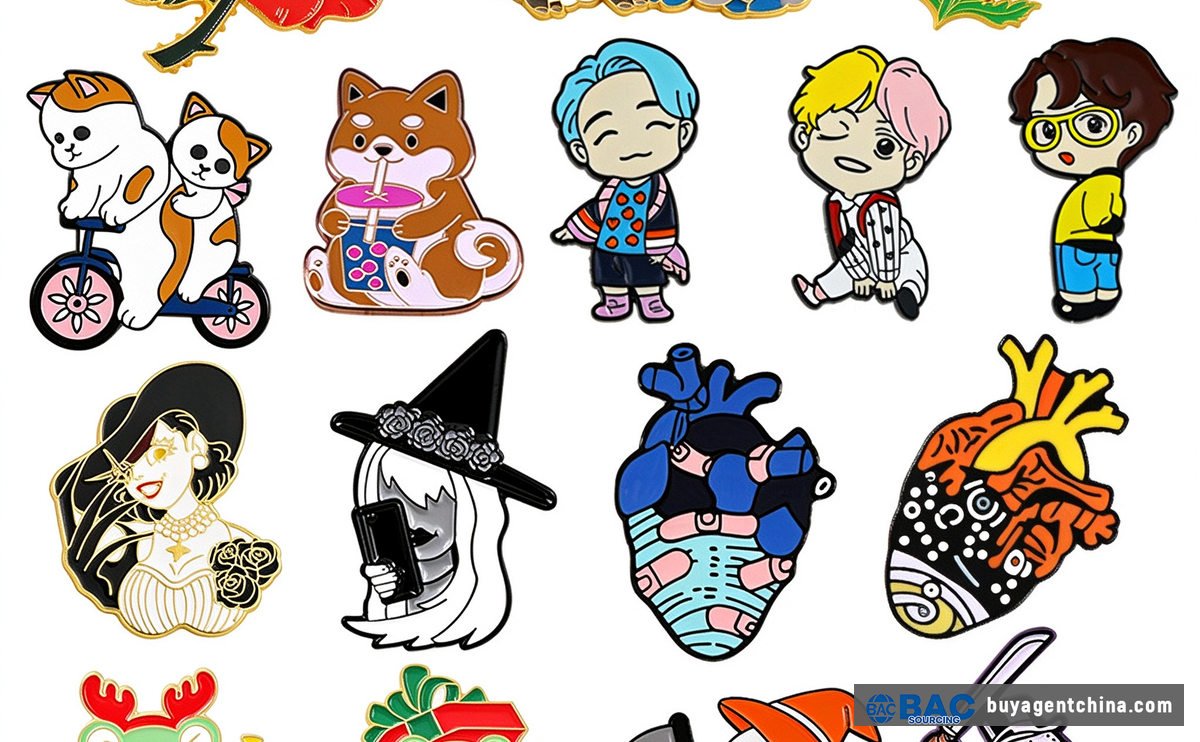
Soft enamel pin stock lot — budget tier, ready to ship from Yiwu or Zhongshan stock

Soft enamel pin stock lot — budget tier, ready to ship from Yiwu or Zhongshan stock

The one-line rule: sell a stock version before you engineer a custom one — tooling is for designs the market has already paid for. I have said it for fifteen years, and a two-inch product is exactly where it matters — a new mould usually starts at a thousand pieces, so do not open tooling for a design the market has never seen.

If you do go custom, know what the process actually costs in time, not just money: your artwork goes to a mould house for die-cutting or stamping, a colour chip and an enamel fill sample come back in 7–15 days, and the golden sample — the one piece both sides sign as the acceptance standard — is produced before bulk starts. Budget a second sampling round, because the first fill is often wrong. Two other rules: keep your vector artwork clean (the factory will quote fewer revisions), and never send trademarked or cartoon designs you do not own. The IP complaint does not care how good your pricing is.

2. The Factory Map: Brooch Manufacturers in Yiwu, Cangnan and Guangdong

China’s brooch supply chain divides the work more cleanly than most buyers expect: Yiwu does volume, Cangnan does badges, Guangdong does premium enamel and big-factory OEM. The region you pick answers two questions first: how small an order they take, and how fast they ship.

RegionPositioningTypical MOQStrengthBest for
Yiwu, ZhejiangVolume stock, fashion styles1–100 pcs negotiableMixed-lot consolidation, cross-border bestsellers, fast and cheapTesting, restock, gifts, promo
Cangnan/Wenzhou, ZhejiangBadges, medals, painted enamel100–1,000 pcsSchool/uniform badges, commemorative pins, painted enamelCustom badges, corporate merch, events
Guangzhou/Zhongshan/Shenzhen/Dongguan, GuangdongPremium enamel and hardware10–100 pcs (flexible on larger orders)Hard enamel, rhinestone setting, big-factory OEM (leading Guangzhou makers can run ten million pieces a month)Custom enamel, mid-to-premium, full containers
Fujian (Quanzhou/Xiamen area)Die-struck hard enamel10–100 pcsEU/US-bound hard enamel, die-struck stampingHard enamel badges, export orders

Yiwu is the world’s small-commodity city, and it shows: thousands of traders keep fashion brooches in stock in dozens of styles, and 1688 pages quote single-piece prices because the MOQ conversation starts at “how many dozen do you want.” It is the cheapest testing ground on the planet for a new design.

Cangnan, part of the Wenzhou badge cluster, is where school badges, uniform pins, commemorative medals and painted-enamel pieces are made. If your order is a corporate emblem or a 5,000-piece commemorative pin, this is the cluster that quotes serious factories instead of shelf stock.

Guangdong is a different league. Factories in Guangzhou, Zhongshan, Shenzhen and Dongguan run hard enamel, rhinestone setting and big OEM programs; leading Guangzhou jewellery makers list monthly capacities of ten million pieces or more. Their QC, plating lines and export paperwork are built for repeat container business. Fujian rounds out the map with die-struck hard enamel aimed at EU and US orders.

Write the brief once and send it to all three clusters. The replies will read differently — different MOQs, different lead times, different interpretations of the word “enamel” — and each difference tells you which cluster actually fits your order. The week you spend waiting costs you nothing and settles the two questions that matter: who takes your MOQ, and who ships in time.

3. The Three Parts That Decide Quality: Plating, Enamel and Backing

A brooch is small, but the three parts that decide what it is worth are not: plating decides whether it tarnishes, enamel decides the hand-feel and the tier, and the backing decides the return rate. None of the three shows up in a listing photo, so each one has to be checked on purpose.

3.1 Plating: Tarnish and Allergy Live in This Layer

Budget models use an iron base with a thin plate — half a season of wear and they rust and fade. Zinc-alloy bases feel heavier and hold up better; stainless costs more but ends the rust argument. Plating itself comes in gold, silver, antique bronze, gunmetal and ruby tones, and the thickness decides how long the colour survives.

There is also a hard regulatory door for Europe: REACH caps nickel release from skin-contact jewellery at 0.5 µg/cm² per week, and a large share of buyers are nickel-sensitive. For any brooch aimed at the EU, ask the factory for the EN 1811 nickel-release test report before you argue about the price — it matters more. In the workshop, look at the plating racks and the recorded plating thickness; if a factory cannot tell you its plating thickness in microns, that is usually exactly where the money is being saved.

3.2 Enamel: Soft, Hard or Die-Struck, Three Tiers of Selling

Soft enamel sits recessed below the metal line — fast to make, cheap, and the workhorse of volume lines. Hard enamel is ground flush with the metal, so it feels like one solid plate, looks a tier up and costs a tier up. Die-struck brooches skip enamel entirely and carry bare metal lines, the classic look for badges and vintage styles. There is also epoxy pretending to be enamel, which shines like plastic in the hand.

For custom enamel brooch pins, ask for a colour chip and a real enamel fill before bulk — renderings are not a finish. Colour also drifts between runs: the same Pantone number can come back half a shade different from another batch, so order your full quantity in one production run, or re-approve the chip before a second run starts.

3.3 Backing: Where Return Rates Are Made

A pin back with a rubber or butterfly clutch is the cheapest option and the first to bend or loosen. A safety-pin brooch clasp is sturdier. Magnetic backs do not damage fabric and hold on heavy coats, but price and pull strength move together — a weak magnet will not hold a scarf. Hat pins carry a long needle for caps.

Decide the backing mechanism in writing before you negotiate the unit price. Test it the way your customer will: bend the pin ten times, clip it on a coat lapel, shake it once. A backing that fails in your hand will fail in theirs, and that failure comes back as a return.

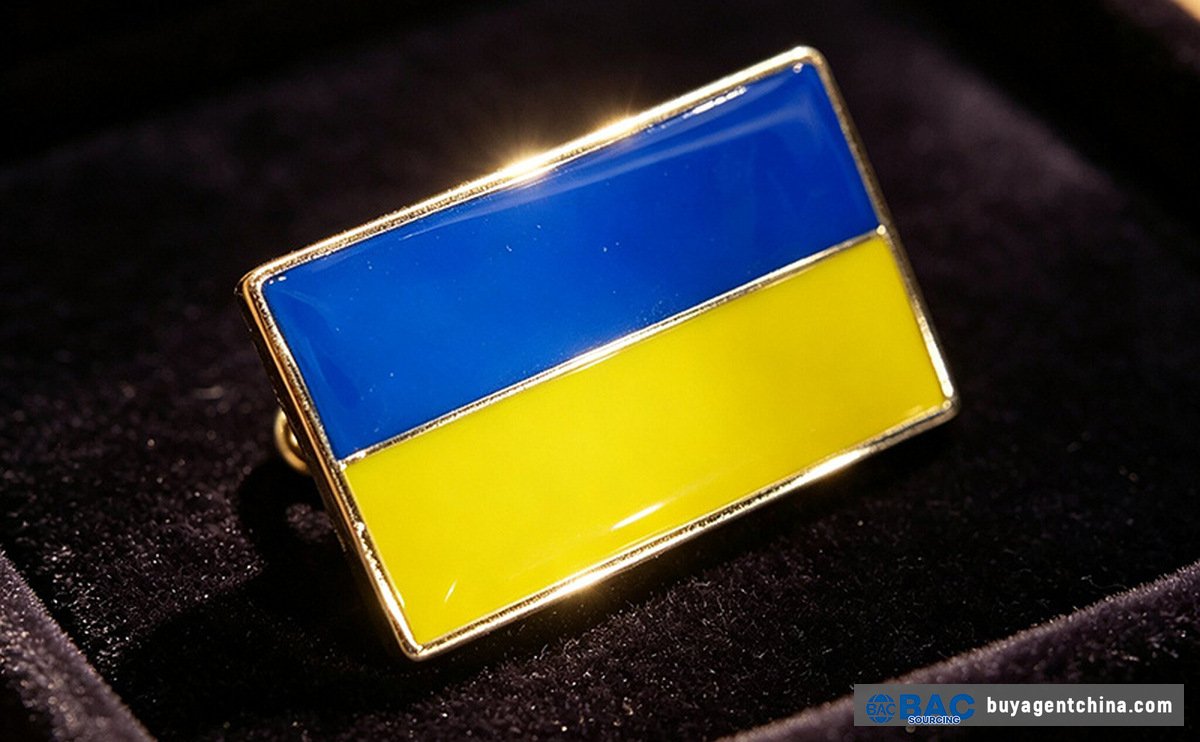
Die-struck metal brooch and hard enamel badge — custom OEM tier

Die-struck metal brooch and hard enamel badge — custom OEM tier

4. The Price Ladder: From a Dime Badge to a Premium Rhinestone

Brooch pricing is not a point; it is a full ladder. The same country, the same industry, will sell you a tinplate badge for a few mao — a tenth of a yuan — on 1688 and a rhinestone brooch for more than a dollar FOB — and everything in between.

TypeReference priceMOQUsual region
Tinplate badge / pin-back buttonCNY 0.12–0.99 (1688)StockWenzhou
Soft enamel pin (volume)USD 0.10–0.40 FOB10–100 pcsYiwu, Zhongshan
Hard enamel pinUSD 0.25–1.00 FOB50–100 pcsZhongshan, Fujian
Die-struck metal broochUSD 0.22–0.42 FOB100 pcsGuangdong, Yiwu
Fashion alloy broochUSD 0.43–0.85 FOB10–500 pcsYiwu, Guangzhou, Changsha
Rhinestone / crystal broochUSD 0.55–1.50 FOB10–100 pcsYiwu, Guangzhou

(Quotes collected October 2026 from 1688, Made-in-China and Alibaba listings; MOQs vary by factory. Use them as a starting point for negotiation, not as a final price.)

The ladder maps to real market tiers: the tinplate end feeds promo and party-bag sellers, the soft enamel middle feeds retail and cross-border listings, and the rhinestone end feeds boutiques and bridal. Know which shelf you are selling to before you pick a rung, because the whole negotiation changes.

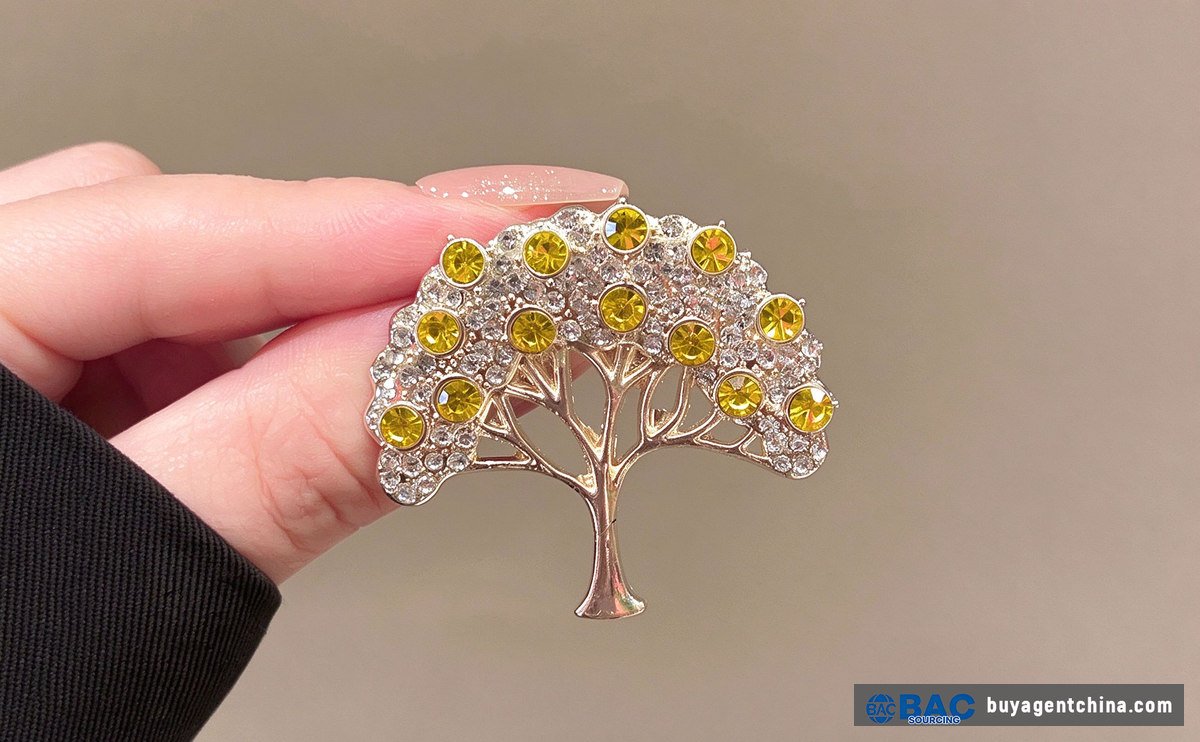
Rhinestone tree brooch — 3.7 × 4.1 cm, about 6.8 g

Rhinestone tree brooch — 3.7 × 4.1 cm, about 6.8 g

Watch the little word “including” in every quote: including how many plating layers, including the backing, including the backing card. Three ‘including’s can change the unit price by 40%. Putting the spec in the contract beats sending a smile across the dinner table.

5. The Four Walls a First-Time Buyer Hits

Sections one to four answered what to buy and where. This one answers why so many people still lose money at the same stage.

Language. Translation apps mangle “hard enamel, 18K gold-plated, butterfly clutch” into something nobody can verify. Technical specs distort worst in translation. Go through the specification sheet item by item — in writing, both languages — and never conclude from a chat log. If a term matters, define it on the sheet: plating type and thickness, enamel type, backing type, magnet strength, packaging.

Culture. Making friends before doing business is the norm, a 30% deposit is the custom — and the balance should never be paid in full before the goods pass inspection. Around Chinese New Year, capacity and prices shift, so lock price and capacity 30–45 days ahead for seasonal peaks. And when a supplier says “absolutely no problem,” I am usually already lining up a backup.

Paperwork. Get the HS code wrong, and a whole container sits at the dock while your margin disappears. Most brooches ship under HS 7117 (imitation jewellery); base-metal brooches plated with precious metal usually classify at 7117.19. Before the goods move, the code has to be resolved against the finished article: a brooch with a magnetic back or a decorative stone can land in a different subheading than the one in your listing photo.

Shipping and inspection. A sample is a sample, and mass production is mass production — I have said it for fifteen years, and brooches deserve the caution more than most: the sample that wins your approval is often the one picked with care, while the batch is what the line actually made — flash, drift and all. Small lots travel by air or consolidated LCL; full containers need packing that protects the finish — backing cards, poly bags, and a carton layout that stops pieces grinding against each other. Three-stage inspection — 30–50% production check, 100% finished-goods check, and a loading-watch — is just as necessary on a two-inch item as on a cabinet.

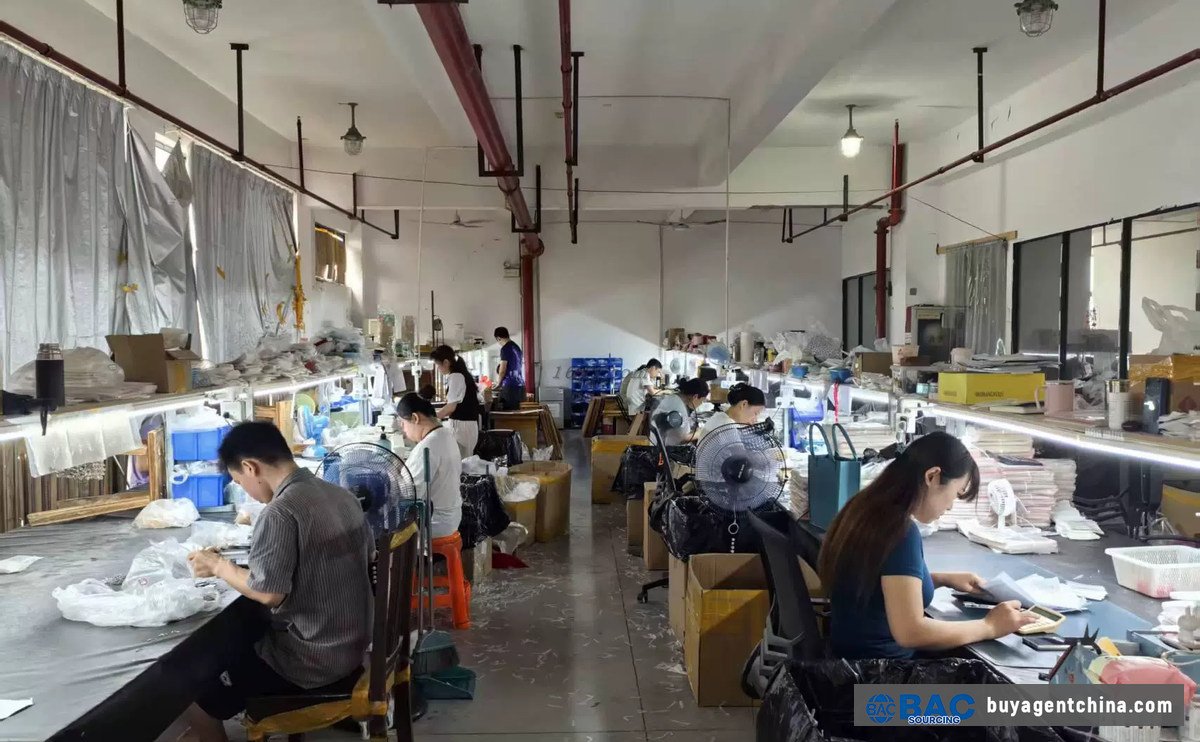
Real Chinese factory workshop — hand assembly lines

Real Chinese factory workshop — hand assembly lines

6. Buy Direct or Use a Sourcing Agent?

“Buying direct is cheaper” and “using an agent is easier” are both claims worth a skeptical look. Direct saves the service fee and pays the hidden costs — communication, verification, and mistakes. An agent costs a transparent fee and saves the flight, the phone calls at midnight and the tuition of a bad first order.

AspectDirect with FactoryWith a Sourcing Agent (e.g. BuyAgentChina)
CostNo service fee, plenty of hidden costsFixed fee or commission, written in the contract
CommunicationTranslator apps, time zones, distorted specsOn-the-ground Chinese team, spec checked line by line
QuotesHard to verify; traders pass as factoriesOriginal factory quotes plus workshop videos
Factory visits & QCFly yourself or skip itOn-site audit plus three-stage inspection
PaperworkHS and customs on your ownHTS classification and document checks assisted
Best forExperienced buyers, big orders, known suppliersFirst orders, small mixed lots, buyers who cannot fly

People trust audit reports; I trust my own ten minutes in the workshop more. What you are really paying an agent for is verification — the part of sourcing that fails silently when nobody is looking.

If you decide an agent makes sense for a brooch order, look for one whose fee structure is published before you pay: a fixed sourcing fee, a factory-visit day rate, and a commission bracket that is written in the contract. A legitimate China sourcing agency does not own factories, does not stock goods and does not mark up factory prices — its income is standardized service fees. As a benchmark, current BuyAgentChina pricing (services page, July 2026) runs an Entry plan at USD 29 for three pre-vetted supplier quotes in 3–5 days, a DIVE deep-sourcing plan at USD 140 for four to six factories with original quotes and workshop videos, and a factory-visit day rate of USD 170. Order-management commissions run 3–5% (Basic) or 5–8% (Growth) on order value. Fees move, so check the live page before you commit — the point is not the number, it is that the number is public.

7. Two Order Plans: Small Test and Bulk Container

7.1 Small Test Order — Start at 300–3,000 Pieces

Mixed lots from Yiwu stock are the fastest start: 1688 suppliers take dozens of pieces per style, and with an agent consolidating, 300–3,000 pieces can test five to ten designs at once. A budget of CNY 3,000–30,000 (roughly USD 500–5,000) covers colour, price point and packaging end to end.

The execution is simple: pick five to ten stock styles that fit your shelf, order small quantities of each, consolidate them into one shipment by air or in a shared LCL container, and track the sell-through per style. At the testing stage, arrival sampling is enough — but check the backings and the enamel on every style, because those are the parts a listing photo never shows. The style that sells out first is the one you take to tooling.

7.2 Bulk Container (20,000+ pcs / consolidated)

Before scaling, three things must be done: a golden sample signed and kept as the only acceptance standard (colour, enamel, backing, packaging locked); the full spec written into the contract — plating, enamel type, backing mechanism, magnet strength; and the inspection schedule fixed — 30–50%, 100%, then a loading watch. Payment terms follow the standard: 30% deposit to lock production, balance after inspection, never before.

Budget USD 8,000–50,000 or more, through a Guangdong OEM if you are customising hard enamel or rhinestone lines, or a Yiwu consolidation if you are scaling a proven stock style. Either way, cheap is never the only standard: cheap is not a sin; chasing cheap is.

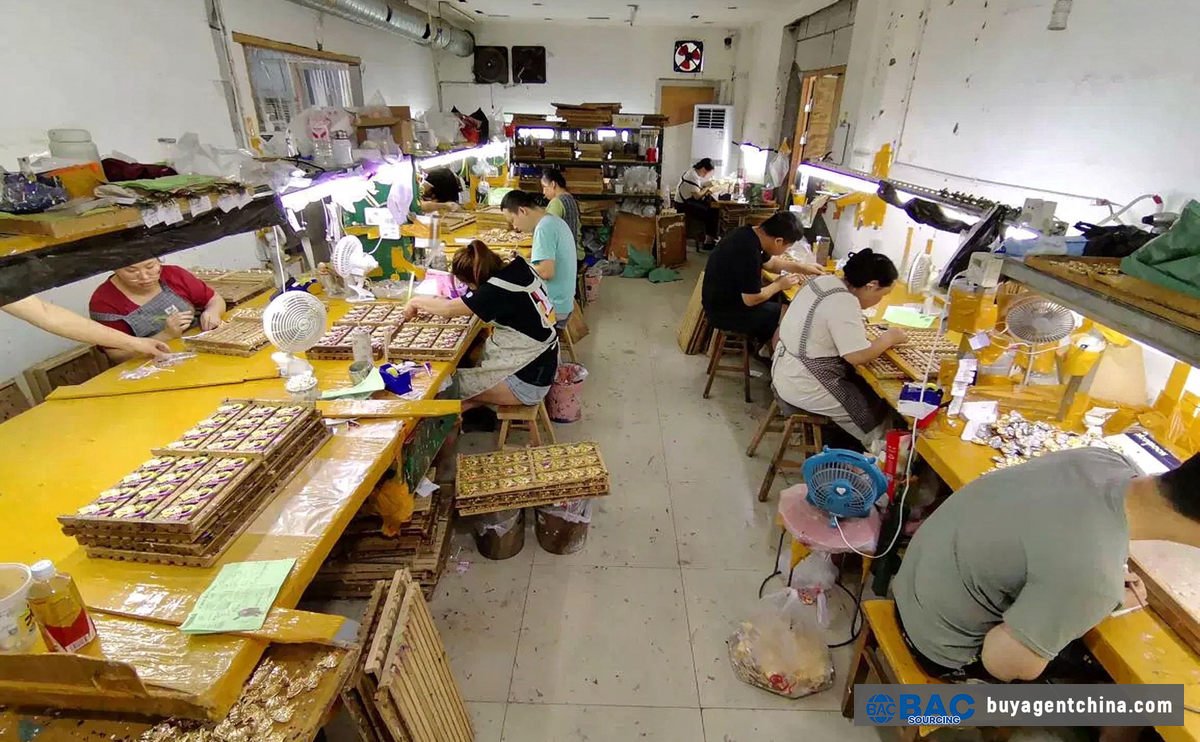
Small hand-assembly workshop — real factory floor

Small hand-assembly workshop — real factory floor

8. HS Codes, Duties and Documents: Count the Cost to the Dock

The brooch paperwork list is short, and every line on it is money.

ItemWhat you need to know
HS code7117 imitation jewellery; base-metal brooches plated with precious metal usually classify at 7117.19 (UK ruling 7117190090)
US dutyHTS 7117.19 general rate about 8%; China-origin codes may add Section 301 duties (+7.5% to +25%) — confirm the current HTS for your exact design
EU dutyThird-country duty for the 7117 family about 4.0% (Access2Markets, 2026)
Compliance linesREACH nickel release ≤ 0.5 µg/cm²/week for skin-contact items; US CPSIA lead ≤ 100 ppm for children's items; California Prop 65
DocumentsMaterial certificate, commercial invoice and packing list, golden-sample photos, third-party inspection report

You can verify the numbers yourself in an afternoon: look up your exact design on the USITC HTS site for the US rate, Access2Markets for the EU rate, and Volza or UN Comtrade if you want to see what HS codes similar brooches actually ship under. Children’s brooches add a second layer — small parts and a 100 ppm lead cap under CPSIA — so decide up front whether your range includes kids’ styles and tell the factory before they quote.

Run this table before the goods ship, together with a six-line checklist: ① stock or custom; ② region by MOQ and lead time; ③ plating, enamel and backing written into the contract; ④ ask what the quote “includes”; ⑤ sign and keep a golden sample; ⑥ schedule the three-stage inspection. Check all six, and the bills this category likes to send first-time buyers mostly never arrive.

9. Frequently Asked Questions (FAQ)

Q1. How much do wholesale brooches from China cost?

A1. Stock soft enamel pins start around USD 0.10–0.40 FOB at 10–100 piece MOQs; die-struck metal brooches run USD 0.22–0.42; fashion alloy and rhinestone brooches land at USD 0.43–1.50 FOB (2026 quotes). Domestic 1688 prices start as low as CNY 0.12 for tinplate badges.

Q2. What is the MOQ for brooches from Chinese factories?

A2. Yiwu stock suppliers often take 1–100 pieces; Guangdong enamel factories commonly quote 10–100 pieces for stock and custom enamel brooch pins; logo or colour changes run 100–500 pieces, and a brand-new mould usually needs 1,000–5,000.

Q3. Which is better, soft enamel or hard enamel brooches?

A3. Soft enamel is recessed, faster and cheaper — the volume seller. Hard enamel is polished flush with the metal, feels premium and costs more. If you are selling on shelf feel, test hard enamel; if you are testing demand, start with soft.

Q4. Can I make custom brooches with my own logo in China?

A4. Yes. Custom enamel brooch pins with your logo are the standard product of Cangnan, Yiwu and Guangdong factories. Budget for artwork, colour samples (7–15 days) and a golden sample sign-off before bulk production.

Q5. What is the HS code for brooches and how much is import duty?

A5. Most metal brooches classify under HS 7117 (imitation jewellery), typically 7117.19. US HTS 7117.19 carries an 8% general rate (China-origin may add Section 301 duties); EU third-country duty for the 7117 family runs about 4.0% (2026). Confirm the current rate for your exact design before ordering.

Q6. Should I use a buying agent in China to source brooches?

A6. For a first order, a small mixed lot, or any time you cannot fly to the factory, yes — a transparent-fee agent such as BuyAgentChina handles factory verification, original quotes, inspection and paperwork. Check the service page for current fees before you commit.

Leave a Reply

Your email address will not be published. Required fields are marked *