Procurement Guides

China Furniture Sourcing Guide 2026 | Practical Manual for Global Importers

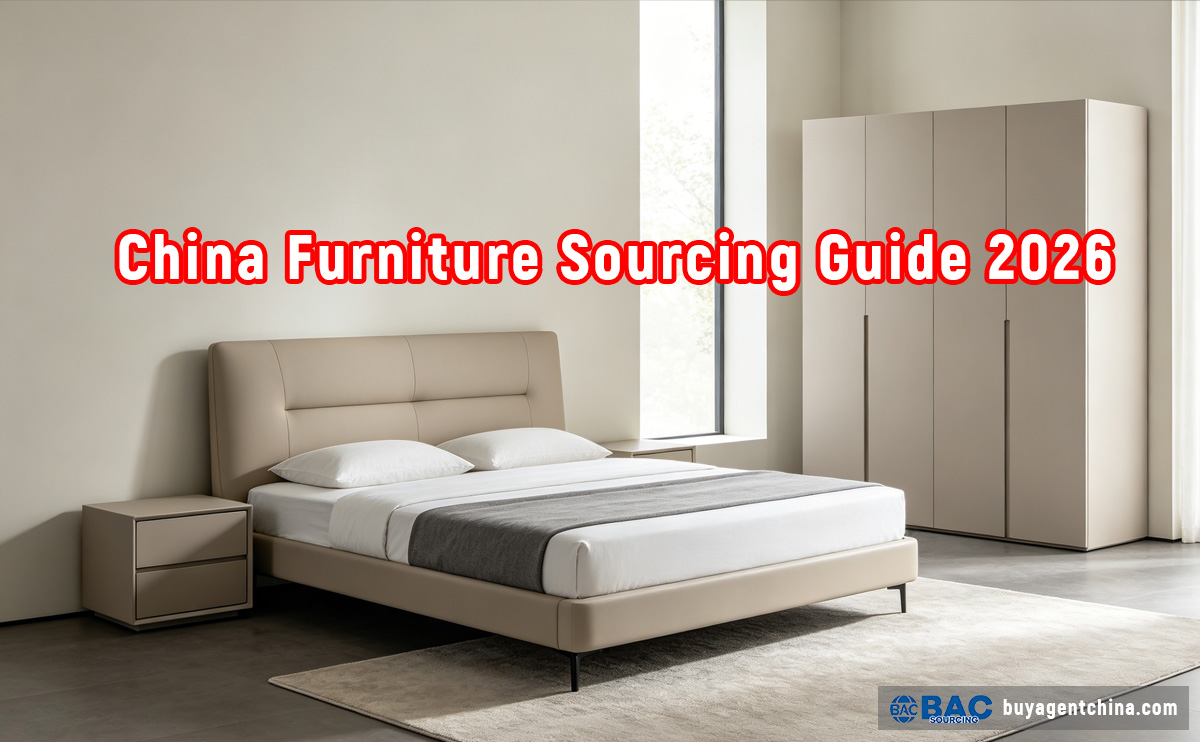
China Furniture Sourcing Guide 2026 01

Key Industry Statistics Summary

Statistical Index

Specific Data

China’s total furniture export value in 2024

USD 36.4 Billion

Global market share of Chinese furniture

30.8%

Total furniture manufacturers in Foshan & Longjiang

Over 5,810 factories

Average procurement cost savings via direct sourcing

30%–41%

China Furniture Sourcing Guide 2026 02 desk and chair

Introduction: Why Global Merchants Source Furniture Directly From China

Most overseas procurement practitioners share a common doubt: are those competitively priced listings on cross-border B2B platforms authentic? Genuine leather sofas priced at USD 400, solid wood dining sets for USD 280 and bulk office chairs starting from USD 45 leave many buyers questioning profitability of China-origin furniture imports.
Sourcing from China remains a lucrative business model only if buyers master core industry norms and supply chain rules. Chinese furniture accounts for 30.8% of worldwide market volume, forming the backbone of global furniture supply chain and continuously supplying physical retailers, hotel fit-out contractors, interior design studios and cross-border e-commerce sellers across Europe, the US, Middle East and Southeast Asia. The USD 36.4 billion export turnover recorded in 2024 fully proves this is a mature, large-scale mainstream foreign trade sector rather than a niche market.
However, polished product listings on online marketplaces often conceal prevalent industry pitfalls. Identically priced furniture may arrive with drastically inconsistent craftsmanship, while the so-called export-grade quality marked by various suppliers lacks unified industrial benchmarks. Without adequate understanding of China’s clustered manufacturing hubs, professional inquiry skills and secure payment arrangements, first-time buyers frequently suffer unexpected financial losses and substandard cargo.
This handbook is compiled based on on-site field experience from core production bases including Foshan, Dongguan and Suzhou, verified real-world buyer cases and latest industrial statistics. After reading through the full content, importers can pinpoint ideal production locations, define strict quality control benchmarks, lock reasonable price ranges and deploy full-cycle risk control solutions to execute cost-efficient and secure China furniture procurement.

Core Industry Indicators

Statistical Details

Total furniture export value of 2024

USD 36.4 Billion

Year-on-year export growth (Jan–Feb 2026)

25%

Global office chair output from Anji, Zhejiang

70%

Cost reduction range for overseas importers

30%–41%

2026 Industrial Data & Core Advantages of Sourcing Chinese Furniture

Official Industrial Stats Table

Category

Statistical Figure

National furniture export volume (2024)

 USD 36.4 Billion

China’s global furniture market proportion

30.8%

Export growth rate (early 2026)

25%

Factory quantity within Foshan & Longjiang cluster

5,810+

Foshan’s share of China’s nationwide furniture export

Over 40%

Anji’s global market occupancy for office seating

70%

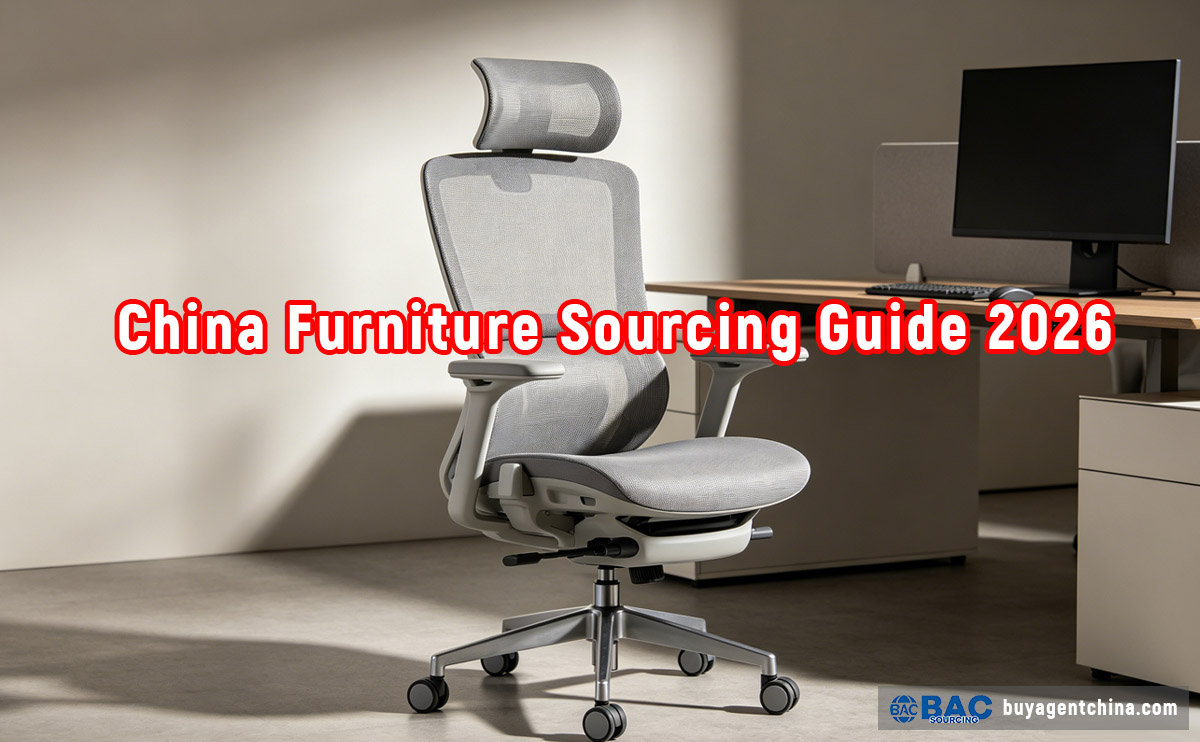
FOB price bracket for mesh office chairs from Anji

USD 30–80

Typical cost saving percentage for importers

 30%–41%

Core Competitive Edges of Chinese Furniture Supply Chain

A practical case perfectly illustrates such cost advantages: an Australian interior design firm spent five days inspecting three local factories in Foshan and finalized orders for 38 sets of commercial office furniture. Their original domestic procurement budget hit USD 287,000, whereas direct FOB sourcing from Chinese manufacturers cut total expenditure down to USD 168,400, delivering a 41% cost reduction. Saved funds were equivalent to 12 times their site visit expenses, and all finished goods successfully passed authoritative BIFMA quality certification for office furniture.
Such cost-effective procurement outcomes are highly replicable, thanks to six core strengths embedded within China’s furniture industry:

1. Cost benefits of factory-direct cooperation:

Cutting out middleman traders slashes purchase expenses by 20%–40% and maximizes net profit margins for importers.

2. Full-spectrum design coverage:

Manufacturers develop items spanning Nordic minimalism, classical mahogany, contemporary luxury and European vintage styles, with continuous seasonal new releases aligned with global home décor trends.

3. Flexible custom manufacturing options:

Both OEM and ODM services are widely accessible. OEM enables production against buyers’ exclusive design drafts; ODM lets merchants rebrand existing factory-developed items under private trademarks.

4. Space-saving compressed packaging technology:

Mattress rolling and knockdown sofa construction shrink cargo volume by up to 67%, substantially trimming ocean freight and catering perfectly to cross-border e-commerce logistics needs.

5. Preferential tariff perks under RCEP:

Southeast Asian buyers enjoy zero-tariff policies via RCEP agreements, making Chinese furniture far cheaper than locally manufactured alternatives by roughly 30%.

6. Complete export certification compliance:

Top-tier factories hold globally recognized accreditations such as BIFMA, CARB, FSC and ISO9001, facilitating hassle-free customs clearance across European and American territories.

China Furniture Sourcing Guide 2026 03 chair

Complete Furniture Product List & Updated 2026 FOB Price Reference

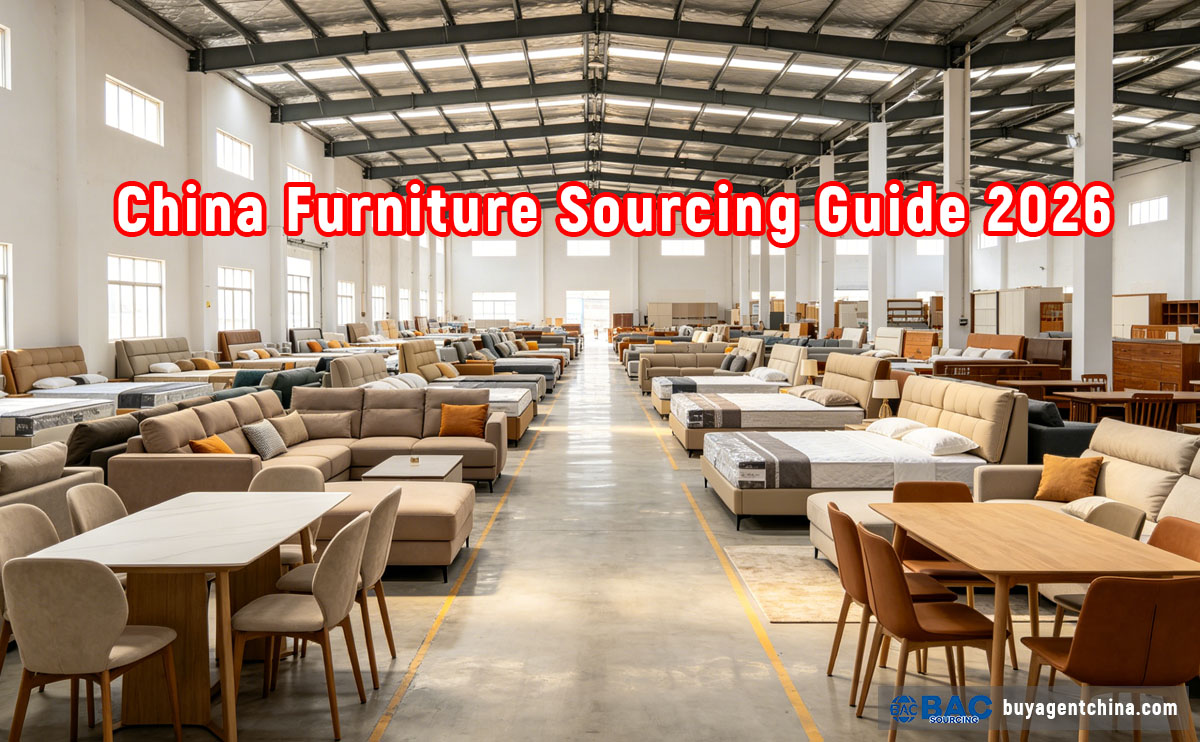
China’s integrated supply chain covers entry-level knockdown furniture all the way to high-end full-hotel customized fit-out projects. The table below outlines mainstream sourcing items, recommended origin locations and latest FOB pricing for quick budget evaluation.

Product Category

Detailed Item Breakdown

Preferred Sourcing Base

2026 FOB Unit Rate

Living Room Furniture

Sofas, coffee tables, TV cabinets, accent armchairs

Longjiang, Foshan

USD 180–800 per piece

Bedroom Furniture

Bed frames, nightstands, wardrobes, dressers

Foshan / Likou

USD 350–1,200 per full set

Dining Furniture

Dining tables, dining chairs, bar stools

Foshan / Dongguan

USD 200–400 per single table

Office Furniture

Executive desks, ergonomic chairs, conference tables

Anji / Xianghe

USD 30–80 per chair

Hotel Project Furniture

Guestroom packages, lobby furnishings, restaurant booth seating

Foshan / Dongguan

USD 500–2,500 per guestroom set

Outdoor Furniture

Patio sets, rattan items, pool lounge chairs

Guangzhou / Foshan

USD 150–600 per complete set

Custom Cabinetry

Built-in cabinets & personalized joinery

Foshan / Dongguan

Quoted per individual project

Children’s Furniture

Kids beds, study desks, storage closets

Likou / Foshan

USD 200–600 per full set

Standard 8-Step China Furniture Sourcing Protocol (Step 1–5)

All inbound procurement, either via on-site factory visits or remote online negotiation, follows standardized operational steps; skipping any single phase invites hidden risks around quality, lead time and capital safety.

Step 1: Finalize detailed product specification sheets prior to supplier outreach

Before contacting potential vendors, compile full specification documents covering dimensions, raw material grades, surface finishing, color schemes, minimum order quantities, target FOB cost and required international certifications. This pre-work eliminates over 90% of communication misunderstandings between buyers and factories.

Step 2: Shortlist qualified candidate manufacturers

Source 5 to 8 verified production facilities per product line via mainstream B2B portals or local China-based sourcing agents. Prioritize legally registered manufacturers with proven export track records and accessible factory site inspections, while filtering out pure middleman trading firms without in-house production capacity.

Step 3: Complete rigorous supplier qualification verification

Request unedited on-site workshop footage (instead of staged showroom clips) and validate business licenses plus ISO9001, FSC or CARB certifications through official government databases. Reject any factories refusing qualification checks entirely.

Step 4: Conduct physical sample comparison & performance testing

Request prototype samples from no fewer than three separate manufacturers for identical items. Cross-check material composition, construction precision and dimensional accuracy against your spec sheet via hands-on tests including seat compression, drawer glide movement and sponge density assessment; never confirm bulk production relying solely on product photos.

Step 5: Negotiate unit pricing and sign formal sales contracts

Secure a 10%–15% downward adjustment from initial supplier quotations during bargaining. Adopt the widely accepted payment scheme: 30% deposit to initiate manufacturing, remaining 70% balance payable only against pre-shipment inspection reports. Formal contracts must define material criteria, ±1cm dimensional tolerance, confirmed production timeline and AQL2.5 inspection standards.

Step 6–8 of Sourcing Workflow + In-depth Incoterms Explanation

Step 6: Arrange third-party pre-shipment inspection upon 80% production completion

Retain accredited inspectors from SGS, Bureau Veritas or V-Trust for factory site audits, with typical inspection fees ranging USD 300–600. Inspectors cross-reference finished goods against your predefined specs for material compliance, sizing accuracy and export-grade packaging, marking this expense the most cost-effective risk prevention investment of the whole procurement cycle.

Step 7: Secure ocean booking and customs clearance for shipment

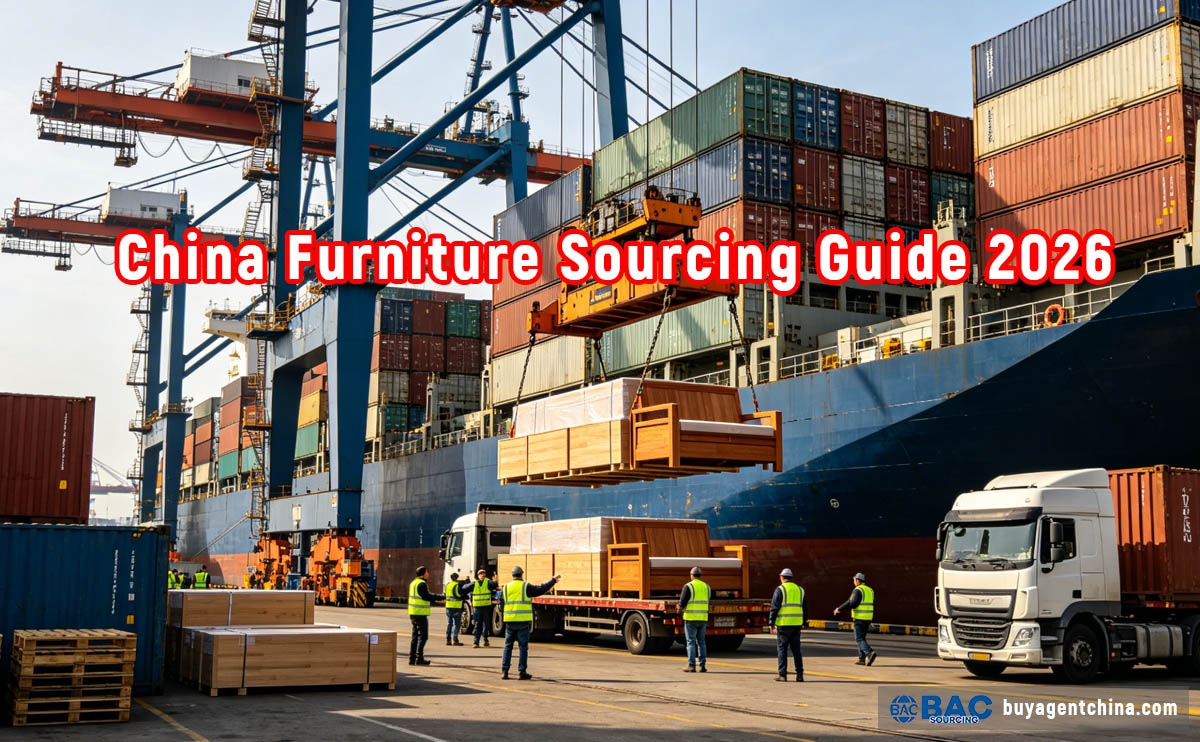
Partner with freight forwarders specializing in furniture logistics. Full-container-load (FCL) shipments minimize cargo damage for large bulk orders, while less-than-container-load (LCL) consolidation cuts down logistics spending for small mixed orders; always retain original ocean bills of lading to safeguard cargo ownership.

Step 8: Full documentation capture upon goods arrival before unpacking

Take complete photos and video footages prior to container unloading. The furniture industry averages a 6.8% in-transit damage rate, and complete visual evidence is essential for subsequent insurance claims and supplier compensation negotiations.

China Furniture Sourcing Guide 2026 05logistics

Four Core International Trade Term Comparison Chart

Incoterms legally divide cost liabilities and risk transfer points between buyers and sellers; selecting appropriate clauses effectively slashes hidden ocean shipping expenses by thousands of US dollars per full container.

Incoterm

Full Definition

Ocean Freight Responsible Party

Ideal Buyer Profile

EXW

Goods collected directly from factory premises; buyer bears all post-factory fees and transportation risks

Buyer covers all sea transport

Veteran importers with established local China freight agents

FOB (Recommended)

Seller delivers goods onboard vessel; risk shifts to buyer once cargo is loaded onto ship

Buyer pays long-haul ocean freight

Majority of global importers for transparent pricing comparison

CIF

Seller covers sea freight plus cargo insurance till destination port terminal

Seller pays primary ocean cost

New buyers prioritizing hassle-free arrangements without detailed landed cost calculation

DDP

Door-to-door all-in pricing inclusive of customs duty and end-delivery charges

Seller covers full shipment expenses

Small batch purchasers without dedicated logistics teams

Critical Risk Alert: Suspiciously low-priced DDP contracts frequently involve under-declared customs value, leading to port detention and costly government fines with zero compensation from forwarding agents. Always cooperate with fully compliant licensed logistics providers.

Sourcing Advice: Standardize all quotation comparisons under FOB terms with identical loading port terms to level the playing field and enable independent freight selection.

Verified Real-World Sourcing Success Cases

Case 1: US Cross-border Sellers Hit USD 1.028 Million Order Volume Within 3 Trade Show Days

A cohort of US Amazon and independent website home goods merchants closed cooperation with Quanzhou-based Huameng Furniture during a Shenzhen cross-border expo, focusing on compressed roll-pack mattresses (65% of total order value) and fabric upholstered sofas (35%). Innovative compression packing reduces cargo volume to one-third of conventional furniture, cutting ocean freight by nearly half and enabling scalable profitable large-item cross-border e-commerce operations. Thirty-two separate purchase agreements were signed throughout the event, accumulating total order value of USD 1,028,000.

Case 2: Australian Design Firm Cuts Office Procurement Cost by 41%

An Australian interior contracting company sourced full office furniture packages for a local tech startup. Original domestic purchasing budget stood at USD 287,000; after on-site audits across three Longjiang factories under FOB Nansha agreement, actual final cost fell to USD 168,400, saving USD 118,600 (41% cost cut). All delivered office furnishings passed official BIFMA quality testing, with travel expenditure fully offset by total cost savings.

Case 3: Saudi Hospitality Group Receives 1,000-Room Furniture Within 45-Day Rush Lead Time

A large Saudi hotel development project required customized bed frames oriented for religious use, formaldehyde-free panel boards and roll-pack mattresses under an urgent 45-day manufacturing deadline. Foshan Suilong Furniture manufactured all items following Western export quality standards with space-efficient compressed packaging for direct container shipping. All panels satisfied zero-formaldehyde environmental specifications and were delivered punctually. Following successful project fulfillment, the client placed a follow-up order covering another 2,000 guest rooms, and organic referral traffic boosted the factory’s Middle Eastern order volume by 52%.

China Furniture Sourcing Guide 2026 04 bed sourcing

Practical Sourcing Tips & Common Costly Buyer Pitfalls

Pre-trip Preparation Checklist Before Visiting China’s Production Zones

  • Draft detailed individual specification sheets for every SKU in advance to lock fixed material benchmarks
  • Research prevailing market pricing; eliminate quotations marked 20% below industry average to avoid inferior-quality traps
  • Book professional local translators or sourcing coordinators if lacking Chinese communication capabilities
  • Prioritize Longjiang factory inspections instead of limiting sourcing visits solely within Lecong showroom districts
  • Reserve minimum three full business days in Foshan to avoid hasty, ill-advised last-minute order decisions

Key On-site Factory Audit Standards

  • Inspect complete production lines, operating equipment and active workforce to filter fake showroom-only disguised manufacturers
  • Examine raw material warehouses to cross-check fabric, timber and sponge consistency against quoted product specs
  • Request timber moisture content test certificates to prevent post-delivery warping and cracking defects
  • Complete hands-on sample testing against finalized specification paperwork on location
  • Capture photos of business licenses and export certifications for permanent record-keeping

Indispensable Clauses to Include Within Formal Sales Contracts

  • List detailed specs including lumber species, fabric composition, sponge density rating and hardware grade classification
  • Set uniform ±1cm dimensional tolerance for all finished furniture pieces
  • Insert liquidated damage terms: daily penalty equivalent to 0.5% of total order value for late deliveries
  • Confirm product inspection benchmark: AQL2.5 standard or third-party audits by SGS/BV/V-Trust
  • Enforce fixed payment structure: 30% deposit upfront, remaining balance post successful pre-shipment inspection

Blank Furniture Sourcing Specification Template

Iteam Name::

___________________

Dimensions (L×W×H): 

___________________

Main Material:

___________________

Fabric/Leather Grade:

___________________

Foam Density:

___________________kg/m³

Wood Type: 

___________________

Target FOB Price: $

___________________

MOQ: 

___________________units

Required Certifications:

___________________

Lead Time Required: 

___________________days

Five Costly Procurement Mistakes Frequently Made by First-time Buyers

1. Treating Lecong showrooms as in-house manufacturers:

Most Lecong display stores operate as middleman traders, marking up factory base prices by 20%–40%. Always verify physical production address and complete factory visits in Longjiang to secure direct factory pricing.

2. Assuring bulk goods match sample quality:

Many producers deploy premium raw materials for prototypes but downgrade materials during mass production via thinner lumber, low-density foam and cheap fabric. Secure all material terms legally in written contracts and enforce third-party pre-shipment checks; uninspected bulk orders carry 15%–25% average defect rates.

3. Full balance prepayment prior to shipment:

Reputable Chinese manufacturers universally follow the 30% deposit + post-inspection balance rule. Numerous small workshops cease operation annually, and full upfront payment exposes buyers to total fund loss risks.

4. Skipping third-party pre-shipment inspection:

A few hundred US dollars spent on professional audits prevents catastrophic financial loss from receiving an entire defective container load, standing as the most valuable risk-control investment available.

5. Ignoring seasonal production schedule fluctuations:

March–June and September–December mark annual manufacturing peak seasons with factory backlogs extending lead times by roughly 15 extra days. Buyers targeting Q4 holiday retail sales must place purchase orders no later than August to lock production slots.

FAQ | Frequently Asked Sourcing Questions

Q1: What furniture categories can be imported directly out of China?

China’s robust supply chain covers all mainstream furniture types including full bedroom & living room sets, dining furnishings, commercial office pieces, complete hotel fit-out packages, outdoor rattan patio collections, children’s furniture, solid wood custom items and bespoke built-in cabinetry. Product tiers range from budget flat-pack commodity goods all the way to premium custom-made luxury hotel furniture to fit all project scales.

Q2: Which Chinese cities rank best for furniture import sourcing?

For widest product diversity and mature export infrastructure, Foshan tops the list with Lecong for sample selection and Longjiang for on-site factory audits. Dongguan specializes in high-end custom upholstery; Anji delivers cost-effective bulk office seating; Likou of Suzhou dominates solid wood and Japan/Korea-bound export orders, while Xianghe focuses on classical rosewood and commercial office furniture.

Q3: Am I restricted to purchasing via trading companies only, or can I source straight from manufacturers?

Direct factory procurement is strongly recommended, cutting middleman markup costs by 20%–40%. The core challenge lies in separating genuine production facilities from fake factory-fronted showrooms; partnering with local sourcing agents enables verified factory access and genuine ex-factory pricing.

Q4: What is the standard MOQ (Minimum Order Quantity) for Chinese furniture?

Ready-made catalog-standard items normally require 20–50 pieces per order; customized OEM goods with exclusive branding or unique raw materials usually set MOQ at 100–200 units. Small-volume trial importers can combine multiple different SKUs in a consolidated order to meet factories’ minimum order thresholds.

Q5: Does Chinese furniture industry support OEM & ODM custom manufacturing?

Customization capability represents one of China’s core global competitive edges. OEM allows manufacturing based on buyers’ exclusive technical drawings; ODM permits private-label branding over existing factory-developed product lines. Modifications cover dimension adjustment, upholstery color swapping, wood finish tweaks, hardware upgrades and customized export packaging. Most Foshan factories maintain in-house design teams capable of developing new samples from reference images or construction blueprints.

Q6: What constitutes the safest payment structure for international furniture deals?

Industry-standard secure payment arrangement requires 30% initial deposit to kick off production, with the remaining 70% payable only once pre-shipment third-party inspection passes all quality benchmarks. Newly established supplier partnerships can add ESCROW service for extra fund protection, never settle full outstanding payment before cargo dispatch.

Q7: Total lead time combining manufacturing plus ocean transit?

Production schedules shift between industry off-peak and peak seasons: 30–45 days off-season vs 45–60 days during busy production windows (Mar–Jun & Sep–Dec). Ocean transit durations vary by destination: West US (15–18 days), East US (25–30 days), Europe (25–35 days), Australia (18–25 days), Middle East (18–22 days). Importers should reserve 8–12 weeks total door-to-door cycle to accommodate unexpected delays.

Q8: How to select the most suitable term among FOB/CIF/EXW/DDP?

FOB remains the primary pick for most global importers thanks to consistent benchmark pricing and independent freight forwarder selection; seasoned procurement professionals opt for EXW to retain full end-to-end shipment control. DDP fits sporadic small orders for effortless door delivery yet requires strict vigilance against customs under-declaration risks, whereas CIF works for entry-level buyers with limited landed cost calculation experience.

Q9: How to guarantee bulk production quality stays identical to pre-approved prototype samples?

Three-tier quality lock-in strategy eliminates bulk vs sample discrepancies: First, seal and photograph confirmed prototype samples with binding contractual quality clauses; second, codify all raw material specifications including lumber, fabric, sponge and hardware inside sales agreements; third, release final balance payment solely after third-party inspectors confirm finished bulk goods comply fully with agreed standards.

Q10: What core risks exist during China furniture import procurement?

Five primary sourcing hazards include intentional raw material downgrade during mass production, financial default risks from unregistered small manufacturers, cargo damage during ocean transit (industry average 6.8%), customs penalties and detention triggered by unlawful DDP customs under-declaration, plus extended lead times amid peak manufacturing seasons. Strict pre-order factory audits, legally binding sales contracts, independent pre-shipment inspection and reliable freight forwarder cooperation successfully mitigate all above threats.

Leave a Reply

Your email address will not be published. Required fields are marked *